
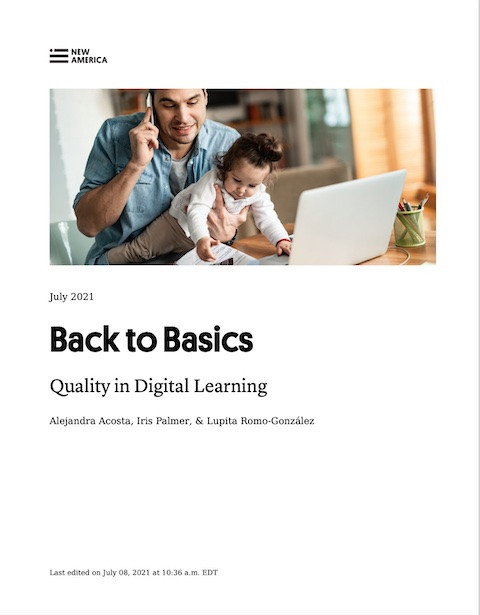
Back to Basics: Quality in Digital Learning
- 형태사항
- 30 p.
- 원래 언어
- 영어
- 발행 연도
- 2021
The pandemic was, in some ways, a sneak preview of higher education’s future, one in which technology-mediated and -enabled education is ubiquitous, but with the potential for deep inequities in access to high-quality learning. This report describes some of the ways in which higher education succeeded and fell short during the remarkable 2020–21 year of distance learning. It proposes a trio of federal policy changes to build the ecosystem needed for online learning to ensure it is more equitable for students of color and low-income students, and to improve the quality for everyone (Acosta et al., 2021, p. 6).
관련 자료
-
 IIEP-UNESCO 12th Medium-Term Strategy: 2026–2029
 -
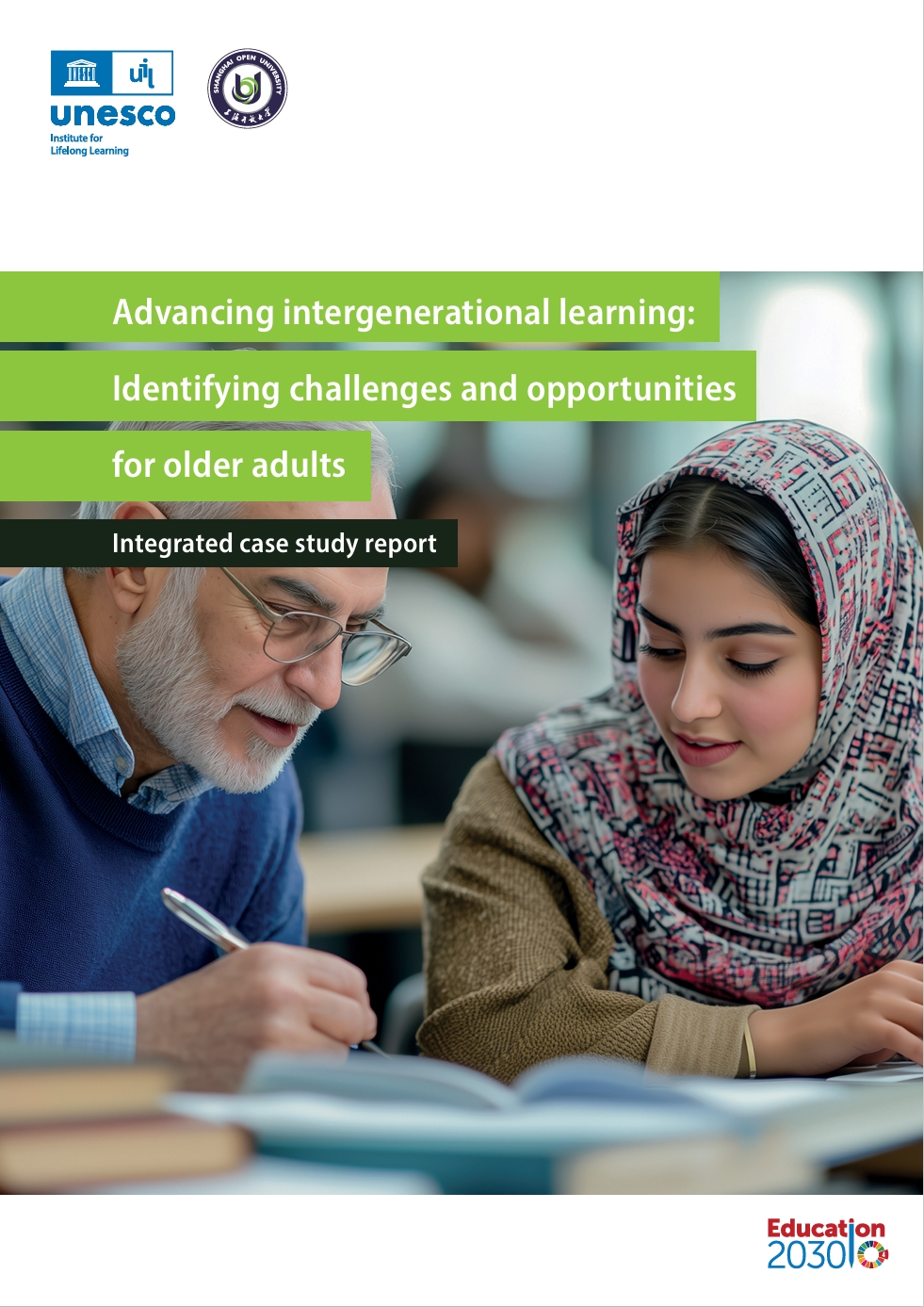 Advancing Intergenerational Learning: Identifying Challenges and Opportunities for Older Adults; Integrated Case Study Report
 -
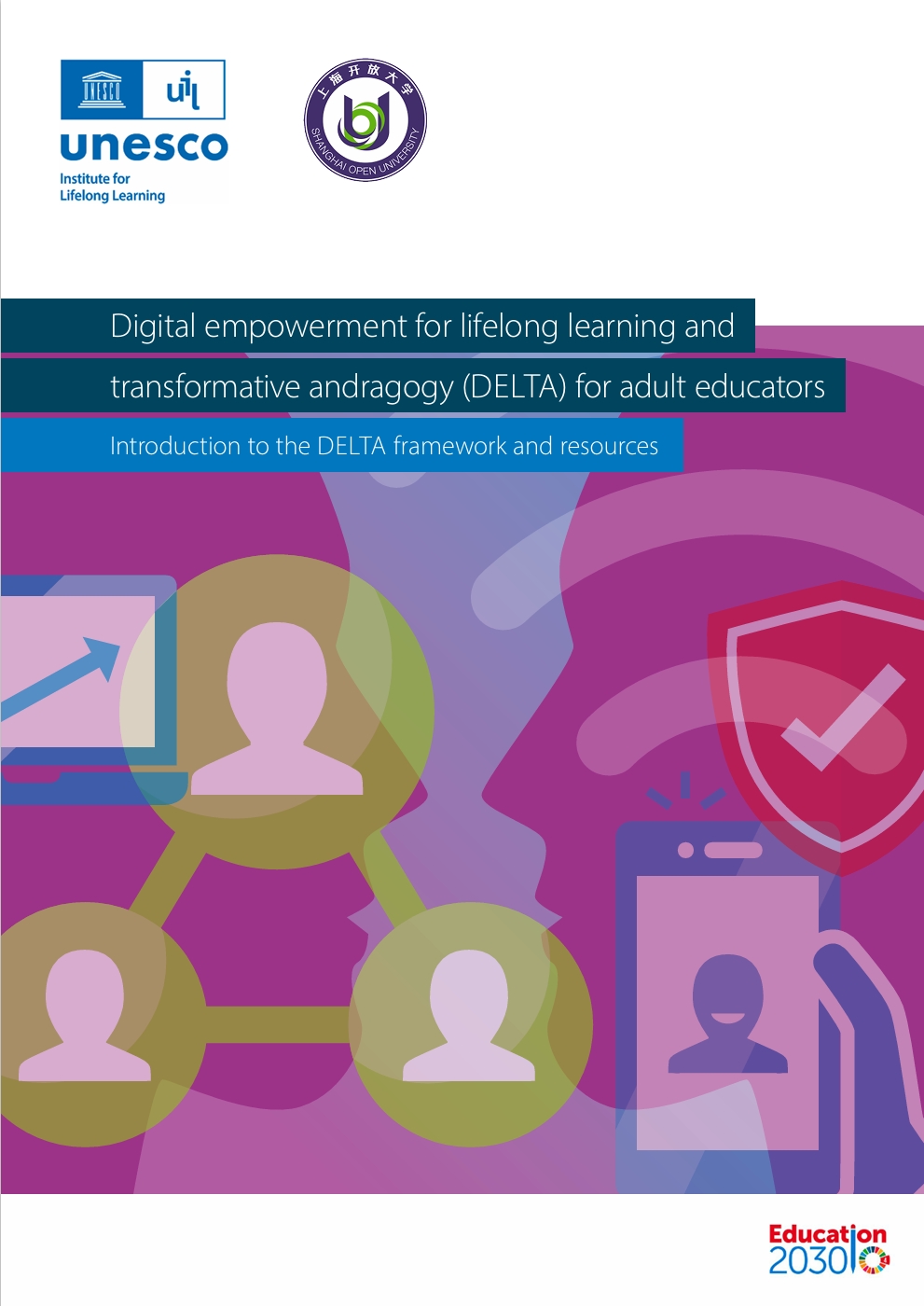 Digital Empowerment for Lifelong Learning and Transformative Andragogy (DELTA) for Adult Educators: Introduction to the DELTA Framework and Resources
 -
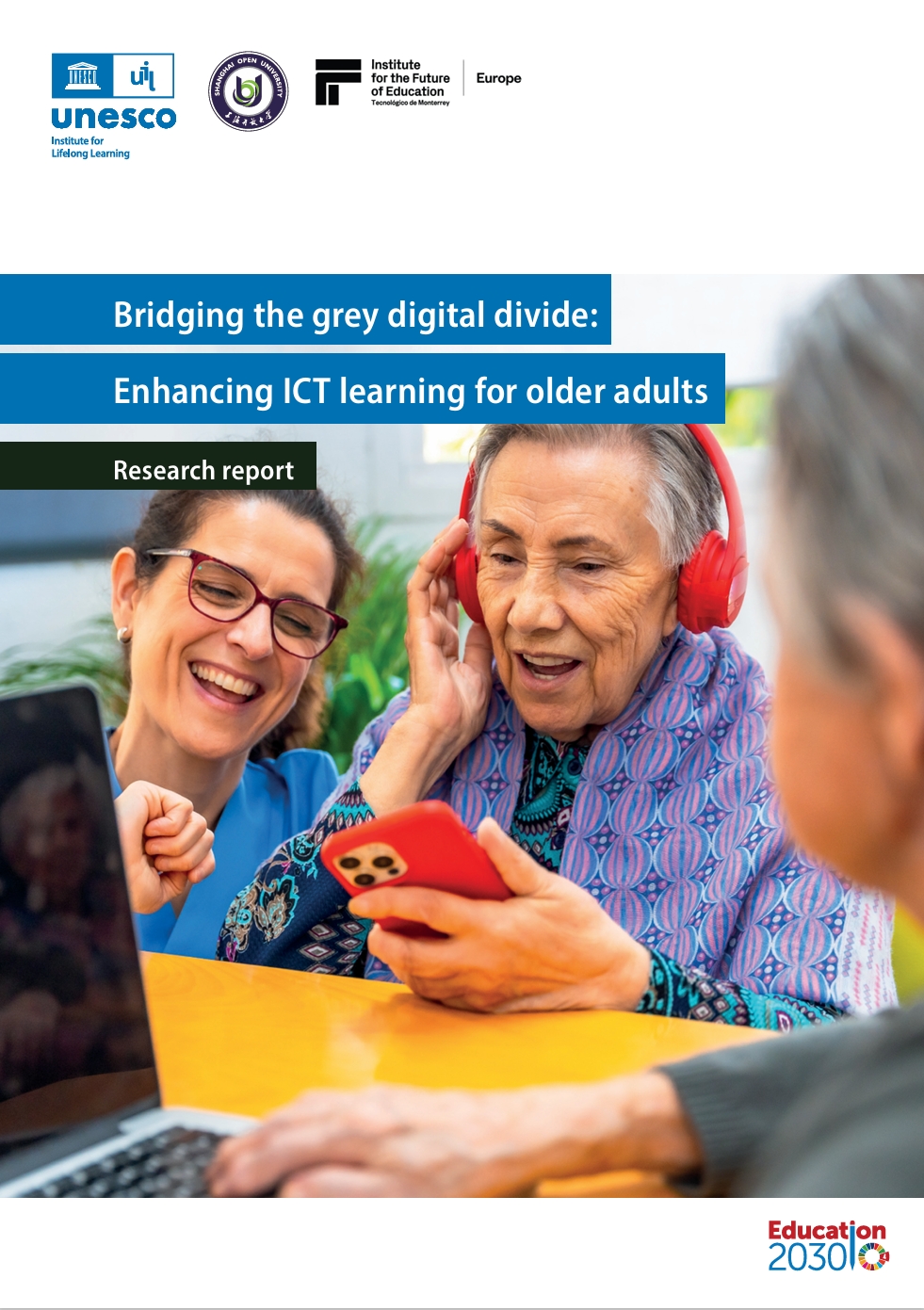 Bridging the Grey Digital Divide: Enhancing ICT Learning for Older Adults; Research Report