
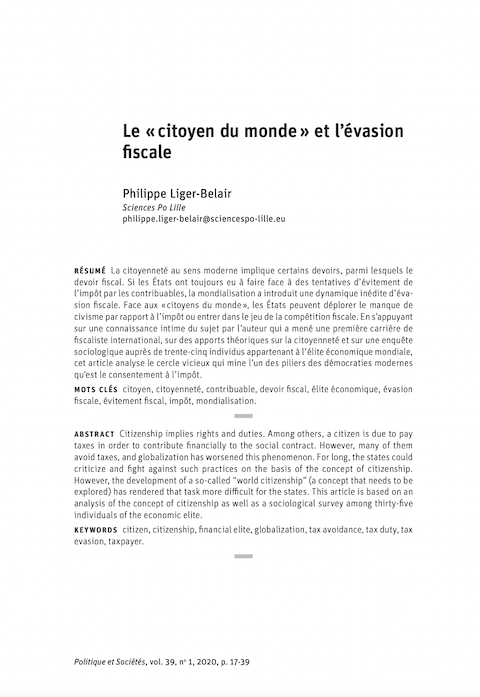
The Global Citizen and Tax Evasion (Politique et Sociétés; vol. 39, no. 1)
- ISBN
- ISSN 1203-9438
- 형태사항
- p. 17-39
- 원래 언어
- 프랑스어
- 발행 연도
- 2020
Citizenship implies rights and duties. Among others, a citizen is due to pay taxes in order to contribute financially to the social contract. However, many of them avoid taxes, and globalization has worsened this phenomenon. For long, the states could criticize and fight against such practices on the basis of the concept of citizenship. However, the development of a so-called “world citizenship” (a concept that needs to be explored) has rendered that task more difficult for the states. This article is based on an analysis of the concept of citizenship as well as a sociological survey among thirty-five individuals of the economic elite.
관련 자료
-
 Study on the Historical Impact of the 1974 Recommendation concerning Education for International Understanding, Cooperation and Peace and Education relating to Human Rights and Fundamental Freedoms
 -
 IIEP-UNESCO 12th Medium-Term Strategy: 2026–2029
 -
 More than Welcome: Intercultural Integration of Migrants in and Through Higher Education
 -
 Advancing Intergenerational Learning: Identifying Challenges and Opportunities for Older Adults; Integrated Case Study Report