
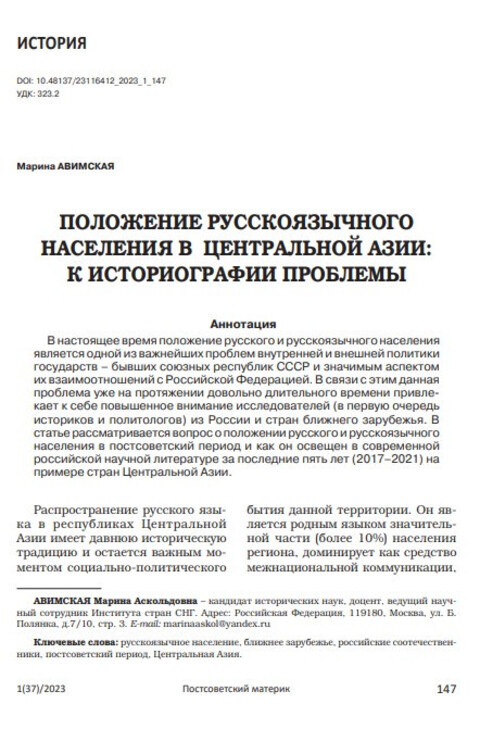
The Situation of the Russian Speaking Population in Central Asia: To the Historiography of the Problem (Post-Soviet Continent;
At present, the position of the Russian and Russian-speaking population is one of the most important problems in the domestic and foreign policy of the states - the former Soviet republics of the USSR and a significant aspect of their relationship with the Russian Federation. In this regard, this problem has been attracting increased attention of researchers (primarily historians and political scientists) from Russia and neighboring countries for quite a long time. The article deals with the issue of the situation of the Russian and Russian-speaking population in the post-Soviet period and how it is covered in modern Russian scientific literature over the past five years (2017–2021), using the example of the countries of Central Asia.
관련 자료
-
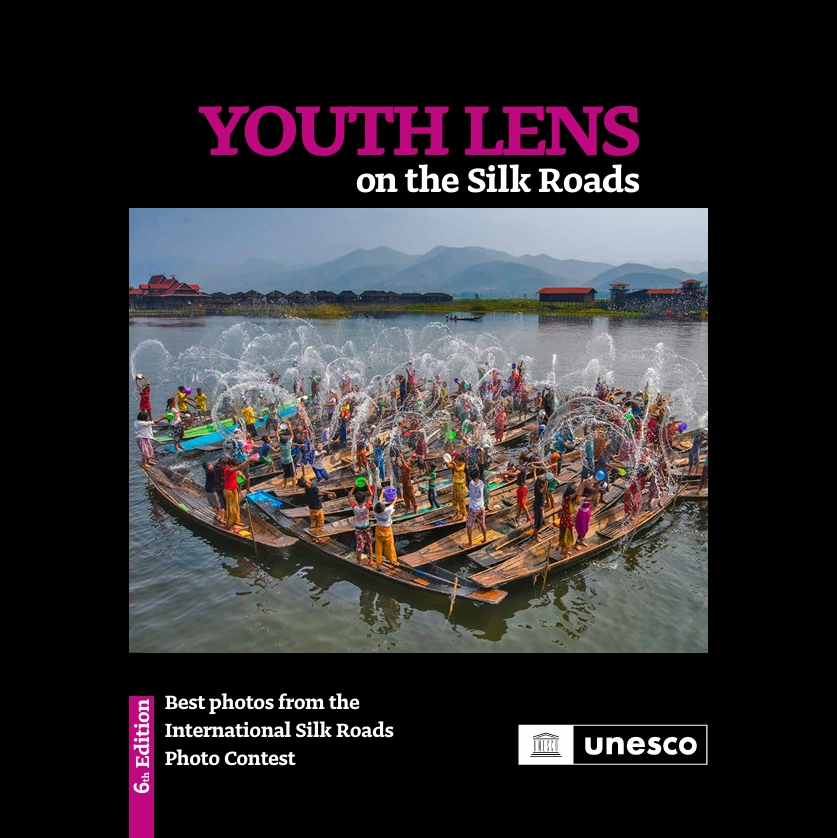 Youth Lens on the Silk Roads: Best Photos from the International Silk Roads Photo Contest; 6th Edition
 -
 UNESCO Framework for Culture and Arts Education: Implementation Guidance
 -
 The Representation of Jews, Judaism and Antisemitism in School Textbooks and Curricula in Europe
 -
 Strategies to Counter Antisemitism: A Handbook for Educators