
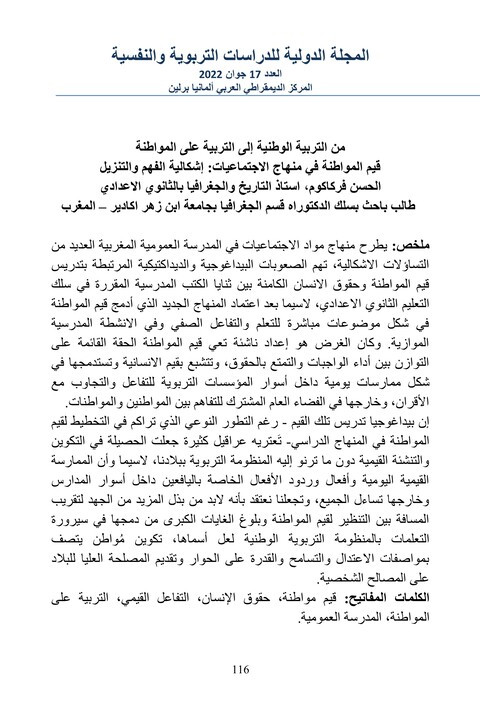
From Civic Education to Citizenship Education: Citizenship Values in the Geography Curriculum; The Problem of Understanding and Downloading (International Journal of Educational and Psychological Studies; vol. 6, no. 17)
This paper aims to contribute to revealing the extent to which the values of citizenship and human rights are present in the social studies lesson in Moroccan public schools, specifically in the middle school education curriculum. The inclusion of human rights values at this level raises several problems that lead to two complementary trends: The first is related to the didactics of human rights and citizenship education, and the second trend is related to the extent of the learner’s ability to acquire and represent the values of citizenship and transform them into automatic daily behaviors and practices in the school environment and then after that in daily public life and private transactions.
관련 자료
-
 IIEP-UNESCO 12th Medium-Term Strategy: 2026–2029
 -
 Advancing Intergenerational Learning: Identifying Challenges and Opportunities for Older Adults; Integrated Case Study Report
 -
 Digital Empowerment for Lifelong Learning and Transformative Andragogy (DELTA) for Adult Educators: Introduction to the DELTA Framework and Resources
 -
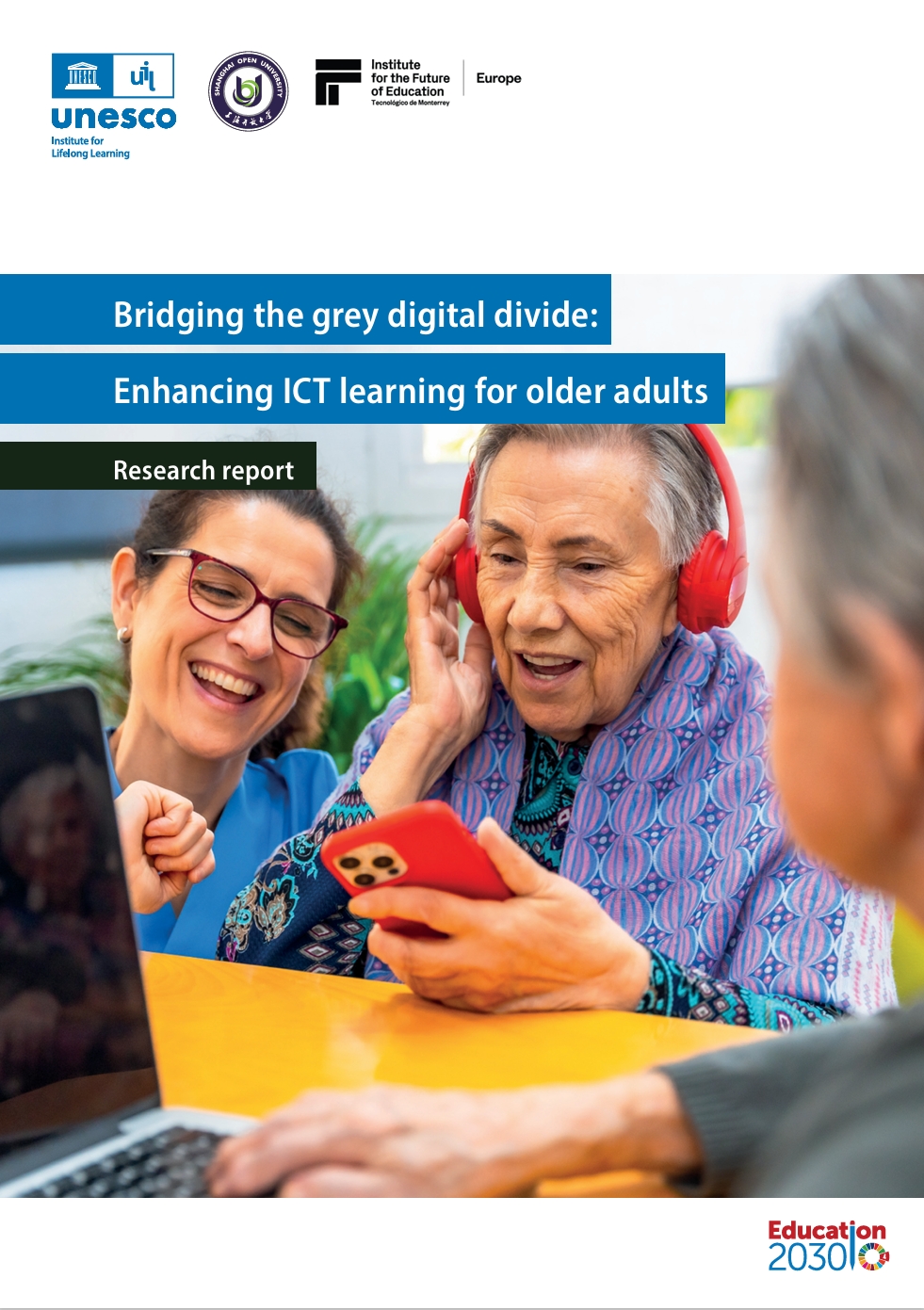 Bridging the Grey Digital Divide: Enhancing ICT Learning for Older Adults; Research Report