
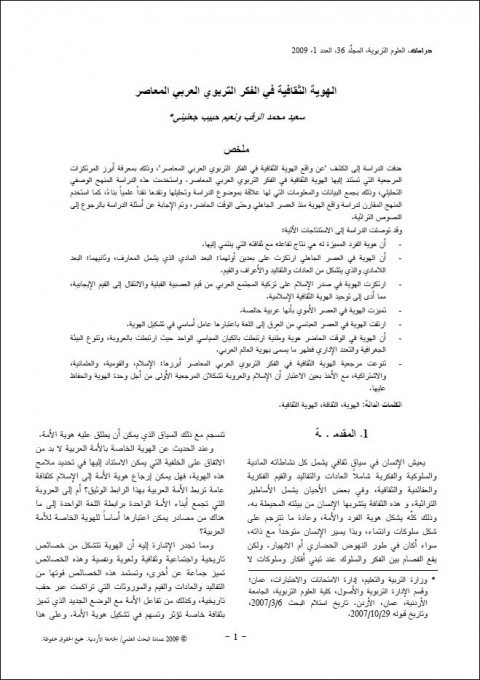
Cultural Identity in Contemporary Arab Educational Thought
The study aimed at revealing the reality of the “Cultural Identity” in the contemporary Arab thought, by tracing the most important references that the” Cultural Identity” stemmed from This study followed a descriptive analytic method: information and data related to the study were gathered, analysed and evaluated. The comparative method is used as well to study the reality of “the Identity”, from Pre-Islam era till present.
The study concluded the followings: 1. A person’s Identity that distinguishes him is a result of his interaction with his culture that he belongs to. 2. In pre-Islam era, the identity was based on two dimensions: the first was physical and this included knowledge; the second was non-physical and was formulated from habits, traditions, customs, and values. 3. In the Early Islamic period, identity was based on the elimination of tribal fanatical values and on the transformation into positive values. That lead to the unification of the Islamic cultural identity. 4. In the Umayyad period, the identity was featured by its pure Arab identity. 5. In the Abbasid period, the identity elevated from the ethnic level to the language level which is considered as integral factor for identity formulation. 6. At present, “the Identity” is a national one aligned with the one political status, and connected with Arabism, the varied geographical environments and the administrative diversity, and hence appeared what is called the 'identity of the Arab World'. 7. The references of the “cultural identity” in the modern educational thought are multi, the most prominent of these elements are Islam, nationalism, secularism and socialism, while taking into consideration that Islam and Arabism are the first references for the unification and preservation of the identity.
관련 자료
-
 Study on the Historical Impact of the 1974 Recommendation concerning Education for International Understanding, Cooperation and Peace and Education relating to Human Rights and Fundamental Freedoms
 -
 IIEP-UNESCO 12th Medium-Term Strategy: 2026–2029
 -
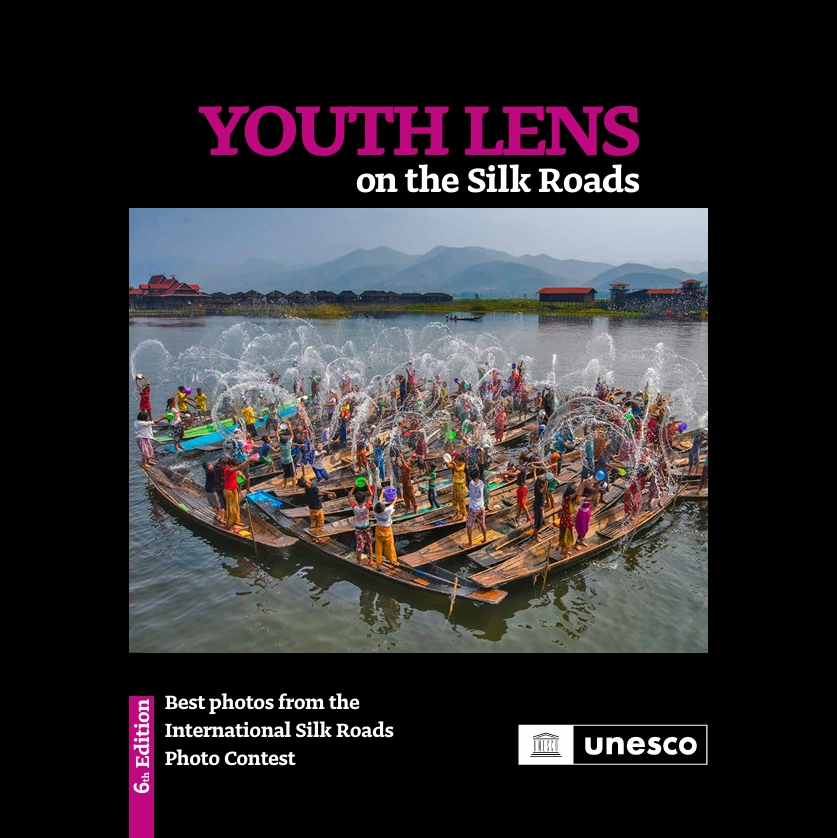 Youth Lens on the Silk Roads: Best Photos from the International Silk Roads Photo Contest; 6th Edition
 -
 More than Welcome: Intercultural Integration of Migrants in and Through Higher Education