
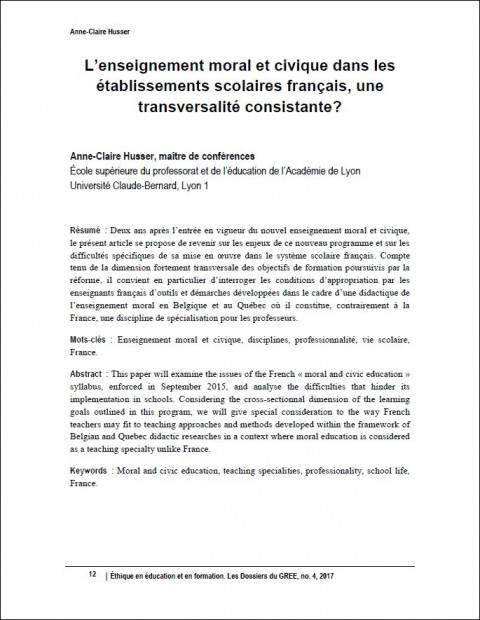
Moral and Civic Teaching in French Schools, a Consistant Transversality?
- ISBN
- ISSN 2561-1488 (numérique)
- 형태사항
- p. 12-29
- 원래 언어
- 프랑스어
- 발행 연도
- 2017
This paper will examine the issues of the French « moral and civic education » syllabus, enforced in September 2015, and analyse the difficulties that hinder its implementation in schools. Considering the cross-sectionnal dimension of the learning goals outlined in this program, we will give special consideration to the way French teachers may fit to teaching approaches and methods developed within the framework of Belgian and Quebec didactic researches in a context where moral education is considered as a teaching specialty unlike France.
관련 자료
-
 Study on the Historical Impact of the 1974 Recommendation concerning Education for International Understanding, Cooperation and Peace and Education relating to Human Rights and Fundamental Freedoms
 -
 IIEP-UNESCO 12th Medium-Term Strategy: 2026–2029
 -
 More than Welcome: Intercultural Integration of Migrants in and Through Higher Education
 -
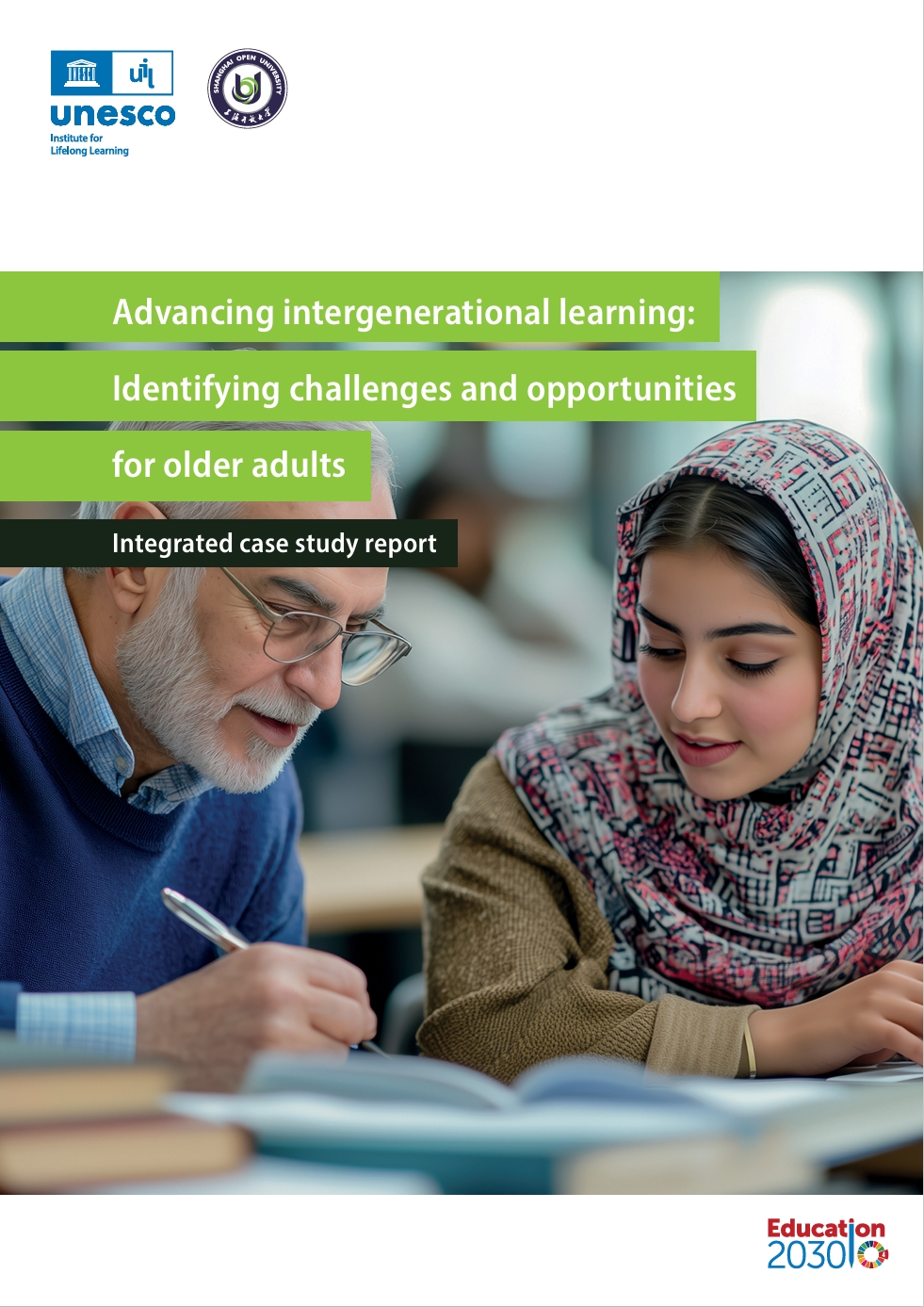 Advancing Intergenerational Learning: Identifying Challenges and Opportunities for Older Adults; Integrated Case Study Report