
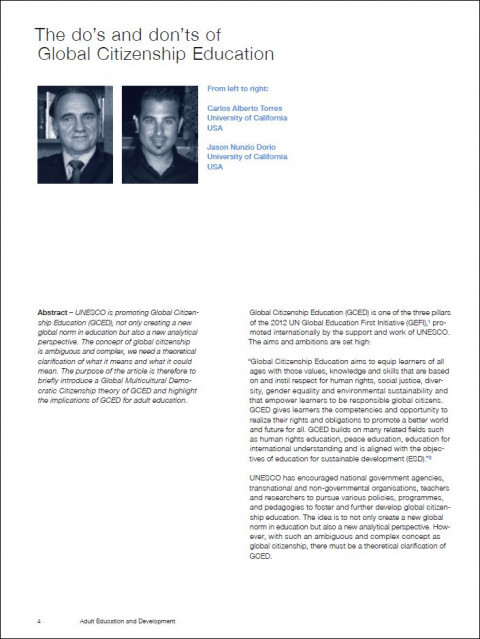
The Do's and Don’ts of Global Citizenship Education
- ISBN
- ISSN 0342-7633
- 형태사항
- p. 4-7
- 원래 언어
- 영어프랑스어스페인어
- 발행 연도
- 2015
UNESCO is promoting Global Citizenship Education (GCED), not only creating a new global norm in education but also a new analytical perspective. The concept of global citizenship is ambiguous and complex, we need a theoretical clarification of what it means and what it could mean. The purpose of the article is therefore to briefly introduce a Global Multicultural Democratic Citizenship theory of GCED and highlight the implications of GCED for adult education.
관련 자료
-
 IIEP-UNESCO 12th Medium-Term Strategy: 2026–2029
 -
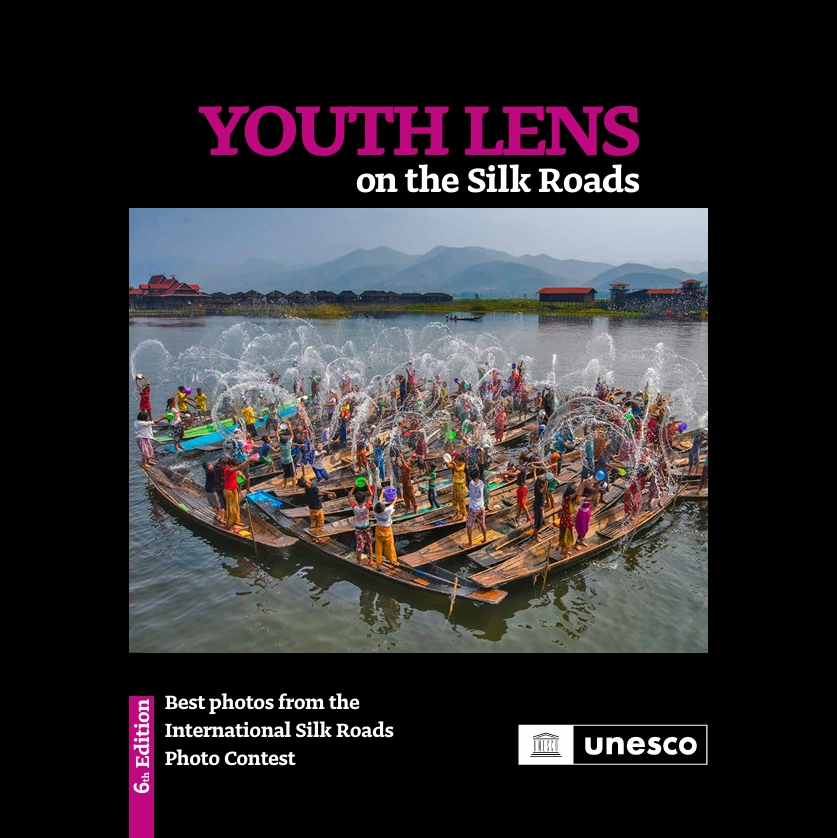 Youth Lens on the Silk Roads: Best Photos from the International Silk Roads Photo Contest; 6th Edition
 -
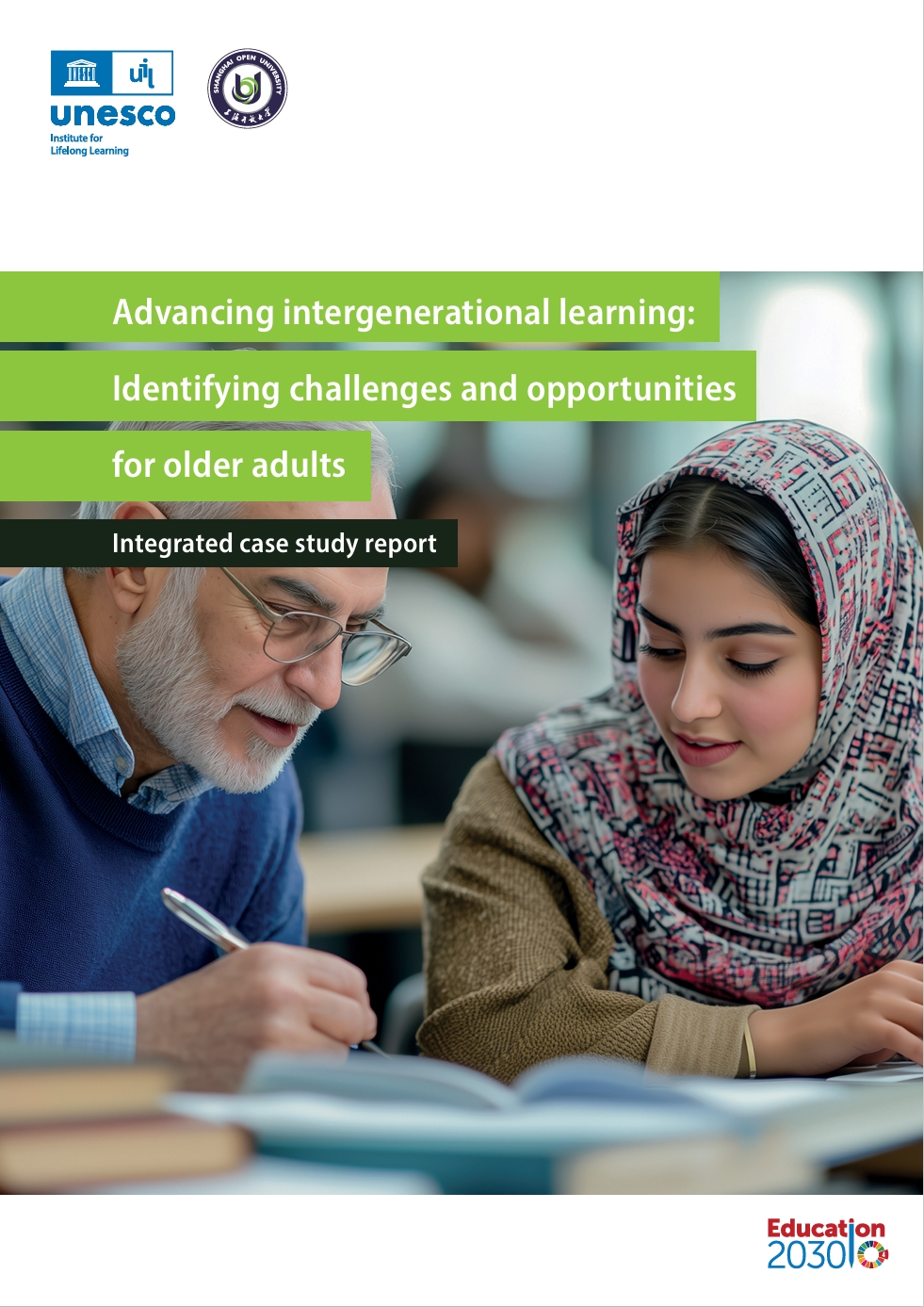 Advancing Intergenerational Learning: Identifying Challenges and Opportunities for Older Adults; Integrated Case Study Report
 -
 Digital Empowerment for Lifelong Learning and Transformative Andragogy (DELTA) for Adult Educators: Introduction to the DELTA Framework and Resources