
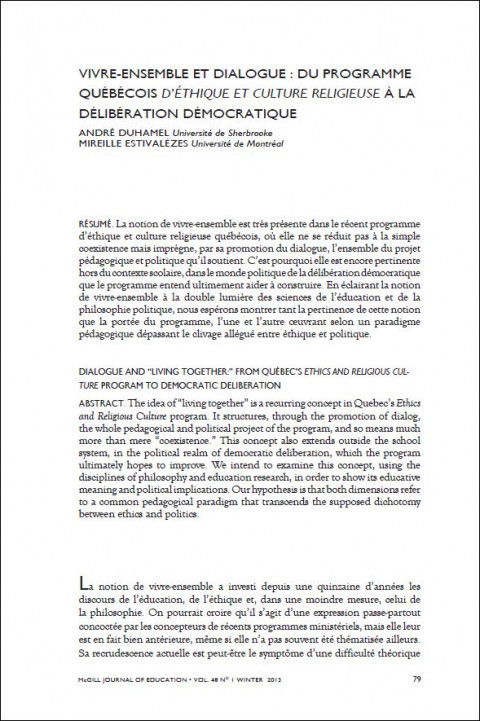
Dialogue and Living Together: From Québec’s Ethics and Religious Culture Program to Democratic Deliberation
- ISBN
- ISSN 1916-0666 (numérique)
- 형태사항
- p. 79–98
- 원래 언어
- 프랑스어
- 발행 연도
- 2013
The idea of “living together” is a recurring concept in Quebec’s Ethics and Religious Culture program. It structures, through the promotion of dialog, the whole pedagogical and political project of the program, and so means much more than mere “coexistence.” This concept also extends outside the school system, in the political realm of democratic deliberation, which the program ultimately hopes to improve. We intend to examine this concept, using the disciplines of philosophy and education research, in order to show its educative meaning and political implications. Our hypothesis is that both dimensions refer to a common pedagogical paradigm that transcends the supposed dichotomy between ethics and politics.
관련 자료
-
 IIEP-UNESCO 12th Medium-Term Strategy: 2026–2029
 -
 Advancing Intergenerational Learning: Identifying Challenges and Opportunities for Older Adults; Integrated Case Study Report
 -
 Digital Empowerment for Lifelong Learning and Transformative Andragogy (DELTA) for Adult Educators: Introduction to the DELTA Framework and Resources
 -
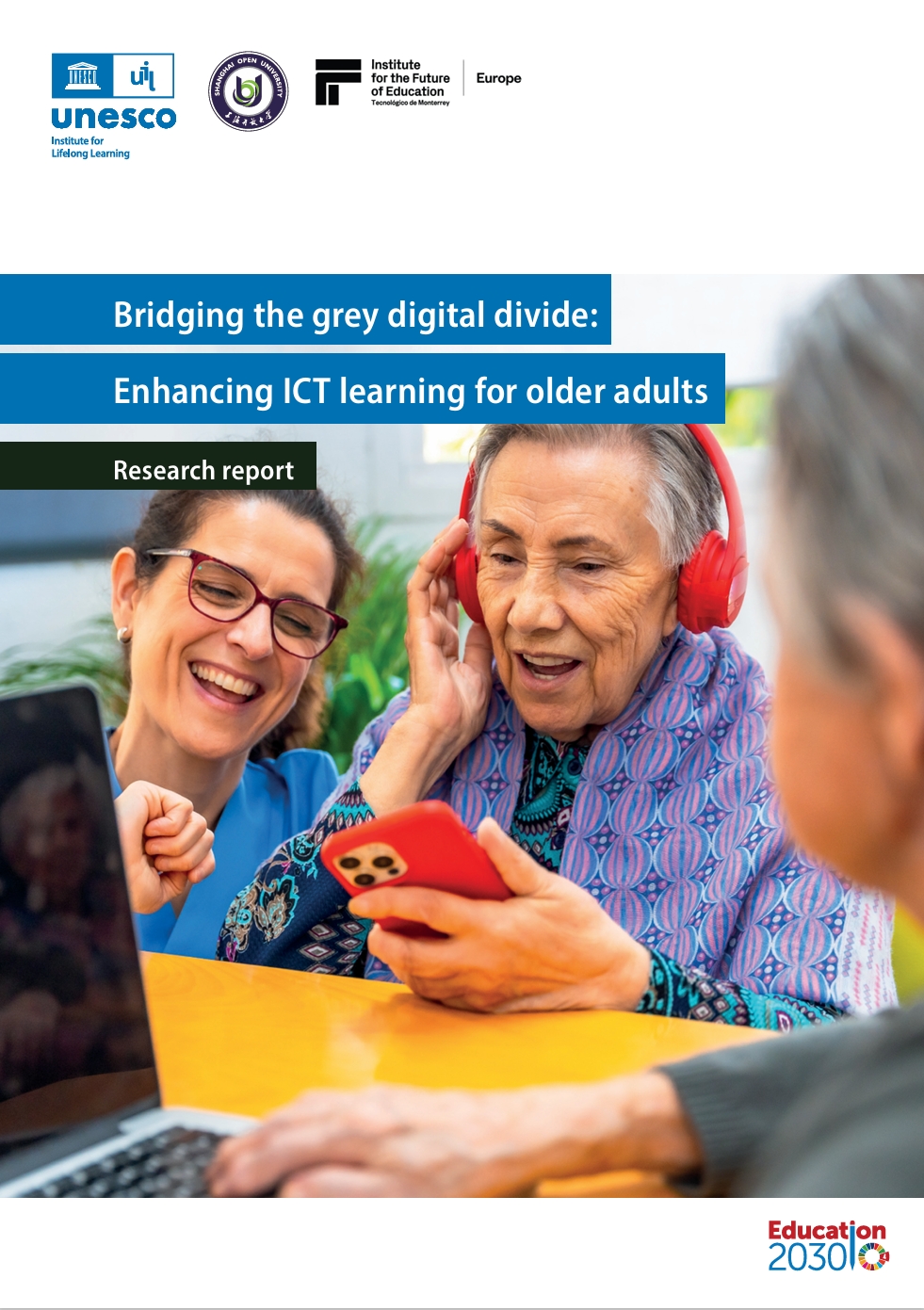 Bridging the Grey Digital Divide: Enhancing ICT Learning for Older Adults; Research Report