
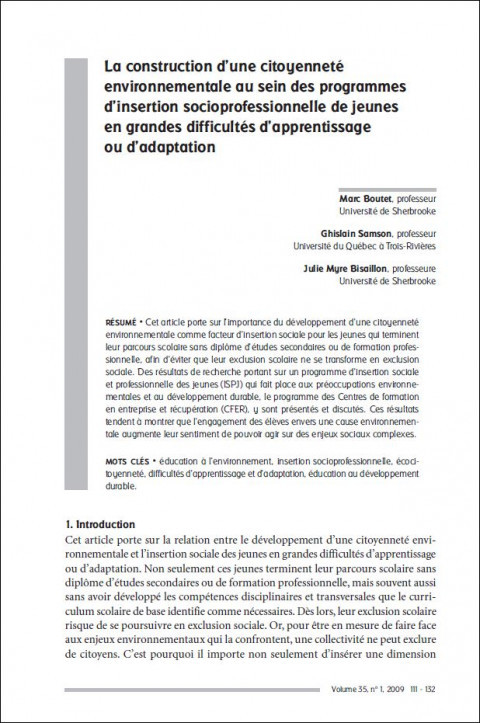
Constructing Environmental Citizenship through Socio-professional Insertion Programs for Youth with Severe Learning and Adaptation Difficulties
- ISBN
- ISSN 1705-0065 (numérique)
- 형태사항
- p. 111–132
- 원래 언어
- 프랑스어
- 발행 연도
- 2009
This article is about the importance of environmental citizenship as a factor of socio-professional insertion for students who terminate their schooling without a secondary or professional training diploma, in order to prevent that their school exclusion leads to a social exclusion. Results of a research on a socio-professional insertion program for youth that integrates environmental and sustainable development issues and the Corporate Training and Recuperation Centres Network (CFER) are presented and discussed. Those results tend to demonstrate that the students’ involvement in an environmental cause increases their empowerment towards complex social issues.
관련 자료
-
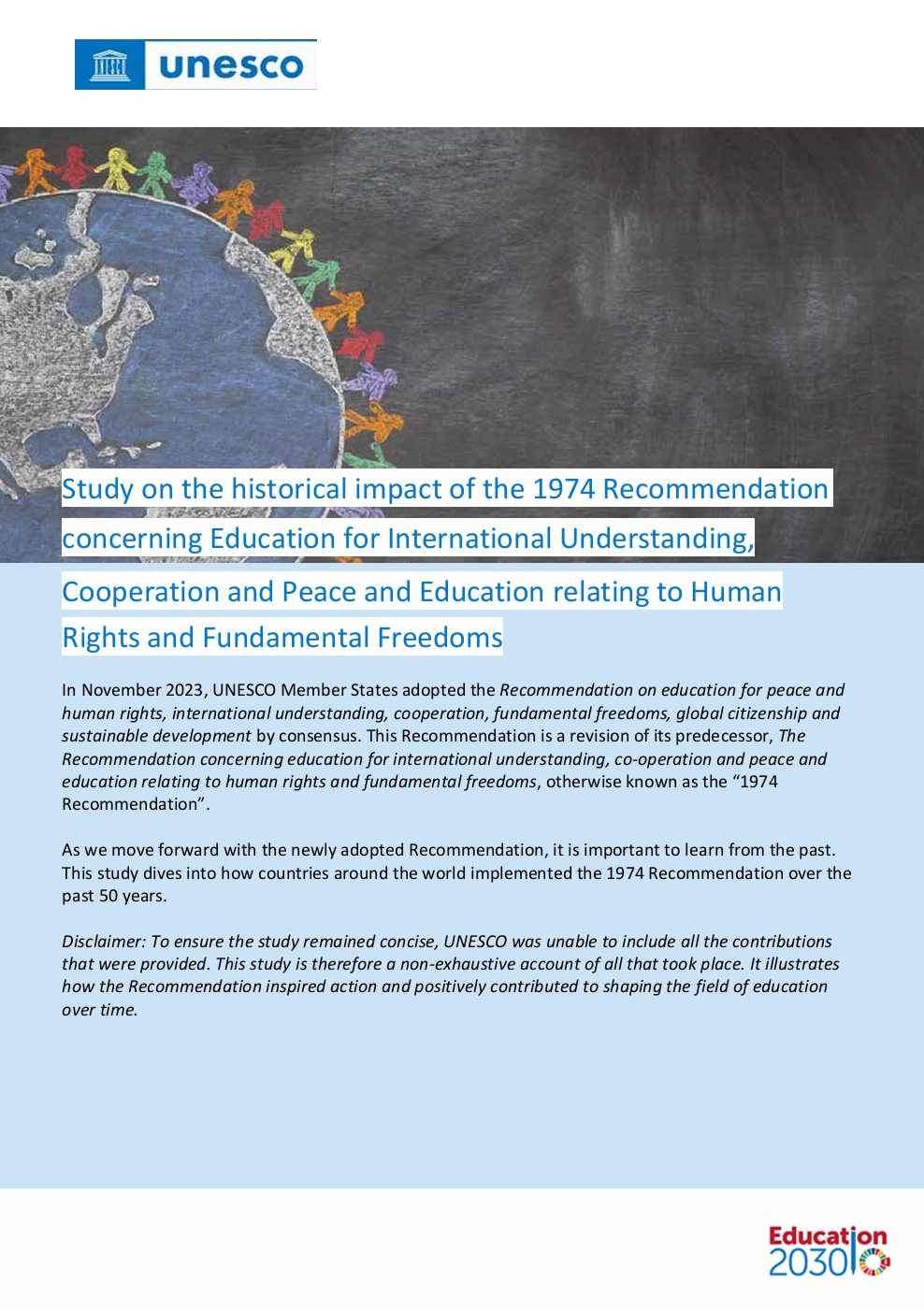 Study on the Historical Impact of the 1974 Recommendation concerning Education for International Understanding, Cooperation and Peace and Education relating to Human Rights and Fundamental Freedoms
 -
 IIEP-UNESCO 12th Medium-Term Strategy: 2026–2029
 -
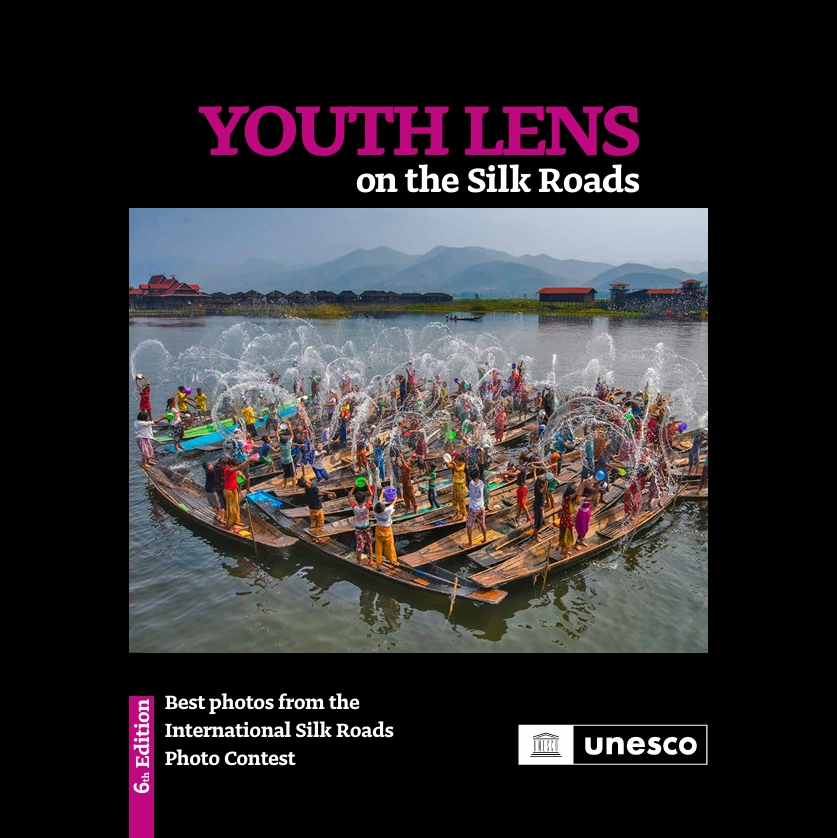 Youth Lens on the Silk Roads: Best Photos from the International Silk Roads Photo Contest; 6th Edition
 -
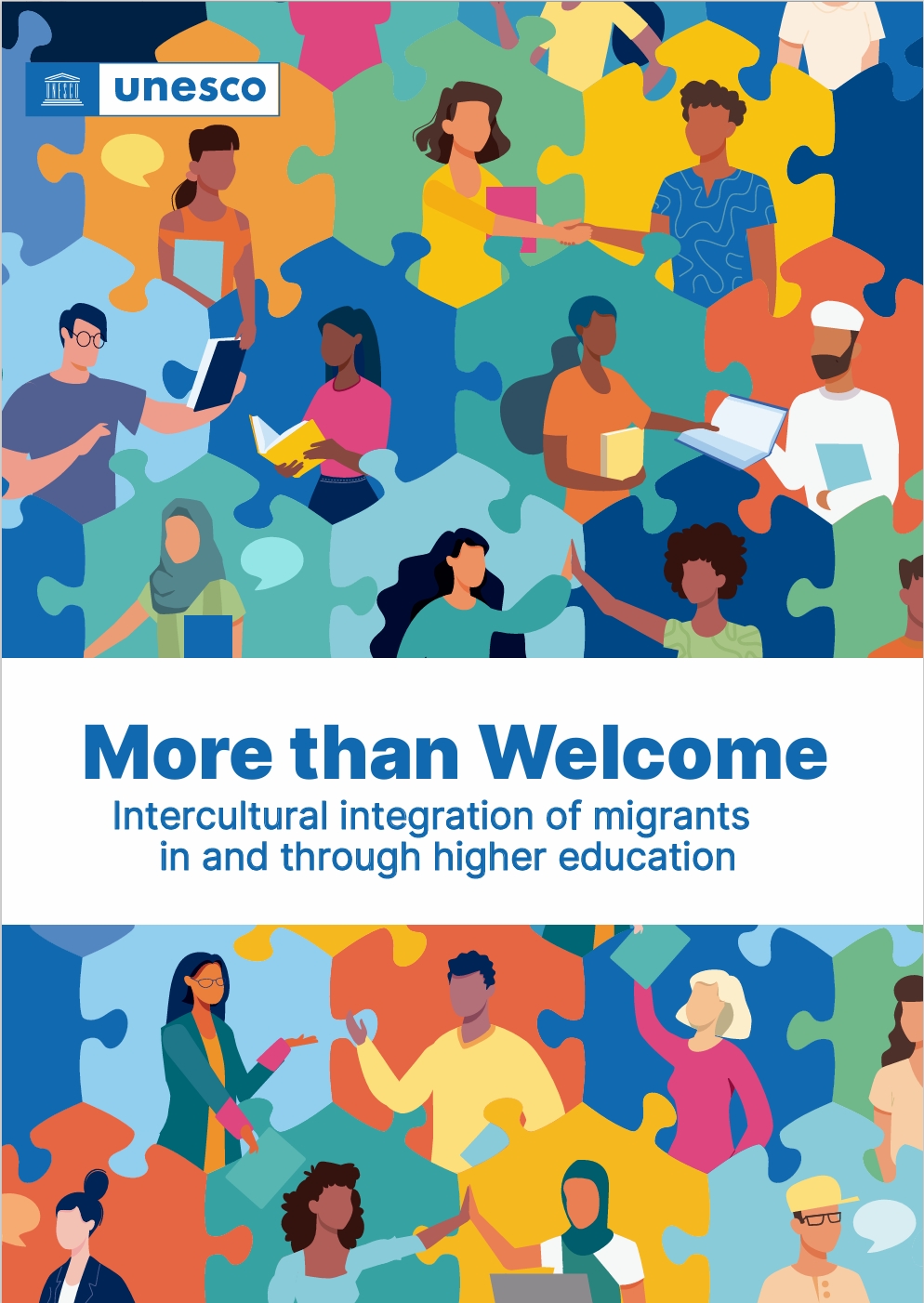 More than Welcome: Intercultural Integration of Migrants in and Through Higher Education