
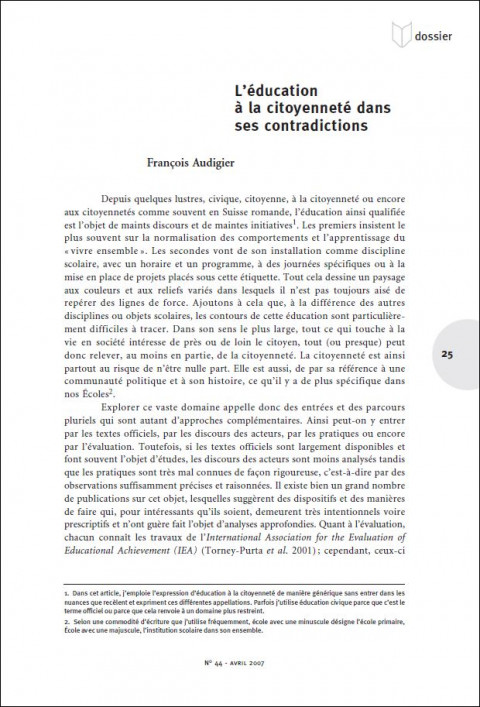
Citizenship Education and Its Contradictions
- ISBN
- ISSN 1254-4590
- 형태사항
- p. 25-34
- 원래 언어
- 프랑스어
- 발행 연도
- 2007
From design to implementation, citizenship education is fraught with tensions and contradictions. The concept of citizenship itself brings into play political, affective and legal aspects. Delivering citizenship education in schools raises several issues. At times treated as a subject area in its own right and at times taught using cross-disciplinary approaches, citizenship education addresses not only knowledge and skills, but also values and behaviour. The ends of citizenship education are ambitious, and often include aims that are difficult to reconcile with one another. In terms of how citizenship education is actually delivered, the once-systematic introduction to the legal and political systems has lost ground to the more recent priority of teaching students a sense of community.
관련 자료
-
 IIEP-UNESCO 12th Medium-Term Strategy: 2026–2029
 -
 Advancing Intergenerational Learning: Identifying Challenges and Opportunities for Older Adults; Integrated Case Study Report
 -
 Digital Empowerment for Lifelong Learning and Transformative Andragogy (DELTA) for Adult Educators: Introduction to the DELTA Framework and Resources
 -
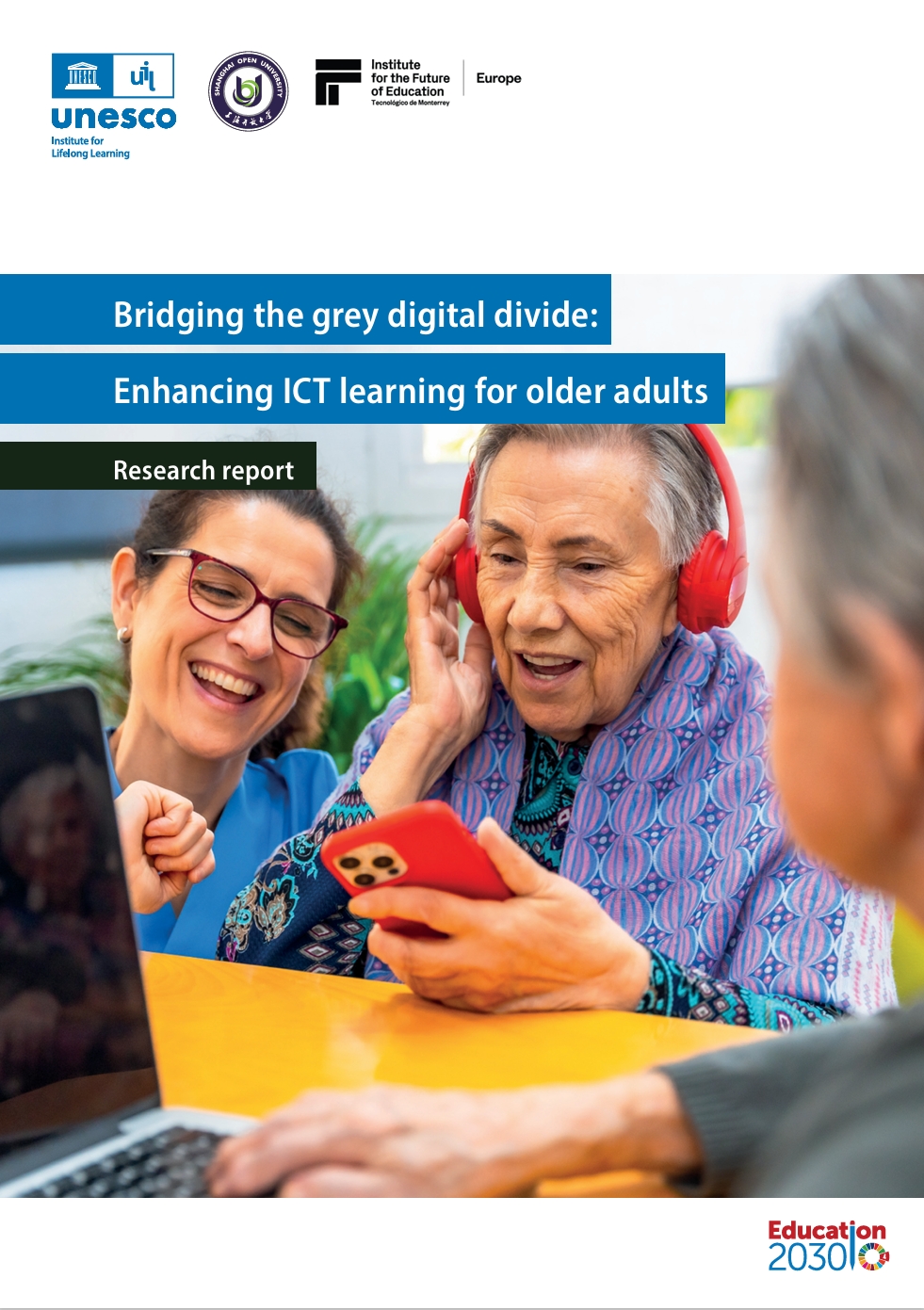 Bridging the Grey Digital Divide: Enhancing ICT Learning for Older Adults; Research Report