
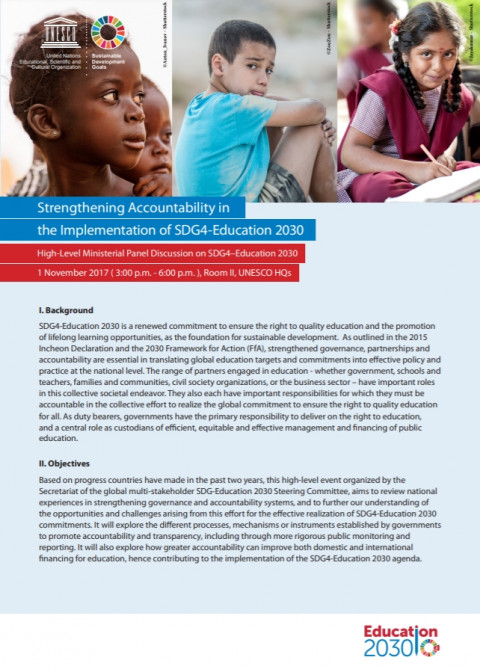
Strengthening accountability in the implementation of SDG4 - Education 2030
SDG4-Education 2030 is a renewed commitment to ensure the right to quality education and the promotion of lifelong learning opportunities, as the foundation for sustainable development. As outlined in the 2015 Incheon Declaration and the 2030 Framework for Action (FfA), strengthened governance, partnerships and accountability are essential in translating global education targets and commitments into effective policy and practice at the national level. The range of partners engaged in education - whether government, schools and teachers, families and communities, civil society organizations, or the business sector – have important roles in this collective societal endeavor. They also each have important responsibilities for which they must be accountable in the collective effort to realize the global commitment to ensure the right to quality education for all. As duty bearers, governments have the primary responsibility to deliver on the right to education, and a central role as custodians of efficient, equitable and effective management and financing of public education.
관련 자료
-
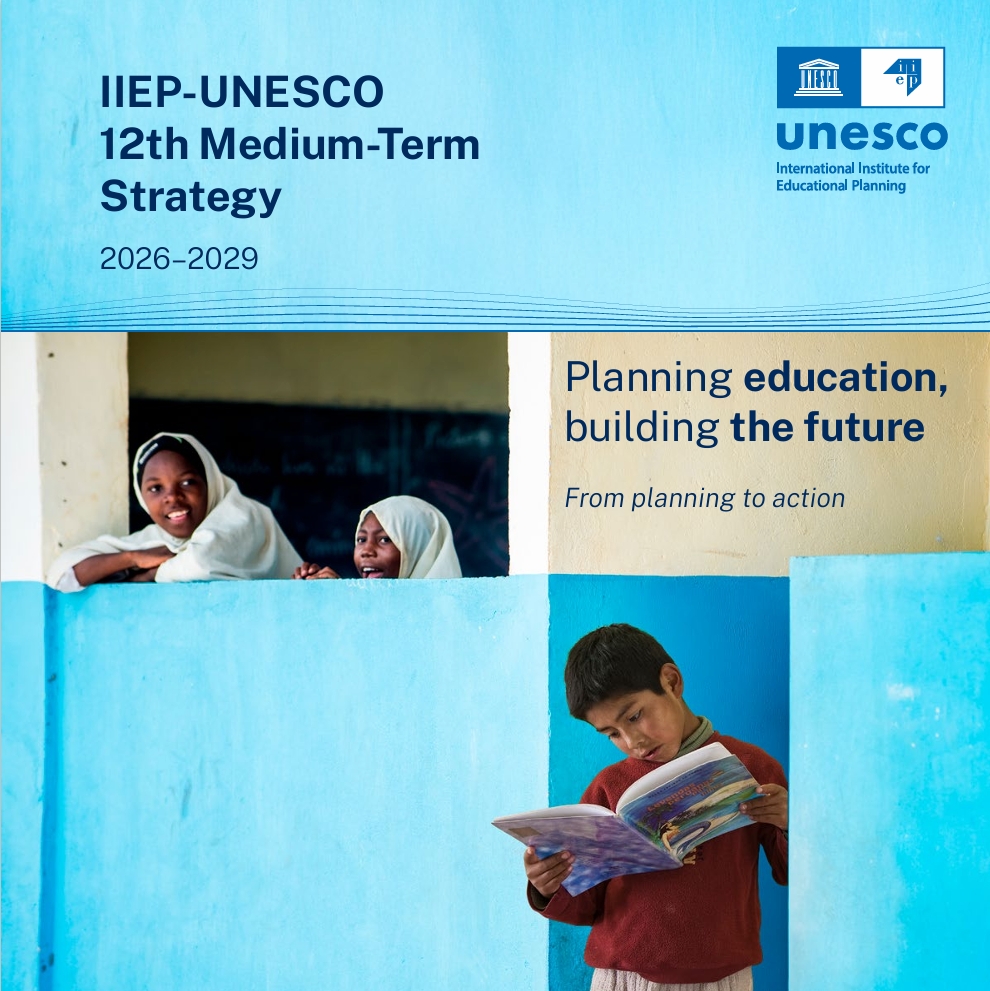 IIEP-UNESCO 12th Medium-Term Strategy: 2026–2029
 -
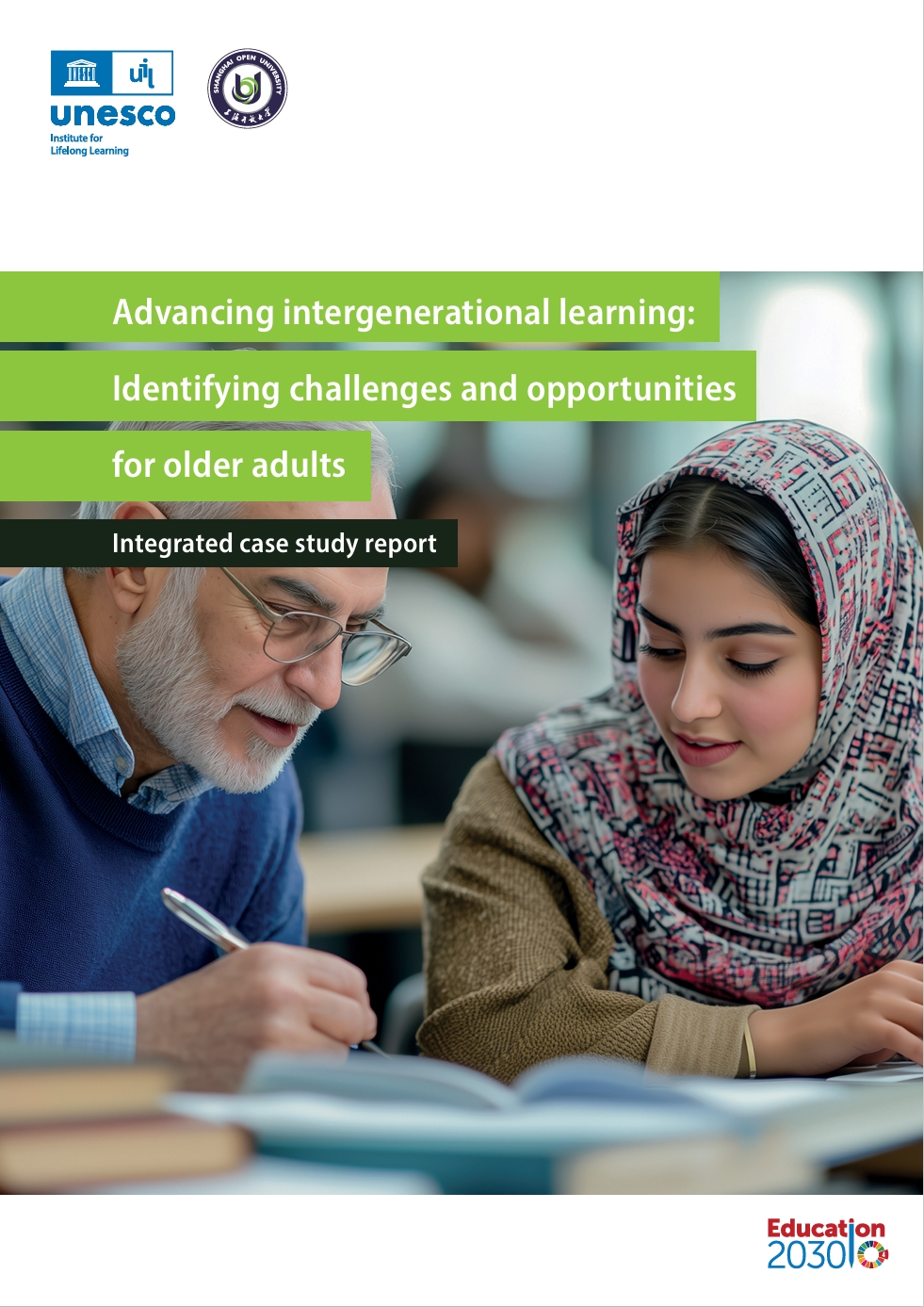 Advancing Intergenerational Learning: Identifying Challenges and Opportunities for Older Adults; Integrated Case Study Report
 -
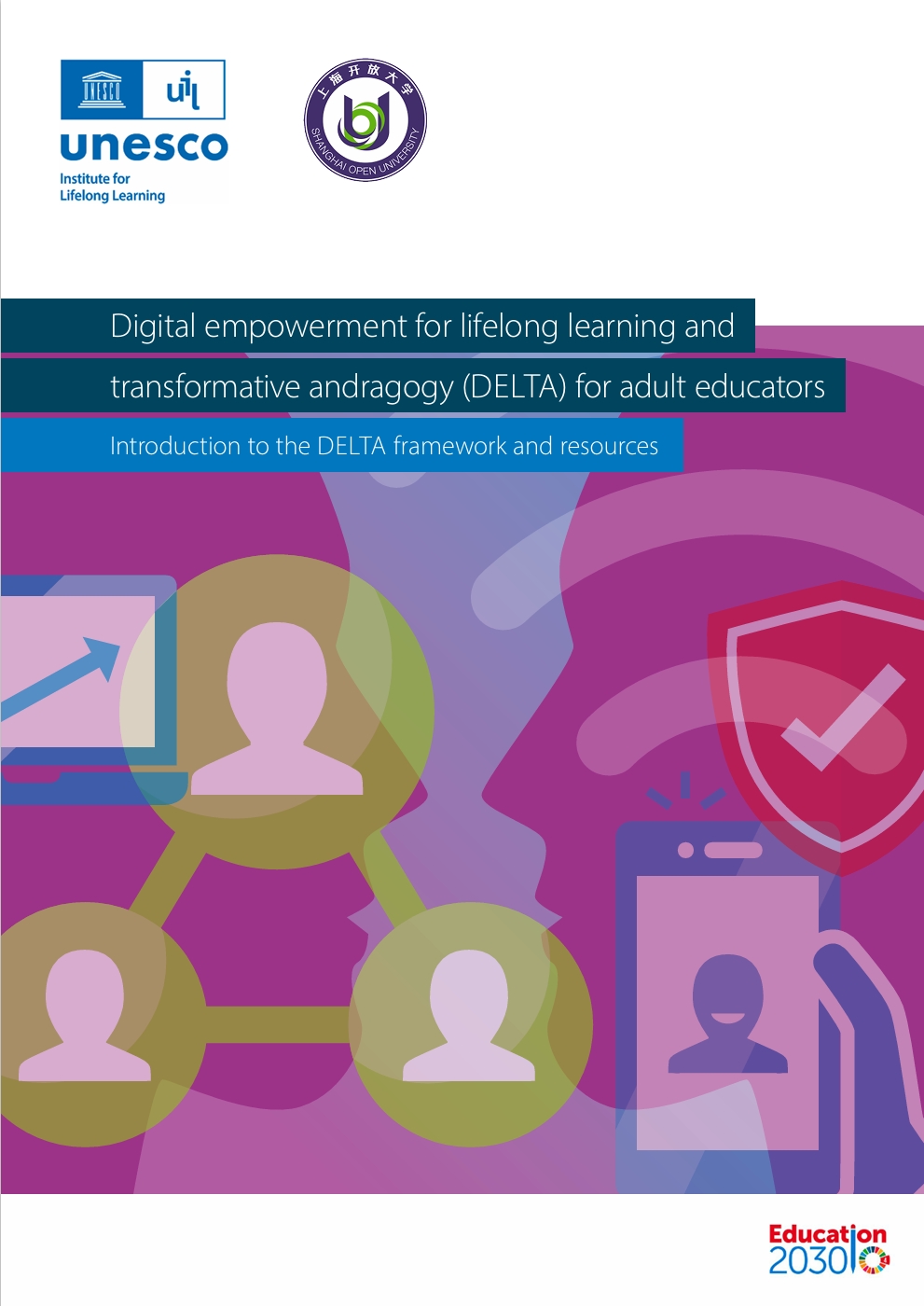 Digital Empowerment for Lifelong Learning and Transformative Andragogy (DELTA) for Adult Educators: Introduction to the DELTA Framework and Resources
 -
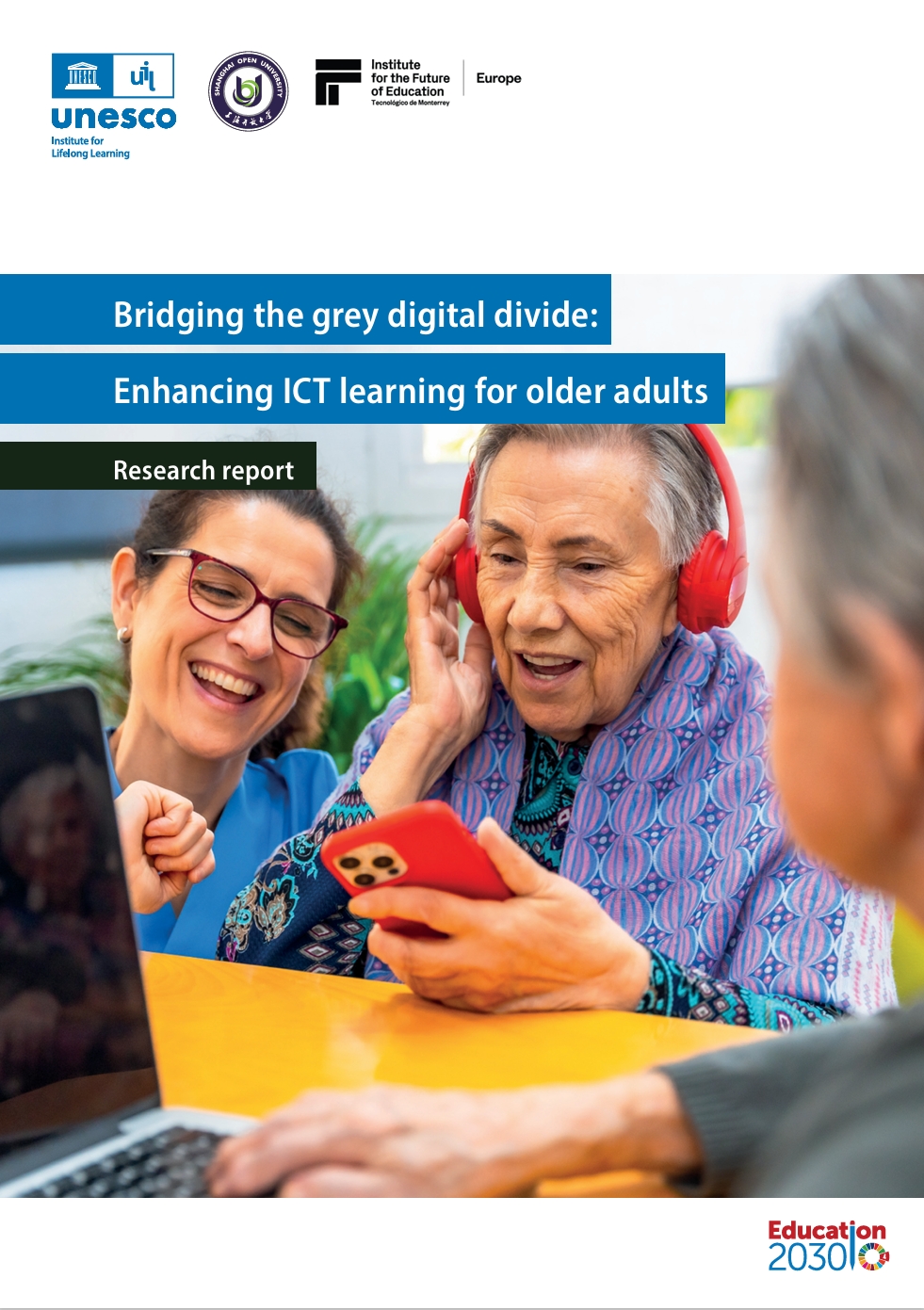 Bridging the Grey Digital Divide: Enhancing ICT Learning for Older Adults; Research Report