
자료
세계시민교육에 대한 이해를 넓히고 연구, 옹호 활동, 교수, 학습 등을 향상시킬 수 있는 다양하고 유용한 자료를 찾아보세요.
20 건의 결과가 검색되었습니다
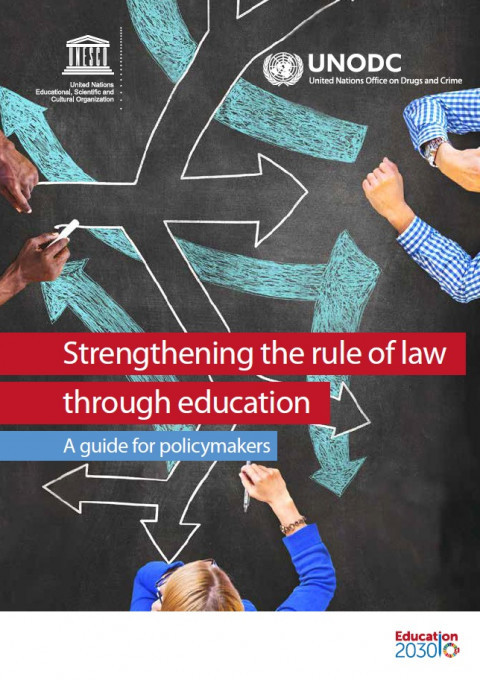 تعزيز سيادة القانون عن طريق التعليم: دليل لواضعي السياسات 발행 연도: 2019 단체 저자: UN. Office on Drugs and Crime (UNODC) | UNESCO لمنشور المشترك الجديد لليونسكو ومكتب الأمم المتحدة المعني بالمخدرات والجريمة بعنوان "تعزيز سيادة القانون من خلال التعليم: دليل لواضعي السياسات" يستكشف الدور الذي يمكن أن تلعبه المؤسسات التعليمية في تعزيز سيادة القانون وبناء أشكال جديدة من المشاركة على أساس المواطنة العالمية وحقوق الإنسان والإدماج - - جميعها حيوية للمضي قدمًا في تحقيق الهدف 4 من أهداف التنمية المستدامة بشأن التعليم ، في صميم خطة التنمية المستدامة لعام 2030.تعزيز سيادة القانون من خلال التعليم: دليل صانعي السياسات موجه لواضعي السياسات التعليمية وغيرهم من المهنيين العاملين في قطاع التعليم الرسمي ، داخل وزارات التعليم وخارجها ، والذين يسعون إلى تعزيز سيادة القانون وثقافة احترام القانون.قد يكون الدليل مفيدًا أيضًا للمهنيين العاملين في أماكن التعليم غير النظامي أو القطاعات الأخرى - وبالتحديد قطاعات العدالة والاجتماعية والصحية - في مجال منع الجريمة والعنف ، الذين يسعون إلى العمل بشكل أوثق مع قطاع التعليم.
 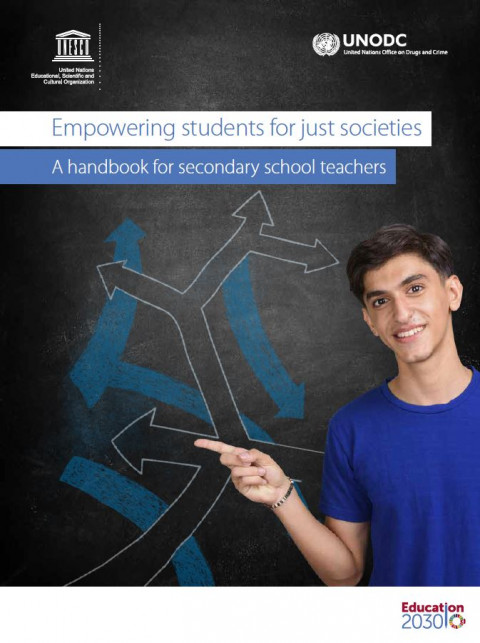 Empowering Students for Just Societies: A Handbook for Secondary School Teachers 발행 연도: 2019 단체 저자: UNESCO | UN. Office on Drugs and Crime (UNODC) The purpose of the handbook is to: Provide teachers with a selection of relevant and accessible in-classroom and out-of-classroom educational resources (summaries of short activities, lessons, units) that aim to instil the principles of the RoL among secondary school students. Assist teachers in applying the teaching resources to their local educational settings by providing ideas for adaptation for a variety of learning environments. This handbook provides: Summaries of existing teaching resources selected from UN agencies, INGOs, NGOs, and ministries that work to meet the learning outcomes on GCED for the RoL. Links to the original resource that offers additional learning opportunities. Tips and suggestions for adaptation, extension and cross-references of teaching resources; and Suggestions for learning assessment. This handbook can be useful for: Teachers and teacher trainers in formal school settings at the secondary school level. It encourages teachers to strengthen the RoL through education by integrating it into their lessons and planning. Professionals working in non-formal education or engaging with young people, for example, in sports associations, community organizations, social work and the justice sector. Parents seeking to raise empowered young citizens who actively contribute to peace and justice. Empoderar a los alumnos para crear sociedades justas: manual para docentes de educación secundaria 발행 연도: 2019 단체 저자: Organización de las Naciones Unidas para la Educación, la Ciencia y la Cultura (UNESCO) | UN. Office on Drugs and Crime (UNODC) Cuál es el objetivo de este manual? Su finalidad es: Proporcionar a los docentes diversos materiales didácticos relevantes y accesibles que pueden usarse tanto dentro como fuera del aula (resúmenes de actividades breves, unidades didácticas) dirigidos a transmitir los principios del estado de derecho a los alumnos de educación secundaria. Ayudar a los docentes en la aplicación de los materiales didácticos a su contexto educativo local ofreciendo ideas de adaptación para diversos entornos de prendizaje. El presente manual ofrece: Resúmenes de materiales didácticos procedentes de organismos de las Naciones Unidas, ONG, ONGI y ministerios encargados de lograr resultados educativos en materia de promoción del estado de derecho para la educación para la ciudadanía mundial; Enlaces a los recursos originales, donde pueden consultarse opciones de aprendizaje adicionales; Consejos y sugerencias para la adaptación y ampliación de los recursos didácticos, así como su cotejo con otros materiales; y Sugerencias para evaluar el aprendizaje. Puede resultar de utilidad a: Docentes y formadores de docentes en entornos educativos formales de educación secundaria. Anima a los docentes a fortalecer el estado de derecho a través de la educación intergrandolo en sus clases y planificaciones; Profesionales que trabajan en contextos educativos no formales o que están implicados con los jóvenes, por ejemplo, asociaciones deportivas, en organizaciones comunitarias, que hacen trabajo social y en el sector de justicia; Padres que desean criar a ciudadanos empoderados que contribuyan de forma activa a la paz y la justicia. 为学生赋能,建设公正社会: 中学教师手册 발행 연도: 2019 단체 저자: 联合国教科文组织 (UNESCO) | UN. Office on Drugs and Crime (UNODC) 该文件为中学阶段的教师提供一个公民教育指导手册,包含众多易于获取的教育资源,用于进行青少年公民教育。
 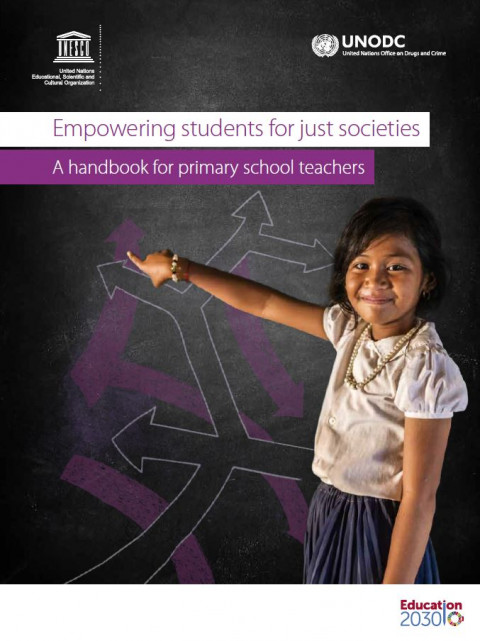 Empowering Students for Just Societies: A Handbook for Primary School Teachers 발행 연도: 2019 단체 저자: UNESCO | UN. Office on Drugs and Crime (UNODC) The purpose of the handbook is to: Provide teachers with a selection of relevant and accessible in-classroom and out-of-classroom educational resources (summaries of short activities, lessons, units) that aim to instil the principles of the RoL among primary school students. Assist teachers in applying the teaching resources to their local educational settings by providing ideas for adaptation for a variety of learning environments. This handbook provides: Summaries of existing teaching resources selected from UN agencies, INGOs, NGOs, and ministries that work to meet the learning outcomes on GCED for the RoL. Links to the original resource that offers additional learning opportunities. Tips and suggestions for adaptation, extension and cross-references of teaching resources; and Suggestions for learning assessment. This handbook can be useful for: Teachers and teacher trainers in formal school settings at the primary school level. It encourages teachers to strengthen the RoL through education by integrating it into their lessons and planning. Professionals working in non-formal education or engaging with young people, for example, in sports associations, community organizations, social work and the justice sector. Parents seeking to raise empowered young citizens who actively contribute to peace and justice. Empoderar a los alumnos para crear sociedades justas: manual para docentes de educación primaria 발행 연도: 2019 단체 저자: Organización de las Naciones Unidas para la Educación, la Ciencia y la Cultura (UNESCO) | UN. Office on Drugs and Crime (UNODC) ¿Cuál es el objetivo de este manual? Su finalidad es: Proporcionar a los docentes diversos recursos educativos relevantes y accesibles que pueden usarse tanto dentro como fuera del aula (resúmenes de actividades breves, planes de clase) dirigidos a transmitir los principios del estado de derecho a los alumnos de educación primaria. Ayudar a los docentes en la aplicación de los materiales didácticos a su contexto educativo local ofreciendo ideas de adaptación para diversos entornos de aprendizaje. El presente manual ofrece: Resúmenes de materiales didácticos procedentes de organismos de las Naciones Unidas, ONG, ONGI y ministerios encargados de lograr resultados educativos en materia de promoción del estado de derecho para la educación para la ciudadanía mundial; Enlaces a los recursos originales, donde pueden consultarse opciones de aprendizaje adicionales; Consejos y sugerencias para la adaptación y ampliación de los recursos didácticos, así como su cotejo con otros materiales; y Sugerencias para evaluar el aprendizaje. Puede resultar de utilidad a: Docentes y formadores de docentes en entornos educativos formales de educación primaria. Anima a los docentes a fortalecer el estado de derecho a través de la educación intergrandolo en sus clases y planificaciones; Profesionales que trabajan en contextos educativos no formales o que están implicados con los jóvenes, por ejemplo, en asociaciones deportivas, en organizaciones comunitarias, que hacen trabajo social y en el sector de justicia; Padres que desean criar a ciudadanos empoderados que contribuyan de forma activa a la paz y la justicia. 为学生赋能,建设公正社会: 小学教师手册 발행 연도: 2019 단체 저자: 联合国教科文组织 (UNESCO) | UN. Office on Drugs and Crime (UNODC) 该文件为小学阶段的教师提供一个公民教育指导手册,包含众多易于获取的教育资源,用于进行青少年公民教育。
 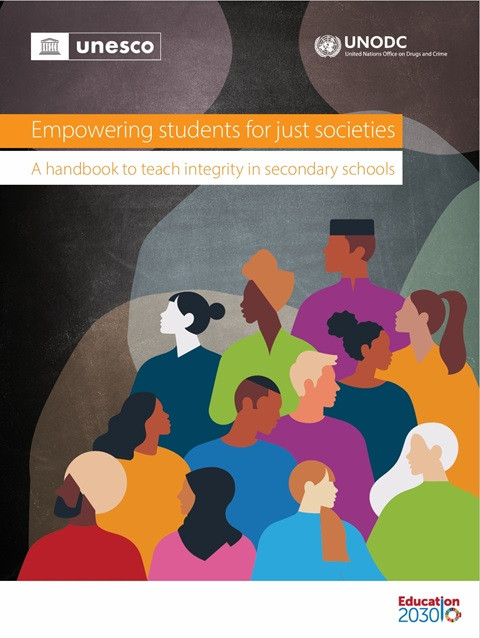 Empowering Students for Just Societies: A Handbook to Teach Integrity in Secondary Schools 발행 연도: 2024 단체 저자: UNESCO | UN. Office on Drugs and Crime (UNODC) The importance of education lies in its power to shape the values of upcoming generations and equip them with the knowledge to make informed decisions. Contemporary challenges, including corruption must be addressed through education, transparency, accountability and the rule of law, among other efforts. This joint publication by UNODC and UNESCO is a response to this important issue. It is aimed at educators who are striving to inspire and prepare future generations to actively contribute to societies grounded in integrity, ethics and respect for the rule of law. The handbook builds on the first two launched in 2019. This publication highlights the transformative power of education in strengthening the knowledge, skills, attitudes and values necessary for addressing global challenges, especially those that stem from a lack of integrity, like corruption. It underlines the crucial role education plays in nurturing critical thinking, empathy, ethical behaviour, and a commitment to justice and equality among people. The handbook presents a catalogue of educational activities, lesson plans and outside the classroom resources designed to empower youth to reject corrupt practices and become agents of change, promoting integrity and upholding democratic values.
  Asia-Pacific Migration Report 2024: Assessing Implementation of the Global Compact for Migration 발행 연도: 2024 단체 저자: UN. Economic and Social Commission for Asia and the Pacific (UN. ESCAP) | International Labour Organization (ILO) | International Organization for Migration (IOM) | UN. Office of the United Nations High Commissioner for Human Rights (UN. OHCHR) | United Nations Centre for Human Settlement Programme (UN Habitat) | United Nations Entity for Gender Equality and the Empowerment of Women (UN Women) | United Nations Development Programme (UNDP) | UNESCO | UN. Office of the United Nations High Commissioner for Refugees (UNHCR) | UN. Office on Drugs and Crime (UNODC) | World Bank This report aims to assess the state of GCM implementation in the region, its progress and its challenges since the first Asia-Pacific Regional Review of Implementation of the Global Compact for Migration in 2021, in which a Chair’s summary was adopted. Chapters 2 to 5 each consider clusters of GCM objectives, as presented in General Assembly resolution 73/326 and following the same groupings as in the Asia-Pacific Migration Report (APMR) 2020. These chapters open with a summary of the discussions from the first regional review of the GCM, held in 2021, drawing from the Chair’s summary. Chapter 6 provides overarching recommendations to support and accelerate GCM implementation in Asia and the Pacific. At the end of the report are annexes with information on the GCM objectives and guiding principles, references to migration in Voluntary National Reviews to the High-Level Political Forum on Sustainable Development, and GCM pledges at the level of the State or City, Municipality and Local Authority.
 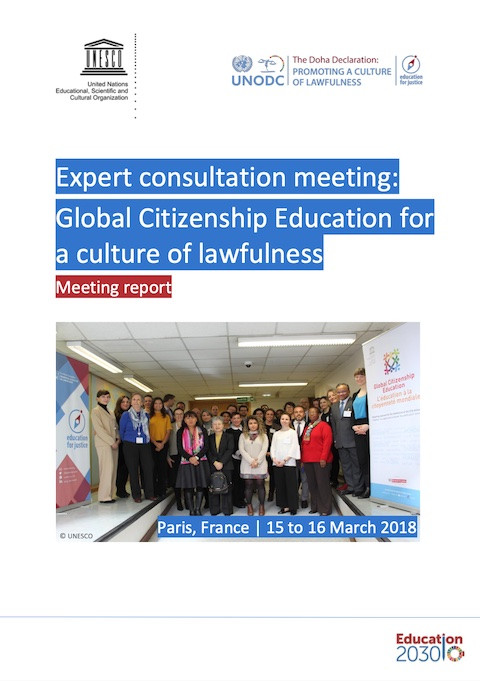 Expert Consultation Meeting: Global Citizenship Education for a Culture of Lawfulness; Meeting Report 발행 연도: 2018 단체 저자: UNESCO | UN. Office on Drugs and Crime (UNODC) In the context of a UNESCO/UNODC partnership on “Global Citizenship Education for a Culture of Lawfulness”, an expert consultation meeting was held in Paris on March 15 and 16 of 2018. The purpose of the partnership is to strengthen the capacities of educational systems to promote the rule of law. To this end, the partnership aims to empower and equip learners to act and engage in society as constructive and ethically responsible agents of change, supporting peace, justice, and strong institutions. This notably contributes to the achievement of the 2030 Agenda for Sustainable Development, and in particular Sustainable Development Goals 4 and 16. Additionally, the partnership intends to enable learners to be both motivated and capable to respond resiliently to crime and violence. The meeting had three broad objectives: To help clarify the conceptual foundation of the partnership; to identify the measures that can be taken in the education sector to promote a culture of lawfulness; and to identify effective educational approaches. Thus, the meeting is meant to elucidate core concepts and identify promising educational approaches in the promotion of a culture of lawfulness by asking fundamental questions, including: What constitutes the rule of law and a culture of lawfulness? How do we create demand for the rule of law? How do we ensure learners apply these principles? How do we ensure they survive in a context where there is no rule of law?