
자료
세계시민교육에 대한 이해를 넓히고 연구, 옹호 활동, 교수, 학습 등을 향상시킬 수 있는 다양하고 유용한 자료를 찾아보세요.
27 건의 결과가 검색되었습니다
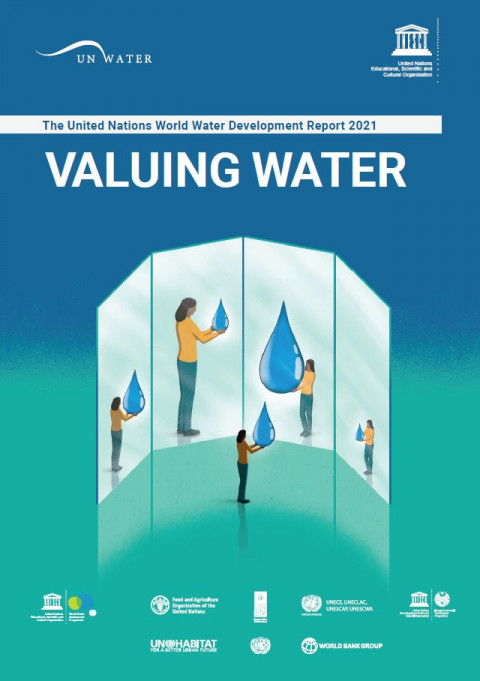 The United Nations World Water Development Report 2021: Valuing Water 발행 연도: 2021 단체 저자: UNESCO World Water Assessment Programme (WWAP) The 2021 edition of the United Nations World Water Development Report focuses on valuing water. There is enough water for all provided we use and manage it efficiently. But we don’t. We invest too little, and ineffectively. We use too much water, creating scarcities. Quality is suffering and so is the environment.The value we place on water varies, depending upon who is using it, and why. Value can be a guide to what our goals should be, what actions are needed, and where we should invest. Many of our problems arise because we don’t value water highly enough; all too often water is not valued at all.This report explains various approaches to valuing water for environmental considerations, water-related infrastructure, drinking water, sanitation and hygiene. It looks at valuation issues in food and agriculture, business, industry, energy and financing. And it highlights the perspectives of different value systems and cultures, and associated social and gender-based considerations.
 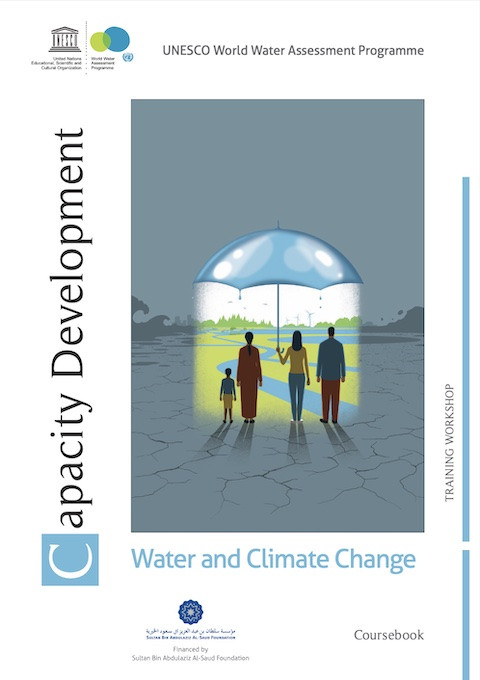 الميا ه وتغير المناخ كتاب التدريب 발행 연도: 2020 단체 저자: UNESCO World Water Assessment Programme (WWAP) تقرير الأمم المتحدة العالمي عن تنمية الموارد المائية هو التقرير الرئيسي الذي تصدره آلية الأمم المتحدة للمياه بشأن قضايا المياه والصرف الصحي، وهو يركز في كل عام على موضوع مختلف. وتتولى اليونسكو نشر التقرير، باسم الآلية، ويضطلع برنامج اليونسكو العالمي لتقييم الموارد المائية بتنسيق عملية إعداده وإصداره. ويوفر التقرير رؤية متعمقة بشأن الاتجاهات الرئيسية المتعلقة بحالة المياه العذبة وخدمات الصرف الصحي واستخدامها وإدارتها، بالاستناد إلى العمل الذي يقوم به أعضاء آلية الأمم المتحدة للمياه وشركاؤها. والتقرير، الذي يصدر بالاقتران مع اليوم العالمي للمياه، يزود صانعي القرار بالمعارف والأدوات اللازمة لصياغة وتنفيذ سياسات مستدامة بشأن المياه. وهو يطرح كذلك أفضل الممارسات والتحليلات المتعمقة حفزًا للأفكار والإجراءات من أجل الارتقاء بالإدارة في قطاع المياه وغيره من القطاعات.وتبين طبعة عام 2020 من التقرير العالمي عن تنمية الموارد المائية، التي تحمل عنوان ‘‘المياه وتغير المناخ’’، الروابط البالغة الأهمية التي تربط بين المياه وتغير المناخ في سياق برنامج التنمية المستدامة الأع ّم. ويقدم التقرير، الذي تدعمه أمثلة من جميع أنحاء العالم، وصفًا لكل من التحديات التي يفرضها تغير المناخ والفرص التي يتيحها، ويعرض إجراءات يمكن اتخاذها على صعيد الاستجابة - من حيث التكيف والتخفيف وتحسين القدرة على الصمود - من خلال تعزيز إدارة الموارد المائية، وتخفيف المخاطر المتعلقة بالمياه، وتحسين سبل حصول الجميع على إمدادات المياه وخدمات الصرف الصحي بطريقة مستدامة. وهو يتناول العلاقات المتداخلة بين المياه والناس والبيئة والاقتصاد في ظل مناخ متغير، ويوضح الكيفية التي يمكن بها لتغير المناخ أن يكون حافزًا إيجابيًا على تحسين إدارة المياه وحوكمتها وتمويلها من أجل إيجاد عالم مستدام ومزدهر للجميع.ويقدم التقرير مساهمة لقاعدة المعارف المتعلقة بتغير المناخ تركز على المياه وتستند إلى الحقائق. وهو مك ِمل للتقييمات العلمية القائمة ومص َّمم لدعم الأطر السياسية الدولية، بهدف مساعدة الأوساط المعنية بالمياه على التصدي للتحديات التي يطرحها تغير المناخ، وإطلاع الأوساط المعنية بتغير المناخ على الفرص التي يوفرها تحسين إدارة المياه من حيث التكيف مع تغير المناخ والتخفيف من آثاره. Water and Climate Change: Coursebook 발행 연도: 2020 단체 저자: UNESCO World Water Assessment Programme (WWAP) The United Nations World Water Development Report (WWDR) is UN-Water’s flagship report on water and sanitation issues, focusing on a different theme each year. The report is published by UNESCO, on behalf of UN-Water and its production is coordinated by the UNESCO World Water Assessment Programme. The report gives insight on main trends concerning the state, use and management of freshwater and sanitation, based on work done by the Members and Partners of UN-Water. Launched in conjunction with World Water Day, the report provides decision-makers with knowledge and tools to formulate and implement sustainable water policies. It also offers best practices and in-depth analyses to stimulate ideas and actions for better stewardship in the water sector and beyond.The 2020 edition of the WWDR, titled ‘Water and Climate Change’ illustrates the critical linkages between water and climate change in the context of the broader sustainable development agenda. Supported by examples from across the world, it describes both the challenges and opportunities created by climate change, and provides potential responses – in terms of adaptation, mitigation and improved resilience – that can be undertaken by enhancing water resources management, attenuating water-related risks, and improving access to water supply and sanitation services for all in a sustainable manner. It addresses the interrelations between water, people, environment and economics in a changing climate, demonstrating how climate change can be a positive catalyst for improved water management, governance and financing to achieve a sustainable and prosperous world for all.The report provides a fact-based, water-focused contribution to the knowledge base on climate change. It is complementary to existing scientific assessments and designed to support international political frameworks, with the goals of helping the water community tackle the challenges of climate change, and informing the climate change community about the opportunities that improved water management offers in terms of adaptation and mitigation.
 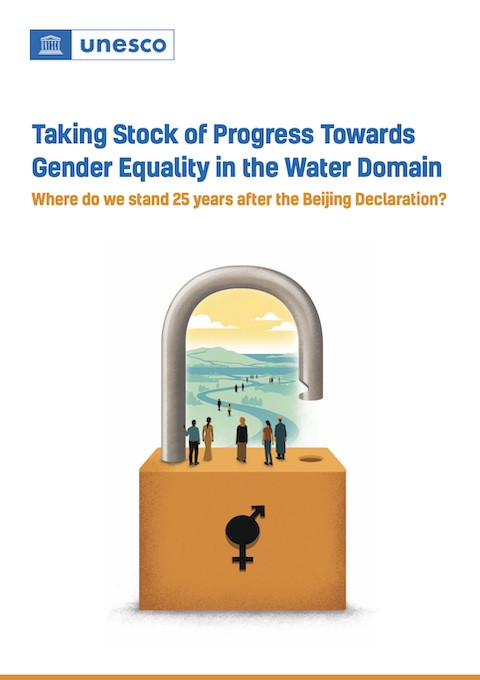 Taking Stock of Progress Towards Gender Equality in the Water Domain: Where Do We Stand 25 Years After the Beijing Declaration? 발행 연도: 2021 단체 저자: UNESCO World Water Assessment Programme (WWAP) Women are not only the main persons responsible for water collection in many parts of the world, but they also possess invaluable knowledge with regard to water resources and play a key role in water and sanitation management at the local and community levels. Accordingly, women must be able to enjoy equal access to water and also have an equal say in the management and governance of water resources. Twenty-five years after the Beijing Declaration and Platform for Action, progress towards gender equality through the fulfilment of the basic right to water and sanitation is clearly off track.Despite advances at the policy level in acknowledging the need to progress towards gender equality in the water sector – and the resulting benefits – large gender inequalities persist in practice. Women are generally under-represented in terms of participation at all levels: from institutional bodies that manage national or transboundary waters, to water-related institutions such as governmental water agencies and water utilities, to local water management institutions.This report provides a detailed overview of the existing and emerging challenges to gender equality in the water domain with a particular focus on: access to water, sanitation and hygiene (WASH), health, employment,climate change management, water governance, education and training, and data collection and funding. Systematic and sustained efforts to eliminate these inequalities are essential to achieve meaningful and lasting gender equality in the water sector, and to promote sustainable development in general.Governments, international organizations, professionals and policy-makers in the water sector, academia and NGOs are invited to join forces to accelerate the achievement of gender equality in water for a more just, sustainable and peaceful future.
  [Facts and Figures] The United Nations World Water Development Report 2019: Leaving No One Behind; Facts and Figures 발행 연도: 2019 저자: Engin Koncagül | Michael Tran | Richard Connor | Stefan Uhlenbrook 단체 저자: UNESCO World Water Assessment Programme (WWAP) Water availability and demandFigure 1 provides a global overview of countries experiencing different levels of water stress (the ratio of total freshwater withdrawn annually by all major sectors, including environmental water requirements, to the total amount of renewable freshwater resources, expressed as a percentage).Over 2 billion people live in countries experiencing high water stress. Recent estimates show that 31 countries experience water stress between 25% (which is defined as the minimum threshold of water stress) and 70%. Another 22 countries are above 70% and are therefore under serious water stress (UN, 2018a).Growing water stress indicates substantial use of water resources, with greater impacts on resource sustainability, and a rising potential for conflicts among users.It has been estimated that about 4 billion people, representing nearly two-thirds of the world population, experience severe water scarcity during at least one month of the year (Mekonnen and Hoekstra, 2016).
  [Summary] The United Nations World Water Development Report 2019: Leaving No One Behind; Executive Summary 발행 연도: 2019 저자: Richard Connor | Stefan Uhlenbrook | Engin Koncagül 단체 저자: UNESCO World Water Assessment Programme (WWAP) People from different groups are ‘left behind’ for different reasons. Discrimination, exclusion, marginalization, entrenched power asymmetries and material inequalities are among the main obstacles to achieving the human rights to safe drinking water and sanitation for all and realizing the water-related goals of the 2030 Agenda. Poorly designed and inadequately implemented policies, inefficient and improper use of financial resources, as well as policy gaps fuel the persistence of inequalities in access to safe drinking water and sanitation. Unless exclusion and inequality are explicitly and responsively addressed in both policy and practice, water interventions will continue to fail to reach those most in need and who are likely to benefit most.Improving water resources management and providing access to safe and affordable drinking water and sanitation for all is essential for eradicating poverty, building peaceful and prosperous societies, and ensuring that ‘no one is left behind’ on the road towards sustainable development. These goals are entirely achievable, provided there is a collective will to do so. [Resumen] Informe Mundial de las Naciones Unidas sobre el Desarrollo de los Recursos Hídricos 2019:no dejar a nadie atrás, resumen ejecutivo 발행 연도: 2019 저자: Richard Connor | Stefan Uhlenbrook | Engin Koncagül 단체 저자: UNESCO World Water Assessment Programme (WWAP) Personas de distintos grupos “se quedan atrás” por diferentes motivos. Discriminación, exclusión, marginación, asimetrías de poder arraigadas y desigualdades materiales se encuentran entre los principales obstáculos para lograr los derechos humanos al agua potable segura y al saneamiento para todos y para alcanzar los objetivos relacionados con el agua de la Agenda 2030. Las políticas mal diseñadas y aplicadas de manera inadecuada, un uso ineficaz e inadecuado de los recursos financieros, así como las brechas en las políticas, alimentan la persistencia de las desigualdades en el acceso al agua potable segura y al saneamiento. A menos que la exclusión y la desigualdad se aborden de forma explícita y responsable tanto en las políticas como en la práctica, las intervenciones sobre el agua seguirán fracasando a la hora de llegar a los más necesitados y a quienes probablemente beneficiarían más.Mejorar la gestión de los recursos hídricos y facilitar el acceso al agua potable y saneamiento seguros y asequibles para todo el mundo es esencial para erradicar la pobreza, construir sociedades pacíficas y prósperas y garantizar que “no dejar a nadie atrás” en el camino hacia un desarrollo sostenible. Estos objetivos son plenamente alcanzables, siempre que exista la voluntad colectiva de hacerlo. [Résumé] Rapport mondial des Nations Unies sur la mise en valeur des ressources en eau 2019: ne laisser personne pour compte; résumé 발행 연도: 2019 저자: Richard Connor | Stefan Uhlenbrook | Engin Koncagül 단체 저자: UNESCO World Water Assessment Programme (WWAP) Le fait que des personnes de différents groupes soient « laissées pour compte » s’explique par plusieurs facteurs. La discrimination, l’exclusion, la marginalisation, des rapports de force asymétriques et les inégalités matérielles figurent parmi les principaux obstacles à la réalisation des droits de l’homme à l’eau potable et à l’assainissement pour tous et aux objectifs du Programme 2030 relatifs à l’eau. En outre, la mauvaise conception des politiques et leur application insuffisante, l’utilisation inefficace et inadéquate des ressources financières, ainsi que les lacunes politiques, alimentent les inégalités dans l’accès à l’eau potable et à l’assainissement. Si l’exclusion et l’inégalité ne sont pas traitées de manière explicite et adaptée dans les politiques et les pratiques, les interventions dans le domaine de l’eau continueront de ne pas bénéficier à ceux qui en ont le plus besoin et qui sont susceptibles d’en tirer le plus profit.Améliorer la gestion des ressources en eau et garantir l’accès universel à une eau potable et à des installations sanitaires sécuritaires, à un coût abordable, sont essentiels pour éliminer la pauvreté, bâtir des sociétés pacifiques et prospères et assurer de « ne laisser personne pour compte » sur la voie du développement durable. Ces objectifs sont tout à fait réalisables, à condition qu’il y ait une volonté collective d’agir. [요약보고서] 2019년 UN 세계물개발보고서: 누구도 소외되지 않는 사회; 요약보고서 발행 연도: 2019 저자: Richard Connor | Stefan Uhlenbrook | Engin Koncagül 단체 저자: UNESCO World Water Assessment Programme (WWAP) 여러 그룹의 사람들은 다양한 이유로 ‘소외’되고 있다. 차별, 배제, 소외, 집권층 권력의 불균형 및 경제적 불평등은 안전한 식수 및 위생에 대한 인권을 달성하고, 2030 아젠다의 물 관련 목표를 실현하는 데 있어 걸림돌이 된다. 설계가 잘못되고, 부적절하게 구현된 정책, 비효율적이고 부당한 재정 자원 사용과 더불어 정책 격차는 안전한 식수 및 위생 시설 접근에 대한 불평등을 지속시킨다. 배제와 불평등 문제가 정책과 실행에서 분명하고, 신속하게 고려되지 않는다면, 물조정 노력 (water interventions)은 물을 가장 필요로 하고 혜택을 가장 많이 받을 수 있는 사람들에게 계속해서 그 효과를 주지 못할 것이다.수자원 관리를 개선하고 모든 사람에게 안전하고 경제적인 식수 및 위생 시설을 제공하는 것은 빈곤 퇴치, 평화롭고 번영하는 사회 형성, 지속 가능한 발전을 위한 ‘누구도 소외되지 않는 사회’ 구축에 필수적이다. 이러한 목표는 공동의 의지가 있는 한 전적으로 달성 가능할 것이다. [Pабочее резюме] Всемирный доклад Организации Объединенных Наций о состоянии водных ресурсов, 2019 г. : Не оставляя никого в стороне, рабочее резюме 발행 연도: 2019 저자: Richard Connor | Stefan Uhlenbrook | Engin Koncagül 단체 저자: UNESCO World Water Assessment Programme (WWAP) Представители различных групп «бывают забыты» по разным причинам. Дискриминация, отчуждение, маргинализация, укоренившаяся асимметричность в распределении власти, материальное неравенство – все это относится к числу основных препятствий на пути соблюдения права человека на безопасную питьевую воду и санитарию для всех, а также реализации связанных с водными ресурсами целей, поставленных в Повестке-2030.Плохо разработанная и неумело осуществляемая политика, бесхозяйственное и нецелевое использование финансовых ресурсов, а также пробелы в политике подпитывают сохранение неравенства в сфере доступа к водным ресурсам и санитарии. Если для решения проблем отчуждения и неравенства в политике и на практике не будут приниматься конкретные и ответственные меры, связанные с водными ресурсами мероприятия по-прежнему не будут отвечать интересам наиболее нуждающихся слоев и тех, кто должен быть их основными бенефициарами.Совершенствование управления водными ресурсами и обеспечение всеобщего доступа к безопасной и финансово доступной питьевойводе и санитарии имеет существенно важное значение для искоренения нищеты, созидания мирных и процветающих обществ и обеспечения такого положения, при котором «никто не будет забыт» на пути, ведущем к устойчивому развитию. При наличии коллективной воли эти цели вполне достижимы.