
자료
세계시민교육에 대한 이해를 넓히고 연구, 옹호 활동, 교수, 학습 등을 향상시킬 수 있는 다양하고 유용한 자료를 찾아보세요.
90 건의 결과가 검색되었습니다
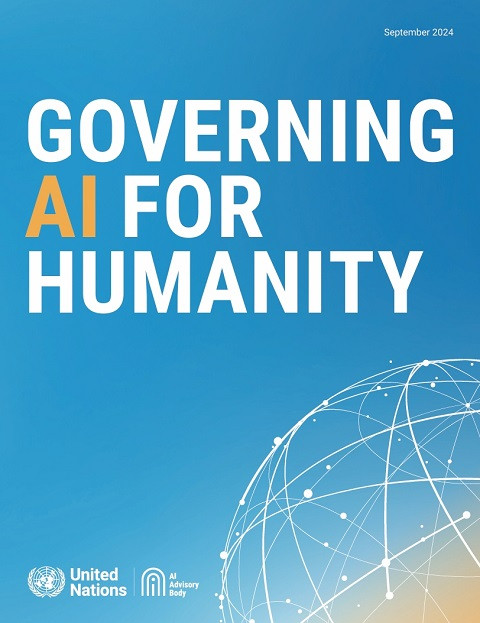 Governing AI for Humanity: Final Report 발행 연도: 2024 단체 저자: United Nations (UN) The United Nations Secretary-General’s High-level Advisory Body on AI’s Final Report, “Governing AI for Humanity,” builds on months of work, including extensive global consultations, and the publication of an interim report in December 2023. Proposals for Global Governance on AI This report outlines a blueprint for addressing AI-related risks and sharing its transformative potential globally, including by:• Urging the UN to lay the foundations of the first globally inclusive and distributed architecture for AI governance based on international cooperation;• Proposing seven recommendations to address gaps in current AI governance arrangements;• Calling on all governments and stakeholders to work together in governing AI to foster development and protection of all human rights. This includes light institutional mechanisms to complement existing efforts and foster inclusive global AI governance arrangements that are agile, adaptive and effective to keep pace with AI’s evolution. Extensive Global Consultations The report is the product of extensive consultations, involving more than 2,000 participants across all regions of the world, including via: • 18 deep-dive discussions on key issues with top experts• More than 50 consultation sessions across all regions• More than 250 written submissions from over 150 organizations and 100 individuals The Advisory Body also commissioned an AI Risk Global Pulse Check – the most comprehensive global horizon scanning exercise on AI risks to date – and an AI Opportunity Scan to crowdsource expert assessments of emerging AI trends.
 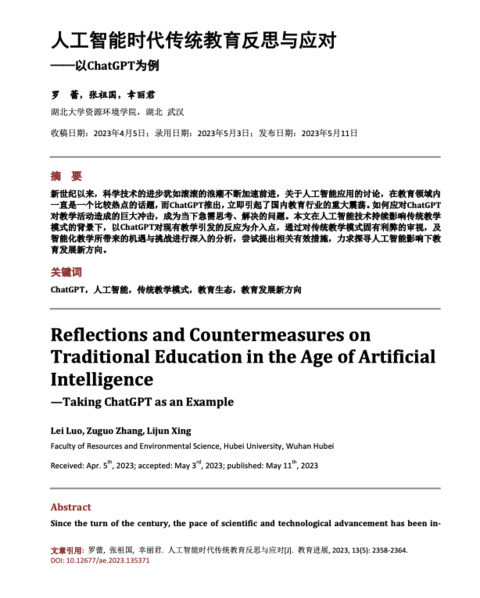 Reflections and Countermeasures on Traditional Education in the Age of Artificial Intelligence: Taking ChatGPT as an Example (Advances in Education; Vol.13, No.5) 발행 연도: 2023 저자: 罗蕾 | 张祖国 | 幸丽君 Since the turn of the century, the pace of scientific and technological advancement has been increasing rapidly, like a rolling wave gaining momentum. As a result, the topic of artificial intelli-gence and its potential applications has remained a hot topic in the field of education. The introduction of ChatGPT had an immediate and significant impact on the domestic education industry. Addressing how to manage this impact on teaching activities has become an urgent issue that requires prompt consideration and resolution. In light of the ongoing impact of artificial intelligence technology on traditional teaching methods, this article focuses on ChatGPT’s response as an intervention point, delving into a thorough analysis of the inherent strengths and weaknesses of traditional teaching modes, as well as the opportunities and challenges presented by intelligent teaching. Through our analysis of artificial intelligence, we aim to propose effective measures and explore new directions for the development of education in its influence. 人工智能时代传统教育反思与应对: 以ChatGPT为例 (教育进展; Vol.13, No.5) 발행 연도: 2023 저자: 罗蕾 | 张祖国 | 幸丽君 新世纪以来,科学技术的进步犹如滚滚的浪潮不断加速前进,关于人工智能应用的讨论,在教育领域内一直是一个比较热点的话题,而ChatGPT推出,立即引起了国内教育行业的重大震荡。如何应对ChatGPT对教学活动造成的巨大冲击,成为当下急需思考、解决的问题。本文在人工智能技术持续影响传统教学模式的背景下,以ChatGPT对现有教学引发的反应为介入点,通过对传统教学模式固有利弊的审视,及智能化教学所带来的机遇与挑战进行深入的分析,尝试提出相关有效措施,力求探寻人工智能影响下教育发展新方向。
 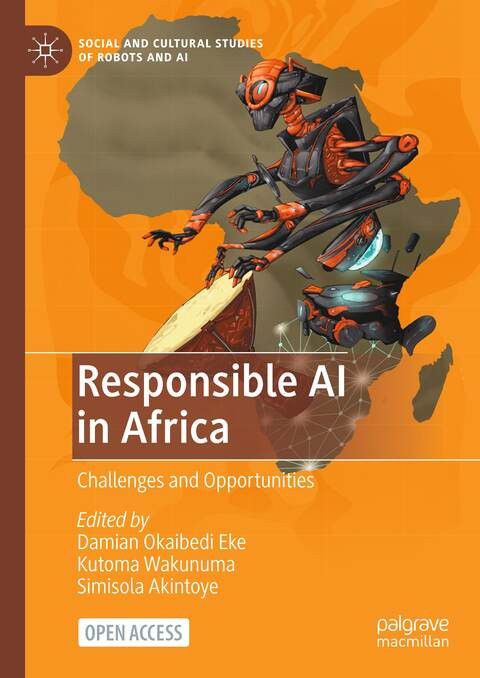 Responsible AI in Africa: Challenges and Opportunities 발행 연도: 2023 단체 저자: Palgrave Macmillan This open access book contributes to the discourse of Responsible Artificial Intelligence (AI) from an African perspective. It is a unique collection that brings together prominent AI scholars to discuss AI ethics from theoretical and practical African perspectives and makes a case for African values, interests, expectations and principles to underpin the design, development and deployment (DDD) of AI in Africa. The book is a first in that it pays attention to the socio-cultural contexts of Responsible AI that is sensitive to African cultures and societies. It makes an important contribution to the global AI ethics discourse that often neglects AI narratives from Africa despite growing evidence of DDD in many domains. Nine original contributions provide useful insights to advance the understanding and implementation of Responsible AI in Africa, including discussions on epistemic injustice of global AI ethics, opportunities and challenges, an examination of AI co-bots and chatbots in anAfrican work space, gender and AI, a consideration of African philosophies such as Ubuntu in the application of AI, African AI policy, and a look towards a future of Responsible AI in Africa.
 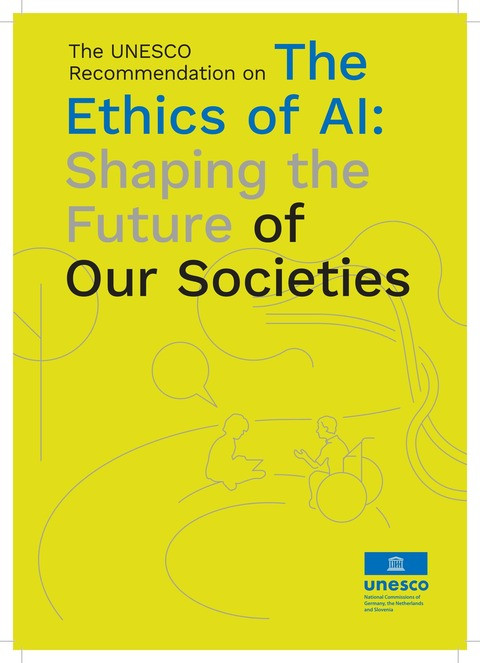 The UNESCO Recommendation on the Ethics of AI: Shaping the Future of Our Societies 발행 연도: 2023 단체 저자: German Commission for UNESCO | Netherlands National Commission for UNESCO | Slovenian National Commission for UNESCO The UNESCO commissions of Germany, the Netherlands and Slovenia with the support of IRCAI have jointly published a brochure on the UNESCO recommendation on the ethics of artificial intelligence. It summarizes the most important content in a compact manner and presents the central demands from the areas of health, culture, the environment, gender equality as well as education and research. The recommendation with its diverse topics is not only relevant for political experts, but it offers one for various areas of application of the ethical framework and thus serves as an orientation for dealing with AI in general. The brochure is available for the wider public in a number of formats including the original Adobe InDesign file that allows translations to be inserted and format pages, resulting in new versions of the brochure. Therefore, we strongly encourage all UNESCO Commissions from across all UNESCO regions Africa, Arab States, Asia and the Pacific, Europe and North America, Latin America and the Caribbean to use the text in the basic files and translate the content into their own languages, including using the graphic file to setup their own designs of the brochure.
 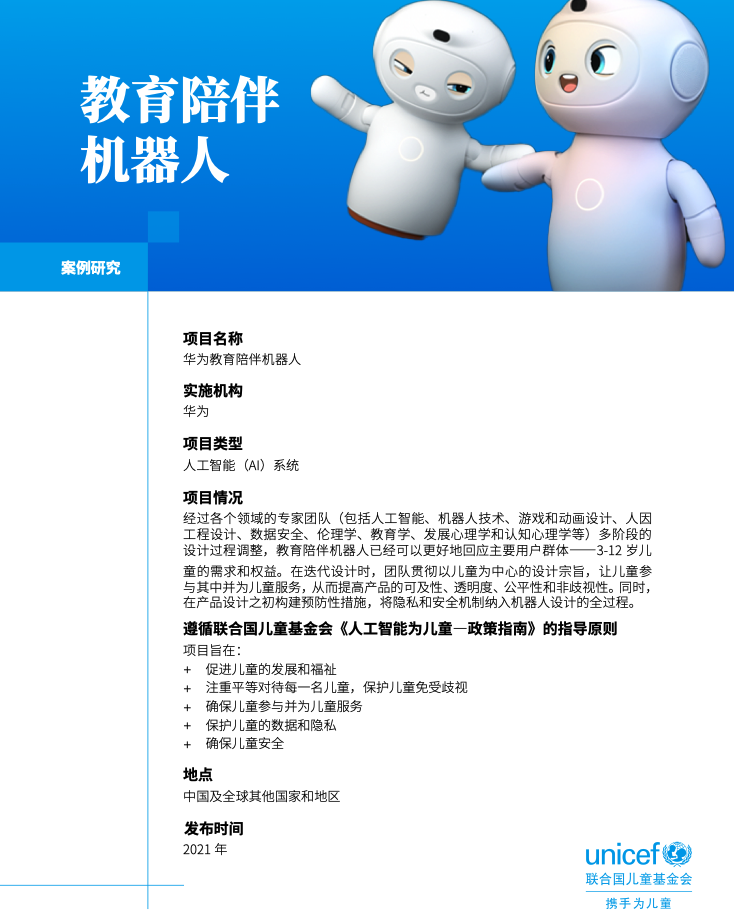 人工智能为儿童 발행 연도: 2023 在芬兰政府的支持下,联合国儿童基金会于2020年发布了《人工智能为儿童——政策指南》,并于2021年发布2.0版本,鼓励商界在各自领域进行试点,并公开分享研究结果。这是两份描述联合国儿童基金会《人工智能为儿童——政策指南》的应用情况、展现其应用结果的案例研究。研究由中国传媒大学(CUC)在中国网络社会组织联合会(CFIS)的指导下和联合国儿童基金会驻华办事处的支持下开展,由埃莱奥诺·鲍威尔斯(Eleonore Pauwels)执笔,说明了如何将指南中所述的、“以儿童为中心”的原则嵌入人工智能系统相关产品的开发、设计和推广的全过程中。 相关人工智能系统产品由企业生产,并为企业所有。联合国儿童基金会未参与该过程的任一阶段。本项目提及特定公司并不意味着联合国儿童基金会认可该公司的政策和做法。 联合国儿童基金会鼓励开源学习平台的设计、制作和传播。
  Global Research Policy & Practices Report: Advancing Artificial Intelligence-Supported Global Digital Citizenship Education 발행 연도: 2022 단체 저자: UNESCO Institute for Information Technologies in Education (IITE) | Shanghai Open University The UNESCO Institute for Information Technologies in Education (IITE) was established as an integral part of UNESCO by the General Conference of UNESCO at its 29th session November 1997) and is located in Moscow, Russian Federation. IITE is the only UNESCO Category 1 Institute that holds a global mandate for ICT in education.In line with the new Education 2030 Agenda, IITE has developed its strategic priority areas to meet new demands and tasks ahead. The mission of IITE in the new era is promoting the innovative use of ICT and serving as facilitator and enabler for achieving Sustainable Development Goal 4 (SDG 4) through ICT-enabled solutions and best practices. This report, supported by the Online Learning Consortium (OLC), is published in partnership with Shanghai Open University (SOU) to help amplify best practices regarding artificial ntelligence, digital literacy, and digital citizenship instruction for lifelong learning and success. 全球政策与实钱研究报告: 以人工智能为支撑,推动全球数字公民教育 발행 연도: 2022 단체 저자: UNESCO Institute for Information Technologies in Education (IITE) | Shanghai Open University 1997年11月,联合国教科文组织大会在第二十九届会议上设立联合国教科文组织教育信息技术研究所(以下简称 “本研究所),确定其办公地点在俄罗斯联邦莫斯科。本研究所是联合国教科文组织一类机构中唯一在教育领域拥 有信息与通信技术全球授权的机构,并根据新的《2030 年教育议程》, 确定了战略优先领域,以满足未来的新需求 和新任务。其在新时代的使命是以信息与通信技术为支撑,制订解决方案,形成最佳实践,加强创新使用信息与通 信技术,促进和推动实现可持续发展目标 4。在线学习联盟对本工具包给予支持,并与上海开放大学合作将其发布, 旨在帮助推广有关人工智能、数字素养和数字公民教育的最佳实践,以实现终身学习和取得成功,并为政策制定者 和执业者提供一个评估框架和评价工具,以衡量支持学习和参与实践在设计、交付和实施方面所取得的重大进步。
  A Review of Research on Teaching and Learning Transformation under the Influence of ChatGPT Technology (Advances in Education; Vol.13, No.5) 발행 연도: 2023 저자: 师璇 | 王绽蕊 Artificial intelligence continues to develop, and recently ChatGPT, which has caught the attention of various sectors of society in the internet boom. Starting from the perspectives of “teaching” and “learning”, this paper introduces the development history and learning path of ChatGPT, and reviews domestic and foreign literature from three aspects: teacher teaching, personalized learning for students, and teaching evaluation. It summarizes the attitudes and views of domestic and foreign scholars on the future development of education under the influence of ChatGPT technology. ChatGPT技术影响下的教与学变革研究综述 (教育进展; Vol.13, No.5) 발행 연도: 2023 저자: 师璇 | 王绽蕊 人工智能持续发展,最近在互联网大火的ChatGPT引起了社会各界不同领域的广泛关注。本文从“教”与“学”的视角出发,在介绍ChatGPT的发展历史及学习路径的基础上,从教师教学、学生个性化学习、教学评估等三个方面对国内外文献进行了梳理,概括了国内外学者在ChatGPT技术影响下对未来教育前景发展的态度和看法。