
자료
세계시민교육에 대한 이해를 넓히고 연구, 옹호 활동, 교수, 학습 등을 향상시킬 수 있는 다양하고 유용한 자료를 찾아보세요.
114 건의 결과가 검색되었습니다
 Recomendación sobre la Educación para la Paz, los Derechos Humanos y el Desarrollo Sostenible : nota explicativa 발행 연도: 2024 단체 저자: UNESCO En este folleto se presenta la versión actualizada de la Recomendación y se explica lo que ofrece y el modo en que las distintas partes interesadas en la educación pueden utilizarla de manera concreta en el día a día.
  La Recommandation sur l’éducation pour la paix, les droits de l’homme et le développement durable: Brochure explicative 발행 연도: 2024 단체 저자: UNESCO Cette brochure présente la version actualisée de la Recommandation et explique ce que cette dernière peut apporter et comment elle peut être mise en application de manière concrète par les différents acteurs de l’éducation au quotidien.
  [Summary] First Meeting of UNESCO Chairs Relating to Global Citizenship Education 발행 연도: 2022 단체 저자: 联合国教科文组织 (UNESCO) | 亚太地区促进国际理解教育中心 (APCEIU) This report shares the overview of the First Meeting of UNESCO Chairs Relating to Global Citizenship Education held on Friday, 30 September 2022. The event was co-organized by UNESCO and APCEIU with the main objective of gathering UNESCO Chairs from GCED-related fields to discuss the need for a platform for information sharing and knowledge exchanges and share ideas of how UNESCO Chairs could collaborate through joint projects.As UNESCO is in the process of revising the 1974 UNESCO Recommendation concerning Education for International Understanding, Co-operation and Peace and Education relating to Human Rights and Fundamental Freedoms, the report also shared the summary of the discussion over the meeting regarding the current status of the revision process and UNESCO Chairs' thoughts and suggestions on the revised Recommendation.
  Revised Recommendation Concerning Education for International Understanding, Co-operation and Peace and Education Relating to Human Rights and Fundamental Freedoms ('1974 Recommendation') 발행 연도: 2022 단체 저자: UNESCO The revision of the 1974 Recommendation provides the international community with the opportunity to strengthen the instrument so that it can support the design and implementation of effective educational policies and programmes, which can put the world on a pathway to lasting peace and sustainable development for all, in line with the requirements of the 2030 Agenda and the body of international legal norms adopted since 1974. Recommandation révisée sur l’éducation pour la compréhension, la coopération et la paix internationales et l’éducation relative aux droits de l’homme et aux libertés fondamentales (« Recommandation de 1974 ») 발행 연도: 2022 단체 저자: UNESCO La révision de la Recommandation de 1974 offre à la communauté internationale l'occasion de renforcer l'instrument afin qu'il puisse soutenir la conception et la mise en œuvre de politiques et de programmes éducatifs efficaces, susceptibles de mettre le monde sur la voie d'une paix durable et du développement durable pour tous, conformément aux exigences de l'Agenda 2030 et à l'ensemble des normes juridiques internationales adoptées depuis 1974.
 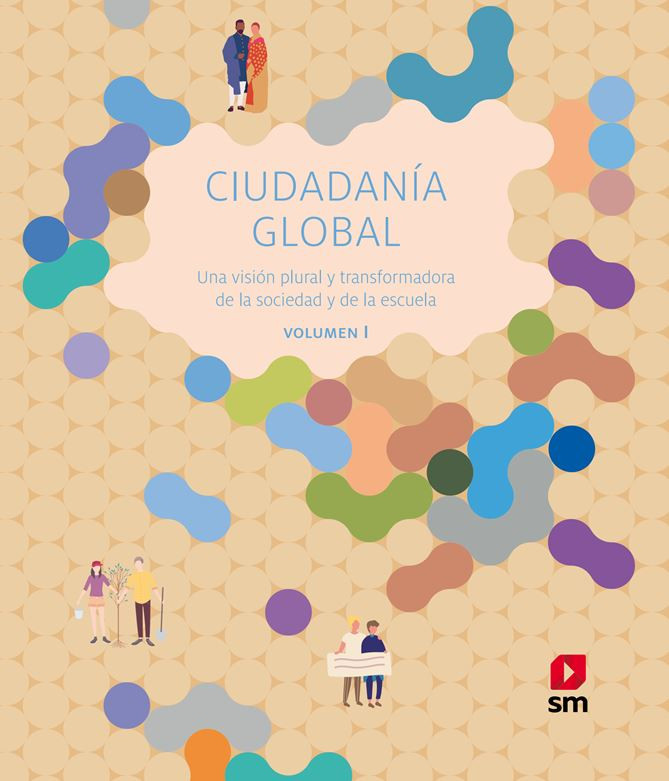 Global Citizenship: A plural and Transformative Vision of Society and School; Volume Ⅰ 발행 연도: 2020 저자: Rafael Díaz-Salazar | Alfonso Díez Prieto | Antonio Roura | Begoña Carmona | Carme García Yeste | Carmen Magallón | César García-Rincón | Florencio Luengo | Gema Celorio | Gonzalo Fanjul | Juan Iglesias | Juan Pablo Rayo | Luis González Reyes | Manuela Mesa | María Laín | Mónica Cantón de Celis | Pedro Sáez | Pilar Álvarez Cifuentes | Rafael Feito | Regina Gairal | Santiago Álvarez Cantalapiedra | Victoria Camps | Violeta Velasco | Yayo Herrero | Augusto Ibañez 단체 저자: SM Foundation The objective of this work, which brings together the voices of great specialists, reinforced by the vision of the school itself, is to promote and channel the debate on global citizenship towards an education oriented to the care of the person, society and nature. Understood in this way, education for global citizenship can help us form fulfilled people, prepared to intervene positively in a world in continuous change, and capable of adopting a sustainable way of life for ourselves, those around us and those who will succeed us. Ciudadanía Global: Una visión plural y transformadora de la sociedad y de la escuela; Volumen Ⅰ 발행 연도: 2020 저자: Rafael Díaz-Salazar | Alfonso Díez Prieto | Antonio Roura | Begoña Carmona | Carme García Yeste | Carmen Magallón | César García-Rincón | Florencio Luengo | Gema Celorio | Gonzalo Fanjul | Juan Iglesias | Juan Pablo Rayo | Luis González Reyes | Manuela Mesa | María Laín | Mónica Cantón de Celis | Pedro Sáez | Pilar Álvarez Cifuentes | Rafael Feito | Regina Gairal | Santiago Álvarez Cantalapiedra | Victoria Camps | Violeta Velasco | Yayo Herrero | Augusto Ibañez 단체 저자: SM Foundation El objetivo de esta obra, que recoge las voces de grandes especialistas, reforzadas por la visión de la propia escuela, es impulsar y canalizar el debate sobre la ciudadanía global hacia una educación orientada al cuidado de la persona, de la sociedad y de la naturaleza. Entendida así, la educación para la ciudadanía global puede ayudarnos a formar a personas plenas, preparadas para intervenir positivamente en un mundo en continuo cambio, y capaces de adoptar un modo de vida sostenible para nosotros, los que nos rodean y los que nos sucederán.
  평화, 인권, 국제이해, 협력, 기본적 자유, 세계시민성, 지속가능발전을 위한 교육 권고: 해설서 발행 연도: 2024 단체 저자: 유네스코 '평화, 인권, 국제이해, 협력, 기본적 자유, 세계시민성, 지속가능발전을 위한 교육 권고'를 소개하고 교육에 관심이 있는 이해관계자들 대상으로 권고의 내용과 활용을 담은 해설서.
 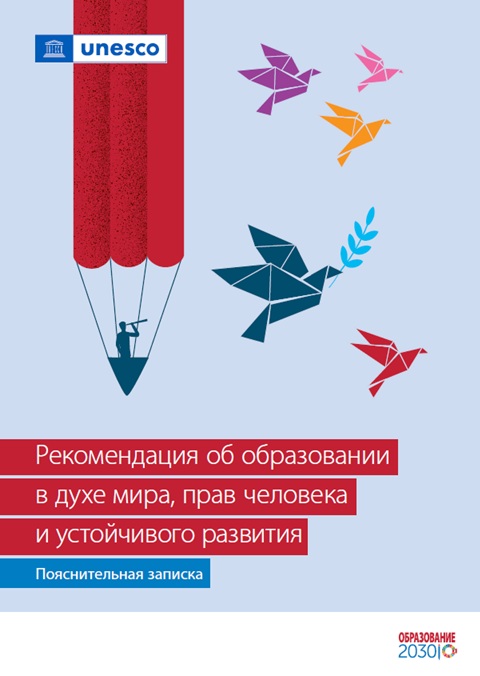 Рекомендация об образовании в духе мира, прав человека и устойчивого развития. Пояснительная записка 발행 연도: 2024 단체 저자: UNESCO Данная брошюра знакомит с обновленной Рекомендацией и кратко разъясняет, каким образом сформулированные в ней руководящие принципы могут быть применены на практике и в повседневной жизни различными субъектами деятельности в сфере образования.
 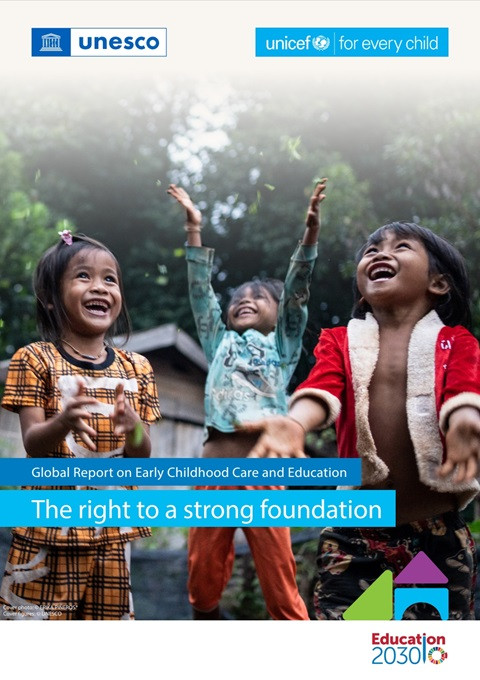 Global Report on Early Childhood Care and Education: The Right to a Strong Foundation 발행 연도: 2024 단체 저자: UNESCO | United Nations Children's Fund (UNICEF) Inclusive and quality early childhood care and education (ECCE) are vital for promoting school readiness, foundational learning, and lifelong well-being. Yet almost 60% of children in low-income countries do not have access to early care and learning opportunities. To meet national targets of providing at least one year of organized learning before primary school, low-income and lower-middle-income countries must fill an annual financial gap of USD 21 billion and recruit at least six million more educators before 2030. The first global report, jointly published by UNESCO and UNICEF, offers insights into global and regional ECCE trends. The report, which is a key response to the commitments outlined in the Tashkent Declaration, synthesizes scientific evidence on ECCE’s importance, and exposes persistence gaps in policy and investment. It illustrates how countries have responded to providing equitable and quality ECCE opportunities. The report invites all stakeholders, from governments and policy-makers, to educators, parents and organizations, to ensure that the commitments made in the Tashkent Declaration are fully realized by building a strong foundation for every child.