
자료
세계시민교육에 대한 이해를 넓히고 연구, 옹호 활동, 교수, 학습 등을 향상시킬 수 있는 다양하고 유용한 자료를 찾아보세요.
1,330 건의 결과가 검색되었습니다
 A Policy Review: Building Digital Citizenship in Asia-Pacific through Safe, Effective and Responsible Use of ICT 발행 연도: 2016 단체 저자: UNESCO Bangkok This report is a major output of the project. The policy review described in this report took stock of national policies in 22 Member States in the Asia-Pacific region and assessed the capacity of their education sectors to foster digital citizenship among children aged 0-18.It is encouraging to note from the study that surveyed Member States’ policies to promote ICT opportunities mature alongside policies that address potential risks, at varying levels of policy maturity. However, while the surveyed Member States recognize the importance of equipping children with ICT skills and providing basic infrastructure, the findings indicate that there is much to be done for young learners (e.g. early childhood education and lower primary education) in introducing the concept of safe, effective and responsible use of ICT to their national curriculum as well as to their teacher professional development programmes.
  Education and Crisis (The Blue Dot Issue 3, 2016) 발행 연도: 2016 단체 저자: Mahatma Gandhi Institute of Education for Peace and Sustainable Development (MGIEP) In this third issue of The Blue Dot, we have chosen to focus on the often forgotten aspect of education in the context of crises. While relief efforts tend to focus on emergency responses such as providing food and shelter, more often than not rebuilding schools and ensuring that students continue to attend their classes are not considered priorities. At UNESCO MGIEP, we believe that when education is relegated to the side-lines, there is little hope for a country and its citizens to recover.In this issue, we have brought together expert contributors from academia and the field—from countries such as Afghanistan, Nepal and South Sudan—and have dedicated a large section to the ongoing civil conflict in Syria, which will soon enter its fifth year. With almost half of Syria’s population living as refugees or as internally displaced persons, an entire generation of young people risks losing out on stability and a better future. Our Syria Section explores how these young people, with a particular focus on those who have sought refuge in Germany, are faring and what their hopes are for the future.In other parts of the magazine, we focus on technology and on how modern information and communications technologies (ICTs) can help students access a better education. From impoverished communities in Calcutta using Skype to connect with teachers around the world, to new interactive platforms built for young people to discuss global issues, we hope the stories and experiences we have collected for our readers will give a new and fresh perspective on what it means for education when a crisis hits. We also hope that you enjoy our photo contest, which drew more than 100 entries from young people around the world on what “education and crisis” means to them.
  Education & Extremism: Waging Peace in the Classroom (The Blue Dot Issue 4, 2016) 발행 연도: 2016 단체 저자: Mahatma Gandhi Institute of Education for Peace and Sustainable Development (MGIEP) In this fourth issue of The Blue Dot, we have decided to focus on education as a tool for both preventing violent extremism and—sometimes—even propagating extremist ideologies. This issue reflects UNESCO MGIEP’s commitment to advancing the fundamental role of education as a means to changing mindsets and, ultimately, bringing about more peaceful societies.From an interview with award-winning social entrepreneur Prof. Sugata Mitra on the role of technology in revolutionizing education, to a foreword by Secretary-General Ban Ki-moon on the UN’s response to violent extremism, our contributors come from a host of different countries and backgrounds. What brings them together, however, is a call for changing current education systems. This is espoused even more clearly in a piece by Prof. K.P. Mohanan, who uses inquiry-driven approaches to prompt youth to question blind faith in any form of ideology or indoctrination.In this issue we also discuss UNESCO MGIEP’s activities in raising awareness of the strong link between education and radicalization and violent extremism, including our flagship Talking Across Generations (TAG) event which brought together policymakers and young people in an open discussion in Delhi this February. The outcome was a statement calling for greater inclusiveness and more space for young people to shape the policies that ultimately affect them.Just like our events, The Blue Dot is a platform for individuals from different backgrounds and walks of life who might have divergent ideologies, beliefs, and values, all of which may have prevented them from coming together to debate some of the most pressing issues of our time—including the global concern surrounding the rise in violent extremism. When individuals feel free to discuss, share ideas and question their beliefs, they can begin to think creatively and critically about the world and their surrounding environment. The challenge is to avoid lecturing or preaching to young people, but to provide youth with a safe space to discuss contentious issues in an open, inclusive and transparent manner.An open dialogue on violent extremism is a step towards providing young people with opportunities to ask questions and to reflect on their own beliefs, assumptions, and values, including animosities, prejudices, hatred and intolerance. At UNESCO MGIEP we believe that individuals who feel connected to others across political, religious or cultural divides also share a sense of responsibility for the world in which they live.
  The Seen Unseen: Improving Education for the Invisible Billion Difference Learners (The Blue Dot Issue 5, 2017) 발행 연도: 2017 단체 저자: Mahatma Gandhi Institute of Education for Peace and Sustainable Development (MGIEP) MGIEP believes that addressing the needs of children with difference learning offers a unique opportunity to build the competency of understanding, respect and appreciation between the children and the rest of their peers in school.It provides the Institute favorable conditions to put in practice how inclusive education is a necessary condition for building peaceful and sustainable societies. Many of the Information Technology pedagogical tools developed by the Institute lend themselves to children with difference learning.Transforming the education system in such a manner will allow mainstream schools to provide a learning platform that breaks down barriers across learning types and provide the equitable access to education that is a fundamental Sustainable Development Goal.We are, in this issue of The Blue Dot, privileged to read from some of the world’s best experts on the subject describing the challenges at hand and suggesting ways and means of addressing the lacuna present in curricula and policy. As always, we dedicate a special section to reflecting the voices of young people in our discussion. I am especially honoured and delighted to present a foreword from a young entrepreneur who has not allowed his neurobiological dyslexic condition to prevent him from pursuing his dreams to help others.
 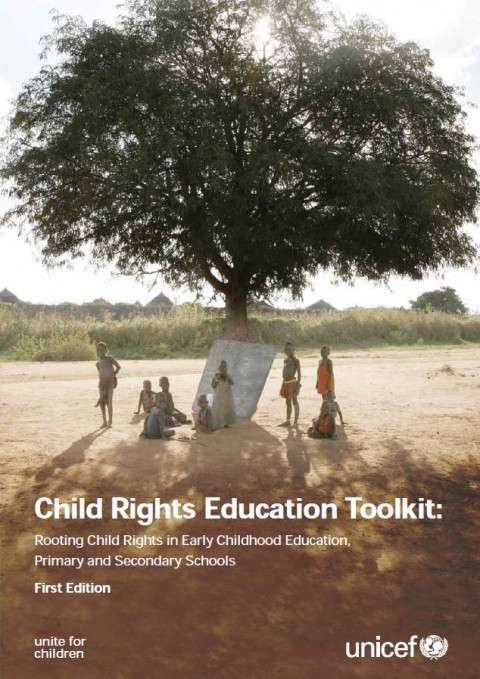 Child Rights Education Toolkit: Rooting Child Rights in Early Childhood Education, Primary and Secondary Schools 발행 연도: 2014 단체 저자: United Nations Children's Fund (UNICEF) This toolkit, developed by UNICEF, defines what is meant by child rights education and the child rights approach. It explains the relevance of child rights education to UNICEF’s mission and the ways in which education can take place in a range of contexts--including with professionals, caregivers, the corporate sector, the media, and children’s groups. The audience of this toolkit is therefore intended to be UNICEF National Committees, UNICEF country offices, UN agencies working on child rights education (CRE), governments, and other civil society organisations, NGOs, and academic institutions.Although this Toolkit focuses on child rights education in the formal learning environment (early childhood education settings, primary and secondary schools), it is hoped that it will also be useful for those working to promote child rights education through other channels, such as in the media, with children’s organizations and through children’s involvement in advocacy.For more information check the UNICEF webpage.
  التعليم كوسيلة للتعافي: معالجة صدمة النزوح من خلال التعلم الاجتماعي والعاطفي 발행 연도: 2019 وتتناول هذه الوثيقة أنشطة التعليم النظامي وغير النظامي، ولا سيما الأنشطة التي تركز على التعلم الاجتماعي والعاطفي، كنهج واعد لتوفير الدعم النفسي والاجتماعي للمهاجرين واللاجئين في مواجهة الآثار السلبية للصدمات التي تعرضوا لها. وتغطي الوثيقة سياقات الطوارئ والأوضاع المجتمعية التي تقود فينهاية المطاف إلى استقرار أطفال المهاجرين واللاجئين. كما تغطي الدراسة مسألة توفير التعليم وبيئة التعلم؛ ومحتوى التعليم والتعلم لكل من الأطفال وأولياء أمورهم؛ والدور الذي يمكن أن يقوم به المعلمون وغيرهم من المهنيين . Education as healing: addressing the trauma of displacement through social and emotional learning 발행 연도: 2019 The conditions under which migrants and refugees have to leave their homes and homelands can be traumatic in the extreme. Whether they have crossed the Mediterranean in an overcrowded and unsafe boat, been barricaded in a Syrian basement for protection from shelling, or been chased away from a burning village in Myanmar, the events of their departures and their journeys can leave scars on those affected – and none more than on children who have witnessed and experienced death, loss, violence, separation from family and prolonged insecurity. Even those fortunate enough to find a sanctuary often face further hardship or discrimination in their host communities that can exacerbate their vulnerability.
 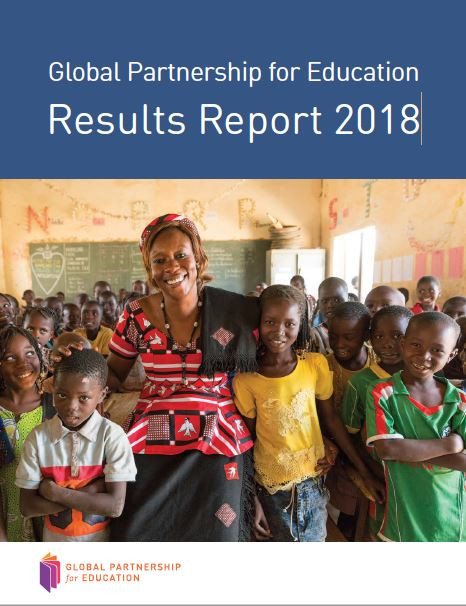 Global Partnership for Education Results Report 2018 발행 연도: 2018 단체 저자: Global Partnership for Education (GPE) The GPE Results Report 2018 shows progress against agreed-upon targets and identifies critical gaps that need to be addressed.
 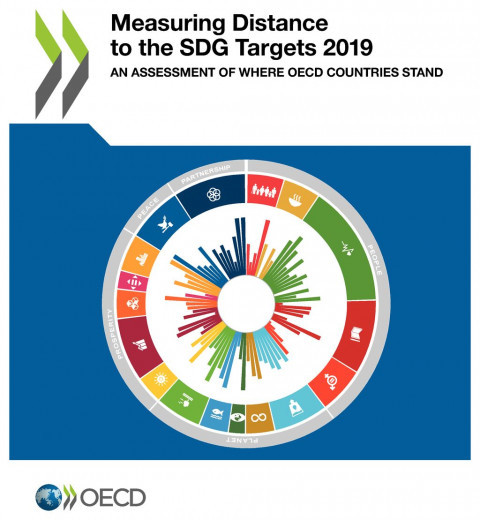 Measuring Distance to the SDG Targets 2019 - An Assessment of Where OECD Countries Stand 발행 연도: 2019 단체 저자: Organisation for Economic Co-operation and Development (OECD) The Sustainable Development Goals (SDGs) set a broad and ambitious programme for the world to achieve by 2030. With 17 Goals, underpinned by 169 Targets, the complex and integrated nature of the 2030 Agenda presents national governments with huge challenges for implementation. To assist countries, the OECD has developed a unique methodology allowing comparison of progress across SDG goals and targets. Based on the UN Global List of 244 indicators, this study evaluates the distance that OECD countries need to travel to meet SDG targets for which data is currently available. This 2019 edition of the study presents the latest results for OECD countries, both on average and individually, as well as new exploratory approaches to assessing progress over time and transboundary aspects of the SDGs. By providing a high-level overview of countries’ strengths and weaknesses in performance across the SDGs, this study aims to support member countries in navigating the SDGs and in setting their own priorities for action within the broad 2030 Agenda.
 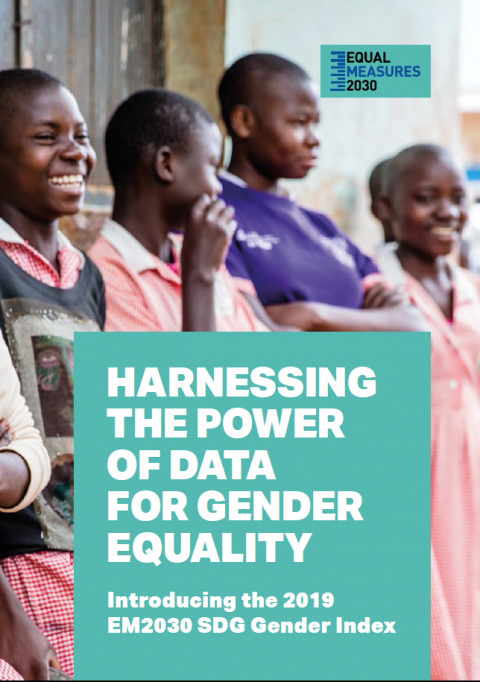 HARNESSING THE POWER OF DATA FOR GENDER EQUALITY: Introducing the 2019 EM2030 SDG Gender Index 발행 연도: 2019 단체 저자: Equal Measures 2030 In the 2019 Global Report “Harnessing the power of data for gender equality: Introducing the 2019 EM2030 SDG Gender Index”, the Equal Measures 2030 (EM2030) introduces the 2019 SDG Gender Index. The index is a comprehensive tool available to explore the state of gender equality across 129 countries (covering 95% of the world’s girls and women), 14 of the 17 Sustainable Development Goals (SDGs), and 51 targets linked to issues inherent in the SDGs. The 2019 SDG Gender Index finds that, with just 11 years to go until 2030, nearly 40% of the world’s girls and women – 1.4 billion – live in countries failing on gender equality. Another 1.4 billion live in countries that “barely pass”. Even the highest-scoring countries have more to do, particularly on complex issues such as climate change, gender budgeting and public services, equal representation in powerful positions, gender pay gaps, and gender-based violence. No country in the world has reached the “last mile” on gender equality. 2019 Global Report overview: Section 1: A foreword from Equal Measures 2030’s partners: The African Women’s Development and Communication Network (FEMNET), The Asian-Pacific Resource & Research Centre for Women (ARROW), Bill & Melinda Gates Foundation, the Committee for Latin America and the Caribbean for the Defense of Women’s Rights (CLADEM), Data2X, International Women’s Health Coalition (IWHC), KPMG, ONE Campaign, Plan International, Women Deliver. Section 2: Key findings from the 2019 SDG Gender Index. Section 3: Introducing the 2019 SDG Gender Index, the approach, what makes this index unique and how the findings should be interpreted. Section 4: Key global findings, patterns and comparisons of index scores between and within the different regions: Asia and the Pacific, Europe and North America, Latin America and the Caribbean, the Middle East and North Africa, Sub-Saharan Africa. Section 5: Regional overviews of index scores and gender equality context, and thematic deep drives on 1) inequalities in girls’ education, 2) women in science and technology research positions, 3) girls’ and women’s physical safety, 4) legal barriers for women, 5) women in government. Section 6: Leaving no one behind: multiple and intersecting forms of discrimination of girls and women. Section 7: Recommendations for action.