
자료
세계시민교육에 대한 이해를 넓히고 연구, 옹호 활동, 교수, 학습 등을 향상시킬 수 있는 다양하고 유용한 자료를 찾아보세요.
2,813 건의 결과가 검색되었습니다
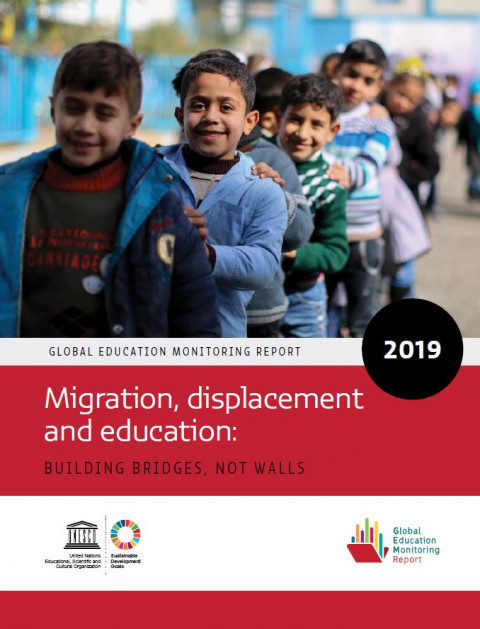 Global Education Monitoring Report, 2019: Migration, Displacement and Education: Building Bridges, Not Walls 발행 연도: 2018 단체 저자: UNESCO | Global Education Monitoring Report Team The 2019 Global Education Monitoring Report examines the education impact of migration and displacement across all population movements: within and across borders, voluntary and forced, for employment and education. It also reviews progress on education in the 2030 Agenda for Sustainable Development.Two new global compacts on migrants and refugees recognize education’s role and set objectives aligned with the global commitment to leave no one behind. This report is a vital toolkit for these compacts. It covers policy issues that address seasonal migrants, rural school consolidation, intercultural curricula, refugee inclusion in national education systems and elimination of segregation, qualifications recognition, targeting of school funding, more effective humanitarian education aid and teacher preparedness for diverse classrooms in emergency, protracted and “new normal” contexts.The report calls on countries to see education as a tool to manage migration and displacement and an opportunity for those needing one.
 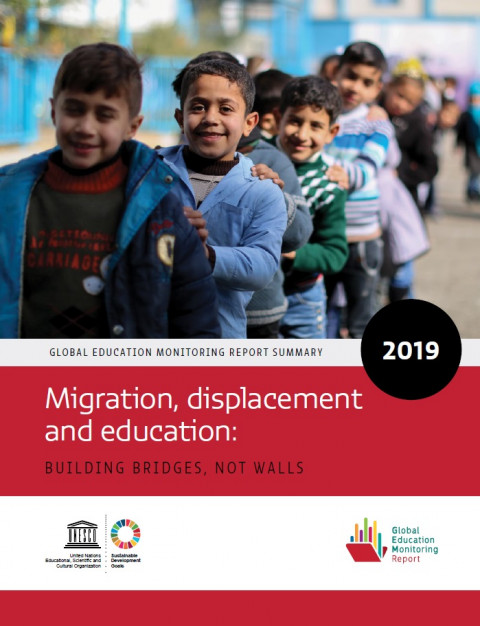 [Summary] Global Education Monitoring Report Summary 2019: Migration, Displacement and Education: Building Bridges, Not Walls 발행 연도: 2018 단체 저자: UNESCO | Global Education Monitoring Report Team This Report points directly to a major challenge: How can teachers be supported to practise inclusion? It offers us fascinating insights into humanity and the age-old phenomenon of migration. I invite you to consider its recommendations and to act on them. This report is a vital toolkit for these compacts. It covers policy issues that address seasonal migrants, rural school consolidation, intercultural curricula, refugee inclusion in national education systems and elimination of segregation, qualifications recognition, targeting of school funding, more effective humanitarian education aid and teacher preparedness for diverse classrooms in emergency, protracted and “new normal” contexts. This summary of the 2019 GEM Report calls on countries to see education as a tool to manage migration and displacement and an opportunity for those needing one.
 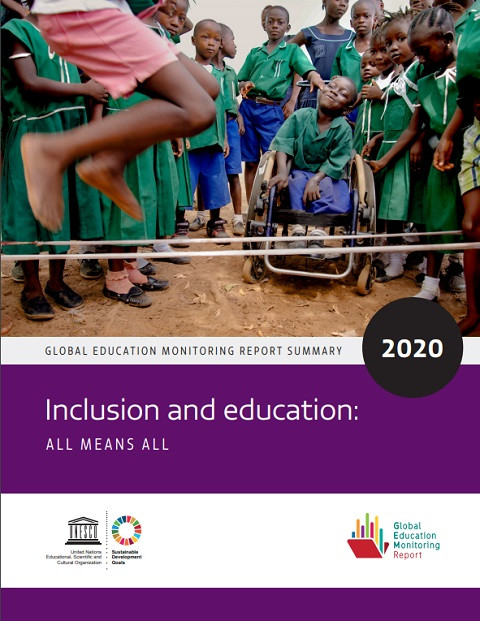 [Summary] Global Education Monitoring Report Summary 2020: Inclusion and Education; All Means All 발행 연도: 2020 단체 저자: UNESCO | Global Education Monitoring Report Team The 2020 Global Education Monitoring Report looks at social, economic and cultural mechanisms that discriminate against disadvantaged children, youth and adults, keeping them out of education or marginalized in it. Spurred by their commitment to fulfil the right to inclusive education, countries are expanding their vision of inclusion in education to put diversity at the core of their systems. Yet implementation of well-meaning laws and policies often falters. Released at the start of the decade of action to 2030, and in the middle of the Covid-19 crisis, which has exacerbated underlying inequalities, the Report argues that resistance to addressing every learner’s needs is a real threat to achieving global education targets. [Résumé] Résumé du rapport mondial de suivi sur l’éducation 2020: Inclusion et éducation; Tous, sans exception 발행 연도: 2020 단체 저자: Organisation des Nations Unies pour l'éducation, la science et la culture (UNESCO) | Global Education Monitoring Report Team L’édition 2020 du Rapport mondial de suivi sur l’éducation examine les mécanismes sociaux, économiques et culturels qui discriminent les enfants, les jeunes et les adultes défavorisés, les tenant à l’écart de l’éducation ou les marginalisant en son sein. Encouragés par leur engagement à réaliser le droit à l’éducation inclusive, les pays élargissent leur vision de l’inclusion dans l’éducation afin de placer la diversité au cœur de leurs systèmes. Pourtant, la mise en œuvre de lois et de politiques bien intentionnées échoue souvent. Publié au début de la décennie d’action à l’horizon 2030, et en pleine crise de COVID-19 qui a exacerbé les inégalités existantes, rapport affirme que la résistance à la prise en compte des besoins de chaque apprenant constitue une menace réelle pour la réalisation des objectifs mondiaux d’éducation. [Resumen] Resumen del informe de seguimiento de la educación en el mundo 2020: Inclusión y educación; Todos sin excepción 발행 연도: 2020 단체 저자: Organización de las Naciones Unidas para la Educación, la Ciencia y la Cultura (UNESCO) | Global Education Monitoring Report Team En el Informe de Seguimiento de la Educación en el Mundo 2020 se examinan los mecanismos sociales, económicos y culturales que discriminan a niños, jóvenes y adultos desprotegidos, manteniéndolos excluidos de la educación o marginados dentro de ella. Estimulados por su compromiso de hacer realidad el derecho a la educación inclusiva, los países están ampliando su visión de la inclusión en la educación y otorgando a la diversidad un lugar central en sus sistemas. Sin embargo, la aplicación de leyes y políticas bienintencionadas suele flaquear. El informe, publicado a principios del decenio de acción que culmina en 2030 y en el contexto de la crisis de Covid-19 que ha exacerbado las desigualdades subyacentes, sostiene que la resistencia a atender las necesidades de todos los educandos es una verdadera amenaza para el logro de los objetivos mundiales de educación. Pезюме всемирного доклада по мониторингу образования 2020: Инклюзивность и образование; для всех означает для всех 발행 연도: 2020 단체 저자: Организация Объединенных Наций по вопросам образования, науки и культуры (UNESCO) | Global Education Monitoring Report Team Во Всемирном докладе по мониторингу образования за 2020 г. рассматриваются социальные, экономические и культурные механизмы, которые служат источниками дискриминации обездоленных детей, молодых людей и взрослых, не позволяя им получать образование или отводя им маргинальное место. В подтверждение своей приверженности делу осуществления права на инклюзивное образование страны расширяют свое видение инклюзивности в образовании, отводя разнообразию центральное место в рамках своих систем. Однако воплотить в жизнь правильные, по сути, законы и стратегии часто не удается. В настоящем докладе, вышедшем в начале десятилетия действий на период до 2030 г., в разгар кризиса COVID-19, усугубившего основные формы неравенства, утверждается, что отказ обеспечить удовлетворение потребностей каждого учащегося представляет собой реальную угрозу для решения глобальных задач в области образования.
 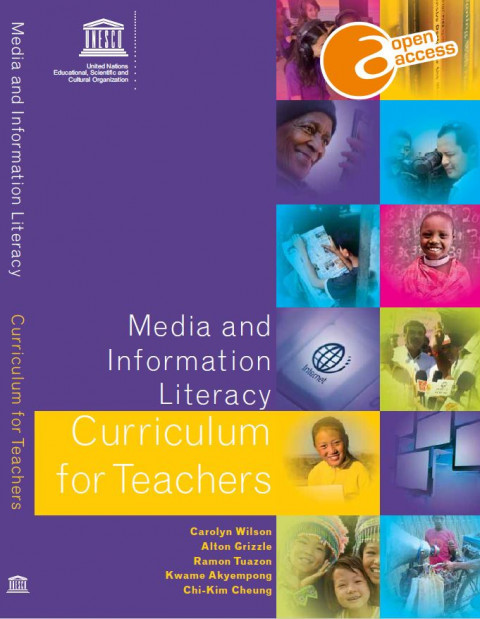 Media and Information Literacy Curriculum for Teachers 발행 연도: 2011 저자: Carolyn Wilson | Alton Grizzle | Ramon Tuazon | Kwame Akyempong | Chi Kim Cheung 단체 저자: UNESCO We live in a world where the quality of information we receive largely determines our choices and actions, including our capacity to enjoy fundamental freedoms and the ability for self-determination and development. This Media and Information Literacy Curriculum for Teachers is an important resource for UNESCO Member States and a pioneering publication.First, it is forward looking, drawing on present trends toward the convergence of radio, television, Internet, newspapers, books, digital archives and libraries into one platform. Second, it is specifically designed for integration into the formal teacher education system.UNESCO believes that, ultimately, this curriculum will contribute to innovation and improvement in all levels of education.
  Educación para el desarrollo sostenible: Asociados en la acción; Informe de los asociados clave del Programa de Acción Mundial de Educación para el Desarrollo Sostenible (2015-2019) 발행 연도: 2019 단체 저자: Organización de las Naciones Unidas para la Educación, la Ciencia y la Cultura (UNESCO) La UNESCO puso en marcha el Programa de Acción Mundial de Educación para el Desarrollo Sostenible (EDS) como seguimiento del Decenio de las Naciones Unidas de la EDS, con el fin de acelerar el progreso del desarrollo sostenible e intensificar las iniciativas de EDS en todas las esferas de la educación y el aprendizaje. Este Programa se desarrolló entre 2015 y 2019. La UNESCO trabajó con una red de 97 asociados clave del Programa de Acción Mundial, procedentes de gobiernos, la sociedad civil, el sector privado y el mundo académico que trabajan en cinco ámbitos de acción prioritarios: la promoción de políticas, la transformación de los entornos de aprendizaje, el desarrollo de la capacidad de los educadores, el empoderamiento de los jóvenes y la aceleración de las soluciones sostenibles a escala local. Los asociados clave del Programa se comprometieron a cumplir objetivos específicos para 2019.Se desarrollaron diez indicadores, dos por cada ámbito de acción prioritario.Los asociados clave del Programa informaron de sus progresos en relación con esos indicadores en tres encuestas que les envió la UNESCO a lo largo del Programa. También se invitó a los asociados clave a que valoraran los beneficios que había tenido para su labor la participación en el Programa de Acción Mundial y a que proporcionaran datos cualitativos sobre los progresos realizados en la aplicación del mismo. Se elaboraron tres informes sobre los progresos realizados:• El primer informe, que abarca los progresos realizados entre 2015 y 2016, fue publicado por la UNESCO en 2017.• El segundo informe, que abarca de 2015 a 2018, se publicó en 2019.• Este tercer y último informe abarca todo el periodo del Programa de Acción Mundial, desde 2015 hasta 2019.En el presente informe se presenta el análisis de las respuestas cuantitativas de los asociados clave del Programa a cada uno de los diez indicadores. Sobre la base de las respuestas cualitativas, se ofrece también un breve comentario sobre los progresos realizados en relación con cada indicador. Este breve informe concluye con algunas enseñanzas extraídas del Programa de Acción Mundial que pueden servir de base para la aplicación del nuevo marco mundial para el periodo 2020-2030: “Educación para el desarrollo sostenible: hacia la consecución de los ODS (EDS para 2030)”. Образование в интересах устойчивого развития: Партнеры в действии; Доклад ключевых партнеров по Глобальной программе действий (ГПД) (2015-2019 гг.) 발행 연도: 2019 단체 저자: Организация Объединенных Наций по вопросам образования, науки и культуры (UNESCO) По итогам Десятилетия образования в интересах устойчивого развития (ОУР) Организации Объединенных Наций ЮНЕСКО предприняла осуществление Глобальной программы действий (ГПД) по ОУР в целях содействия устойчивому развитию и расширению масштабов действий в сфере ОУР во всех областях образования и обучения. Время осуществления программы – с 2015 г. по 2019 г. ЮНЕСКО развернула сотрудничество с сетью из 97 ключевых партнеров по ГПД, представляющих правительство, гражданское общество, частный сектор и академические круги. Деятельность осуществлялась в пяти приоритетных областях: разработка политики, преобразование учебной среды, создание потенциала преподавателей, расширение прав и возможностей молодежи и содействие принятию устойчивых решений на местном уровне. Ключевые партнеры по ГПД взяли на себя обязательство выполнить к 2019 г. ряд конкретных задач. Было разработано десять целевых показателей – по два для каждой приоритетной области деятельности. Ключевые партнеры по ГПД представили информацию о прогрессе в достижении этих показателей, ответив на три опроса, которые ЮНЕСКО направила им в ходе осуществления программы. Ключевым партнерам было также предложено оценить преимущества, полученные ими самими благодаря участию в ГПД, и представить данные качественного характера о ходе работы. Достигнутым успехам были посвящены три доклада: первый доклад, охватывающий период 2015-2016 гг., был выпущен ЮНЕСКО в 2017 г.; второй доклад, охватывающий период 2015-2018 гг., был опубликован в 2019 г.; настоящий доклад, третий и заключительный, охватывает весь период осуществления ГПД с 2015 г. по 2019 г. В этом докладе содержится анализ количественных данных, представленных ключевыми партнерами по ГПД по каждому из десяти показателей. На основе качественных ответов, представленных ключевыми партнерами по ГПД, в докладе также дается краткий комментарий о ходе работы над каждым показателем.В заключительной части доклада содержатся некоторые выводы, касающиеся осуществления ГПД, которые могут послужить информационной основой для реализации новых рамочных принципов деятельности в области ОУР на период 2020-2030 гг. под названием «Образование в интересах устойчивого развития: на пути к достижению ЦУР (ОУР на период до 2030 г.)».
  Enforcing the right to education of refugees: a policy perspective 발행 연도: 2019 단체 저자: UNESCO This paper, aimed at education policymakers, provides analysis and insights on how the right to education for refugees could be ensured from a policy perspective. It does so by reviewing the current status of access to education of refugees, using the scant data that is available in this area. It also outlines some of the extensive barriers to education that refugees face, with recognition of the multifaceted, interlinked and complex nature of exclusion. It provides an overview of the international normative frameworks and global agendas on education that can be applied to refugees to ensure their right to education and achieve SDG 4. Additionally, this document presents practical examples, good practices, and promising measures taken by countries in order to ensure the inclusion of refugees in their national systems and better guarantee the fulfilment of their right to education. As a result of this research, collaboration and the invaluable contributions from the participants in a dedicated Expert Meeting in Barcelona (2018), a set of policy recommendations are provided in the last chapter which aims to guide policymakers to ensure equal access to good quality education for refugees.