
자료
세계시민교육에 대한 이해를 넓히고 연구, 옹호 활동, 교수, 학습 등을 향상시킬 수 있는 다양하고 유용한 자료를 찾아보세요.
948 건의 결과가 검색되었습니다
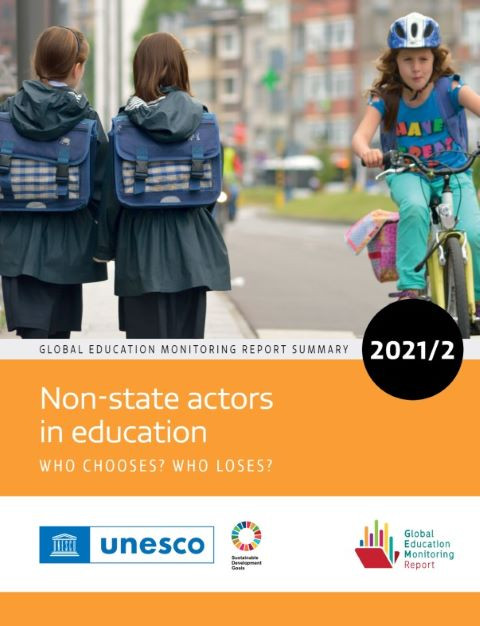 [Resumen] Informe de seguimiento de la educación en el mundo 2021/2: Los actores no estatales en la educación; ¿quién elige? ¿quién pierde? 발행 연도: 2022 단체 저자: UNESCO El papel de los actores no estatales se extiende más allá de la escolarización a las intervenciones en diferentes niveles educativos y esferas de influencia. Junto con su revisión del progreso hacia el ODS 4, incluida la evidencia emergente sobre el impacto de la pandemia de COVID-19, el Informe de Seguimiento de la Educación en el Mundo 2021/2 insta a los gobiernos a considerar a todas las instituciones, estudiantes y docentes como parte de un solo sistema. Los estándares, la información, los incentivos y la rendición de cuentas deberían ayudar a los gobiernos a proteger, respetar y cumplir el derecho a la educación para todos, sin apartar la vista de los privilegios o la explotación. La educación financiada por el estado no tiene que ser proporcionada por el estado, pero se debe abordar la disparidad en los procesos educativos, los resultados de los estudiantes y las condiciones de trabajo de los maestros. La eficiencia y la innovación, en lugar de ser secretos comerciales, deben ser compartidos y practicados por todos. Con este fin, se debe mantener la transparencia e integridad del proceso de formulación de políticas de educación pública para bloquear los intereses creados. El grito de guerra del informe: ¿Quién elige? ¿Quién pierde? – invita a los responsables de la toma de decisiones políticas a cuestionar las relaciones con los actores no estatales en términos de elecciones fundamentales: entre equidad y libertad de elección; entre fomentar la iniciativa y establecer estándares; entre grupos de diferentes medios y necesidades; entre los compromisos inmediatos bajo el ODS 4 y los que se lograrán gradualmente (por ejemplo, educación postsecundaria); y entre la educación y otros sectores sociales. [Résumé] Rapport mondial de suivi sur l’éducation, 2021-2022: Les acteurs non étatiques dans l’éducation; Qui décide? qui est perdant? 발행 연도: 2022 단체 저자: UNESCO Le rôle des acteurs non étatiques s'étend au-delà de la scolarisation à des interventions à différents niveaux d'éducation et sphères d'influence. Parallèlement à son examen des progrès vers l'ODD 4, y compris les preuves émergentes sur l'impact de la pandémie de COVID-19, le Rapport mondial de suivi sur l'éducation 2021/2 exhorte les gouvernements à considérer tous les établissements, étudiants et enseignants comme faisant partie d'un système unique. Les normes, l'information, les incitations et la responsabilité devraient aider les gouvernements à protéger, respecter et réaliser le droit à l'éducation de tous, sans détourner les yeux des privilèges ou de l'exploitation. L'éducation financée par l'État n'a pas à être fournie par l'État, mais la disparité dans les processus éducatifs, les résultats des élèves et les conditions de travail des enseignants doit être abordée. L'efficacité et l'innovation, plutôt que d'être des secrets commerciaux, doivent être diffusées et pratiquées par tous. À cette fin, la transparence et l'intégrité du processus d'élaboration des politiques d'éducation publique doivent être maintenues pour bloquer les intérêts acquis. Le cri de ralliement du rapport – Qui choisit ? Qui perd ? – invite les décideurs politiques à questionner les relations avec les acteurs non étatiques en termes de choix fondamentaux : entre équité et liberté de choix ; entre l'incitation à l'initiative et l'établissement de normes ; entre des groupes aux moyens et aux besoins variés ; entre les engagements immédiats au titre de l'ODD 4 et ceux à concrétiser progressivement (par exemple, l'enseignement postsecondaire) ; et entre l'éducation et les autres secteurs sociaux. [요약본] 세계 교육 현황 보고서 2021/2: 비국가 행위자의 교육 참여; 누가 선택을 하는가? 누가 손해를 보는가? 발행 연도: 2022 단체 저자: 유네스코 비국가 행위자는 학교 교육 제공을 넘어 다양한 교육단계 및 영향력 있는 영역에까지 그 역할을 확장하고 있다. 2021/2022 『세계 교육 현황 보고서』는 SDG4의 진행 상황을 검토하고 더불어 코로나19 팬데믹의 영향에 대한 새로운 증거를 포함하고 있다. 본 보고서는 정부가 모든 교육기관, 학생 및 교사를 하나의 시스템으로 인식해야 한다고 촉구하고 있다. 표준, 정보, 인센티브 및 책무성은 정부가 특권이나 착취로부터 눈을 돌리지 않으면서 모든 사람의 교육권을 보호, 존중, 이행하는 데 도움이 되어야 한다. 공적 자금을 지원받은 교육이 반드시 공교육일 필요는 없지만, 교육 과정과 학업 성취도, 교사 근무 여건의 불균형은 해결되어야 한다. 효율성과 혁신은 상업적인 비밀이 되어서는 안 되고, 오히려 모든 사람이 공유하고 실행해야 한다. 이를 달성하기 위해서는 공교육 정책 과정의 투명성과 청렴성을 유지해야 한다.이 보고서가 외치고 있는 구호인 “누가 선택을 하는가? 누가 손해를 보는가?”는 정책 입안자가 선택의 자유와 형평성 사이, 이니셔티브 장려와 표준 설정 사이, 수단과 요구가 다른 인구 집단 사이, 즉각적인 약속과 점진적으로 실현되어야 할 약속 사이, 교육부문과 다른 사회부문 사이에서의 기본적인 선택의 관점에서 비국가 행위자와의 관계에 대해 의문을 제기할 것을 요청한다. [Summary] Global Education Monitoring Report 2021/2: Non-state Actors in Education; Who Chooses? Who Loses? 발행 연도: 2022 단체 저자: UNESCO يمتد دور الجهات الفاعلة غير الحكومية إلى ما هو أبعد من توفير التعليم ليشمل التدخلات على مستويات التعليم المختلفة ومجالات التأثير. إلى جانب استعراضه للتقدم المحرز نحو الهدف 4 من أهداف التنمية المستدامة ، بما في ذلك الأدلة الناشئة على تأثير جائحة COVID-19 ، يحث التقرير العالمي لرصد التعليم 2021/2 الحكومات على رؤية جميع المؤسسات والطلاب والمعلمين كجزء من نظام واحد. يجب أن تساعد المعايير والمعلومات والحوافز والمساءلة الحكومات على حماية واحترام وإعمال الحق في التعليم للجميع ، دون إبعاد أعينهم عن الامتيازات أو الاستغلال. لا يلزم توفير التعليم الممول من القطاع العام بشكل عام ولكن يجب معالجة التفاوت في عمليات التعليم ونتائج الطلاب وظروف عمل المعلم. الكفاءة والابتكار ، بدلا من أن يكونا أسرارا تجارية ، ينبغي نشرها وممارستها من قبل الجميع. وتحقيقا لهذه الغاية ، يجب الحفاظ على الشفافية والنزاهة في عملية سياسة التعليم العام لمنع المصالح المكتسبة. نداء التقرير - من يختار؟ من يخسر؟ - يدعو صانعي السياسات إلى التشكيك في العلاقات مع الجهات الفاعلة غير الحكومية من حيث الخيارات الأساسية: بين الإنصاف وحرية الاختيار ؛ بين تشجيع المبادرة ووضع المعايير ؛ بين مجموعات مختلفة من الوسائل والاحتياجات ؛ بين الالتزامات الفورية بموجب الهدف 4 من أهداف التنمية المستدامة وتلك التي يتعين تحقيقها تدريجياً (مثل التعليم ما بعد الثانوي) ؛ وبين التعليم والقطاعات الاجتماعية الأخرى.
 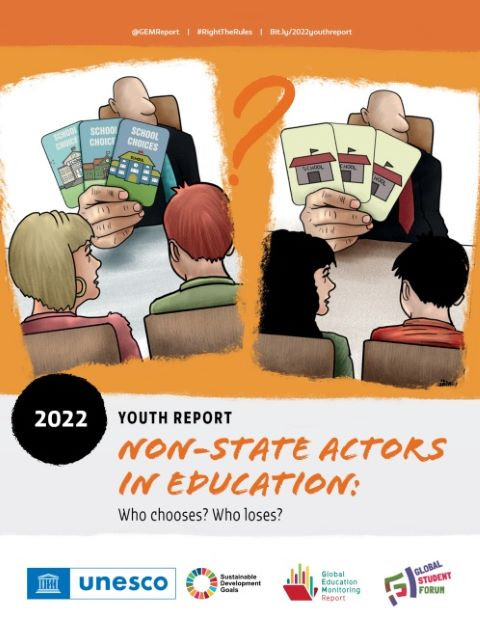 Youth Report 2022: Non-state Actors in Education; Who Chooses? Who Loses? 발행 연도: 2022 단체 저자: UNESCO This report is written in partnership with the Global Student Forum to help you learn about the youth perspective on the different roles and impact of non-state actors in education. For many, a discussion on the role of non-state actors in education quickly boils down to a debate about whether private schools support or undermine good-quality education.But the role of non-state actors impacts many more corners of the education sector, from the textbooks you use, the food in your canteens, any additional tutorial support you get, the skills you might learn at work and much more.The report invites youth to join a call for governments to #RightTheRules which will ensure that non-state actor involvement does not compromise the promise of providing 1 year of pre-primary and 12 years of primary and secondary education free for all. Informe sobre la juventud 2022: Los actores no estatales en la educación; ¿quién elige? ¿quién pierde? 발행 연도: 2022 단체 저자: UNESCO Este informe fue redactado en colaboración con el Foro Mundial de Estudiantes (Global Student Forum) para ayudarte a conocer el punto de vista de las y los jóvenes sobre las diferentes funciones y el impacto de los actores no estatales en la educación. Para muchos, una discusión sobre el papel de los actores no estatales en la educación se reduce rápidamente a un debate sobre si las escuelas privadas apoyan o socavan la educación de buena calidad. Pero el papel de los actores no estatales repercute en muchos más aspectos del sector educativo, desde los libros de texto que utilizas, la comida de tus comedores, el apoyo tutorial adicional que recibes, las habilidades que puedes aprender en el trabajo y de muchas otras maneras. El informe invita a las y los jóvenes a unirse a un llamamiento a los gobiernos para #RedefinirLasReglas de tal manera que se garantice que la participación de los actores no estatales no comprometa la promesa de proporcionar 1 año de educación preescolar y 12 años de educación primaria y secundaria gratuita para todos. Rapport des jeunes 2022: Les acteurs non étatiques dans l’éducation; Qui décide? qui est perdant? 발행 연도: 2022 단체 저자: Organisation des Nations Unies pour l'éducation, la science et la culture (UNESCO) Ce Rapport a été produit en partenariat avec le Forum mondial des étudiants pour vous donner un aperçu du point de vue des jeunes sur les différents rôles et l'impact des acteurs non étatiques de l'éducation. Pour beaucoup, débattre du rôle des acteurs non étatiques de l'éducation se résume rapidement à se demander si les écoles privées sont un atout ou un obstacle à une éducation de qualité. Mais le rôle des acteurs non étatiques a un impact sur bien d'autres aspects du secteur de l'éducation, qu'il s'agisse des manuels scolaires que vous utilisez, de la nourriture dans vos cantines, du soutien scolaire complémentaire que vous recevez, des compétences que vous pouvez acquérir au travail et bien plus encore. Le Rapport invite les jeunes à se joindre à l'appel à #RedéfinirLesRègles lancé aux gouvernements, appel qui garantira que l'implication des acteurs non étatiques ne compromette pas la promesse de fournir un an d'enseignement pré-primaire et douze ans d'enseignement primaire et secondaire gratuit pour tous.
 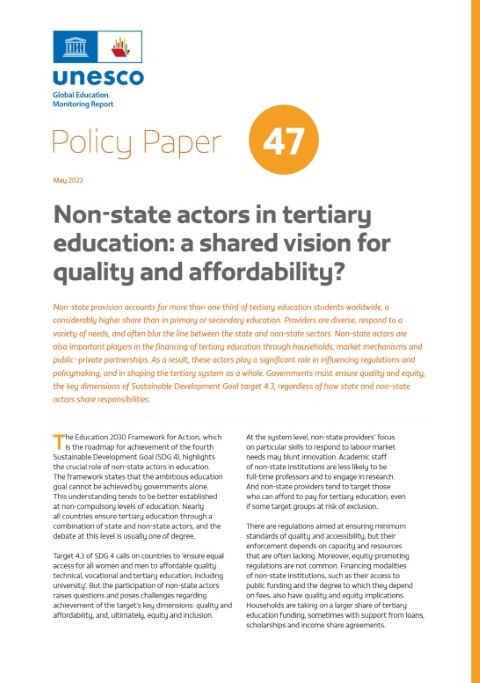 Non-state Actors in Tertiary Education: A Shared Vision for Quality and Affordability? (Policy Paper 47) 발행 연도: 2022 단체 저자: UNESCO Non-state provision accounts for more than one third of tertiary education students worldwide, a considerably higher share than in primary or secondary education. Providers are diverse, respond to a variety of needs, and often blur the line between the state and non-state sectors. Non-state actors are also important players in the financing of tertiary education through households, market mechanisms and public–private partnerships. As a result, these actors play a significant role in influencing regulations and policymaking, and in shaping the tertiary system as a whole. Governments must ensure quality and equity, the key dimensions of Sustainable Development Goal target 4.3, regardless of how state and non-state actors share responsibilities.
  Un nuevo contrato social para la educación (The UNESCO Courier Special Edition; November 2021) 발행 연도: 2021 단체 저자: UNESCO Reimagining Our Futures Together upholds the tradition of the major UNESCO reports that have already structured education policies throughout the world in the past. The Faure report, Learning to be, in 1972, and the Delors report, Learning: The Treasure Within, in 1996, have become benchmarks in the debate on learning. This third document presents a lucid assessment of the challenges confronting education today.Faced with the rapid changes in our environment, a change of direction is needed. We need to devote more importance to ecology; to provide students with the critical tools to detect misinformation, prejudices, and preconceived ideas; to strengthen teamwork, and to improve the professionalization of teachers. Beyond these imperatives, we must also rethink the multiple interdependencies, the links between generations and between cultures, and our relationship with living beings, to establish a new social contract for education. Un nouveau contrat social pour l’éducation (The UNESCO Courier Special Edition; November 2021) 발행 연도: 2021 단체 저자: Organisation des Nations Unies pour l'éducation, la science et la culture (UNESCO) Reimagining Our Futures Together upholds the tradition of the major UNESCO reports that have already structured education policies throughout the world in the past. The Faure report, Learning to be, in 1972, and the Delors report, Learning: The Treasure Within, in 1996, have become benchmarks in the debate on learning. This third document presents a lucid assessment of the challenges confronting education today.Faced with the rapid changes in our environment, a change of direction is needed. We need to devote more importance to ecology; to provide students with the critical tools to detect misinformation, prejudices, and preconceived ideas; to strengthen teamwork, and to improve the professionalization of teachers. Beyond these imperatives, we must also rethink the multiple interdependencies, the links between generations and between cultures, and our relationship with living beings, to establish a new social contract for education.