
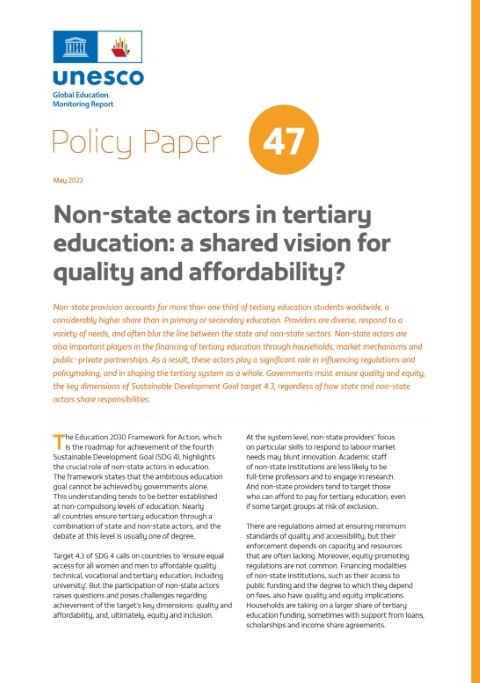
Non-state Actors in Tertiary Education: A Shared Vision for Quality and Affordability? (Policy Paper 47)
- Corporate Author
- UNESCO
- Collation
- 15 p.
- Resource Language
- English
- Year of publication
- 2022
- Topic
- Civic / Citizenship / DemocracyMedia and information literacy / Digital citizenshipGlobalisation and social justice / International understandingDiversity / Cultural literacy / InclusivenessOthers
- Resource Type
- International normative instruments / policy and advocacy documentsResearch papers / journal articles
- Level of education
- Secondary educationHigher educationLifelong learningTechnical and vocational education and trainingNon-formal education
- Region
- Global
- Place of publication
- Paris
Non-state provision accounts for more than one third of tertiary education students worldwide, a considerably higher share than in primary or secondary education. Providers are diverse, respond to a variety of needs, and often blur the line between the state and non-state sectors. Non-state actors are also important players in the financing of tertiary education through households, market mechanisms and public–private partnerships. As a result, these actors play a significant role in influencing regulations and policymaking, and in shaping the tertiary system as a whole. Governments must ensure quality and equity, the key dimensions of Sustainable Development Goal target 4.3, regardless of how state and non-state actors share responsibilities.
Related Resources
-
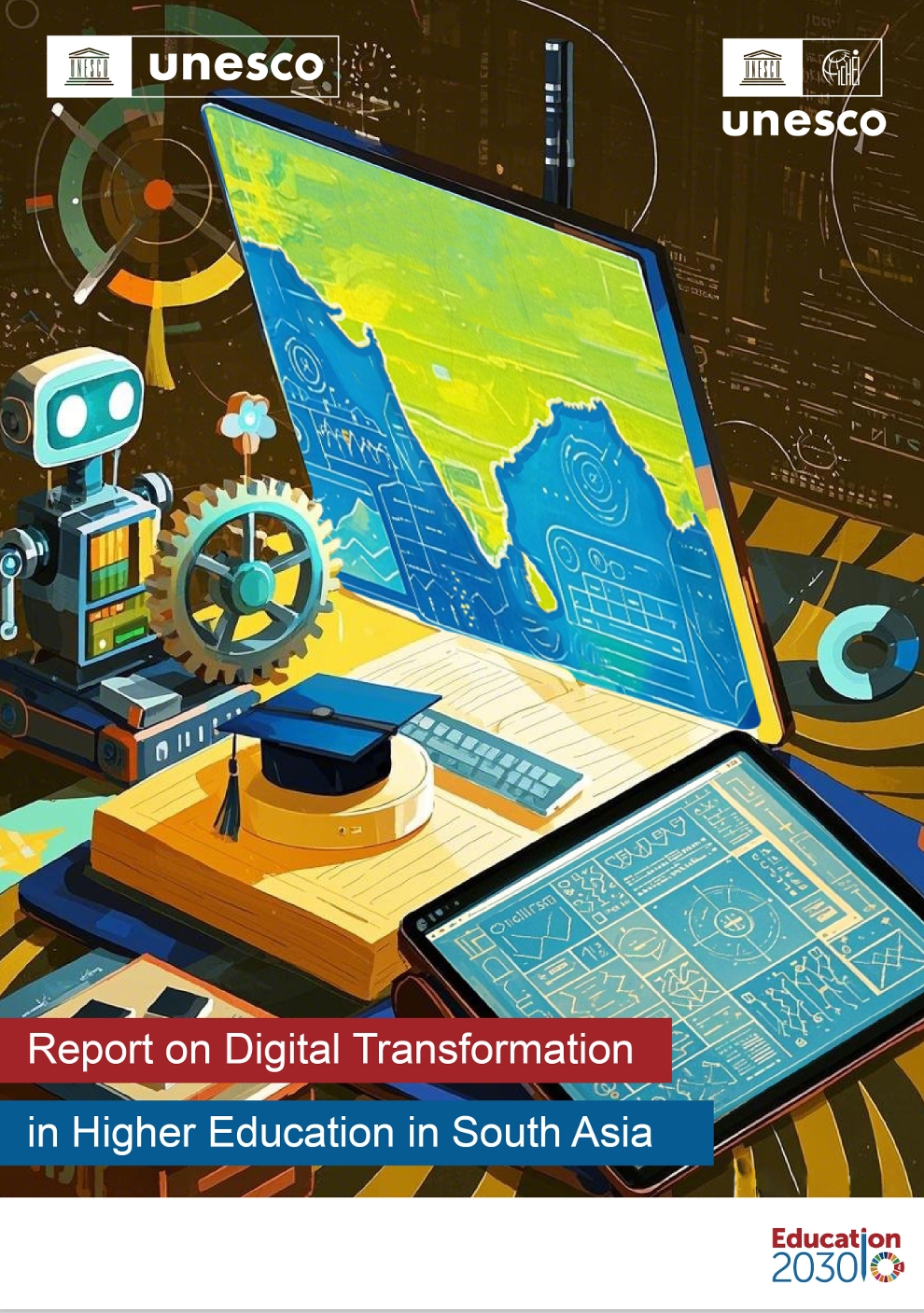 Report on Digital Transformation in Higher Education in South Asia
 -
 Voices Against Violence: Middle Years
 -
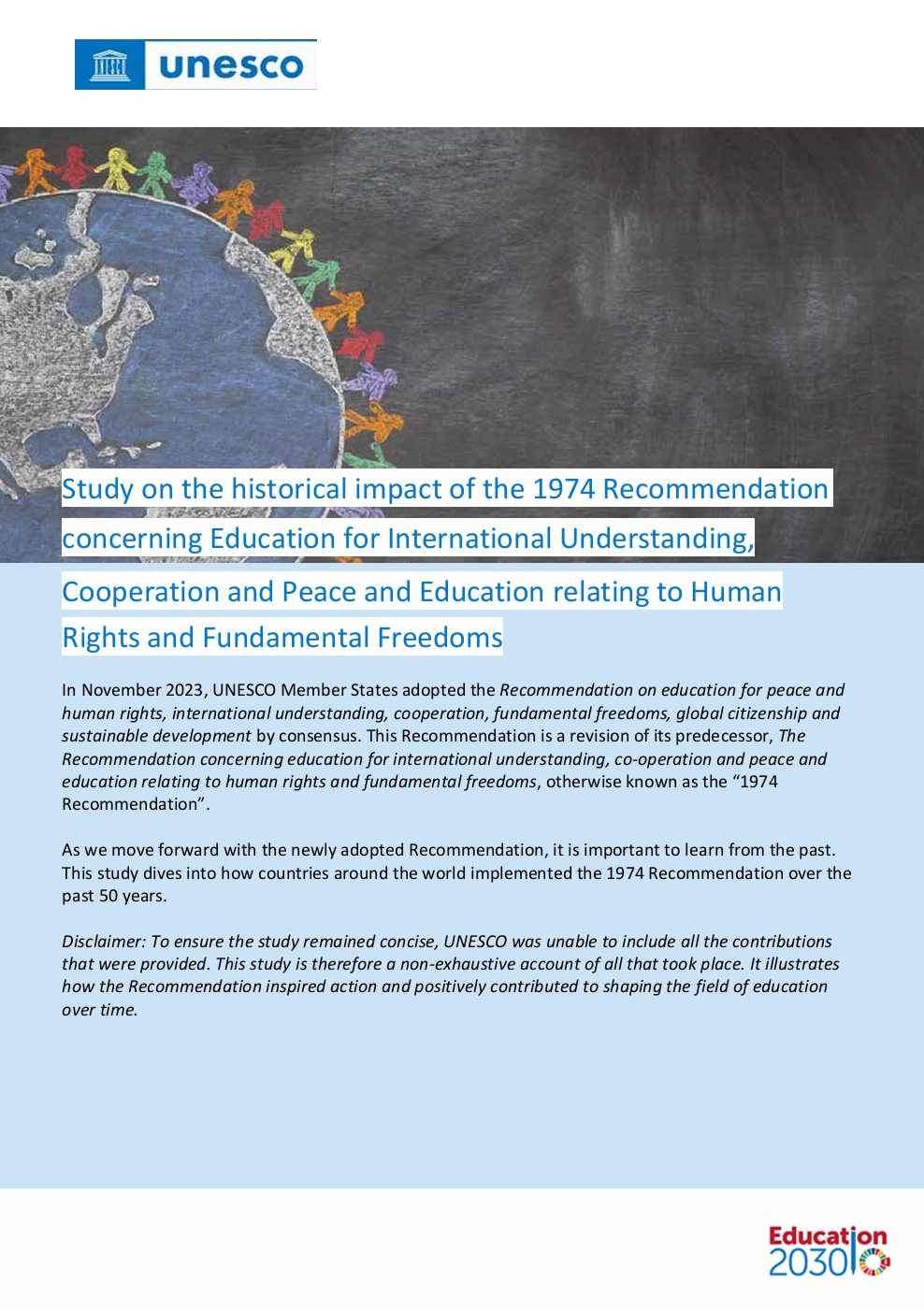 Study on the Historical Impact of the 1974 Recommendation concerning Education for International Understanding, Cooperation and Peace and Education relating to Human Rights and Fundamental Freedoms
 -
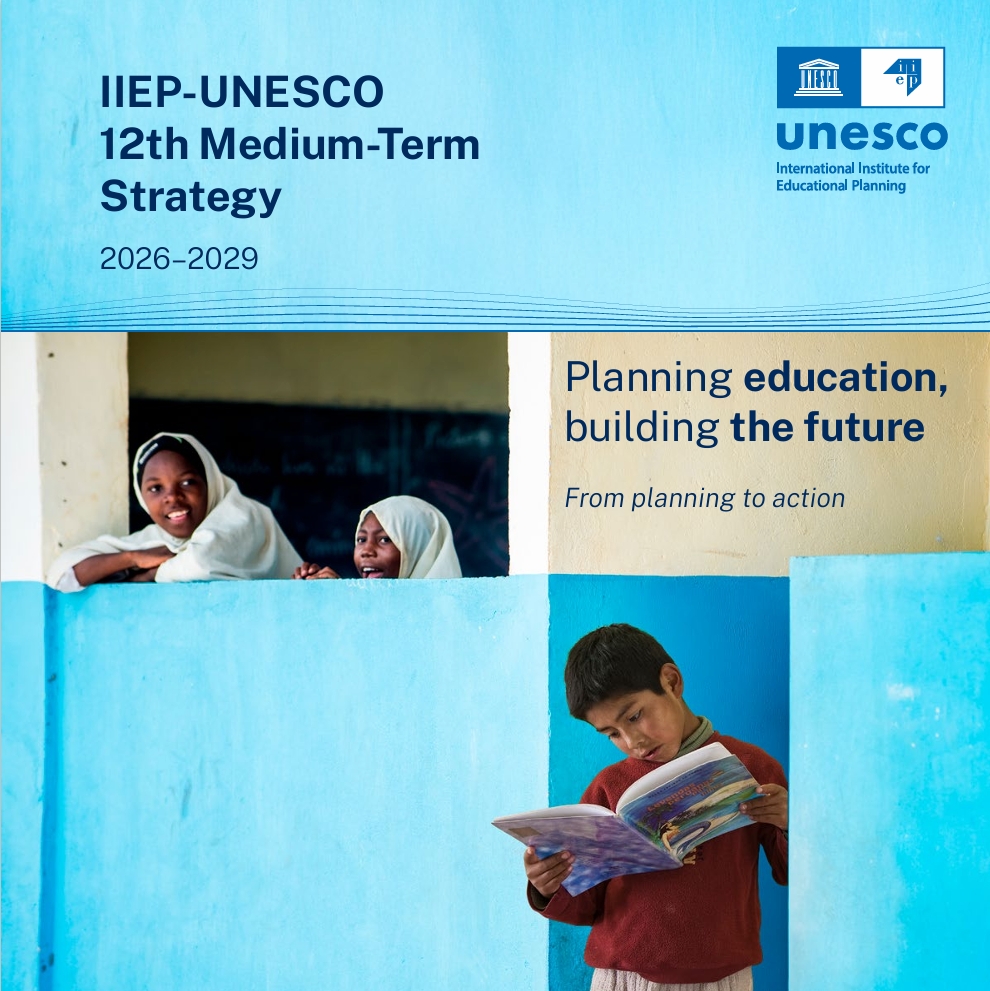 IIEP-UNESCO 12th Medium-Term Strategy: 2026–2029