
자료
세계시민교육에 대한 이해를 넓히고 연구, 옹호 활동, 교수, 학습 등을 향상시킬 수 있는 다양하고 유용한 자료를 찾아보세요.
3,401 건의 결과가 검색되었습니다
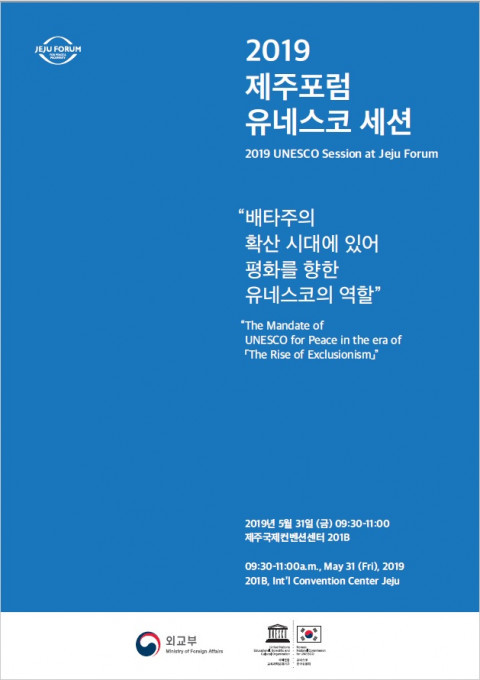 배타주의 확산 시대에 있어 평화를 향한 유네스코의 역할 (2019 제주포럼 유네스코 세션) 발행 연도: 2019 저자: 한경구 | 유성상 | 성지은 | 조동준 | 강인욱 | 김성해 | 루츠 묄러 | 최동주 단체 저자: 대한민국 외교부 | 유네스코한국위원회 최근 국제사회는 미국우선주의, 브렉시트, 극우정당의 부상 등 여러 급격한 변화로 인해 2 차 대전 이후 70 여 년간 다져온 다자주의 기반을 조금씩 잃어가고 있다. 사람들의 마음속에서부터 시작되는 이러한 현상은 국가 간 외교라는 „상위정치‟만으로는 다자주의를 지키기 힘든 시대가 왔음을 의미하기도 한다. 이러한 가운데 현 다자주의 체제의 상징인 UN 은 금년 중점과제 중 하나로 “전세계적인 UN 가치 강화”를 내걸었다. UN 기구 중 교육과학문화의 지적 협력을 통해 인간의 마음에 평화의 방벽을 세우는 것을 사명으로 하는 UNESCO 를 통해 인류의 마음 속 갈등과 분열을 치유하고 평화로 나아가기 위한 여러 구체적인 방안을 고민해보고자 한다.
 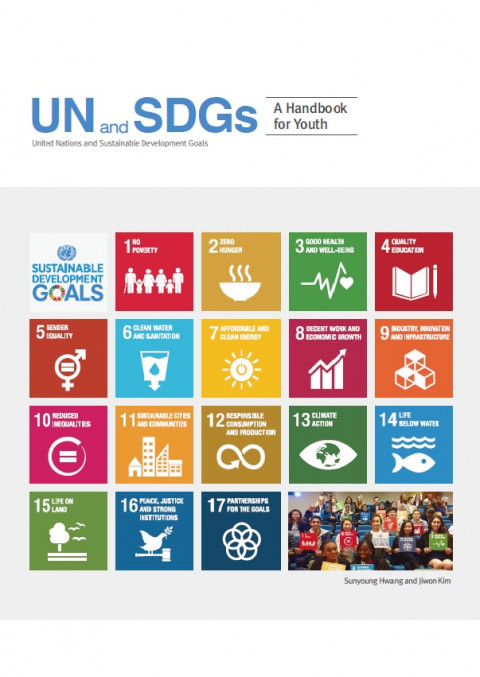 UN and SDGs: A Handbook for Youth 발행 연도: 2017 저자: Sunyoung Hwang | Jiwon Kim 단체 저자: UN. Economic and Social Commission for Asia and the Pacific (UN. ESCAP) | Asian Development Bank (ADB) | United Nations Development Programme (UNDP) "UN and SDGs: A Handbook for Youth" is an outcome of ESCAP East and North-East Asia’s internship program that brings young people closer to the work of the United Nations, as well as to the achievement of the ambitious set of Sustainable Development Goals (SDGs). As young leaders of tomorrow, it is pivotal that youth are informed and engaged with the global vision for the future. Over the next fifteen years, youth will not only directly experience the outcome of SDGs and plans, but will also be the key driver for their successful implementation. For this reason, it is vital to raise awareness about the recently adopted 17 SDGs and the 2030 Agenda for Sustainable Development among youth, build a platform for discussion, and create the conditions for active engagement. This Handbook explores SDGs and the 2030 Agenda from a youth perspective. In the first chapter, it introduces the concept of sustainable development and outlines its historical development through the transition from Millennium Development Goals (MDGs) to SDGs. The second chapter discusses how youth can be harnessed as a major agent of change in achieving sustainable development, focusing on several pertinent youth issues in Asia and the Pacific. The final chapter introduces the UN system and its regional arm, ESCAP, explaining their role in the successful implementation of SDGs. 청년을 위한 UN과 SDGs 핸드북 발행 연도: 2017 저자: Sunyoung Hwang | Jiwon Kim 단체 저자: UN. Economic and Social Commission for Asia and the Pacific (UN. ESCAP) | Asian Development Bank (ADB) | United Nations Development Programme (UNDP) 이 핸드북은 유엔의 업무와 지속가능발전목표(SDGs)에 대해 배울 수 있는 유엔 인턴십 프로그램을 통해 만들어졌습니다. 청년들이 내일의 리더로써 미래 글로벌 비전을 인식하고, 이에 적극 동참하는 일은 매우 중요합니다. 그들은 향후 15년간 SDGs의 결과를 체험하고, 목표를 성공적으로 이행할 핵심 주체가 될 것입니다. 그러므로 지속가능발전을 위한 2030 의제와 SDGs에 대한 청년들의 인식을 함양하고, 논의의 장을 늘리고, 적극적인 참여를 유도하기 위한 환경을 조성하는 것이 중요합니다. '청년을 위한 UN과 SDGs 핸드북'은 청년들의 관점에서 2030 의제와 SDGs를 개괄합니다. 제1장에서는 지속가능발전에 대한 개념을 소개하고 새천년개발목표 (MDGs)에서 SDGs로의 이행을 통한 역사적인 발전에 대해 알아보며, 제2장에서는 아시아태평양지역 내 청년과 관련된 여러가지 사안에 초점을 맞춰 청년들이 지속가능발전을 실현하기 위해 어떤 역할을 할 수 있는지에 대해 논의합니다. 제3장에서는 유엔 시스템과 지역기구인 ESCAP에 대해 소개하면서 SDGs의 성공적 이행 과정에 있어서의 청년들의 역할에 대해 알아봅니다.
 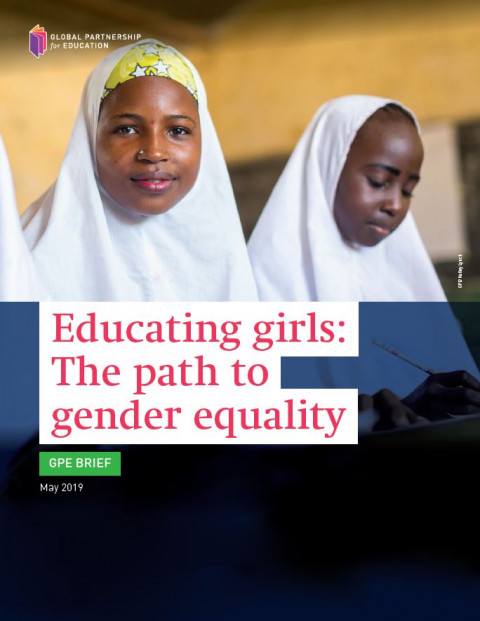 Educating Girls: The Path to Gender Equality; GPE Brief 발행 연도: 2019 단체 저자: GPE Despite significant gains in recent years, education outcomes for girls in developing countries continue to lag behind those of boys. Adolescence is a particularly critical stage for girls, marked by rapid biological and psychological changes as well as powerful social expectations of how their lives should unfold. For many girls in developing countries, adolescence also marks a time of extreme vulnerability: to child marriage, teenage pregnancy, sexual violence, nutritional deficiency and exposure to HIV/AIDS. It also marks a time when pressures of social norms and cultural practices place new restrictions on what girls can do and who they can be. Lack of access to education increases vulnerability to these risks and constraints. Conversely, being in education acts as a powerful protective factor as well as a route to empowerment for girls to determine their own destiny. Achieving gender equality means delivering on three interlinked areas for girls: health, education and safety. GPE uses its results-based partnership model to work with developing countries to prioritize planning and spending on girls’ education throughout the education cycle, to achieve gender equality. Ensuring girls and boys have equal access to inclusive, quality education is a core principle of GPE’s strategic plan, GPE 2020, and GPE’s Gender Equality Policy and Strategy 2016-2020. At the advocacy level and in conjunction with its partners, GPE is also promoting working across sectors to meet the holistic needs of girls, from a gender equality perspective.
  한국교육과 SDG4-교육2030 발행 연도: 2018 저자: 김광호 단체 저자: 유네스코한국위원회 영유아 교육부터 성인교육에 이르기까지 교육의 모든 분야를 망라하고 있는 SDG4는 매우 야심 찬 목표다. 세계 각국은 이를 달성하기 위해 여러 논의도 벌이고 교육 정책 에 반영도 하는 등 다각도로 노력하고 있다. 이러한 국제사회의 노력에 비해 국내의 SDG4 관련 움직임은 아직 그리 크지 않은 것 같다. 이에 유네스코한국위원회는 교육부와 함께 한국의 SDG4 달성 현황을 파악하고 앞으로 어떤 과제에 집중해야 하는지 점검하기 위하여 2017년 11월에 ‘제1회 SDG4-교육 2030 포럼: 한국교육과 SDG4-교육 2030’을 개최한 바가 있다. 이 책은 포럼 발표문과 토론문의 저자들이 포럼에서의 논의를 반영하여 수정한 원고를 한데 묶은 것이다. 일차적으로 교육 정책 담당자, 교육 연구자, 교육기관 종사자, 시민단체 활동가를 위한 내용을 담고 있지만, 일반 시민의 SDG4에 대한 관심과 이해를 높이는 데에도 유용할 것이다.
 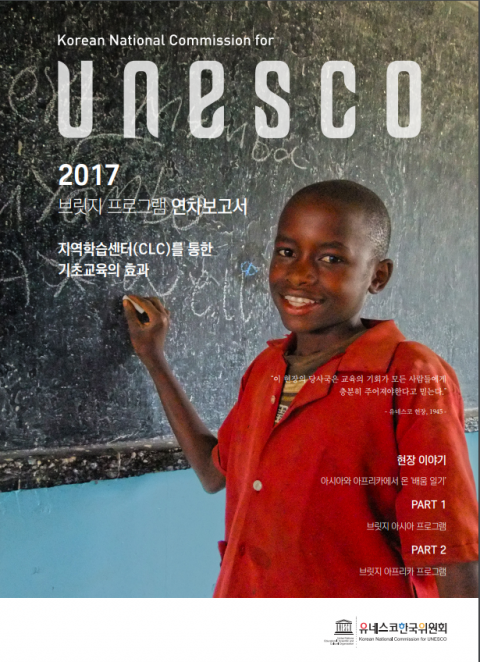 2017-18 브릿지 프로그램 연차보고서 발행 연도: 2018 단체 저자: 유네스코한국위원회 브릿지 프로그램은 유네스코한국위원회가 교육부의 지원과 후원 모금을 통해 남아시아 지역과 사하라 이남 아프리카 지역에 거주하는 비문해자를 포함한 교육소외계층을 대상으로 교육의 기회를 제공하는 사업이다. 이 보고서는 2017년도부터 2018년도 상반기까지 유네스코한국위원회가 아시아 6개국과 아프리카 6개국에서 각국의 정부기관, 시민사회단체 및 유네스코국가위원회 등과 협력하여 추진한 사업들의 세부 활동과 성과를 보여준다. 아울러, 브릿지 프로그램을 통해 삶의 변화를 맞이한 사람들의 이야기도 확인할 수 있다.
 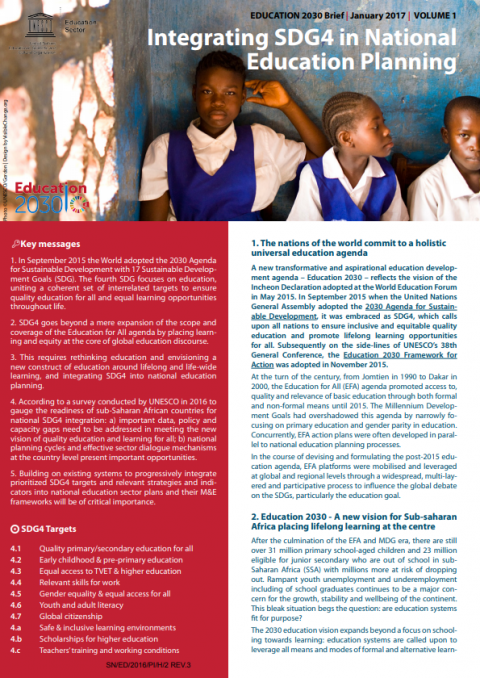 Online programme and meeting document Integrating SDG4 in National Education Planning 발행 연도: 2016 저자: Neyestani-Hailu, Lily 단체 저자: UNESCO Dakar Key messages1. In September 2015 the World adopted the 2030 Agenda for Sustainable Development with 17 Sustainable Develop-ment Goals (SDG). The fourth SDG focuses on education, uniting a coherent set of interrelated targets to ensure quality education for all and equal learning opportunities throughout life. 2. SDG4 goes beyond a mere expansion of the scope and coverage of the Education for All agenda by placing learn-ing and equity at the core of global education discourse. 3. This requires rethinking education and envisioning a new construct of education around lifelong and life-wide learning, and integrating SDG4 into national education planning. 4. According to a survey conducted by UNESCO in 2016 to gauge the readiness of sub-Saharan African countries for national SDG4 integration: a) important data, policy and capacity gaps need to be addressed in meeting the new vision of quality education and learning for all; b) national planning cycles and effective sector dialogue mechanisms at the country level present important opportunities. 5. Building on existing systems to progressively integrate prioritized SDG4 targets and relevant strategies and indi-cators into national education sector plans and their M&E frameworks will be of critical importance. Intégration de l'ODD4 dans la planification nationale de l'éducation 발행 연도: 2016 저자: Neyestani-Hailu, Lily 단체 저자: UNESCO Dakar Messages clés 1. En septembre 2015, le monde a adopté le Programme de développement durable à l’horizon 2030 et ses 17 objectifs de développement durable (ODD). Le quatrième ODD, relatif à l’éducation, regroupe un ensemble cohérent de cibles inter-dépendantes pour assurer une éducation de qualité pour tous et des possibilités égales d’apprentissage tout au long de la vie. 2. L’ODD4 va au-delà d’une simple expansion de la portée et de la couverture de l’agenda de l’Education pour tous (EPT) en plaçant l’apprentissage et l’équité au cœur du discours mondial sur l’éducation. 3. Cette vision implique de repenser l’éducation et d’envisager une nouvelle conception de l’éducation autour de l’apprentissage tout au long et dans toutes les circonstances de la vie et d’intégrer l’ODD4 dans la planification nationale de l’éducation. 4. Selon une enquête menée par l’UNESCO en 2016 pour mesurer l’état de préparation des pays d’Afrique subsaharienne en vue de l’intégration de l’ODD4 : a) des lacunes considérables en matière de données, de politiques et de capacités doivent être com-blées pour répondre à la nouvelle vision de l’éducation et de l’apprentissage de qualité pour tous ; b) les cycles nationaux de planification et les mécanismes efficaces de dialogue sectoriel au niveau des pays offrent d’importantes opportunités. 5. Il sera capital de s’appuyer sur les systèmes existants pour intégrer progressivement les cibles priorisées de l’ODD4 et les stratégies et indicateurs pertinents dans les plans sectoriels de l’éducation nationaux et leurs cadres de suivi et évaluation. URL:https://unesdoc.unesco.org/ark:/48223/pf0000247239?posInSet=2&queryId=54d6ce36-0065-4dd9-a570-4fe80ac5fcb6
  Improving early-grade performance for 2030: measurement and estimation options for innovative policy dialogue 발행 연도: 2019 저자: Helen Abadzi 단체 저자: UNESCO International Bureau of Education (IBE) Governments and donors are faced with the challenge of attaining the 2030 Sustainable Development Goals (SDGs). One of the challenges for education is to measure and set benchmarks that indicate whether people have developed sufficient core literacy and numeracy skills to function in the complex literate environments of the 21st century. Benchmark setting has proved difficult in education because stakeholders find it hard to define which variables really matter and how they can be measured. Measurement of skills particularly in grades 1‐3 is highly relevant for policy dialogue, because this is when many students fall behind. Donors use existing national, regional, and international assessments, for which longitudinal data are available. However, assessments require reading fluency and do not focus on the lowest literacy and numeracy levels, so they may overestimate or underestimate learners’ skills in grades 1‐3. Governments need specific feedback as soon as possible of likely student performance by 2030 so that they can take measures to improve performance by then. This monograph aims to publicize options for measuring early literacy and numeracy skills, using neuroscientific insights. These may help develop interventions that could accelerate early learning, facilitate monitoring and promote policy interventions to accelerate the achievement of the SDG 4.1 goals in various countries by 2030. The research evidence presented indicates that: Performance benchmarks can be set using reading and math fluency research;The performance of lower grades worldwide could be monitored through brief tests, measuring concepts that have high predictive validity, derived from cognitive science;If these test results were linked to international and national assessments, statistical models could be developing to estimate roughly how populations of various countries are likely to score in 2030;Clear feedback, along with recommendations for appropriate interventions, would allow countries and donors to engage in targeted policy dialogue to close the gap;Improved performance in grade 1 would improve performance in subsequent grades;With sufficient emphasis, funding, and space logistics, illiteracy among low‐income students could be eliminated in about 7 years and near‐universal and sustainable literacy could be attained by 2030.
  Discussion Paper for Women's Education and Political Participation 발행 연도: 2012 저자: Subhalakshmi Nandi 단체 저자: Asia South Pacific Association for Basic and Adult Education (ASPBAE) This paper is an outcome of the presentations and discussions from the Quality Adult Education (QAE) Benchmarking Workshop held in Jakarta in November '10, as well as a subsequent meeting of the core group for finalizing the paper (this meeting was held in New Delhi in March '11).