
자료
세계시민교육에 대한 이해를 넓히고 연구, 옹호 활동, 교수, 학습 등을 향상시킬 수 있는 다양하고 유용한 자료를 찾아보세요.
1,727 건의 결과가 검색되었습니다
 Воспитание глобальной гражданственности: темы и цели обучения 발행 연도: 2015 단체 저자: Организация Объединенных Наций по вопросам образования, науки и культуры (UNESCO) Данная публикация, озаглавленная «Воспитание глобальной гражданственности: темы и цели обучения» является первым, подготовленным ЮНЕСКО, педагогическим руководством в области воспитания глобальной гражданственности. Она является результатом обширных исследований и консультаций с участием экспертов из разных частей мира. Это руководство основывается на публикации ЮНЕСКО «Воспитание глобальной гражданственности: подготовка учащихся к проблемам XXI века» и результатах трех ключевых мероприятий ЮНЕСКО в области воспитания глобальной гражданственности: технической консультации по воспитанию глобальной гражданственности (сентябрь 2013 г.), а также первого и второго форумов ЮНЕСКО по воспитанию глобальной гражданственности, прошедших в декабре 2013 г. и январе 2015 г. До составления окончательного варианта руководства оно было протестировано заинтересованными сторонами в области образования в отдельных странах во всех регионах для обеспечения его актуальности в различных географических и социо-культурных ситуациях.
  التربية على المواطنة العالمية: مواضيع وأهداف تعلمية 발행 연도: 2015 단체 저자: منظمة الأمم المتحدة للتربية والعلم والثقافة (UNESCO) هذا الدليل "التربية على المواطنة العالمية: المواضيع والأهداف التعلمية" هو أول التوجيهات التربوية لليونسكو حول تعليم المواطنة العالمية. أتى هذا الدليل نتيجة لبحوث معمقة وعملية استشارية مع خبراء من مختلف أصقاع العالم. يرتكز هذا التوجيه على دليل اليونسكو» التربية على المواطنة العالمية: تحضير المتعلمين لتحديات القرن الواحد والعشرين " ومخرجات الأحداث لليونسكو حول التربية على المواطنة العالمية: المشاورة الفنية حول التربية على المواطنة العالمية (أيلول/سبتمبر 2013) وندوة اليونسكو الأولى والثانية حول التربية على المواطنة العالمية، واللتين عقدتا في كانون الأول/ديسمبر 2013 وكانون الثاني/يناير من العام 2015 على التوالي. قبل الانتهاء من العمل على هذا التوجيه، اختبره أصحاب المصلحة في المجال التعليمي اختباراً ميدانياً في عدد من الدول المنتقاة بغية الحرص على ملاءمته للسياقات الجغرافية والاجتماعية الثقافية المختلفة. تهدف التربية على المواطنة العالمية إلى أن تشكل قوة تحويلية، وبناء المعرفة والمهارات والقيم والسلوكيات التي يحتاج إليها المتعلمون ليتمكنوا من المساهمة في عالم أكثر دمجاً وعدلا وسلاماً. ويقدم هذا الدليل اقتراحات لترجمة مفاهيم التربية على المواطنة العالمية إلى مواضيع وأهداف تعلمية عملية ومراعية للأعمار بطريقة تسمح بمواءمتها مع السياقات المحلية. ويهدف الدليل إلى أن يشكل مورداً للمربين ومطوري المناهج والمدربين، بالإضافة إلى صانعي السياسات، فضلا عن كونه مهماً أيضاً لغيرهم من أصحاب المصلحة في المجال التعليمي، العاملين في أطر نظامية أو غير نظامية. يعرّف الدليل بالتربية العالمية ومقوماتها التعلمية وكيفية إدماجها في النطم التربوية وتطبيقها داخل الصف.
  세계시민교육: 학습 주제 및 학습 목표 발행 연도: 2015 단체 저자: 유네스코 세계시민교육은 학습자들이 더 포용적이고, 정의롭고, 평화로운 세상을 만드는 데 이바지할 수 있도록 필요한 지식, 기능, 가치, 태도를 길러줌으로써 변혁적인 교육을 달성하고자 한다.이 책 『세계시민교육 : 학습 주제 및 학습 목표』는 세계시민교육에 대한 유네스코의 첫 교수·학습 지침서이다. 세계시민교육의 개념을 지역적 맥락에 맞게 활용할 수 있도록 실제 연령별 학습 주제 및 학습 목표로 구체화한 제안을 담고 있다. 교육자, 교육과 정 개발자, 교사교육자 및 정책입안자를 대상으로 개발된 본 지침서는 무형식 및 비형식 교육환경에 있는 교육 관계자들에게도 유용한 자료가 될 것이다.
  Incheon Declaration: Education 2030: Towards inclusive and equitable quality education and lifelong learning for all 발행 연도: 2015 단체 저자: UNESCO The "Incheon Declaration: Education 2030: Towards inclusive and equitable quality education and lifelong learning for all" was signed and adopted at the end of the World Education Forum 2015 (WEF 2015) by over 130 Education Ministers and more than 1500 participants. The Declaration marks an important step in the development of international education policy, continuing the Education for All (EFA) movement started in Jomtien in 1990 and formalized in Dakar in 2000. The Declaration also reaffirms the commitment to realize the SDG4, “Ensure inclusive and equitable quality education and promote life-long learning opportunities for all” and the willingness to invest efforts on access, equity and inclusion, quality and learning outcomes, within a lifelong learning approach. Déclaration d'Incheon: Education 2030: Vers une éducation inclusive de qualité et équitable et de l'apprentissage à vie pour tous 발행 연도: 2015 단체 저자: Organisation des Nations Unies pour l'éducation, la science et la culture (UNESCO) La ‘Déclaration de Incheon: Education 2030: Vers une éducation inclusive de qualité et équitable et l'apprentissage continu pour tous’ a été signé et adopté à la fin du Forum Mondial sur l'Éducation 2015 (FME 2015) par plus de 130 ministres de l'éducation et plus de 1500 participants. La Déclaration marque une étape importante dans le développement de la politique de l'éducation internationale, continue l'Education pour tous (EPT) a commencé à Jomtien en 1990 et formalisé à Dakar en 2000. La Déclaration réaffirme également l'engagement de réaliser le SDG4, ‘Assurer inclusivement l'éducation équitable de la qualité et promouvoir les possibilités d'apprentissage continu pour tous’ et la volonté d'investir des efforts sur l'accès, l'équité et l'inclusion, la qualité des résultats et de l'apprentissage, dans une approche de l'apprentissage continu.
  共 鸣文化多样性 ─ 发展之路 발행 연도: 2011 단체 저자: 联合国教科文组织 (UNESCO) This founding text was the first to acknowledge cultural diversity as “the common heritage of humanity”. It is with great pride that UNESCO is commemorating the 10th anniversary of the Declaration. Commemorate – from the Latin cum memorare – means quite literally “to remember together” or “to remember with”. This collection is compiled the voices of all those who have contributed to the heightening of human awareness by throwing into relief the inestimable value of cultural diversity. These excerpts from books, articles and statements by global intellectual and political leaders, artists and Nobel Prize-winners all call for the safeguarding of cultural diversity, which is inseparable from respect for human dignity. Their voices resound in bearing witness to the strength of cultural diversity and to its capacity to enlighten the minds of women and men. We are duty-bound to ensure that it is central to public policies and a resource for development and dialogue among nations. The United Nations was born of the determination of men and women “to save succeeding generations from the scourge of war...”. In accordance with that principle, UNESCO was established on a key idea, expressed at the very beginning of its Constitution: “... since wars begin in the minds of men, it is in the minds of men that the defences of peace must be constructed”. In the world today, globalized, connected and interdependent as never before, this mission is more vital than ever. The rapprochement of peoples and cultures requires a commensurately global awareness. Cultural diversity has always been at the heart of international relations. It is also, increasingly, a feature of the contemporary mixed and plural societies in which we live. In view of this reality, we must formulate appropriate public policies and rethink the mechanisms of social cohesion and civic participation. How can we build common ground on the basis of such diversity? How can we construct genuine moral and intellectual solidarity of humanity? Any new vision of humanism must be grounded itself in the dynamism and diversity of cultural heritage. It is a source of inspiration and knowledge to be shared and a means of broadening our horizons. The goal of the UNESCO Universal Declaration on Cultural Diversity is to provide keys and benchmarks for capitalizing on this wealth. There can be no sustainable governance if cultural diversity is not acknowledged. There can be no economic and social development if specific features of every culture are belittled and ignored. Programme d'action de l'UNESCO: pour une culture de la paix et de la non-violence, une vision en action 발행 연도: 2013 단체 저자: Organisation des Nations Unies pour l'éducation, la science et la culture (UNESCO) This document builds upon the experience and resources of the Intersectoral Platform for a Culture of Peace and Non-Violence and has benefited from the contribution of Professor Arjun Appadurai. This document shows the UNESCO's mission; Buidling the defences of peace in the minds of men and women and Culture of peace and Non-violence which is positive values, attitudes and behaviours for everyday peace. This document pointed out today's multiple crisis, and then introduced the programme of action on a culture of peace and non-violence. After drew the UNESCO's strategies, UNESCO's peace activities were followed.
 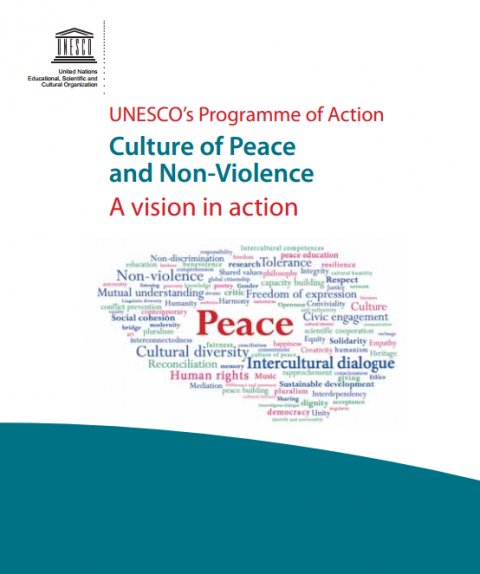 UNESCO's programme of action: culture of peace and non-violence, a vision in action 발행 연도: 2013 단체 저자: UNESCO This document builds upon the experience and resources of the Intersectoral Platform for a Culture of Peace and Non-Violence and has benefited from the contribution of Professor Arjun Appadurai. This document shows the UNESCO's mission; Buidling the defences of peace in the minds of men and women and Culture of peace and Non-violence which is positive values, attitudes and behaviours for everyday peace. This document pointed out today's multiple crisis, and then introduced the programme of action on a culture of peace and non-violence. After drew the UNESCO's strategies, UNESCO's peace activities were followed. UNESCO's programme of action: culture of peace and non-violence, a vision in action 발행 연도: 2013 단체 저자: Organisation des Nations Unies pour l'éducation, la science et la culture (UNESCO) Ce document se fonde sur l'expérience et les ressources de la plate-forme intersectorielle pour une Culture de la Paix et la non-violence et a bénéficié de la contribution du Professeur Arjun Appadurai. Ce document montre la mission de l'UNESCO; Buidling Construire les défenses de la paix dans l'esprit des hommes et des femmes et la culture de la paix et de non-violence qui est des valeurs positives, les attitudes et les comportements pour la paix tous les jours. Ce document a souligné multiples crises d'aujourd'hui, et a ensuite présenté le programme d'action sur une culture de paix et de non-violence. Après les stratégies de l'UNESCO, les activités de paix de l'UNESCO ont été suivies.
 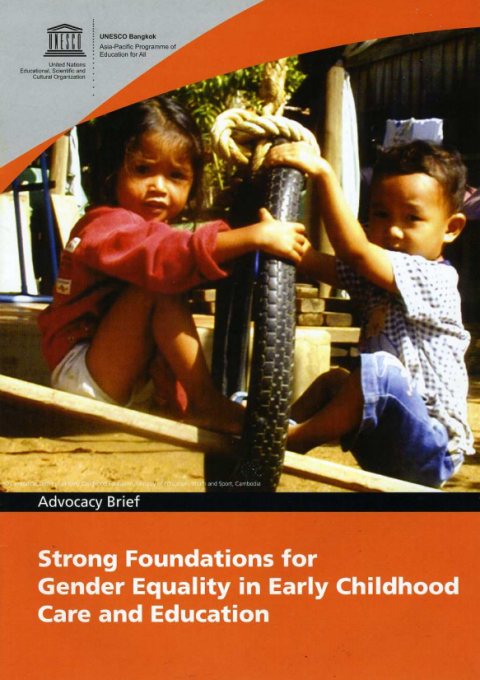 Strong foundations for gender equality in early childhood care and education: advocacy brief 발행 연도: 2007 단체 저자: UNESCO The term Early Childhood Care and Education (ECCE) refers to services for children from birth to eight years of age. These include educating parents in how to care for their children and help them learn, as well as providing community-run and formal preschool programmes for pre-primary school-aged boys and girls. Given the varying needs of children from birth to eight years, educators have found it best to have different policies and strategies for children below and above three years of age. This brief focuses on the gender issues in the services provided for children who are three years of age or older in the Asia-Pacific region. Its scope is informed by UNESCO's commitment to holistic pre-primary services for this age group. The goal is to provide early childhood education that helps girls and boys succeed in primary school and in learning throughout their lives. The brief starts by looking into the growth of ECCE in the Asia-Pacific region and what is driving this growth. It explores why gender responsiveness is important in early childhood education, gives practical examples of what this looks like, and discusses the challenges of providing ECCE that equally values and benefits each girl and each boy. Flowing from this, the brief concludes with recommendations on how to make ECCE more gender responsive