
자료
세계시민교육에 대한 이해를 넓히고 연구, 옹호 활동, 교수, 학습 등을 향상시킬 수 있는 다양하고 유용한 자료를 찾아보세요.
1,725 건의 결과가 검색되었습니다
 L'Education: un trésor est caché dedans, rapport à l'UNESCO de la commission internationale sur l'éducation pour le vingt et unième siècle (extraits) 발행 연도: 1996 저자: Jacques Delors 단체 저자: International Commission on Education for the Twenty-first Century Learning: The Treasure Within, commonly referred to as the 'Delors Report', proposes a holistic and integrated vision of education based on the paradigms of lifelong learning, and the four pillars of learning to be, to know, to do, and to live together. 教育:财富蕴藏其中国际二十一世纪教育委员会向教科文组织提交的报告(要点) 발행 연도: 1996 저자: Jacques Delors 단체 저자: International Commission on Education for the Twenty-first Century Learning: The Treasure Within, commonly referred to as the 'Delors Report', proposes a holistic and integrated vision of education based on the paradigms of lifelong learning, and the four pillars of learning to be, to know, to do, and to live together. التعلّم: ذلك الكنز المكنون؛ تقرير قدمته الى اليونسكو اللجنة الدولية المعنية بالتربية للقرن الحادي والعشرين (مقتطفات) 발행 연도: 1996 저자: Jacques Delors 단체 저자: International Commission on Education for the Twenty-first Century Learning: The Treasure Within, commonly referred to as the 'Delors Report', proposes a holistic and integrated vision of education based on the paradigms of lifelong learning, and the four pillars of learning to be, to know, to do, and to live together.
  ASPnet strategy for 2014-2021 global network of schools addressing global challenges: building global citizenship and promoting sustainable development 발행 연도: 2014 단체 저자: UNESCO Associated Schools Project Network (ASPnet) Over the next 8 years (2014-2021), ASPnet needs to respond to the needs of education in a rapidly changing and increasingly complex world. The following strategy, therefore, has to remain flexible and requires regular re-evaluation in the light of a changing environment. Globalization and growing interconnectedness ask for increased networking and cooperation. ASPnet has proven to have a great potential for global school networking and educational innovations, which remain largely untapped. UNESCO can make much fuller use of ASPnet in its quest for and implementation of a successful Post-2015 Global Education Agenda. Stratégie du réSEAU pour 2014-2021 Un réseau mondial d’Ecoles pour répondre aux défis mondiaux : renforcer la citoyenneté mondiale et promouvoir le développement durable 발행 연도: 2014 단체 저자: UNESCO Associated Schools Project Network (ASPnet) Au cours des huit prochaines années, le réSEAU devra répondre aux besoins de l'éducation dans un monde en évolution rapide et de plus en plus complexe. C’est pourquoi, la stratégie ci-après doit rester flexible et nécessite une réévaluation régulière à la lumière des changements de l'environnement. La mondialisation et l’interdépendance croissante requièrent le renforcement des réseaux et de la coopération. Le réSEAU a démontré un potentiel important pour la mise en réseau mondiale d’écoles et d’innovations éducatives, qui demeurent largement inexploitées. L’UNESCO peut tirer beaucoup plus parti du réSEAU dans sa quête d’un agenda mondialperformant pour l’éducation après-2015 et lors de la mise en œuvre de celui-ci.
 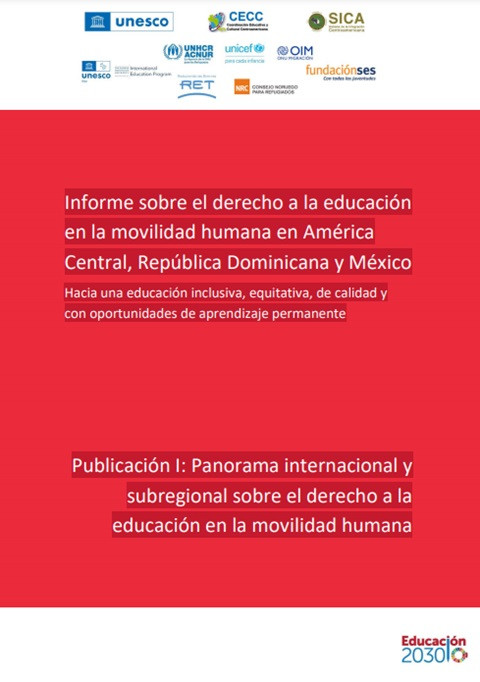 Report on the Right to Education in Human Mobility in Central America, the Dominican Republic and Mexico: Towards Inclusive, Equitable, Quality Education With Lifelong Learning Opportunities 발행 연도: 2024 단체 저자: UNESCO San José | Central American Educational and Cultural Coordination | Central American Integration System Although human mobility is not a new phenomenon, data indicate that the number of people in this situation has reached its highest point since records began and there are no signs that the trend will decrease in the coming years. This scenario threatens to become a structural situation, strongly impacting the right to education and educational systems. Therefore, it is imperative that States and other key actors make a deep commitment to guarantee the fundamental right to education of people in situations of mobility through urgent measures, in line with the provisions of Sustainable Development Goal (SDG) 4 of the United Nations 2030 Agenda. For this reason, the preparation of this Report on the right to education of people in situations of mobility in Belize, Costa Rica, El Salvador, Guatemala, Honduras, Mexico, Nicaragua, Panama and the Dominican Republic has been undertaken. The Report is an effort by UNESCO and the Central American Educational and Cultural Coordination (CECC/SICA) in collaboration with UNHCR, IOM, UNICEF, the Norwegian Refugee Council and RET International, and with the technical support of the SES Foundation and the UNESCO Chair for the Development of International Education at George Washington University (United States). Informe sobre el derecho a la educación en la movilidad humana en América Central, República Dominicana y México: Hacia una educación inclusiva, equitativa, de calidad y con oportunidades de aprendizaje permanente 발행 연도: 2024 단체 저자: UNESCO San José | Central American Educational and Cultural Coordination | Central American Integration System Si bien la movilidad humana no es un fenómeno nuevo, los datos indican que la cantidad de personas en esta situación ha alcanzado su punto más alto desde que se tiene registro y no hay indicios de que la tendencia vaya disminuyendo en los próximos años. Este escenario amenaza con volverse una situación estructural, impactando fuertemente en el derecho a la educación y los sistemas educativos. Por ello, es perentorio el compromiso profundo de los Estados y otros actores clave para garantizar el derecho fundamental a la educación de las personas en situación de movilidad a través de medidas urgentes, en sintonía con lo estipulado en el Objetivo de Desarrollo Sostenible (ODS) 4 de la Agenda 2030 de las Naciones Unidas. Por ello se ha emprendido la elaboración del presente Informe sobre el derecho a la educación de las personas en situación de movilidad en Belice, Costa Rica, El Salvador, Guatemala, Honduras, México, Nicaragua, Panamá y República Dominicana. El Informe constituye un esfuerzo de la UNESCO y la Coordinación Educativa y Cultural Centroamericana (CECC/SICA) en colaboración con ACNUR, OIM, UNICEF, el Consejo Noruego para Refugiados y RET International, y con el apoyo técnico de la Fundación SES y la Cátedra UNESCO para el Desarrollo de la Educación Internacional en la Universidad George Washington (Estados Unidos)
  Safe Schools Declaration 발행 연도: 2015 단체 저자: Global Coalition to Protect Education from Attack (GCPEA) The Safe Schools Declaration is an intergovernmental political commitment that was developed at an international conference held in Oslo, Norway, on 28-29 May 2015. The Declaration allows countries the opportunity to express their political support for the protection of students, teachers and schools during times of armed conflict; the importance of the continuation of education during armed conflict; and the implementation of the Guidelines for Protecting Schools and Universities from Military Use during Armed Conflict. Declaración sobre escuelas seguras 발행 연도: 2015 단체 저자: Global Coalition to Protect Education from Attack (GCPEA) La Declaración sobre Escuelas Seguras es un compromiso político intergubernamental que se construyó en el marco de una conferencia internacional celebrada en Oslo, Noruega, el 28-29 de mayo de 2015.La Declaración permite a los países la oportunidad de expresar su apoyo político para la protección de los estudiantes, maestros y escuelas durante tiempos de conflicto armado; la importancia de la continuación de la educación durante los conflictos armados y la aplicación de las Directrices para Proteger Escuelas y Universidades de Uso Militar durante Conflicto Armado.
 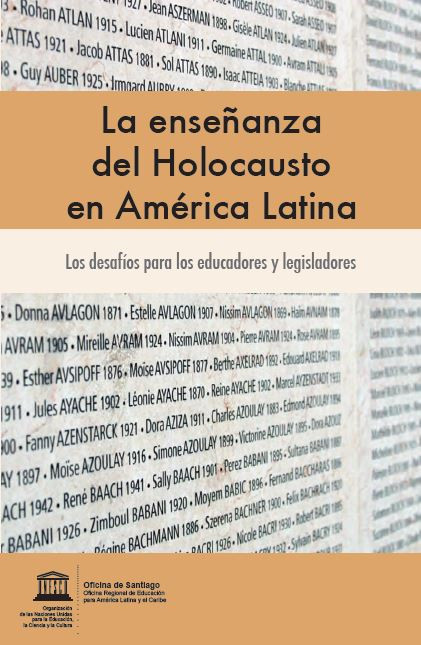 The Teaching of the Holocaust in Latin America the Challenges for Educators and Legislators 발행 연도: 2017 저자: María Celeste Adamoli | Emmanuel Kahan, Pablo Luzuriaga | Ministerio de Educación 단체 저자: UNESCO Santiago This book provides an overview of opportunities that may arise from educating about the Holocaust in diverse cultural contexts and educational situations, with a special focus on Latin American countries. We can actually be away from the places where the genocide against the Jewish people was perpetrated, but Latin America is still taking charge of its own past of violence and crimes against humanity. With this publication, Latin American educators will have at their fingertips an updated account of the most outstanding topics that are discussed on pedagogy and policy making. You can also explore how, even today in Europe, education about the Holocaust shapes a culture of memory. On the other hand, you can see how in other places the memory of the Holocaust can be a starting point to relate to other difficult pasts. UNESCO is convinced that the prevention of genocide begins at school. In a world where mass violence is possible, this publication will show the importance of teaching young people about the Holocaust and about other genocides in history. It is a condition to prevent similar crimes from happening in the future.