
자료
세계시민교육에 대한 이해를 넓히고 연구, 옹호 활동, 교수, 학습 등을 향상시킬 수 있는 다양하고 유용한 자료를 찾아보세요.
2,162 건의 결과가 검색되었습니다
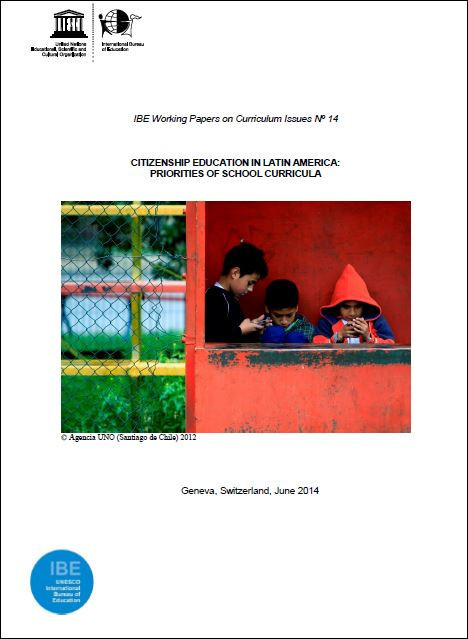 Educación Ciudadana en América Latina: Prioridades de los Currículos Escolares 발행 연도: 2014 저자: Cristián Cox | Martín Bascopé | Juan Carlos Castillo | Daniel Miranda | Macarena Bonhomme 단체 저자: UNESCO International Bureau of Education (IBE) El documento se organiza en cuatro partes. En la primera se da cuenta del estado de la creencia democrática en la región, recurriendo a evidencia de los estudios de opinión más importantes de la última década, de modo de ofrecer contexto y bases de significado amplios al análisis curricular, así como, más en general, al trabajo educativo en el área de ciudadanía. En la segunda sección se describe las características organizativas (o de estructura) de los currículos de los seis países y se presenta un esquema de categorías para el análisis comparado de los mismos. La sección siguiente describe y analiza los contenidos de los seis currículos examinados y su tratamiento de los valores, las instituciones y las relaciones de ciudadanía, en su dimensión cívica (política) y civil (convivencia). A partir de los hallazgos más importantes, la sección de cierre ofrece unas reflexiones orientadas al desarrollo curricular en el área.
  World citizenship education and teacher training in a global context: Canada, India and South Africa 발행 연도: 2011 저자: George Cappelle | Gary Crippin | Ulla Lundgren 단체 저자: Children's identity and Citizenship in Europe (CICE) In this study we change our focus from a European setting to a global one. We were interested to see how our observations from the first study would be reflected in a more global context with focus on the cases of Canada, India and South Africa looking at both the models for world citizenship education and the influence of contextual factors.In choosing these countries we were interested in:Countries on different continentsCountries in different stages of national, social and economic developmentCountries in which there was considerable diversity in the populationCountries in which citizenship and world citizenship education was seen as an important priorityCountries, because of the limitations of researchers, which used English as a primary language.In addition to background research we asked for assistance from professors in the field of teacher education in the three countries to provide us with information on key questions related to citizenship education and teacher training. Mondiale l'éducation civique et la formation des enseignants dans un contexte mondial: le Canada, l'Inde et l'Afrique du Sud 발행 연도: 2011 저자: George Cappelle | Gary Crippin | Ulla Lundgren 단체 저자: Children's identity and Citizenship in Europe (CICE) Dans cette étude, nous changeons notre objectif d'un cadre européen pour une approche globale. Nous nous sommes intéressés de voir comment nos observations de la première étude serait reflétée dans un contexte plus global en mettant l'aCECnt sur les cas du Canada, l'Inde et l'Afrique du Sud qui cherchent à la fois les modèles pour l'éducation à la citoyenneté mondiale et l'influence des facteurs contextuels. Dans le choix de ces pays, nous étions intéressés à: ● Les pays sur différents continents ● pays à différents stades de développement national, social et économique ● Les pays dans lesquels il y avait une grande diversité dans les populations ● Les pays dans lesquels la citoyenneté et la citoyenneté mondiale l'éducation a été considérée comme une priorité ● importants pays, en raison des limitations des chercheurs, qui ont utilisé l'anglais comme langue principale. Outre la recherche de fond, nous avons demandé l'aide de professeurs dans le domaine de la formation des enseignants dans les trois pays pour nous fournir des informations sur des questions clés liées à l'éducation à la citoyenneté et à la formation des enseignants.
 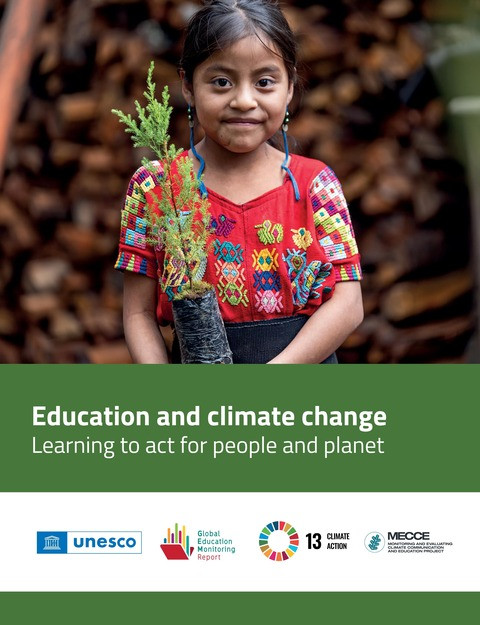 Education and Climate Change: Learning to Act for People and Planet 발행 연도: 2024 단체 저자: Global Education Monitoring Report Team | Monitoring and Evaluating Climate Communication and Education Project (MECCE) | University of Sakatchewan How can education lead to climate change action?Despite strong evidence on the impact of education on other development outcomes and the role it plays in developing professional capacity for sustainable development transitions, education is often absent from other sectors’ strategic, policy, planning and financing considerations. The Global Education Monitoring Report is introducing a new series to advance dialogue on the interrelationship of education with the other Sustainable Development Goals.The first paper in the series focuses on climate change. It starts by reviewing the growing impact of climate change on education before turning to the role of education in climate action. Education has a somewhat underappreciated contribution to developing professional capacities for the transition to a green economy. Formal, non-formal and informal learning are also commonly believed to be playing a critical role in motivating actions on climate change mitigation and adaptation.Yet a positive association between education attainment and unsustainable consumption levels, as well as inconclusiveness of much research on the direct impact of education on climate change adaptation and mitigation actions has in part contributed to education receiving low priority in global and national climate change agendas.This paper argues that climate change education needs to adapt to fulfil its potential. The education paradigm cannot rely solely on knowledge transfer but needs to focus on social and emotional, and action-oriented learning.Much of the research has focused on the impact of education attainment and cognitive learning. More research is therefore needed to assess other drivers through which education can influence behaviours and motivate climate change action. Such research is needed to formulate viable education reform packages that improve the curriculum, strengthen climate-readiness of schools and education systems, engage learners and prepare educators accordingly.
 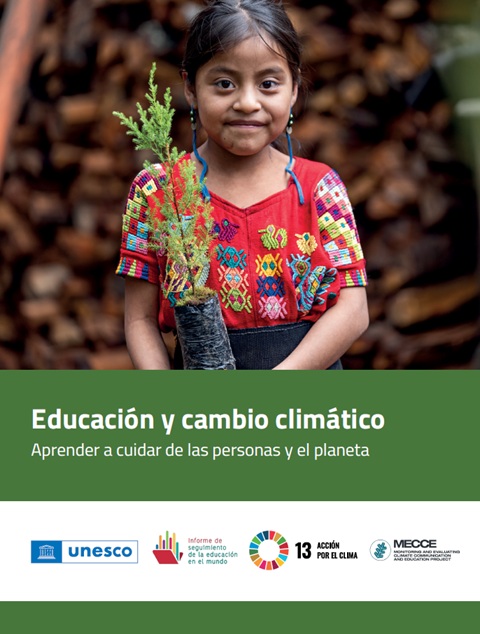 Educación y cambio climático: aprender a cuidar de las personas y el planeta 발행 연도: 2024 단체 저자: Global Education Monitoring Report Team | Monitoring and Evaluating Climate Communication and Education Project (MECCE) | University of Sakatchewan ¿Cómo puede la educación conducir a la acción contra el cambio climático?A pesar de las sólidas pruebas existentes sobre la repercusión de la educación en el logro de otros objetivos de desarrollo y la función que desempeña en el desarrollo de la capacidad profesional para las transiciones hacia el desarrollo sostenible, la educación suele estar ausente de las consideraciones estratégicas, políticas, de planificación y de financiación de otros sectores.El Informe de seguimiento de la educación en el mundo presenta una nueva serie destinada a fomentar el diálogo sobre la interrelación de la educación con los demás Objetivos de Desarrollo Sostenible. El primer documento de la serie se centra en el cambio climático, y empieza por analizar el creciente impacto del cambio climático en la educación antes de pasar a abordar la función de la educación en la acción climática.La contribución de la educación al desarrollo de capacidades profesionales para la transición a una economía verde está en cierta medida infravalorada. Al mismo tiempo, existe la conciencia de que el aprendizaje, tanto formal como no formal e informal, desempeña una función esencial a la hora de motivar la acción en materia de mitigación del cambio climático y adaptación a sus efectos.Sin embargo, la existencia de una correlación positiva entre el nivel de educación y los niveles de consumo insostenibles, así como la falta de conclusiones de muchas investigaciones sobre la repercusión directa de la educación en la mitigación del cambio climático y la adaptación a sus efectos, han contribuido en parte a que se otorgue escasa prioridad a la educación en las agendas mundiales y nacionales sobre el cambio climático.En este documento se sostiene que es necesario adaptar la educación sobre el cambio climático para que desarrolle todo su potencial. El paradigma educativo no puede basarse únicamente en la transferencia de conocimientos, sino que debe centrarse en el aprendizaje socioemocional y orientado a la acción. Gran parte de la investigación se ha centrado en analizar el logro educativo y los resultados que se alcanzan mediante el aprendizaje cognitivo. Por ello, es necesario seguir investigando para evaluar otros factores mediante los cuales la educación puede influir en los comportamientos y motivar la acción contra el cambio climático. Estas investigaciones son necesarias para formular paquetes de reformas educativas viables que mejoren los planes de estudios, refuercen la preparación de las escuelas y los sistemas educativos para el cambio climático, impliquen a los educandos y preparen a los educadores en consecuencia. Средства массовой информации как партнеры в сфере образования для устойчивого развития. Учебно-ресурсный комплект 발행 연도: 2009 저자: Eleanor Bird | Richard Lutz | Christine Warwick 단체 저자: UNESCO Media as Partners in Education for Sustainable Development addresses issues that are being discussed on the social, economic and environmental fronts. It does not pretend to know all the answers, but draws on existing experience and recommends resources for further inquiry and research. It encourages the media to engage in public participation and to debate improvements that can lead to sustainable development. It also seeks to contribute to media awareness and understanding of sustainability, as outlined by the Agenda 21 Plan of Action for all nations endorsed at the 1992 Earth Summit in Rio de Janeiro. Les médias, partenaires de l'éducation au développement durable: kit de formation et de référence 발행 연도: 2008 저자: Eleanor Bird | Richard Lutz | Christine Warwick 단체 저자: UNESCO Media as Partners in Education for Sustainable Development addresses issues that are being discussed on the social, economic and environmental fronts. It does not pretend to know all the answers, but draws on existing experience and recommends resources for further inquiry and research. It encourages the media to engage in public participation and to debate improvements that can lead to sustainable development. It also seeks to contribute to media awareness and understanding of sustainability, as outlined by the Agenda 21 Plan of Action for all nations endorsed at the 1992 Earth Summit in Rio de Janeiro.
 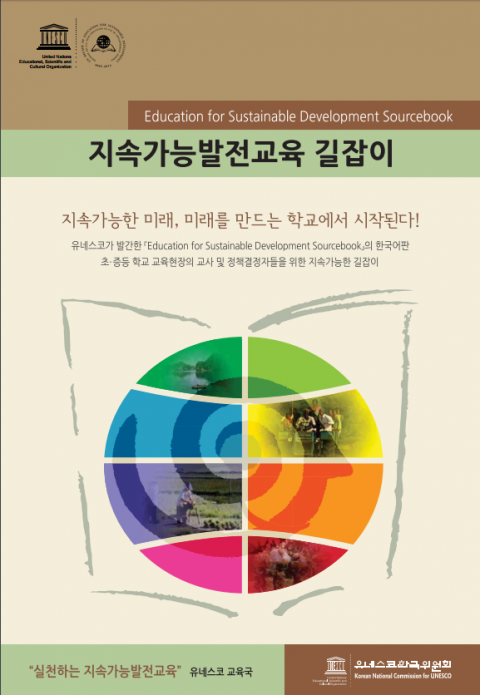 Education for Sustainable Devleopment: Sourcebook 발행 연도: 2013 단체 저자: UNESCO The target audiences for the Education for Sustainable Development Sourcebook are primary and secondary teachers and mid-level decision-makers, who have responsibility for primary and secondary education. Another primary audience is teacher educators who work with pre-service and in-service primary and secondary school teachers. The purpose of the publication is to describe ways in which education for sustainable development (ESD) can be integrated into primary and secondary schooling. This collection of briefs is designed to complement other ESD materials published by UNESCO. The topics for the briefs were selected in consultation with UNESCO Field Offices and Institutes. The briefs for primary and secondary teachers are specifically written for professional educators who work in formal education settings. The briefs for teachers as well as those for decision-makers address “gaps” in the UNESCO ESD literature. Media as partners in education for sustainable development: a training and resource kit 발행 연도: 2008 저자: Eleanor Bird | Richard Lutz | Christine Warwick 단체 저자: UNESCO Media as Partners in Education for Sustainable Development addresses issues that are being discussed on the social, economic and environmental fronts. It does not pretend to know all the answers, but draws on existing experience and recommends resources for further inquiry and research. It encourages the media to engage in public participation and to debate improvements that can lead to sustainable development. It also seeks to contribute to media awareness and understanding of sustainability, as outlined by the Agenda 21 Plan of Action for all nations endorsed at the 1992 Earth Summit in Rio de Janeiro. 可持续发展教育(ESD)为21世纪建设一个更加美好和更加公平的世界 발행 연도: 2012 단체 저자: UNESCO Education for Sustainable Development allows every human being to acquire the knowledge, skills, attitudes and values necessary to shape a sustainable future. Education for Sustainable Development means including key sustainable development issues into teaching and learning; for example, climate change, disaster risk reduction, biodiversity, poverty reduction, and sustainable consumption. It also requires participatory teaching and learning methods that motivate and empower learners to change their behaviour and take action for sustainable development. Education for Sustainable Development consequently promotes competencies like critical thinking, imagining future scenarios and making decisions in a collaborative way. Education for Sustainable Development requires far-reaching changes in the way education is often practised today. UNESCO is the lead agency for the UN Decade of Education for Sustainable Development (2005-2014).