
자료
세계시민교육에 대한 이해를 넓히고 연구, 옹호 활동, 교수, 학습 등을 향상시킬 수 있는 다양하고 유용한 자료를 찾아보세요.
3,435 건의 결과가 검색되었습니다
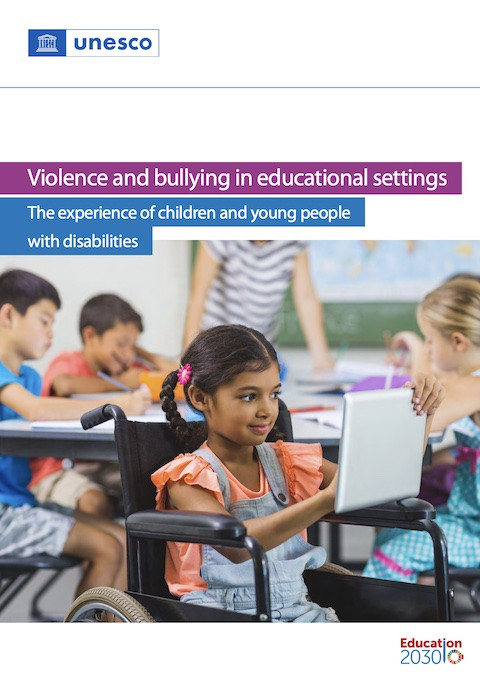 教育环境中的暴力和欺凌 : 残障儿童和青年的经历 발행 연도: 2021 단체 저자: 联合国教科文组织 (UNESCO) 本文是联合国教科文组织关于校园暴力和欺凌的系列技术简报之一,重点关注残障学生的经历。本文首次汇集了关于教育环境中残障学生遭受暴力和欺凌的规模和性质的证据,旨在提高对该问题的认识,鼓励采取行动确保残障儿童和青年能够获得安全的学习环境。本文主要面向教育政策制定者和规划者、学校管理者、校长、教师和其他学校工作人员。
 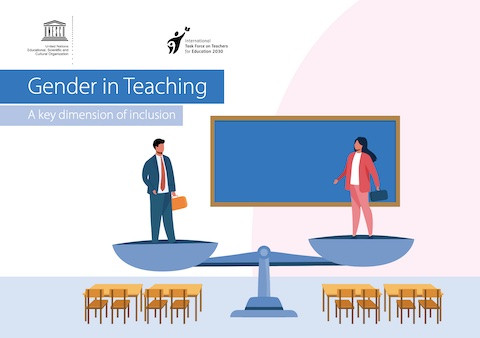 Gender in Teaching: A Key Dimension of Inclusion 발행 연도: 2020 단체 저자: UNESCO | International Task Force on Teachers for Education 2030 Without teachers, Sustainable Development Goal 4 to ensure inclusive and equitable, quality education for all by 2030 will not be achieved.Since teachers act as role models for students, inclusion in education means that the teaching workforce mirror the diversity of the classroom. As countries look to recruit more teachers to meet SDGs, one significant factor important to creating inclusive classrooms is gender.This document has been prepared for the 2020 World Teachers’ Day celebrated by UNESCO and the Teacher Task Force with the theme Teachers: Leading in crisis, reimagining the future. Le genre dans l’enseignement: Un élément essentiel de l’inclusion 발행 연도: 2020 단체 저자: Organisation des Nations Unies pour l'éducation, la science et la culture (UNESCO) | International Task Force on Teachers for Education 2030 Sans enseignant(e)s, il sera impossible d’atteindre l’objectif de développement durable 4 qui vise à assurer l’accès de tous à une éducation inclusive de qualité, sur un pied d’égalité, d’ici à 2030.Les enseignant(e)s sont des exemples pour les élèves ; à ce titre, l’inclusion dans l’éducation signifie que la composition ducorps enseignant doit refléter la diversité des élèves. À l’heure où les pays cherchent à recruter davantage d’enseignant(e)s pour atteindre les ODD, le genre constitue l’un des facteurs les plus importants pour créer des classes inclusives.Le présent document a été préparé en vue de la Journée mondiale des enseignant(e)s 2020, célébrée par l’UNESCO et l’Équipe spéciale sur les enseignants autour du thème Enseignants : leaders en temps de crise et façonneurs d’avenir.
  Communication and Information Programme 발행 연도: 2021 단체 저자: UNESCO UNESCO is the UN specialized agency building peace in the minds of people through education, the sciences, culture, communication and information. Our mission is to foster intercultural dialogue and sustainable development, by promoting the free flow of ideas.By adopting a multi-disciplinary and inclusive approach, UNESCO works with both duty-bearers and rights-holders across the world to develop and implement targeted actions that are born out of local needs, which ensures a holistic and results-based approach for sustainable change.In the field of communication and information, UNESCO defends and promotes freedom of expression, media independence and pluralism, and the building of inclusive knowledge societies underpinned by universal access to information and the innovative use of digital technologies.Through capacity-building, policy advice, international cooperation, monitoring and foresight in the fields of freedom of expression, access to information, and digital transformation, UNESCO will continue to empower key actors with a view to ensuring that fundamental freedoms are guaranteed online and offline, in line with international standards.This is all the more relevant to ensure the ethical development and use of emerging technologies, which have a growing impact on all aspects of the world’s societies. Citizens will also be empowered to enjoy these fundamental freedoms through the development of 21st century skills and the fostering of enabling environments for media pluralism and diversity.
 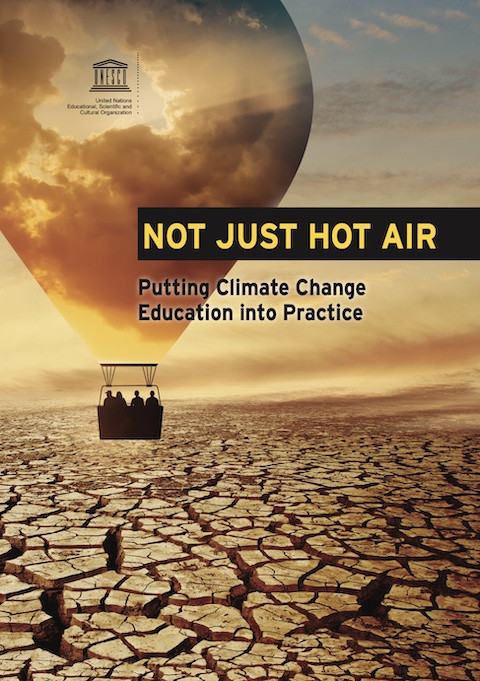 Not Just Hot Air: Putting Climate Change Education Into Practice 발행 연도: 2015 단체 저자: UNESCO This publication presents UNESCO’s work on Climate Change Education for Sustainable Development in 2012/2013, and intends to serve as a reference for similar work in the future.It provides: National case studies on five CCESD country pilots conducted by UNESCO in 2012/2013 in: Dominican Republic, Guyana, Mauritius, South Africa and Tuvalu. The case studies include an analysis and assessment of the undertaken CCESD capacity-building work for policy makers and teacher educators, lessons learnt about the implementation of the programme, and conclusions. 16 short country profiles from around the world on policy development regarding ESD and Climate Change Education. Recommendations on Climate Change Education in the context of Education for Sustainable Development, developed by UNESCO in order to establish a common understanding of what needs to be done to enhance education responses to climate change. This publication is intended to provide policy makers and teacher educators with a compact source of information on how to mobilize education to address climate change.
  Inclusion in Early Childhood Care and Education in High-Income Countries 발행 연도: 2021 단체 저자: Global Education Monitoring Report Team | UNESCO | Deloitte Access Economics This report reviews the international research and policy literature concerning approaches to inclusion in early childhood care and education (ECCE) in different high-income jurisdictions globally. Each chapter highlights examples of policies and practices which can foster inclusion in ECCE across the themes set out in the Global Education Monitoring (GEM) Report in 2020.As a critical period for children’s intellectual, emotional, social, physical and moral development, supporting inclusion in ECCE is of particular importance for supporting lifelong learning and equitable opportunities for all children. A number of key messages emerging from this review that are instructive to designing policies to promote inclusion in ECCE are summarised below. Inclusion in ECCE is fostered through complementary universal and targeted approaches to most aspects of ECCE governance, financing, policy and service delivery. The implementation of ECCE laws and policies is key to supporting inclusion. As the central actors delivering ECCE services, collaboration within the ECCE workforce is crucial to supporting a community of practice which leads and shares inclusion, while avoiding risks of specialisation. Finally, while many existing ECCE policies, resources and tools are grounded in a deficits-based approach to understanding need, inclusion may be better supported through an approach which focusses on child learning needs and strengths.
  Media and Information Literacy for Building Culture of Open Government: Proceedings of the International Conference (Khanty-Mansiysk, Russian Federation, 7–10 June 2016) 발행 연도: 2017 단체 저자: Interregional Library Cooperation Centre | UNESCO The International Conference on Media and Information Literacy for Building a Culture of Open Government was convened in Khanty-Mansiysk, Russian Federation, on 6 to 10 June 2016. The objectives of this pioneering forum were as follows: define the conceptual framework of open government/open government culture exchange innovative and creative experiences and best practices in open government; (3) discuss how MIL competencies of different governance stakeholders can foster (or facilitate) open government practice promote the adoption of MIL educational programmes as a requirement in open government adoption.
  Addressing Hate Speech on Social Media: Contemporary Challenges; Discussion Paper 01 발행 연도: 2021 단체 저자: UNESCO | Oxford Internet Institute | European Union (EU) This paper is part of a collection of discussion papers, commissioned and produced by UNESCO and the United Nations Office of the Special Adviser on the Prevention of Genocide (OSAPG). The papers are a direct contribution to the United Nations Strategy and Plan of Action and are published in the context of the Multistakeholder Forum and Ministerial Conference on Addressing Hate Speech through Education in September and October 2021. The outbreak of the COVID-19 pandemic has highlighted the pertinence of the United Nations Strategy and Plan of Action, generating a wave of hate speech across the world –further exacerbating intolerance and discrimination towards particular groups and destabilizing societies and political systems. The discussion papers seek to unpack key issues related to this global challenge and propose possible responses and recommendations.
  5th UNESCO Forum on Transformative Education for Sustainable Development, Global Citizenship, Health and Well-being (Strand 3) 발행 연도: 2021 저자: Carmel Cefai | Dy Samsideth | Mieke van Ingelghem | Kiichi Oyasu 단체 저자: UNESCO | El Centro Asia Pacífico de Educación para el Entendimiento Internacional (APCEIU) Strand 3– What does progress in transformative education look like – the crucial role of teachers Plenary session 3Based on the findings of two global studies conducted by UNESCO and its partners, this session discussed what can be done to support teachers to feel more confident in their role and to effectively facilitate transformative education. Moderators: Ms Antonia Wulff, Director of Policy, Advocacy and Research, Education International, Mr Christophe Cornu, Senior Project Officer, Section of Education for Health and Well-being, UNESCOMr William Gaudelli, Dean, College of Education & Vice Provost for innovation in education, Lehigh University, USAMr Carmel Cefai, Professor, Department of Psychology, University of Malta, MaltaPanelists:Mr Anil Ramdewor, Ministry of Education, MauritiusMr Souphap Khounvixay, Advisor, Cabinet Office of the Minister for Education and Sports, Lao People's Democratic RepublicMs Miri Yemini, Professor, Department of Educational Policy and Administration, the Jaime and Joan Constantiner School of Education, Tel Aviv University, IsraelMr Bert Tuga, President, Philippines Normal University, PhilippinesMs Anh Duong Phuong, Teacher and youth activist for gender equality and girls’ rights, Viet NamMr Renato Jiménez Cabrera, teacher trainer, the Benemérita Escuela Nacional de Maestros, Mexico Concurrent sessions 3The session addressed key action areas in view of advancing the role and building the capacities of teachers to deliver ESD, GCED and education for health and well-being. Session 3.1 – Teacher preparednessModerator: Dr Jim Taylor, Research Associate, University of KwaZulu-Natal, South AfricaSpeakers:Dr Dy Samsideth, Deputy Director General for Education, Ministry of Education, Youth and Sport, CambodiaDr Mieke van Ingelghem, Lecturer, UC Leuven Limburg Teacher Education (UNESCO Associated Schools Network member), Belgium Session 3.2 – Teaching and learning resources and materialsModerator: Ms Yumiko Yokozeki, Director, UNESCO International Institute for Capacity Building in Africa (IICBA)Speakers:Mr Dennis Sinyolo, Director, Education International’s African Regional OfficeMs Mary Sichangi, Head of Department, Partnerships & Linkages, Centre for Mathematics, Science and Technology Education in Africa (CEMASTEA)Mr Temechegn Engida, Program Officer, UNESCO International Institute for Capacity Building in Africa (IICBA) Session 3.3 – School and community supportModerator: Mr Carlos Vargas, Chief of Section of Teacher Development, UNESCOMr Carlos Enrique Rodoriguez Rivas, Head, National Teacher Training Institute, Ministry of Education, El SalvadorDr James Williams, Professor, School of Education and Human Development at George Washington University, USAMr Kiichi Oyasu, Director, Education Cooperation Department of Asia-Pacific Cultural Centre for UNESCO (ACCU), Japan Links to Strand 1 / Strand 2 & Special Session / Strand 4
  5th UNESCO Forum on Transformative Education for Sustainable Development, Global Citizenship, Health and Well-being (Strand 4) 발행 연도: 2021 저자: Alexander Leicht | Nilantha Gunasekara | Aaron Benavot | Umair Mushtaq | Elena Diryugina | Libby Giles | Mónika Réti | Le Anh Vinh 단체 저자: 유네스코 | 유네스코 아시아태평양 국제이해교육원 Strand 4 – What does progress in transformative education look like – conclusions and next steps Plenary session 4The Strand assessed how to best capture progress including possible benchmarks and success indicators in addressing different aspects of transformative education and discussed the way forward.Moderator: Ms Vibeke Jensen, Director, Division of Peace and Sustainable Development, UNESCOPresentation of the key ideas for recommendation:Mr Alexander Leicht, Chief of Section of Education for Sustainable Development, UNESCODiscussants:Mr Nilantha Gunasekara, Deputy Director, School Health and Nutrition Branch, Ministry of Education, Sri LankaMs Chandrika Bahadur, Director, SDG AcademyMs Katarina Popovic, Professor, Department of Andragogy, University of Belgrade, Serbia & Secretary General, the International Council for Adult Education (ICAE)Mr Hyun Mook Lim, Director, APCEIUMr Aaron Benavot, Professor, University of Albany, USA Concurrent sessions 4In the concurrent sessions, concrete policy recommendations on advancing transformative education and creating enabling conditions were formulated by policymakers, practitioners and monitoring experts. Session 4.1 – Policy makersModerator: Mr Sam Loni, Programme Director, UN Sustainable Development Solutions Network, USASpeakers:Ms Catherine Matara, Assistant Director of Education, Ministry of Education, KenyaMs Sandra Allison Soria Mendoza, Head of the Environmental Education Unit and Environmental Education Specialist, Ministry of Education of PeruMs Saher Baig, Representative, Youth4Climate Session 4.2 – PractitionersModerator: Ms Monica Froehler, CEO, Ban Ki-moon Centre for Global CitizensSpeakers:Mr Umair Mushtaq, Project Manager, The Little Art, PakistanMs Elena Diryugina, Head of methodology and evaluation department, Investment to the Future, Russian FederationMs Libby Giles, Head of Global Citizenship, St Cuthbert’s College, Director, New Zealand Centre for Global Studies, New Zealand Session 4.3 – Monitoring experts on measurement frameworks, M&E, and dataModerator: Mr Ralph Carstens, Senior Research Advisor, International Association for the Evaluation of Educational Achievement (IEA)Speakers:Ms Mónika Réti, Representative of Hungary, UNECE working group on monitoring of the ESD strategyMr Le Anh Vinh, Deputy Director General, Viet Nam Institute of Educational Sciences (VNIES)Mr Hilaire Hounkpodoté, Coordinator of the Programme for the Analysis of Education Systems (PASEC), CONFEMENMr Guy-Roger Kaba, Coordinator of the Observatory on the Quality of Education, CONFEMEN Links to Strand 1 / Strand 2 & Special Session / Strand 3