
자료
세계시민교육에 대한 이해를 넓히고 연구, 옹호 활동, 교수, 학습 등을 향상시킬 수 있는 다양하고 유용한 자료를 찾아보세요.
3,441 건의 결과가 검색되었습니다
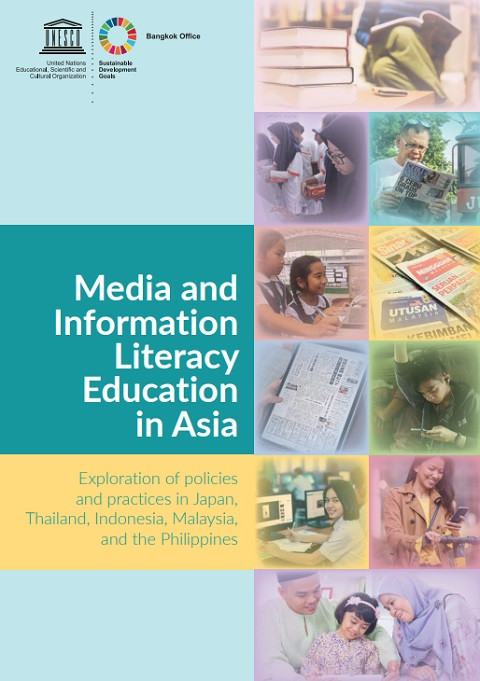 Media and Information Literacy Education in Asia: Exploration of Policies and Practices in Japan,Thailand, Indonesia, Malaysia, and the Philippines 발행 연도: 2020 저자: Masato Kajimoto | Phansasiri Kularb | Bobi Guntarto | Sabariah Mohamed Salleh | Therese Patricia S. Torres | Guillian Mae C. Palcon | Ramon Tuazon 단체 저자: UNESCO This book looked at the current media and information literacy education policies and teaching practices in formal and informal settings. It explores how MIL could address emerging and pressing problems such as political extremism, false news, online harassment and discrimination in Indonesia, Japan, Malaysia, the Philippines, and Thailand.
 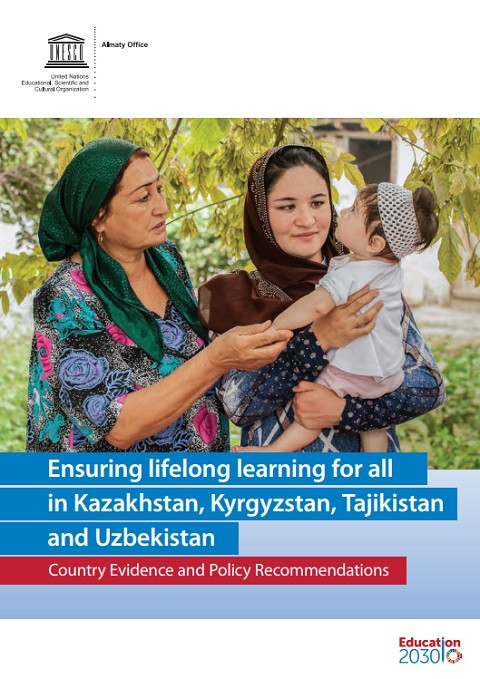 Ensuring Lifelong Learning for All in Kazakhstan, Kyrgyzstan, Tajikistan and Uzbekistan: Country Evidence and Policy Recommendations 발행 연도: 2020 저자: Arne Carlsen 단체 저자: UNESCO Lifelong Learning is at the heart of the 2030 Agenda for Sustainable Development and its 17 goals. More speci¬cally, Sustainable Development Goal 4 is devoted to ensuring quality education and lifelong learning opportunities for all. As the lead agency for education, UNESCO is mandated to support Member States in implementing SDG 4 through the Education 2030 Framework for Action. Central Asian countries – Kazakhstan, Kyrgyzstan, Tajikistan and Uzbekistan – have all shown their commitment to achieving the SDGs by 2030, including SDG 4, and have taken several actions in this regard. This sub-regional study aims to provide a broader picture of lifelong learning in Central Asia, supported by evidence and policy recommendations in order to propose a systemic approach for future education reforms. Обеспечение возможности обучения на протяжении всей жизни для всех в Казахстане, Кыргызстане, Таджикистане и Узбекистане: Опыт отдельных стран и рекомендации по вопросам политики 발행 연도: 2020 저자: Arne Carlsen 단체 저자: Организация Объединенных Наций по вопросам образования, науки и культуры (UNESCO) Обучение на протяжении всей жизни лежит в основе Глобальной программы устойчивого развития, состоящей из 17 целей. Суть Цели 4 в области устойчивого развития заключается в «Обеспечении всеохватного и справедливого качественного образования и поощрение возможности обучения на протяжении всей жизни для всех». ЮНЕСКО, как специализированному учреждению ООН по вопросам образования, было поручено оказывать государствам-членам содействие в достижении ЦУР 4 через выполнение Рамочной программы действий в области образования до 2030 года.Страны Центральной Азии – Казахстан, Кыргызстан, Таджикистан и Узбекистан – выразили заинтересованность в достижении к 2030 году всех ЦУР, включая ЦУР 4, и уже предприняли ряд действий в этом направлении. Цель настоящего субрегионального исследования состоит в предоставлении более точной картины положения дел в области обучения на протяжении всей жизни в Центральной Азии, подкрепленной фактическим материалом и рекомендациями по вопросам политики, для подготовки предложений по системному подходу к будущим реформам образования.
 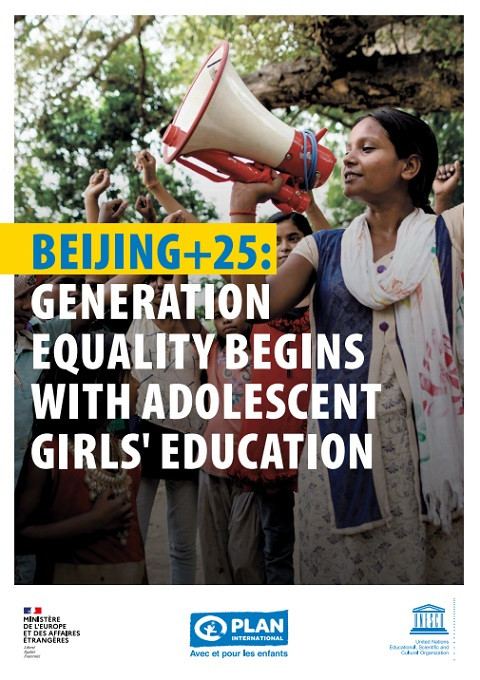 Beijing+25: Generation Equality Begins With Adolescent Girls' Education 발행 연도: 2020 단체 저자: Plan International France | France. Ministry for Europe and Foreign Affairs | UNESCO This publication examines progress and persistent gaps in our efforts to achieve gender equality in and through education since the adoption of the Beijing Platform for Action 25 years ago. In 2018, 130 million girls worldwide were out of school, and only two out of three girls were enrolled in secondary education. The crisis related to the COVID-19 pandemic is likely to further widen these gaps and threatens to interrupt the education of more than 11 million girls.This publication demonstrates the importance of adolescent girls' education for the advancement of the Beijing Platform for Action’s visionary agenda, and the achievement of the Sustainable Development Goals.It provides recommendations to fast-track investments and action on adolescent girls’ education during the 2021 Generation Equality Forum, and the related Action Coalitions aiming to accelerate progress for gender equality. It promotes intersectoral approaches and multi-stakeholder partnerships, and focuses on three ‘levers of action’: comprehensive sexuality education, the involvement of adolescent girls in science, technology, engineering and mathematics education, and the development of adolescent girls’ leadership. It shares adolescent girls’ own priorities and expectations, and their vision of what is needed for an equal future for us all. Pékin+25 : La Génération Égalité commence par l’éducation des adolescentes 발행 연도: 2020 단체 저자: Plan International France | France. Ministry for Europe and Foreign Affairs | Organisation des Nations Unies pour l'éducation, la science et la culture (UNESCO) Cette publication examine les progrès et les lacunes persistantes dans nos efforts pour parvenir à l'égalité des genres dans et par l'éducation depuis l'adoption du Programme d'action de Pékin il y a 25 ans. En 2018, 130 millions de filles dans le monde n'étaient pas scolarisées et seules deux filles sur trois étaient inscrites dans l'enseignement secondaire. La crise liée à la pandémie de COVID-19 est susceptible d'élargir encore ces écarts et menace d'interrompre l'éducation de plus de 11 millions de filles.Cette publication démontre l'importance de l'éducation des adolescentes pour l'avancement de l’agenda visionnaire du Programme d'action de Pékin et la réalisation des objectifs de développement durable.Elle formule des recommandations pour accélérer les investissements et les actions en faveur de l’éducation des adolescentes lors du Forum Génération Égalité de 2021 et des coalitions d’action qui seront lancées visant à accélérer les progrès en faveur de l’égalité des genres. Elle promeut des approches intersectorielles et des partenariats multipartites et se concentre sur trois « leviers d'action »: une éducation complète à la sexualité, la participation des adolescentes aux sciences, à la technologie, à l'ingénierie et aux mathématiques, et le développement du leadership des adolescentes. Elle fait part des propres priorités et attentes des adolescentes, ainsi que de leur vision de ce qui est nécessaire pour un avenir égal pour tous et toutes.
 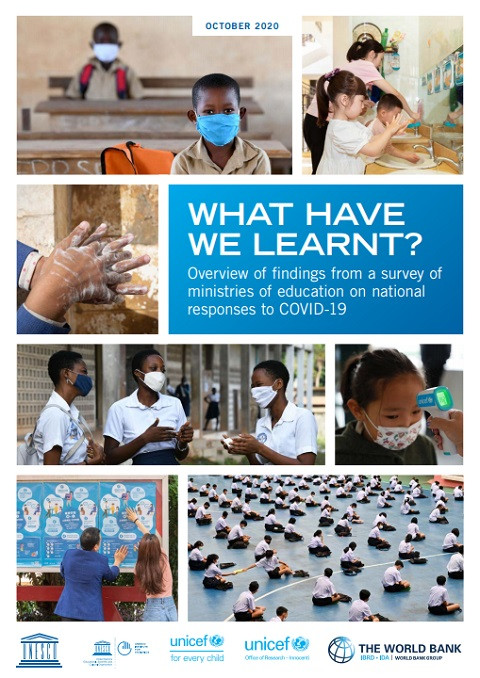 What Have We Learnt?: Overview of Findings From a Survey of Ministries of Education on National Responses to COVID-19 발행 연도: 2020 단체 저자: UNESCO | United Nations Children's Fund (UNICEF) | World Bank As part of the coordinated global education response to the COVID-19 pandemic, UNESCO, UNICEF and the World Bank conducted a Survey on National Education Responses to COVID-19 School Closures. In this joint report, the results of the first two rounds of data collection administered by the UNESCO Institute for Statistics (UIS) were analysed. They cover government responses to school closures from pre-primary to secondary education.
  International Literacy Day: Background Paper on 'Youth and Adult Literacy in the Time of COVID-19; Impacts and Revelations' 발행 연도: 2020 단체 저자: UNESCO Specially prepared on the occasion of International Literacy Day 2020, this background paper illustrates the impact of the COVID-19 crisis on youth and adult literacy, based on the limited information that is currently available. It provides five regional snapshots and identifies preliminary lessons learned thus far, while aiming to inspire continued reflection and subsequent action. It also makes the case for the ongoing importance of advancing youth and adult literacy, a priority that was already neglected even before the pandemic but which deserves all our attention. ILD 2020 thus seeks to trigger reimaginations of literacy teaching and learning in the COVID-19 crisis and beyond, with a particular focus on the role of educators.
  Understanding Media and Information Literacy (MIL) in the Digital Age: A Question of Democracy 발행 연도: 2019 저자: Ulla Carlsson 단체 저자: University of Gothenburg | UNESCO This book consists of three parts. In the first part, a number of articles of a more general nature discuss media and information literacy (MIL) in a variety of contexts as well as courses of development on national, regional and global levels. The focus in the second part is on Sweden, the host the UNESCO Global MIL Week Feature Conference 2019. The articles in this part present current research findings, policy decisions and political initiatives, and some examples of ‘best practices’ in the MIL area. The third part presents a new approach to MIL in a context of social change and Agenda 2030.
  Approaches to Language in Education for Migrants and Refugees in the Asia-Pacific Region 발행 연도: 2020 단체 저자: UNESCO | United Nations Children's Fund (UNICEF) UNESCO Bangkok commissioned this paper to examine strategies for addressing the needs of refugee, migrant and internally displaced children in the Asia-Pacific region. This document aims to create a stronger knowledge base to support Member States as they formulate education policies that are responsive to the needs of such children. This document aims to:Examine how linguistic diversity and human mobility intersect and impact minority, migrant and refugee children’s access to quality, inclusive educationLink policy priorities to promising practices, based on international frameworks and lessons learned from successful programmesRecommend steps for improving language-in-education policies and their implementation. To do this, this paper examines:Global and regional trends in migrationThe impact of migration on children’s educationLinguistic diversity and its implications for language-in-education policies and practicesResearch and resources that support inclusive quality education for migrant and refugee children.
  Multi-Stakeholder Approaches to Education for Sustainable Development in Local Communities: Towards Achieving the Sustainable Development Goals in Asia 발행 연도: 2020 단체 저자: UNESCO The idea for this publication first emerged from the ‘10th Asia-Pacific RCE Regional Meeting and Symposium on the Sustainable Development Goals: From Goals to Action’, held from 2 to 4 November 2017 at the India Habitat Centre in New Delhi, India. The case studies presented at the symposium became the basis for this publication.The cases presented in this publication show how RCEs create solutions that enable sustainable development practices in local communities by utilizing education, innovative learning methods and multi-stakeholder partnerships. Local stakeholders take ownership of the sustainability processes, consistently address the targeted SDGs, and demonstrate RCE contributions to the ESD for 2030 priority action areas – policy, education and training settings, educators, youth and community.