
자료
세계시민교육에 대한 이해를 넓히고 연구, 옹호 활동, 교수, 학습 등을 향상시킬 수 있는 다양하고 유용한 자료를 찾아보세요.
874 건의 결과가 검색되었습니다
 La vie scolaire, question humaine: la réflexion sur le rôle et la fonction de l'orientation scolaire en matière de coexistence 발행 연도: 2014 단체 저자: Bogotá. Secretaría de Educación del Distrito (SED) | Fundación para la Reconciliación Dans ce module, le Secrétariat d'Education de Bogotá présente des instruments pédagogiques et des activités qui visent à soutenir les communautés éducatives dans le processus de création et de mise en œuvre des plans intégrés d'éducation à la citoyenneté et à la coexistence civique élaboré par le Secrétariat à Bogotá Avec l'intention d'installer l'éducation pour la citoyenneté et la coexistence civique dans toutes les écoles publiques de la ville. Ce matériel devrait être utilisé par les directeurs d'école, les enseignants et les personnes intéressées dans l'élaboration et l'élaboration des plans dans chaque école. Education à la citoyenneté et de la coexistence: mon corps, mon premier territoire; cycle initial (pré-maternelle, jardin et transition) 발행 연도: 2014 단체 저자: Secretaría de Educación del Distrito (SED) | Fe y Alegría Ces douze modules font référence à une série d'activités qui mettent l'accent sur la façon dont les enfants de toutes les classes éducatives comprennent et vivent la citoyenneté, en renforçant et en facilitant les processus d'apprentissage basés sur l'autonomie. Ces matériels éducatifs, qui visent à être mis en œuvre dans les salles de classe, tentent de servir de ressources pour les éducateurs et autres agents qui travaillent ou sont intéressés à travailler avec l'éducation à la citoyenneté et la coexistence. L'objectif global est de fournir une éducation de qualité. Educación para la ciudadanía y la convivencia: construimos paz a nuestra medida; ciclo inicial (prejardín, jardín y transición) 발행 연도: 2015 단체 저자: Secretaría de Educación del Distrito (SED) | Fe y Alegría These twelve modules make reference to a series of activities that focus on how children from all the educative grades understand and live citizenship, strengthening and facilitating the learning processes based on autonomy. This educative materials, which are aimed at being implemented inside the classrooms, attempt to serve as input resources for educators and other agents that work on or are interested in working with citizenship education and coexistence. The overall objective is to provide quality education.
 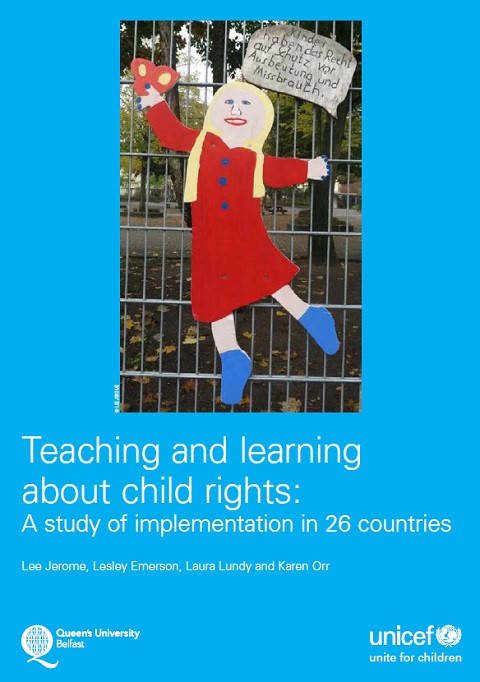 Teaching and Learning about Child Rights: A Study of Implementation in 26 Countries 발행 연도: 2015 저자: Lee Jerome | Lesley Emerson | Laura Lundy | Karen Orr 단체 저자: Queen’s University Belfast | United Nations Children's Fund (UNICEF) This research contributes to the global debate on child rights education (CRE). It explores implementation of CRE in early childhood education, primary and secondary schools in 26 countries with a UNICEF National Committee presence. It includes a literature review, results from an on-line survey completed by national experts, seven country case studies and a series of benchmarking statements for CRE implementation.
  Femmes et mouvement populaire d’habitation au Brésil: Vers une féminisation des luttes pour le droit au logement ? (Économie et Solidarités; Vol. 43, No. 1-2) 발행 연도: 2013 저자: Charmain Levy | Marianne Carle-Marsan | Anne Latendresse 단체 저자: Centre interdisciplinaire de recherche et d’information sur les entreprises collectives (CIRIEC)‑Canada Au Brésil, depuis la fin des années 1990, des actions collectives ont lieu autour du droit à la ville, en particulier pour le droit au logement. Alors qu’il existe des centaines, voire des milliers de bâtiments vacants dans le centre-ville de Rio de Janeiro et São Paulo, notamment, des organisations populaires occupent des bâtiments publics vides en vue d’obtenir le droit d’y résider et, éventuellement, de les transformer en logement public. Deux études ont mis en lumière la présence majoritaire de femmes qui, issues du milieu des sans-abri, des taudis et des favelas, jouent un rôle important dans les occupations. Dans cet article, nous proposons une analyse de la trajectoire de ces femmes afin de voir comment leur engagement à l’intérieur du mouvement urbain a changé leur vie sur les plans individuel et collectif. En d’autres termes, nous allons nous pencher sur le processus de construction du sujet politique opéré par des femmes de milieux précaires, actives au sein du mouvement pour le droit au logement. Par ailleurs, en nous penchant sur leur rôle au sein de ce mouvement, nous tenterons de voir dans quelle mesure ces femmes l’influencent et, en nous inspirant des travaux de Lefebvre et de Castells (1980), dans quelle mesure elles contribuent à la production de la ville.
 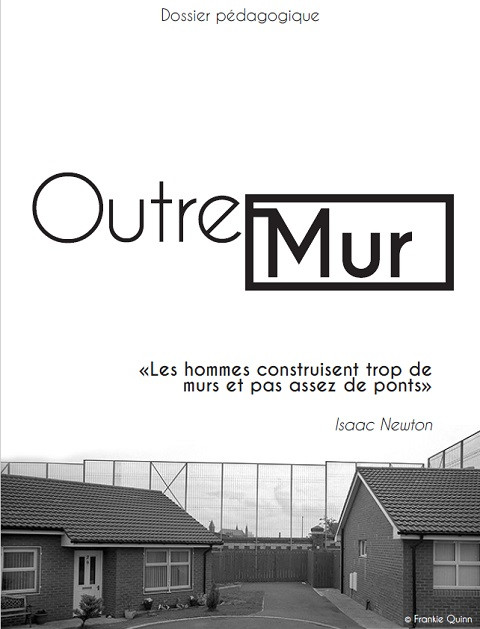 Outre-Mur: Les hommes construisent trop de murs et pas assez de ponts; Dossier pédagogique 발행 연도: 2017 저자: Julie Bijnens | Lucie Desaubies | Fanny Gosset | Hélène Pochet 단체 저자: Institut des Hautes Études des Communications Sociales (IHECS) | Annoncer la Couleur (ALC) Le dossier pédagogique Outre-Mur a été réalisé dans le cadre d’un mémoire médiatique de fin d’études à l’IHECS (Institut des Hautes Études des Communications Sociales); à Bruxelles|. Hélène; Lucie; Fanny et Julie sont étudiantes en dernière année dans l’option “Animation Socioculturelle et Éducation Permanente”. Leur intérêt commun pour la problématique des murs frontières les a réunies autour de ce projet ambitieux. Étant préoccupées par le respect des droits de l’homme et des libertés individuelles; la problématique les a interpellées. Cet outil a été développé en collaboration avec Annoncer la Couleur, programme fédéral d’éducation à la citoyenneté mondiale qui propose aux (futurs) enseignants des démarches pédagogiques participatives pour aborder avec les élèves des questions de citoyenneté mondiale. Riche de son expérience pédagogique, le programme vise à éveiller et former les élèves aux interdépendances mondiales et les incite à agir en citoyens responsables, conscients de l’importance de la solidarité internationale, et à contribuer à un monde plus juste et plus durable.
  주요 외국의 환경교육 비교 연구 발행 연도: 2018 저자: 김찬국 | 이선경 | 김남수 | 민경석 | 황세영 | 이은주 | 김태연 | 강진영 단체 저자: 대한민국 환경부 | 한국환경교육학회 이 연구는 유엔 지속가능발전교육 10년(UN DESD: 2005~2014)이 종료된 시점에서 국제기구와 주요 외국의 환경교육 분야에서 최근 나타나는 변화에 대한 종합적인 이해가 필요한 상황에서 시작되었다.특히 최근 환경교육 분야의 축적된 경험과 논의를 바탕으로 각국의 환경 및 교육상황에 부합하여 환경교육 법·제도 등을 정비하려는 노력이 국제 사회에서 이루어지고 있다는 점에 주목하였다. 이 조사 연구는 아시아, 유럽, 북미와 남미에 위치한 10개국(일본, 중국, 대만, 싱가포르, 호주, 영국, 독일, 미국, 캐나다, 브라질)을 대상으로 환경교육 현황을 조사하고 비교분석과 발전방향을 제시한다. 아울러 국제기구인 UNEP와 UNESCO의 환경교육 정책과 실행 방식도 함께 살펴보았다. Part I에는 주요 외국 10개국의 환경교육 상황과 UNESCO, UNEP의 환경교육 정책을 수록하였고, Part II에서는 각국의 환경교육을 비교 분석하고 있다. Citizenship education and coexistence: guides for citizenship and coexistence from the colective construction of meaning and networks; social and political participation 발행 연도: 2015 단체 저자: Centro de Investigación y Educación Popular (CINEP) | Secretaría de Educación del Distrito (SED) Social and political participation is one of the main themes related with education for citizenship and coexistence. Therefore, this manual identifies three areas of reflection: 1) Social and political participation as human action , 2) Spaces of social and political participation, 3) Actions of transformation. Each one of these areas is accompanied by didactic tools that allow to deepen into the contents that are based on fundamental, theoretical and practical elements, which could be useful in the pedagogical process leaded by the participants of the project. Educación para la ciudadanía y la convivencia: manual de ciudadanía y convivencia desde la construcción colectiva de sentidos y redes; participación social y política 발행 연도: 2015 단체 저자: Centro de Investigación y Educación Popular (CINEP) | Secretaría de Educación del Distrito (SED) Social and political participation is one of the main themes related with education for citizenship and coexistence. Therefore, this manual identifies three areas of reflection: 1) Social and political participation as human action , 2) Spaces of social and political participation, 3) Actions of transformation. Each one of these areas is accompanied by didactic tools that allow to deepen into the contents that are based on fundamental, theoretical and practical elements, which could be useful in the pedagogical process leaded by the participants of the project. Education à la citoyenneté et de la coexistence: la citoyenneté manuelle et la coexistence de construction collective du sens et de réseaux; participation sociale et politique 발행 연도: 2015 단체 저자: Centro de Investigación y Educación Popular (CINEP) | Secretaría de Educación del Distrito (SED) La participation sociale et politique est l'un des principaux thèmes liés à l'éducation à la citoyenneté et à la coexistence. Par conséquent, ce manuel identifie trois domaines de réflexion: 1) la participation sociale et politique que l'action humaine, 2) espaces de participation sociale et politique, 3) Actions de transformation. Chacun de ces domaines est accompagné d'outils didactiques qui permettent d'approfondir dans le contenu qui sont basés sur des éléments fondamentaux, théoriques et pratiques, qui pourraient être utiles dans le processus pédagogique mené par les participants du projet.