
자료
세계시민교육에 대한 이해를 넓히고 연구, 옹호 활동, 교수, 학습 등을 향상시킬 수 있는 다양하고 유용한 자료를 찾아보세요.
950 건의 결과가 검색되었습니다
 A Proposed Strategy for Educational Institutions of Political Socialization in Jordan to Promote National Unity Concepts 발행 연도: 2016 단체 저자: University of Jordan This study aimed to develop an educational proposed strategy for the institutions of political socialization in Jordan to promote national unity concepts from the perspective of Jordanian university students. The study sample consisted of 350 male and female students, were chosen in a stratified random students way from Jordanian public universities for undergraduate for the academic year 2013/2014...the three universities were selected for the study were spread over three regions: southern Region (Muta University), the central Region (The University of Jordan) and the North Region (Yarmouk University)... The study found the following results: -The overall appreciation of the reality of the role of political education institutions in the promotion of national unity concepts from the perspective of Jordanian university students came moderate. -The overall appreciation of the reality of the challenges facing political education institutions in the promotion of national unity concepts from the point of Jordanian university students was moderate...Of the most important recommendations: the introduction of the proposed strategy for developing the role of the political education institutions in the promotion of national unity concepts.
  التعليم وتأسيس المواطنة لدى الإنسان العربي 발행 연도: 2014 저자: مدكور، علي أحمد 단체 저자: Cairo University تناولت هذه المقالة قضية المواطنة وإشكاليتها وتنوعاتها مركّزة على علاقتها بالديمقراطية باعتبارها آلية لتحقيق العدل الاجتماعي، فالديمقراطية الحقيقية لها ثلاثة مقومات: أن يشارك الناس في صناعة القرار، وفي تنفيذ القرار، وفي الثمار الناتجة عن القرار. كما حاولت الورقة التركيز على أسس المواطنة من جهة مثل المشاركة الفعلية في كل مجالات الحياة الاجتماعية، السياسية، الاقتصادية والتعليمية والثقافية؛ ومقومات المواطنة من جهة أخرى مثل حقوق الإنسان كالحق في الحياة والحرية والمساواة والعدل والعمل والتعليم والتفكير والتعبير والاعتقاد... كل هذه الحقوق تمثل المقومات الرئيسة لقوة الوطن والمواطنة. كما تمّ الاعتماد في هذه الورقة على المواثيق العالمية لحقوق الإنسان في عرض العلاقة بين المواطنة وبين هذه المقومات. من هذه المواثيق: الإعلان العالمي لحقوق الإنسان في الإسلام، والإعلان العالمي لحقوق الإنسان الذي أعلن عام 1948، والاتفاقية الأوروبية لحقوق الإنسان. Education and the Laying the Foundations of Citizenship for Arab Humans 발행 연도: 2014 저자: مدكور، علي أحمد 단체 저자: Cairo University This article deals with the issue of citizenship and its variations focusing on its relation to democracy being a mechanism to achieve social justice. Real democracy has three determinants: people’s participation in taking the decisions, in implementing them and in benefiting from their effects. The paper also tried to focus on the fundamentals of citizenship from the perspective of effective participation in all aspects of social, economic and cultural life, on one side, and on the determinants of citizenship such as human rights -the right to life, freedom, equality, justice, work, thinking, expression and belief… from the other - all those rights represent the main determinants of the strength of the homeland and citizenship. Among the human rights conventions: The Universal Islamic Declaration of Human Rights, The Universal Declaration of Human Rights of 1948, The European Convention on Human Rights.
  مدى توافر قیم المواطنة ومفاھیمھا في كتب التربیة الوطنیة بالمملكة العربیة السعودیة من وجھة نظر المعلمین 발행 연도: 2014 단체 저자: Assiut University هدفت الدراسة الحالية إلى الكشف عن القيم والمفاهيم المتضمنة في كتب التربيـة الوطنية في المملكة العربية السعودية، وتقييمات المعلمين لمدى توفر تلك القيم والمفـاهيم . ولتحقيق ذلك قام الباحث بتحليل محتوى كتب التربية الوطنية لجميع الـصفوف (الرابـع الابتدائي – الثالث الثانوي )، كما تم اختيار عينة مكونة من (١٨٠) معلماً مـن معلمـي التربية الوطنية االذين يدرسون خلال العام الدراسي ٢٠٠٩/٢٠١٠م، الصفوف من الرابع ولغاية الثالث الثانوي في مدارس منطقة القصيم . كما تم بناء أداتـين الأولى اسـتخدمت لتحليل محتوى كتب التربية الوطنية، أما الأداة الثانية فقد استخدمت لتقييمـات معلمـي التربية الوطنية لمحتوى الكتب . بينت النتائج عدم وجود توزان في توزيع القيم الإجتماعيـة (الصدق، الأمانة، التعاون ) للصفوف السادس - الأول الثانوي . كما تبين وجود عدد كبير من القيم الإجتماعية المتضمنة في كتب التربية الوطنية في المملكة العربية السعودية مقارنـة بالقيم الشخصية والعالمية . دلت النتائج إلى أن تقييمات المعلمين للقيم والمفاهيم المتضمنة في كتب التربية الوطنية في المملكة العربية السعودية في المجال الشخصي كـان مرتفعـاً، وأن تقييمات المعلمين للقيم والمفاهيم المتضمنة في كتب التربية الوطنيـة في المملكـة العربيـة السعودية في المجال الوطني والإجتماعي كان متوسطاً . كما أن تقييمات المعلمـين للقـيم والمفاهيم المتضمنة في كتب التربية الوطنية في المملكة العربية السعودية في المجال العالمي كان متوسطاً. وقد خرجت الدراسة بمجموعة من التوصيات بالإستناد إلى نتائج الدراسة. The Availability of the Values of Citizenship and It’s Concepts in the Books of National Education, Saudi Arabia, from the Teachers’ Perspective 발행 연도: 2014 단체 저자: Assiut University The purpose of the study was to investigate valuesand concepts included in Civil Education books in Saudi Arabia, and teacher evaluation of the availability of values and concepts. To achieve the study the researcher analyize the contents of the civil education books (fourth grade - third year secondary), a sample has been selected consisting of 180 teachers of civil education, who taught during (2009/2010), in Alqasim schools. Two instruments were developed. The first one was used to analyize the contents of national education books, while the second one was used to evaluate teachers of books' content. The result showed that there is no balance in social values distribution (honesty, trust and co-opration) for (sixth grade –first secondary). The result showed a large number of social values are included in the national education books compared to international and personal values. The results showed that teachers' evaluation of values and concepts included in the national education books in personal field was high.Teachers' evaluation of the values and concepts in the national and social field was medium. Teachers evaluation for values and concepts in the global field was medium.The study presents a group of relevant recommendations.
  مقاربة بنائية-اجتماعية لتعليم/تعلم أرض لشعوب عدة ذات مذاهب مختلفة 발행 연도: 2012 단체 저자: University of Balamand نتيجة لاستطلاع للرأي، أفاد بعض الطلاب أن عملية تعليم/ تعلم مادة التاريخ في المراحل ما قبل الجامعية تعتبر فاشلة لكون التعليم سردياً والتعلم محفوظات للترداد وقت الامتحان. لذلك تعتقد الغالبية منهم أن إعادة النظر بمنهج التاريخ ضرورة وطنية وثقافية. إن تعليم التاريخ يهدف إلى تكوين كفايات أساسية لدى الطالب مثل قيامه بعمليات التحليل والتوليف والإنتاج. كما أنه توجد حاجة إلى تغيير عملية التعليم/التعلم من كونها سردية إلى عملية غائية تتوخى بناء الفكر المدني، الفكر النقدي. فالإشكالية لها ثلاثة أطر: الإطار الجغرافي-الديموغرافي الذي يتعلق بتكوين لبنان، والإطار النفسي-التعليمي الذي يتعلق بمفهوم التاريخ وكيفية بنائه من خلال الإفادة من الفكر النقدي، والإطار الاجتماعي-التربوي الذي يتعلق بالنموذج التعليمي لمادة التاريخ والنشاط الفكري للطالب. وهذا يفترض الربط بين عدة عناصر ثقافية مثل الرجوع إلى المصادر التاريخية المتعددة، ومناقشتها من حيث تسلسل الأحداث وقراءتها ونقدها، ودراسة فكر الشخصيات التي صنعت التاريخ وثقافتها. السؤال الأهم هو: لماذا نعلم مادة التاريخ في المدرسة؟ في أية مرحلة نبدأ وما هي الأهداف في كل مرحلة؟ إن الإجابات على هذا التساؤل قد تكون متعددة، ومنها: تحديد الهوية الوطنية، تعزيز فكر المواطنة، وتنمية الثقافة الوطنية، وتعريف المتعلم بالروابط التي تجمع لبنان بمحيطه، والتعرف على الإرث الحضاري للشعب، وارتباط المتعلم بأرضه، و قبول الآخر. وبعد دراسة التوجهات اللبنانية والعالمية لتعليم/تعلم التاريخ، وضعنا فرضية مفادها أن تكوين الفكر النقدي والموضوعي لدى المتعلم، من خلال دراسته للتاريخ يمكنه من ترسيخ مفهوم قبول الآخر، ذلك أن التعدد الديني والمذهبي في لبنان يعتبر مصدر غنى حضارياً وتفاعلاً اجتماعيا وعامل تماسك وطني على أساس أن التاريخ هو تاريخ أرض لشعوب عدة ذوي مذاهب مختلفة. Teaching/Learning the History of a Land with Diverse Socio-religious Groups: A Socio-constructivist Approach 발행 연도: 2012 단체 저자: University of Balamand A survey of the opinions of some students indicated that they viewed the teaching/learning of history they had undergone in pre-university levels of education as a wasted effort. The teaching consisted of narration, while the learning took the form of memorization of contents to be recited at the time of the examination. The majority considered a revision of the method of teaching history to be a national and cultural necessity. Given that the teaching of history has in view the acquisition by the student of basic skills, such as analysis, synthesis and composition, there is a need to change the teaching/learning process from narration to a targeted development of civic consciousness and critical thinking. The problem is posed within three frameworks: The geographic-demographic framework relating to the composition of the Lebanon; the psychological-educative framework relating to the understanding of history and how it is constructed. through the utilization of critical thinking; the social-educational framework relating to the educational paradigm to be used in the teaching of history and the intellectual activity of the student. This requires the intertwining of several educational elements such as the utilization of the various historical sources, discussing the sequence of events therein and reading them critically, while at the same time studying the thinking of the personalities who influenced the historical developments, and their cultural backgrounds. The main questions here is: Why do we teach history in schools? At which level do we start? What are the targets in each level? The answers to these questions can be many: Defining the national identity; strengthening civic thinking; developing a national culture; making the student aware of what ties the Lebanon to the surrounding region; acquainting ourselves with the cultural heritage of the people; strengthening the attachment with the land; teaching to learn to accept the other. Following an investigation of the Lebanese directives for the teaching of history, as well as the international ones, a hypothesis was proposed: the development of objective critical thinking through the study of history would consolidate the concept of the acceptance of the other. Indeed, the religious and sectarian pluralism of the Lebanon constitutes a source of cultural wealth. It is a factor of national cohesion. The history is a history of a land of many peoples with differing religious persuasions.
 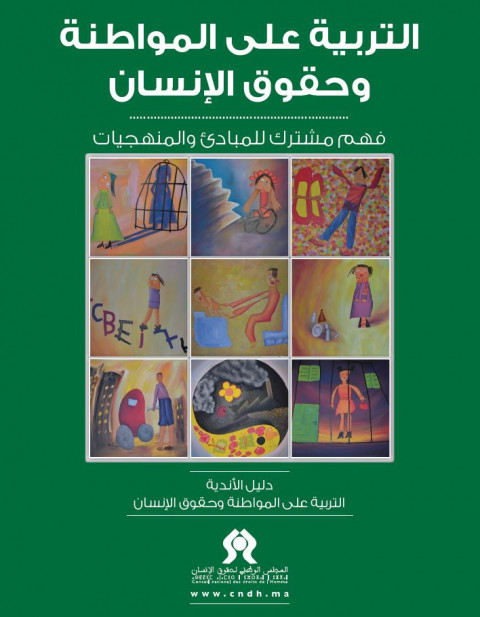 التربية على المواطنة وحقوق الإنسان: فهم مشترك للمبادئ والمنهجيات. دليل الأندية 발행 연도: 2014 단체 저자: National Council for Human Rights جاء هذا الدليل استجابة لحاجة ملحة تم رصدها وتشخيصها من خلال التجربة العملية واللقاءات التشاورية مع أندية التربية على المواطنة وحقوق الإنسان في المؤسسات التعليمية. يستهدف هذا الدليل: وضع إطار مرجعي لأندية التربية على حقوق الإنسان من حيث الأهداف المرجعيات والمبادئ والمقاربات من جهة، وضوابط العمل وأدوات وتقنيات التنشيط من جهة ثانية؛ توحيد وتقريب الرؤى وتيسير الفهم والتواصل بين مختلف مكونات الأندية وشركائهم؛ تقديم أرضية لمأسسة وتفعيل الأندية. ويبقى هذا المشروع مفتوحا على الاجتهادات والإغناء والتكييف وفق خصوصيات الجهات والأقاليم والمؤسسات والفئات المستهدفة في إطار احترام الأهداف المنشودة. لذا فإن هذا الدليل جاء ليوحد الجهود ولينسق الرؤى وليستثمر التراكمات والإبداعات والاجتهادات التي بادرت بها مختلف الأطراف المعنية بالموضوع، وليفتح أفقا أرحب لإرساء وتنظيم أندية التربية على المواطنة وحقوق الإنسان. تشمل محتويات الدليل: دوافع التربية على المواطنة وحقوق الإنسان، ومفاهيمها، وتعريف أدوار مؤسسات التنشئة الاجتماعية والتربوية، الحقوق الديمقراطية والفاعلون في الوسط المدرسي، مبادئ الأندية وأهدافها وبناها، وتشغيلها وفاعليتها وتمويلها، وتقنيات العمل، وغيرها. Education on Citizenship and Human Rights: A Common Understanding of Principles and Methodologies; A Guide for Clubs 발행 연도: 2014 단체 저자: National Council for Human Rights This guide responds to an urgent need that was identified and diagnosed during practical experience and consultative meetings with the education on citizenship and human rights clubs in the educational institutions. The guide aims at: developing a reference framework for the education on human rights clubs regarding their objectives, references, principles and approaches, on one side, and for the regulations, tools and techniques of the activities on the other; streamlining and approaching visions and facilitating understanding and communication among the different components of the clubs and partners; providing the ground for the institutionalization and activation of the clubs.The project remains open to different perspectives, enriching and adaptation according to the characteristics of the different regions, institutions and target categories relevant to the project’s objectives. Thus the guide is to streamline efforts, coordinate visions and capitalize on the accumulations, creativeness and perspectives of the different relevant parties and to open up wider horizons for the establishing and the clubs. Contents include: why the education on citizenship and human rights, concepts, definitions, roles of the institutions for social and educational nurturing, democratic rights and active actors in the school, the principles, objectives, structures, operating, efficiency, funding and techniques of clubs, among others.
 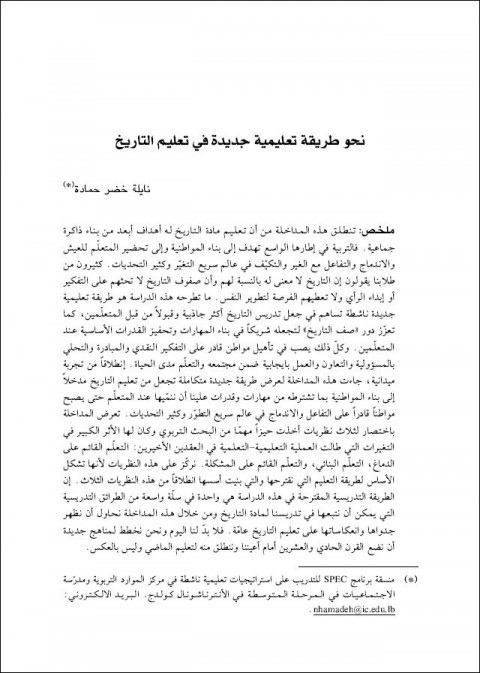 نحو طريقة تعليمية جديدة في تعليم التاريخ 발행 연도: 2012 단체 저자: International College تنطلق هذه المداخلة من أن تعليم مادة التاريخ له أهداف أبعد من بناء ذاكرة جماعية. فالتربية في إطارها الواسع تهدف إلى بناء المواطنية والى تحضير المتعلّم للعيش والاندماج والتفاعل مع الغير والتكيّف في عالم سريع التغيّر وكثير التحديات. كثيرون من طلابنا يقولون إن التاريخ لا معنى له بالنسبة لهم وأن صفوف التاريخ لا تحثّهم على التفكير أو إبداء الرأي ولا تعطيهم الفرصة لتطوير الذات. ما تطرحه هذه الدراسة هو طريقة تعليمية جديدة ناشطة تساهم في جعل تدريس التاريخ أكثر جاذبية وقبولاً من قبل المتعلّمين، كما تعزّز دور "صف التاريخ" لتجعله شريكاً في بناء المهارات وتحفيز القدرات الأساسية عند المتعلّمين. وكلّ ذلك يصب في تأهيل مواطن قادر على التفكير النقدي والمبادرة والتحلي بالمسؤولية والتعاون والعمل بايجابية ضمن مجتمعه والتعلّم مدى الحياة. انطلاقا من تجربة ميدانية، جاءت هذه المداخلة لعرض طريقة جديدة متكاملة تجعل من تعليم التاريخ مدخلاً إلى بناء المواطنية بما تشترطه من مهارات وقدرات علينا أن ننمّيها عند المتعلّم حتى يصبح مواطناً قادراً على التفاعل والاندماج في عالم سريع التطوّر وكثير التحديات. تعرض المداخلة باختصار لثلاث نظريات أخذت حيزاً مهمّا من البحث التربوي وكان لها الأثر الكبير في التغيرات التي طالت العملية التعليمية–التعلمية في العقدين الأخيرين: التعلّم القائم على الدماغ، التعلّم البنائي، والتعلّم القائم على المشكلة. نركّز على هذه النظريات لأنها تشكل الأساس لطريقة التعليم التي نقترحها والتي بنيت أسسها انطلاقاً من هذه النظريات الثلاث. إن الطريقة التدريسية المقترحة في هذه الدراسة هي واحدة في سلّة واسعة من الطرائق التدريسية التي يمكن أن نتبعها في تدريسنا لمادة التاريخ ومن خلال هذه المداخلة نحاول أن نظهر جدواها وانعكاساتها على تعليم التاريخ عامّة. فلا بدّ لنا اليوم ونحن نخطط لمناهج جديدة أن نضع القرن الحادي والعشرين أمام أعيننا وننطلق منه لتعليم الماضي وليس العكس.