
자료
세계시민교육에 대한 이해를 넓히고 연구, 옹호 활동, 교수, 학습 등을 향상시킬 수 있는 다양하고 유용한 자료를 찾아보세요.
3,229 건의 결과가 검색되었습니다
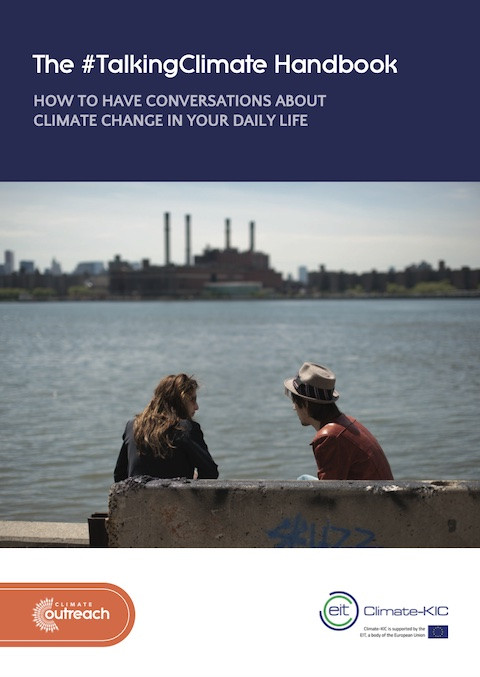 The #Talking Climate Handbook: How to Have Conversations About Climate Change in Your Daily Life 발행 연도: 2019 저자: Robin Webster | George Marshall 단체 저자: Climate Outreach | EIT Climate-KIC This handbook is for anyone who wants to have constructive day-to-day conversations about the climate crisis. It provides pragmatic and evidence-based guidance on how to talk about climate change with friends and family, acquaintances and strangers - on the bus, at work, at a sports event or at home over dinner. The handbook is informed by the idea that you don’t have to be a scientist, or live in a certain place, to care about and want to talk about climate change. It is a topic for everybody, whoever and wherever we are.
 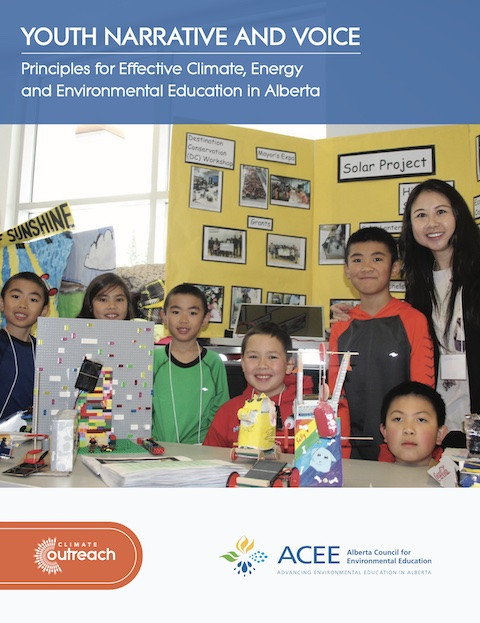 Youth Narrative and Voice: Principles for Effective Climate, Energy and Environmental Education in Alberta 발행 연도: 2020 저자: Christopher Shaw | Amber Bennett | Susie Wang 단체 저자: Climate Outreach | Alberta Council for Environmental Education (ACEE) This report provides educators with 10 principles for developing new energy and climate change education resources in Alberta, and example narratives and language to engage students. The findings and recommendations are drawn primarily from a series of workshops with Alberta students held during the fall of 2019. A survey of Alberta youth conducted by Leger, a literature review and interviews with Alberta teachers provided additional insights that deepened, broadened and ‘sense checked’ the workshop results.
  Secondary Education and Skills 발행 연도: 2020 단체 저자: Generation Unlimited | Global Initiative on Decent Jobs for Youth All young people need access to quality education and learning that would help them develop the skills, knowledge, attitudes and values they need to find and retain productive work, to make informed decisions, and to positively engage in their communities. However, millions of young people remain out of school or do not have access to quality learning opportunities. The COVID-19 pandemic and the resulting economic downturn have made the challenges facing young people even more pressing, as shrinking labour markets leave low-skilled young people with fewer choices, and render them more vulnerable to exploitation.There is a need for a radical re-think of what works, seeking a radical improvement in traditional curricula, the number of trained professional teachers, student–teacher ratios, and the teaching methods and strict school timetables that have become less relevant to the current needs of young people.The aim of this guide is to support the Generation Unlimited strategic priorities, and to inform policy makers and social partners, so as to guide action on investment, policy change and delivery, increasing the likelihood of successful outcomes and decent jobs for young people.
  Positioning ICT in Education to Achieve the Education 2030 Agenda in Asia and the Pacific: Recommendations for a Regional Strategy 발행 연도: 2018 저자: Hyojeong So | Kyungsim Yeon | Kyungsim Yeon | Jian Xi Teng 단체 저자: UNESCO Bangkok This regional study is an important document for Asia-Pacific Member States as it consolidates data related to the effective use of ICT in education. One highlight of this study is the five priority areas for the use of ICT towards achieving SDG4 and Education 2030 that were identified based on a synthesis of the data:ICT for transforming and expanding TVET and higher education ICT for improving teacher qualityICT for improving access to and quality of secondary education ICT for enabling inclusive and equitable learningICT for monitoring and evaluation
 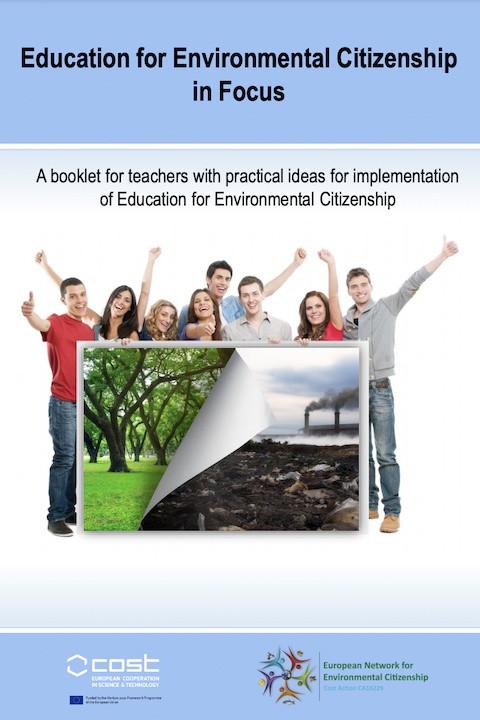 Una visión nítida de la Educación para la Ciudadanía Ambiental: Una publicación para profesorado con ideas prácticas para trabajar la Ciudadanía Ambiental a través de la educación 발행 연도: 2019 단체 저자: European Network for Environmental Citizenship (ENEC) La Red Europea para la Ciudadanía Ambiental (ENEC) – financiada como Acción COST (CA16229-Horizon 2020) – aúna a más de 130 expertos de 38 países con el objetivo de mejorar la comprensión, práctica y evaluación de la Ciudadanía Ambiental en Europa y en los países participantes. El concepto de Ciudadanía Ambiental ha sido influyente en muchos ámbitos como la economía, la política, la filosofía, la gestión y el comercio y se podría desarrollar y aplicar mejor en el ámbito de la educación. La actual crisis ambiental, el cambio climático, la pérdida de biodiversidad y la contaminación requieren de una educación que permita el empoderamiento de los ciudadanos. La educación juega un papel clave en la formación de la futura ciudanía. El enfoque didáctico para una ciudadanía ambiental es una metodología que apunta en esta dirección. Esta metodología propone diferentes pasos y etapas, aunque no es obligatorio seguirlos todos o aplicarlos en un determinado orden. Dependiendo de las circunstancias, del problema ambiental que se esté tratando, del nivel educativo, (p. ej. Primaria o Secundaria) o del contexto (p. ej. formal o no formal), se pueden llevar a cabo unas adaptaciones u otras. Focus sur l’Éducation à la Citoyenneté Environnementale: Un livret pour les enseignants avec des idées pratiques pour l’éducation à la citoyenneté environnementale (EEC) 발행 연도: 2019 단체 저자: European Network for Environmental Citizenship (ENEC) Le réseau européen pour la citoyenneté environnementale – European Network for Environmental Citizenship (ENEC) – financé en tant qu’Action COST (CA16229-Horizon 2020) – a réuni plus de 120 experts venant de 38 pays dans l’objectif d’améliorer la compréhension, la pratique et l’évaluation de la Citoyenneté Environnementale en Europe et dans lespays participants. La Citoyenneté Environnementale a été un concept influant dans de nombreux champs – économie, politique, philosophie, management organisationnel et entrepreneurial, marketing – et pourrait également être mieux exploitéeet davantage établie dans le champ de l’éducation. La crise environnementale contemporaine avec le changement climatique, perte de la biodiversité, pollution de l’air et tous les autres problèmes environnementaux locaux et globaux exigent une éducation à même d’habiliter des citoyens environnementaux. L’éducation joue un rôle clé dans la construction des futurs citoyens environnementaux. L’approche pédagogique de l’Éducation à la Citoyenneté Environnementale est une proposition qui va dans ce sens. L’approche recommande des éléments spécifiques tels des stades et étapes, mais il n’est pas obligatoire de tous les suivre ou de les appliquer selon un ordre linéaire particulier. Selon le problème environnemental à l’étude, le niveau d’éducation (par ex. primaire ou secondaire) et le mode éducatif (par ex. formel ou non-formel), les différenciations et adaptations nécessaires peuvent être faites.
  The Big Conversation: Climate Change; Final Report 발행 연도: 2021 저자: Michael Bruter | Sarah Harrison | Sandra Obradović | Elisabet Vives 단체 저자: British Council | London School of Economics and Political Science This research draws on experience from the field of international cultural relations as well as the latest academic research on values, behaviours and norms to understand more about how we can create the conditions for co-operation on shared global challenges.It delivers new insight on values and attitudes towards climate change among the populations of China, India, Japan and Mexico – selected to represent a diverse range of major world economies who are also important players in the global climate change debate.The research also draws on the experience of international cultural relations experts to provide new insight on how to strengthen international cooperation on climate change and the important role that cultural relations can play in supporting that.
 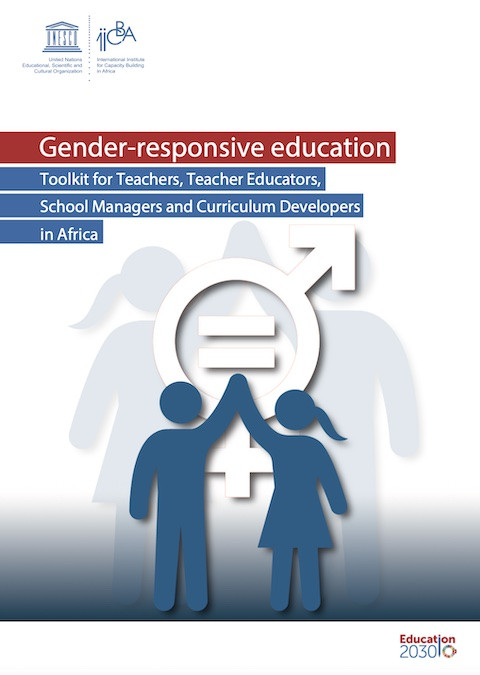 Gender-Responsive Education: Toolkit for Teachers, Teacher Educators, School Managers and Curriculum Developers in Africa 발행 연도: 2020 저자: Dawit Mekonnen | Haregewoin Cherine 단체 저자: UNESCO International Institute for Capacity-Building in Africa (IICBA) This GRE Toolkit is intended to address gender equality in education through intervention across the whole education sector. More specifically, the toolkit contributes to the enhancement of institutional capacities to develop gender responsive curricula, evaluate teaching-learning materials, organize/create gender responsive classroom interaction, eliminate stereotypes in teaching and learning materials, support improvement of the teaching methods and learning assessment techniques in schools and Teacher Training Institutes.The Toolkit is a guide for educators who plan to facilitate gender-responsive education. As such it consists of activities, tools and notes to the facilitators in addition to presenting conceptual discussions and relevant data.
 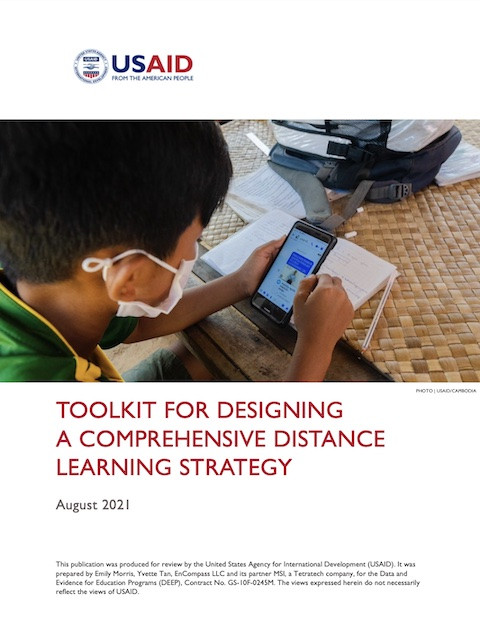 Toolkit for Designing a Comprehensive Distance Learning Strategy 발행 연도: 2021 저자: Emily Morris | Yvette Tan 단체 저자: United States Agency for International Development (USAID) The purpose of this toolkit is to provide practical guidance (tools, examples, and resources) for designing a comprehensive distance learning strategy that covers an entire education sector or system.
 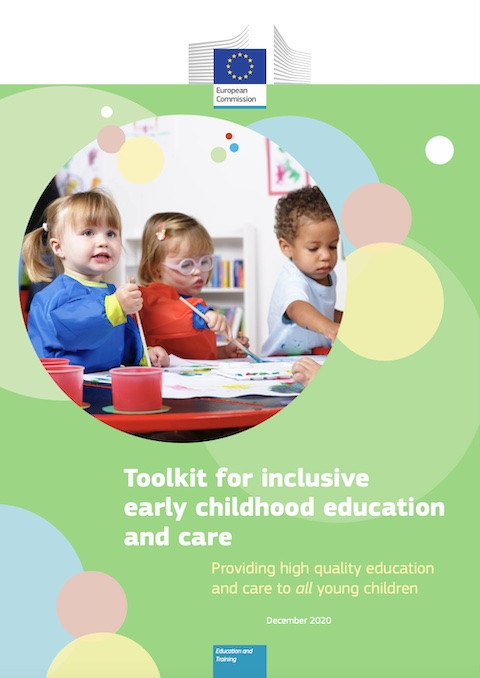 Toolkit for Inclusive Early Childhood Education and Care (ECEC): Providing High Quality Education and Care to All Young Children 발행 연도: 2021 단체 저자: European Commission | European Union (EU) Early childhood education and care (ECEC) is the first step on the lifelong learning ladder. It provides young children with professional support to grow, learn and flourish. While it benefits all children, it is even more crucial to children who may face additional needs or difficulties due to individual or family circumstances, e.g. children living in poverty or precarious conditions, children with disabilities or special learning needs, or children from a migrant background or from a minority ethnic community. All children must therefore be able to benefit from high quality ECEC, independently from their individual or family circumstances. It helps them develop to the best of their abilities and supports their well-being. The European Union 2019 Council Recommendation for High-Quality Early Childhood Education and Care Systems offers a Quality framework for ECEC to support Member States to work towards achieving higher quality and more inclusive ECEC systems. The 2020 Communication from the European Commission on achieving the European Education Area by 2025 announced the release of a European toolkit for inclusion in ECEC, drawing on exchange of best practice and the input of experts and stakeholders. The Toolkit for inclusion in ECEC recalls political commitments made e.g. in the European Pillar of Social Rights, policy recommendations which have been adopted by EU Member States as well as research findings. They all converge towards the need and will to develop more inclusive ECEC systems and settings. To ensure equity for all children in accessing and benefitting from ECEC, the toolkit includes a set of practical solutions and measures to inspire ECEC policy makers at the national, regional or local level, as well as ECEC practitioners. It includes examples of good practice in ECEC settings and identifies useful ideas and resources to inspire leaders and staff across Europe to progress towards practice that is more inclusive. The toolkit aims to inspire decision-makers to use the examples of good practice to create appropriate conditions that can benefit all children and families.