
자료
세계시민교육에 대한 이해를 넓히고 연구, 옹호 활동, 교수, 학습 등을 향상시킬 수 있는 다양하고 유용한 자료를 찾아보세요.
89 건의 결과가 검색되었습니다
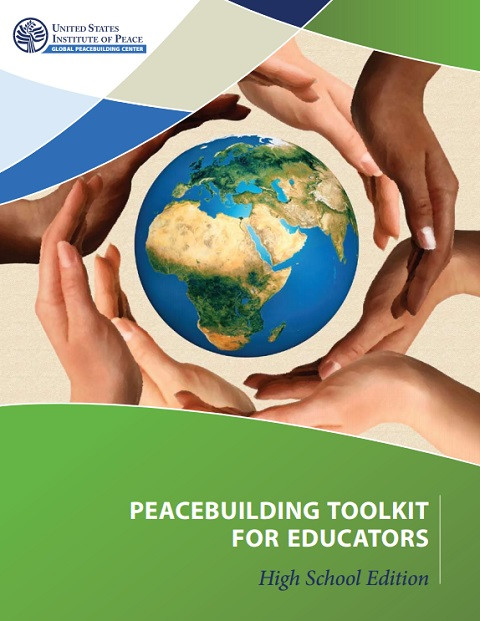 مجموعة أدوات بناء السلام للمعلمي: إصدار المدارس الثانوية 발행 연도: 2011 저자: Alison Milofsky 단체 저자: United States Institute of Peace (USIP) تم تصميم مجموعة أدوات بناء السلام للمعلمين بواسطة المعلمين ومن أجلهم للمساعدة على تطوير الجيل التالي من صناع السلام. ويتضمن الدان - واحد للمدارس المتوسطة وآخر للمدارس الثانوية - دروساً تفاعلية تطرح مواضيع ومهارات بناء السلام للطلبة في أعمار ١١-١٣ و١٤-١٨ عاماً على التوالي. تم تنظيم الدروس حول ثلاث أفكار أساسية في مجال إدارة النزاعات الدولية:• النزاع طبيعة متأصلة في الإنسان.• إمكانية منع النزاع العنيف.• هناك العديد من الطرق لتصبح صانع سلام. وتتضمن هذه الدروس، التي تقدم خططاً مفصلة للمعلمين حديثي العهد بالأساليب التفاعلية، نشرات ومواردللمعلمين وأنشطة إرشادية موجهة لتعليم الطلبة حول التحديات وأهمية بناء السلام العالمي. وتطور هذه الدروس مهارات الطلبة (مثل الاتصالات، وبناء العلاقات، وتحليل النزاعات، والتفاوض، والوساطة) وقدراتهم على القيام بدور بناة السلام في مجتمعاتهم وفي العالم الأكبر Peacebuilding Toolkit for Educators: High School Edition 발행 연도: 2011 저자: Alison Milofsky 단체 저자: United States Institute of Peace (USIP) The Peacebuilding Toolkit for Educators is designed by and for educators to help develop the next generation of peacebuilders. This book encompasses interactive lessons introducing peacebuilding themes and skills for students ages 14–18 respectively. The lessons are organized around three basic ideas within the field of international conflict management:• Conflict is an inherent part of the human condition.• Violent conflict can be prevented.• There are many ways to be a peacebuilder. Providing detailed plans for educators new to interactive methods, the lessons include handouts, teacher resources, and extension activities geared toward teaching students about the challenges and importance of global peacebuilding. These lessons develop students’ skills (such as communication, relationship building, conflict analysis, negotiation, and mediation) and their capacities to act as peacebuilders in their communities and in the greater world. Juego de herramientas para construir paz : Edición para educadores de la escuela secundaria (de 14 a 18 años) 발행 연도: 2011 저자: Alison Milofsky 단체 저자: United States Institute of Peace (USIP) El Juego de herramientas para construir paz ha sido diseñado por y para educadores con el fin de formar la próxima generación de constructores de paz. Las lecciones están organizadas en torno de tres ideas básicas dentro del campo del manejo de conflictos internacionales:• El conflicto es una parte inherente de la condición humana.• Los conflictos violentos pueden prevenirse.• Hay muchas maneras de ser un constructor de paz. Con el fin de proporcionar planes detallados para los educadores que aún no conocen los métodos interactivos, las lecciones incluyen material impreso, recursos para los profesores y actividades para ampliar cuyo fin es enseñar a los alumnos acerca de la importancia y las dificultades que entraña la construcción de paz a nivel mundial. Estas lecciones desarrollan las destrezas de los alumnos (como la comunicación, el afianzamiento de las relaciones, el análisis del conflicto, la negociación y la mediación) y sus capacidades para actuar como constructores de paz en sus comunidades y en el mundo. Boîte à outils pour le peacebuilding à l’intention des éducateurs : Édition pour les élèves de 14 à 18 ans 발행 연도: 2011 저자: Alison Milofsky 단체 저자: United States Institute of Peace (USIP) La Boîte à outils pour le peacebuilding a été conçue par et pour les éducateurs pour aider à former la génération suivante de peacebuilders.Les leçons s’articulent autour de trois idées fondamentales dans le domaine de la gestion des conflits internationaux :• Les conflits sont indissociables de la condition humaine.• Les conflits violents peuvent être évités.• Il existe de nombreuses manières de devenir un peacebuilder. Proposant des plans détaillés pour les éducateurs non encore initiés aux méthodes interactives, les leçons incluent des documents, des ressources pédagogiques et des activités complémentaires axés sur l’enseignement des défis et de l’importance du peacebuilding dans le monde aux élèves. Ces leçons renforcent les compétences des élèves (par ex. communication, établissement de relations, analyse de conflits, négotiation et médiation) et leurs capacités à assumer le rôle de peacebuilders dans leurs communautés et dans le monde au sens large.
 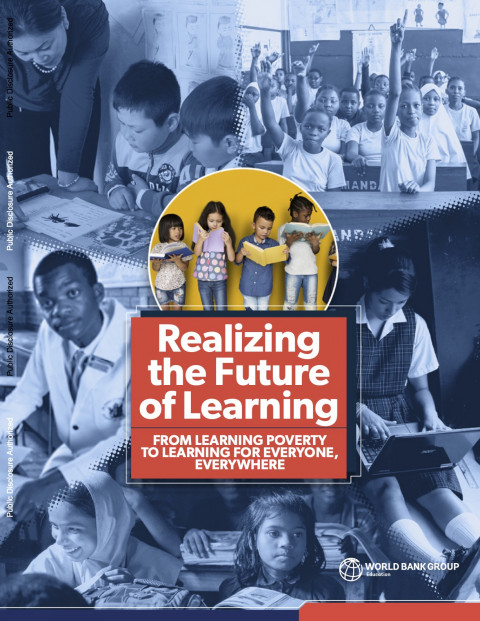 Realizing the Future of Learning: From Learning Poverty to Learning for Everyone, Everywhere 발행 연도: 2020 저자: Jaime Saavedra | Cristian Aedo | Omar Arias | Adelle Pushparatnam | Halsey Rogers | Marcela Gutierrez Bernal | Sanna Ellinore Ahlgren | Maria Qureshi 단체 저자: World Bank This report describes the World Bank’s vision for the future of learning and a strategic approach that lays out the lines of actions needed for education systems to move forward in accelerating learning improvement. To guide its policy advisory and operational support to countries, the report discusses policy actions that are needed to accelerate learning and that characterize the way many successful systems operate. These are presented within five interrelated pillars of a well-functioning education system that underpin the World Bank’s strategic education policy approach: learners, teachers, learning resources, schools, and system management.This report also reviews the current learning crisis, including the extent to which COVID-19 has exacerbated it, and then lays out a vision, policy priorities and some principles for education policy reform.
 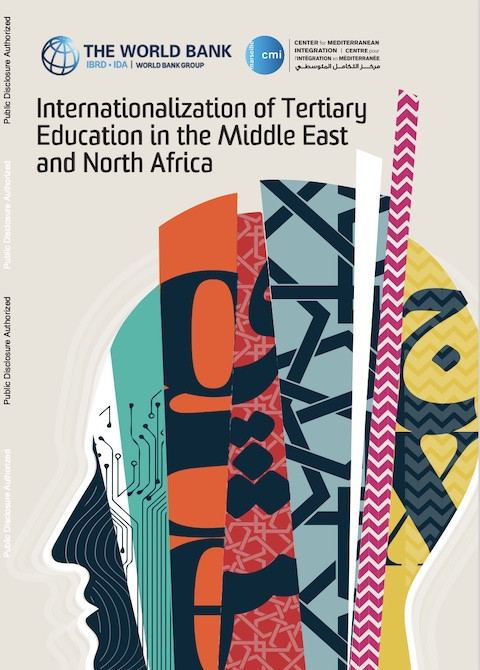 Internationalization of Tertiary Education in the Middle East and North Africa 발행 연도: 2020 저자: Giulia Marchesini | Lise Barbotte | Paul Cahu | Aurelia Hoffmann | Holly Johnstone | Mirna Mehrez | Marco Pasqualini | Francisco Marmolejo 단체 저자: World Bank This report draws on available data to respond to both a real need for regional analysis and a direct demand from stakeholders, including tertiary education institutions in MENA. Encouraging internationalization to be mainstreamed throughout MENA is the objective that this report seeks to achieve by way of stimulating regional policy dialogue on the subject. The report presents some global trends in internationalization and details its main benefits, before providing an overview of the current status of internationalization in the MENA region, including an in-depth analysis of student mobility. In its reflections on the way forward for the region, the report situates its recommendations in the context of COVID-19, within which, despite serious challenges due to a lack of attractiveness of the region, MENA may find a key opportunity. It suggests that adapting to the “new normal” through the deeper implementation of internationalization “at home” – a dimension that does not require physical mobility and, being implemented within domestic environments, has a much wider reach – may help enable the region to make strides towards catching up on the internationalization agenda. Internationalisation de l’enseignement supérieur dans la région Moyen-Orient Afrique du Nord 발행 연도: 2020 저자: Giulia Marchesini | Lise Barbotte | Paul Cahu | Aurelia Hoffmann | Holly Johnstone | Mirna Mehrez | Marco Pasqualini | Francisco Marmolejo 단체 저자: World Bank Ce rapport s'appuie sur les données disponibles pour répondre à la fois à un réel besoin d'analyse régionale et à une demande directe des parties prenantes, y compris des établissements d'enseignement supérieur de la région MENA. Encourager le développement de l’internationalisation à travers la région MENA est l'objectif que ce rapport cherche à atteindre, en stimulant un dialogue régional sur les politiques publiques autour de ce sujet. Le rapport présente quelques tendances mondiales de l'internationalisation et détaille ses principaux avantages, avant de donner un aperçu de l'état actuel de l'internationalisation dans la région MENA, y compris une analyse approfondie de la mobilité étudiante. Parmi les recommandations proposées pour le développement de l’internationalisation, le contexte de la COVID-19 est vu, pour la région MENA, comme une fenêtre d’opportunité pour pallier au manque d'attractivité de la région dans ce domaine. Mettre l’accent sur l'internationalisation « à domicile » - une dimension qui ne nécessite pas de mobilité physique et qui se développe dans le cadre domestique, et a donc une portée plus large - pour s’adapter à la « nouvelle normalité » peut aider la région à rattraper son retard sur le plan de l’internationalisation.
 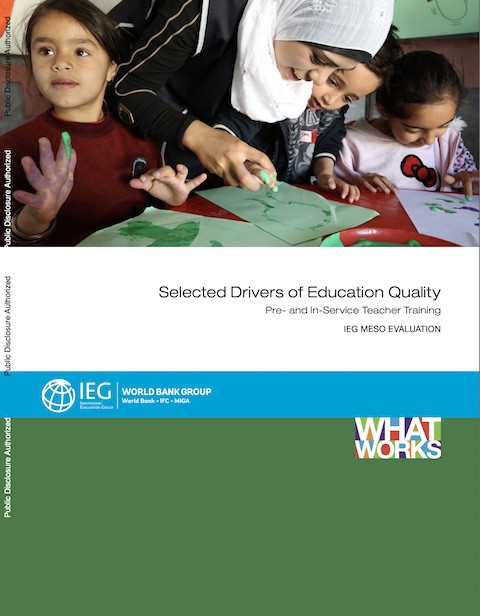 Selected Drivers of Education Quality: Pre- and In-Service Teacher Training 발행 연도: 2019 단체 저자: World Bank This evaluation examines how the World Bank has supported two types of professional development to improve teacher capacity—preservice and in-service training—and identifies how these drivers of education quality can be better designed, implemented, and scaled up.
 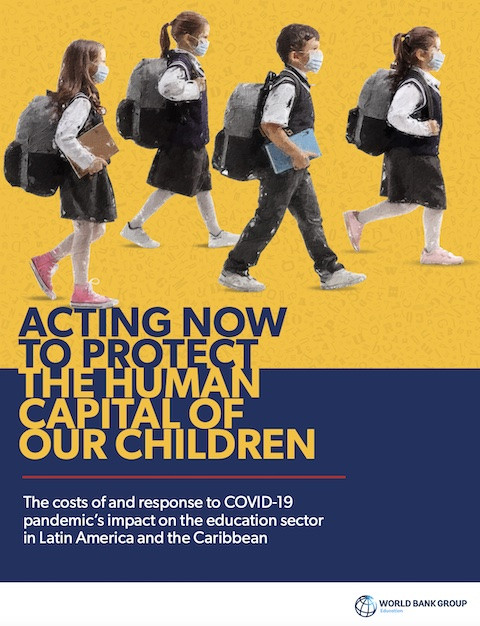 Acting Now to Protect the Human Capital of Our Children: The Costs of and Response to COVID-19 Pandemic’s Impact on the Education Sector in Latin America and the Caribbean 발행 연도: 2021 단체 저자: World Bank The sanitary and economic shocks caused by the COVID-19 pandemic brought about the most significant disruption in the history of the education sector in Latin America and the Caribbean region, leading to school closures at all levels and affecting over 170 million students throughout the region. Despite the tremendous efforts made by countries to mitigate the lack of in-person education through remote learning, education is taking a serious hit and outcomes are plummeting in the region. Learning poverty by the end of primary education could increase by more than 20 percent. Over 2 in 3 lower secondary education students could fall below minimum proficiency levels, and learning losses will be substantially larger for the most disadvantaged students. There is no time to lose. All countries must act now to make sure schools are ready to reopen safely and effectively country-wide so as to speed up the recovery process from the dramatic effects of the pandemic. They can leverage many emerging lessons and evidence, and must protect public funding for education, to enable this reopening process. While education systems face a challenge like no other, this exceptionally difficult situation also opens a window of opportunity to build back better their education systems to become more effective, equitable and resilient. Actuemos ya para proteger el capital human de nuestros ninos: Los costos y la respuesta ante el impacto de la pandemia de COVID-19 en el sector educativo de América Latina y el Caribe 발행 연도: 2021 단체 저자: World Bank El doble shock, sanitario y económico, generado por la pandemia COVID-19 provocó, sin duda alguna, la mayor disrupción en la historia del sector educativo en la región de América Latina y el Caribe, llevando al cierre masivo de escuelas en todos los niveles educativos y afectando a más de 170 millones de estudiantes en toda la región. A pesar de los enormes esfuerzos realizados por los países para tratar de mitigar la falta de educación presencial a través de sistemas de educación a distancia, el impacto sobre la educación está siendo demasiado alto y los aprendizajes se están desplomando en la región. La “pobreza de aprendizaje” al final de la educación primaria podría aumentar en más del 20 por ciento. Más de 2 de cada 3 estudiantes de educación secundaria podrían caer por debajo de los niveles mínimos de rendimiento esperados, y las pérdidas de aprendizaje serán sustancialmente mayores para los estudiantes más desfavorecidos. Realmente no hay tiempo que perder. Todos los países deberían actuar ya mismo para asegurarse que las escuelas estén listas para reabrir de manera segura y eficaz en todo el país a fin de acelerar el proceso de recuperación de los dramáticos efectos de la pandemia. Hay muchas lecciones y evidencias de experiencias positivas que van emergiendo y que pueden ser aprovechadas por los países, los cuales también deben asegurarse de proteger el financiamiento público de la educación, para facilitar este proceso de reapertura. Aun cuando los sistemas educativos de toda la región enfrentan un desafío jamás experimentado, esta situación excepcionalmente difícil también abre una ventana de oportunidad para poder ayudar a reconstruir los sistemas educativos para lograr que sean más efectivos, más equitativos y más resilientes.