
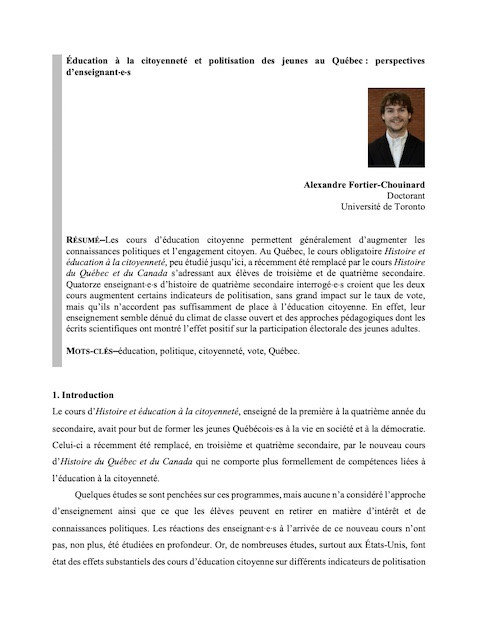
Citizenship Education and Youth Politicization in Quebec: Teacher Perspectives (vol. 46, no. 3)
- Корпоративный автор
- Université de Montréal. Faculté des sciences de l’éducation
- ISBN
- ISSN 1705-0065
- Колляция
- p. 95-124
- Язык ресурса
- Французский
- Год публикации
- 2020
- Тема
- Гражданственность / Гражданство / ДемократияГлобализация и социальная справедливость / Международное взаимопонимание
- Тип ресурса
- Исследовательские работы / журнальные статьи
- Уровень образования
- Среднее образование
- Регион
- Европа и Северная Америка
- Место публикации
- Montréal
Civic education classes generally have a positive impact on political knowledge and citizen involvement. In Quebec, the mandatory History and citizenship education class, almost unstudied thus far, was recently replaced by a History of Quebec and Canada class in secondary 3 and 4. 14 interviewed History and citizenship education teachers in secondary 4 believe that these courses improve some indicators of students’ politicization but not necessarily future turnout, and that civic education takes too little space in the curriculum. An open classroom climate, which literature has found to have a positive impact on voting, seems to be absent from their teaching.
Связанные ресурсы
-
 IIEP-UNESCO 12th Medium-Term Strategy: 2026–2029
 -
 Advancing Intergenerational Learning: Identifying Challenges and Opportunities for Older Adults; Integrated Case Study Report
 -
 Digital Empowerment for Lifelong Learning and Transformative Andragogy (DELTA) for Adult Educators: Introduction to the DELTA Framework and Resources
 -
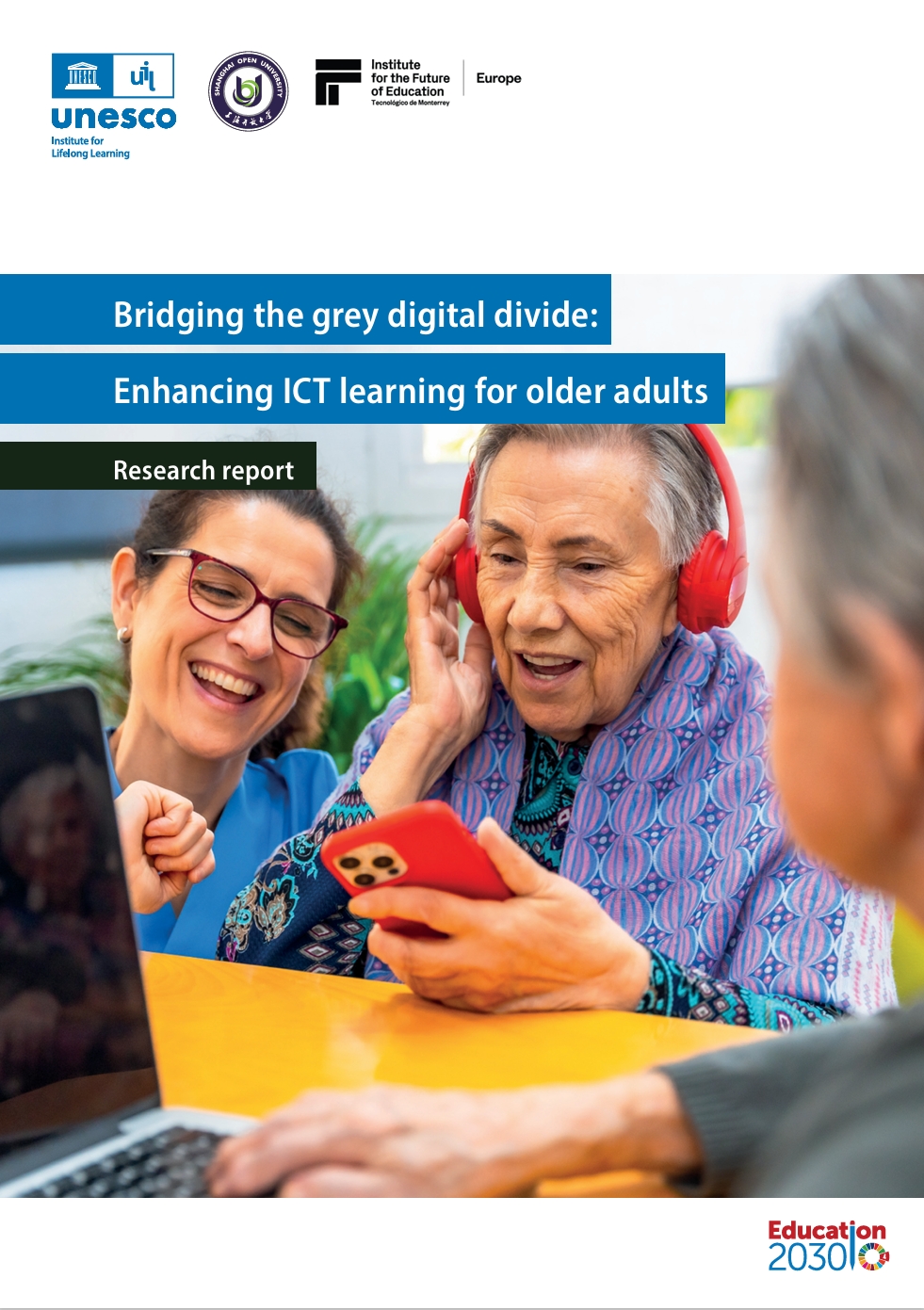 Bridging the Grey Digital Divide: Enhancing ICT Learning for Older Adults; Research Report