
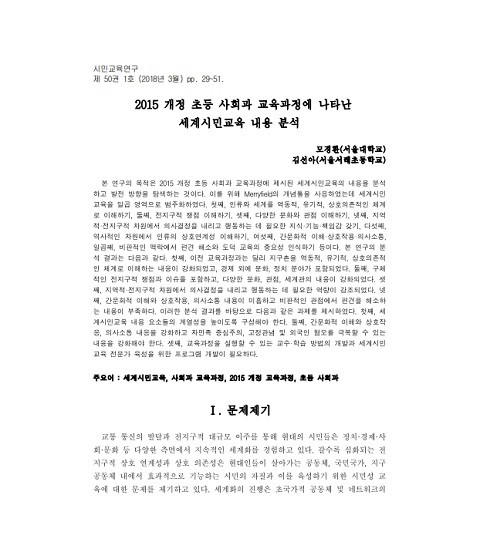
A Critical Analysis of Global Citizenship in 2015 Revised Elementary Social Studies Curriculum (Theory and Research in Citizenship Education; Vol. 50, No. 1)
- Автор
- Kyunghwan MoSunah Kim
- Корпоративный автор
- Korea Association of Social Education
- ISBN
- ISSN 1598-7280
- Колляция
- p. 29-51
- Язык ресурса
- Корейский
- Год публикации
- 2018
- Тип ресурса
- Исследовательские работы / журнальные статьи
- Уровень образования
- Начальное образование
- Регион
- Азия и Тихоокеанский регион
- Место публикации
- Seoul
The purpose of this study was to examine how global citizenship is reflected in the 2015 revised social studies curriculum. The study used the conceptual framework of Merryfield(1998) to analyze the national curriculum. The results of the analysis are as follows. First, in terms of understanding of the world as interdependent systems, contents on politics and culture as well as economy increased. Second, more global issues and problems were included. Third, contents on sustainable development increased. Fourth, the scope of diversity expanded. Fifth, interconnectedness of humans through time was inadequately reflected in the current social studies curriculum. Sixth, contents on values and attitudes, and actions were strengtened. Sixth, contents of cross-cultural understanding, interaction, and communication are not adequately included. The elementary social studies curriculum should strengthen cross-cultural understanding and interaction and prejudice reduction. Also, more instructional methods for global citizenship education should be developed and teacher education programs should be overhauled.
Связанные ресурсы
-
 IIEP-UNESCO 12th Medium-Term Strategy: 2026–2029
 -
 Advancing Intergenerational Learning: Identifying Challenges and Opportunities for Older Adults; Integrated Case Study Report
 -
 Digital Empowerment for Lifelong Learning and Transformative Andragogy (DELTA) for Adult Educators: Introduction to the DELTA Framework and Resources
 -
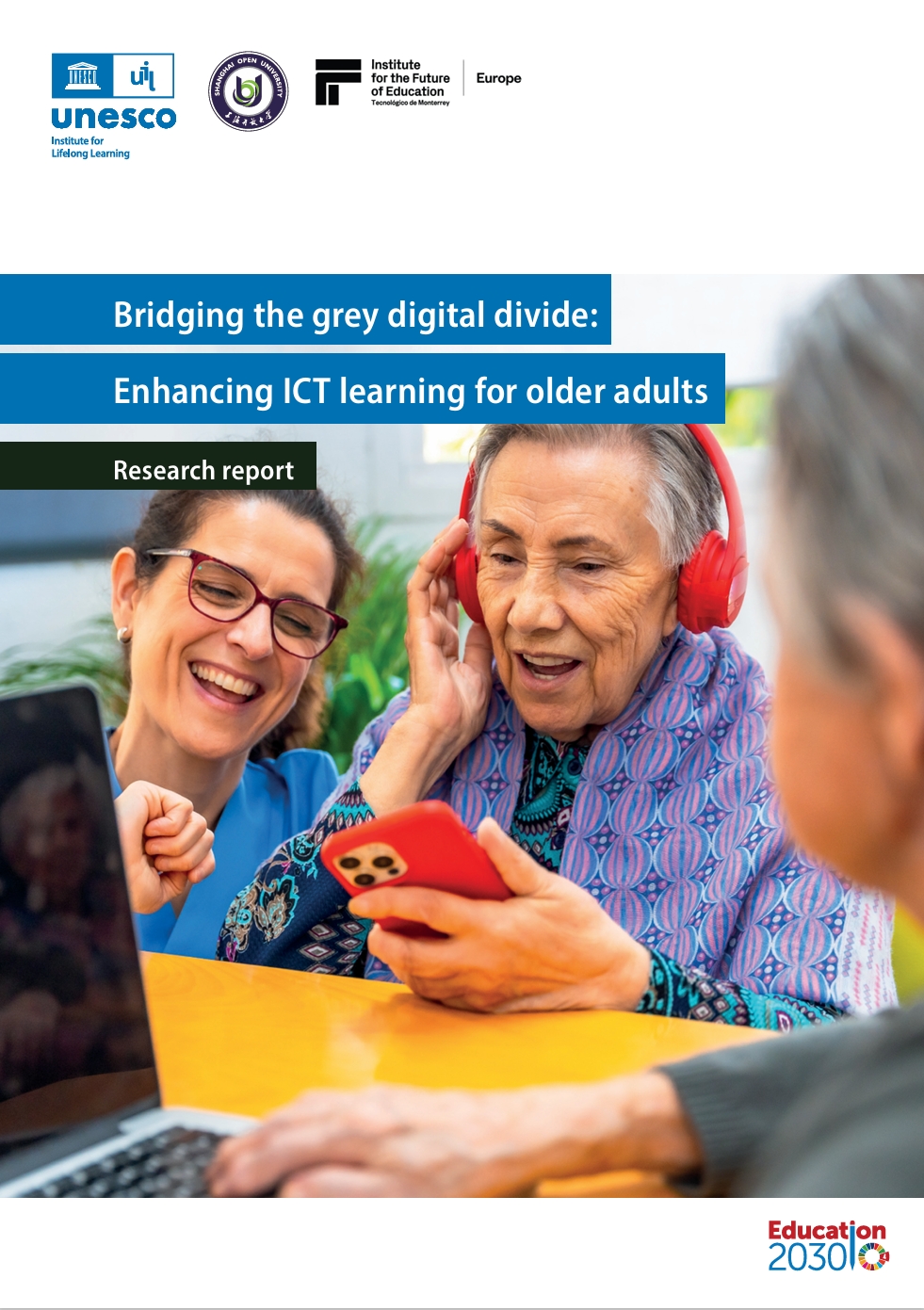 Bridging the Grey Digital Divide: Enhancing ICT Learning for Older Adults; Research Report