
Ресурсы
Изучайте широкий спектр ценных ресурсов ВГГ, чтобы углубить своё понимание и повысить эффективность исследований, просветительской деятельности, преподавания и обучения.
Найдено: 15
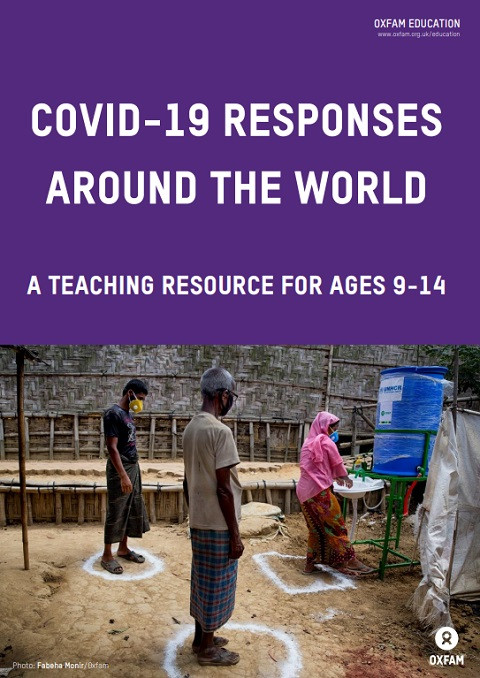 COVID-19 Responses Around the World: A Teaching Resource for Ages 9-14 Год публикации: 2021 Организация-автор: Oxfam GB This resource helps learners to discuss their thoughts and feelings about the pandemic with others. Learners will also find out about ways to stop the current ‘infodemic’ – the rapid spread of misinformation and disinformation about COVID-19.This material will help learners to:discuss their thoughts and feelings about COVID-19.investigate some of the incredible ways in which people have been responding to this crisis.understand the difference between information, disinformation and misinformation.consider their own responses to the pandemic and possible actions that they might take to manage their own wellbeing and support others.
 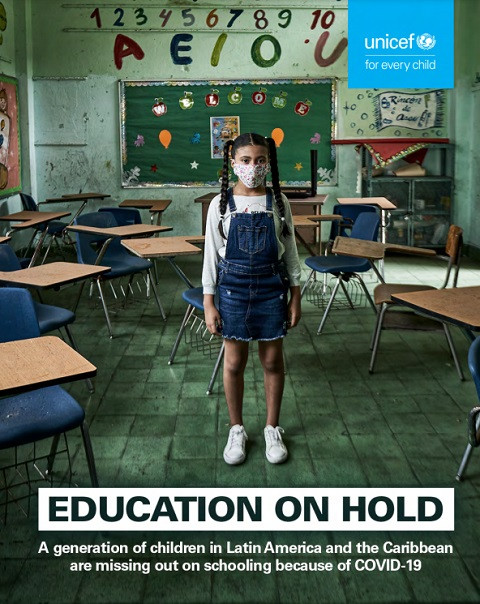 Education on Hold: A Generation of Children in Latin and the Caribbean Are Missing Out on School Because of COVID-19 Год публикации: 2020 Автор: Laura Andreea Seusan | Rocío Maradiegue Организация-автор: United Nations Children's Fund (UNICEF) More than seven months into the pandemic, COVID-19 is putting education on hold for more than 137 million children in Latin America and the Caribbean. This is according to a new UNICEF report about the devastating impacts of COVID-19 on education. The report also finds that COVID-19 has further widened the education gaps between rich and poor families in Latin America and the Caribbean. New UNICEF data shows that the percentage of children not receiving any form of education across the region has soared dramatically, from 4 to 18 per cent in the past few months. UN projections reveal that COVID-19 may push up to 3 million additional children out of school in Latin America and the Caribbean. Educación en Pausa: Una generación de niños y niñas en América Latina y el Caribe está perdiendo la escolarización debido al COVID-19 Год публикации: 2020 Автор: Laura Andreea Seusan | Rocío Maradiegue Организация-автор: United Nations Children's Fund (UNICEF) Más de siete meses después de que iniciara la pandemia, el COVID-19 está poniendo la educación en pausa de más de 137 millones de niños, niñas y adolescentes en América Latina y el Caribe, según un nuevo informe de UNICEF acerca de los devastadores impactos del COVID-19 en la educación.El informe encuentra también que el COVID-19 ha ampliado aún más las brechas educativas entre las familias ricas y las pobres en América Latina y el Caribe. Los nuevos datos de UNICEF muestran que el porcentaje de niños, niñas y adolescentes que no reciben ninguna forma de educación en la región se ha disparado drásticamente, del 4 al 18 por ciento en los últimos meses. Las proyecciones de la ONU revelan que el COVID-19 podría sacar de la escuela hasta 3 millones de niños más en América Latina y el Caribe.
 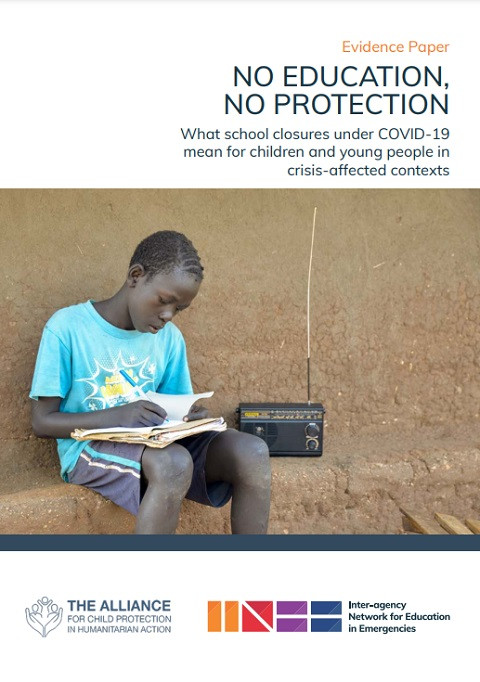 No Education, No Protection: What School Closures Under COVID-19 Mean for Children and Young People in Crisis-Affected Contexts Год публикации: 2021 Организация-автор: Inter-agency Network for Education in Emergencies (INEE) | Alliance for Child Protection in Humanitarian Drawing from research and experience on previous infectious disease outbreaks and an emergent body of work from the current COVID-19 pandemic, this report highlights the primarily negative effects resulting from the combination of sudden school closures and restricted access to and availability of services, social networks, and other protective facilities for children and young people living in crisis-affected contexts. The consequences of school closures on education and child protection can be categorized into three principal areas:1. Loss of learning and impediments to providing inclusive, equitable, quality education2. Negative impact on child well-being and healthy development3. Amplified child protection risks and harms experienced by children and young people
 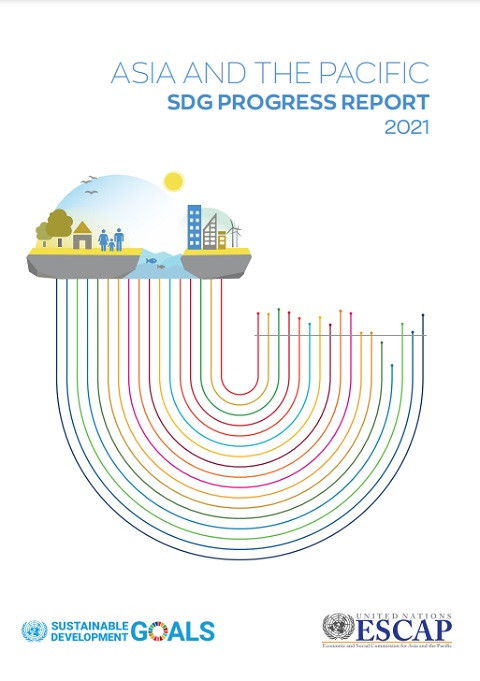 Asia and the Pacific: SDG Progress Report 2021 Год публикации: 2021 Организация-автор: UN. Economic and Social Commission for Asia and the Pacific (UN. ESCAP) This report analyses progress towards the Sustainable Development Goals (SDGs) in Asia and the Pacific and its five subregions as well as the availability of data. It assesses gaps which must be closed to achieve the goals by 2030. This assessment is designed to ensure the region’s actions remain on target and shortcomings are addressed as they arise. It is a resource for all stakeholders involved in prioritization, planning, implementation and follow-up of the 2030 Agenda for Sustainable Development in Asia and the Pacific.
 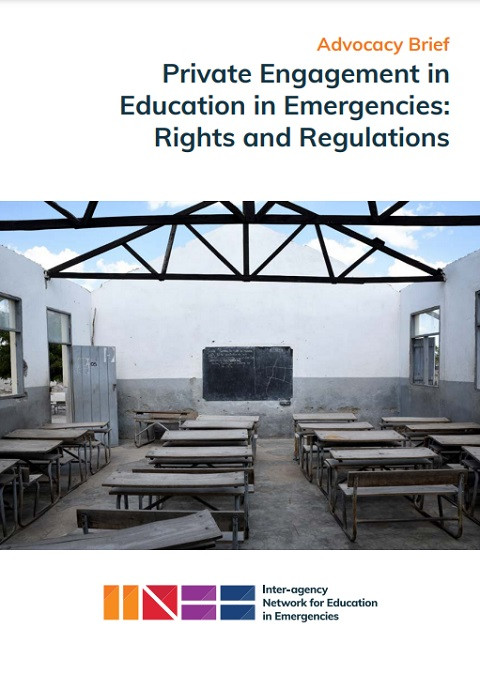 Private Engagement in Education in Emergencies: Rights and Regulations Год публикации: 2021 Автор: Francine Sara Menashy | Zeena Zhakaria Организация-автор: Inter-agency Network for Education in Emergencies (INEE) Efforts to secure inclusive and equitable education for all have prompted calls for greater engagement by the private sector, asserting that businesses and foundations can play significant roles as partners in achieving Sustainable Development Goal 4 (SDG4).In recent years, given shortfalls in public financing and the need for urgent responses, private actors have increasingly become involved in various aspects of educational programming for education in emergencies (EiE). This arrangement, however, can produce tensions between private engagement and humanitarian response in education, which need to be addressed and in turn require extra coordination, advocacy and attention. This brief explores some of these tensions and makes recommendations to support the prioritization of safe, equitable, and quality public education for all children and young people affected by crises.INEE supports every young person’s right to education and recognizes the State as the primary duty-bearer of schooling, in alignment with international declarations, frameworks, and legal instruments that assert and protect the right to education. Participación del sector privado en la Educación en situaciones de emergencia: Derechos y regulaciones Год публикации: 2021 Автор: Francine Sara Menashy | Zeena Zhakaria Организация-автор: Inter-agency Network for Education in Emergencies (INEE) Las iniciativas que buscan garantizar una educación inclusiva y equitativa para todos han generado peticiones para una mayor involucramiento del sector privado, afirmando que las empresas y las fundaciones pueden jugar un papel importante como socios para alcanzar el Objetivo de Desarrollo Sostenible 4 (ODS4). En los últimos años, debido a la falta de financiamiento público y a la necesidad de respuestas urgentes, ha crecido la participación del sector privado en diversos aspectos de la programación educativa para la educación en situaciones de emergencia (EeE). Esta forma de trabajar, sin embargo, puede causar tensiones entre la participación del sector privado y la respuesta humanitaria en materia de educación. Es necesario resolver estas tensiones, lo cual requiere una mayor coordinación, abogacía y atención. Este informe explora algunas de estas tensiones y ofrece recomendaciones para apoyar la priorización de una educación pública segura, equitativa y de calidad para todos los niños, niñas y jóvenes afectados por crisis. La INEE apoya el derecho que tienen todas las personas jóvenes a la educación y reconoce al Estado como el principal responsable de la escolarización, en línea con declaraciones, marcos e instrumentos legales internacionales que reconocen y protegen el derecho a la educación.
 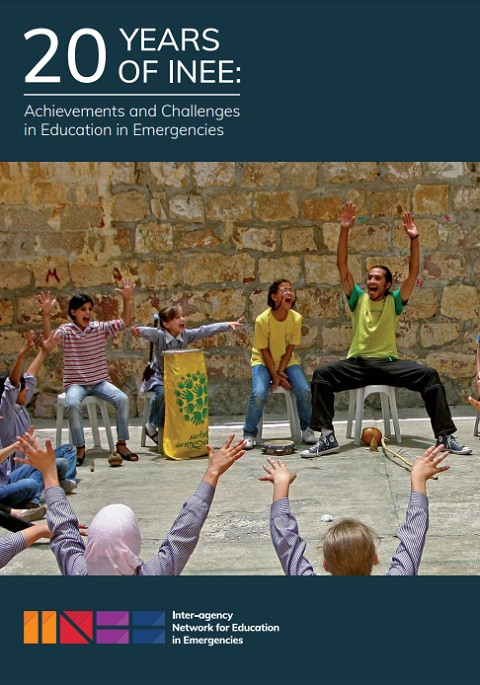 20 Years of INEE: Achievements and Challenges in Education in Emergencies Год публикации: 2020 Организация-автор: Inter-agency Network for Education in Emergencies (INEE) This report highlights the continued relevance of INEE 20 years on. It presents new data that shows 127 million primary and secondary school-age children and young people living in crisis-affected countries were out of school in 2019. This is equivalent to almost half of the global out-of-school population, even though only around 29% of children and young people in this age group globally live in crisis-affected countries. These figures are based on new data provided by the UNESCO Institute for Statistics (UIS). The report also demonstrates the still urgent need to prioritize education and financing of education in emergencies, particularly in ‘forgotten’ crises. 20 ans de l’INEE : Réalisations et Défis dans l’Éducation en Situations d’Urgence Год публикации: 2020 Организация-автор: Inter-agency Network for Education in Emergencies (INEE) Ce rapport, qui marque le 20e anniversaire de l’INEE, souligne les réalisations dans le domaine de l’ESU au cours des deux dernières décennies et identifie les défis permanents. Il retrace les changements qui ont amené l’ESU dans les programmes mondiaux de planification et d’action et note les étapes clés du développement de l’ESU en tant que domaine reconnu. Reconnaissant également les engagements énoncés dans l’Agenda 2030 pour le développement durable, notamment la promesse de veiller à ce que « personne ne soit laissé de côté » (ONU, 2015), ce rapport se tourne vers l’avenir en recommandant des actions immédiates et durables pour atteindre l’Objectif de Développement Durable 4 (ODD 4), une éducation de qualité et des possibilités de formations permanente inclusives et équitables pour tous - incluant les enfants et les jeunes dans les contextes de crise (ONU, 2015). 20º aniversario de la INEE: Logros y desafíos en la educación en situaciones de emergencia Год публикации: 2020 Организация-автор: Inter-agency Network for Education in Emergencies (INEE) Este informe, con motivo del 20.º aniversario de la INEE, enfatiza los logros alcanzados en el ámbito de la EeE en las últimas dos décadas y señala los desafíos que siguen existiendo. Explora los cambios que facilitaron la inclusión de la EeE en los programas globales de planificación y acción, y señala los hitos principales en el desarrollo de la EeE como un campo reconocido. Asimismo, este informe reconoce los compromisos establecidos en la Agenda de Desarrollo Sostenible de 2030, incluido el compromiso de «no dejar a nadie atrás» (ONU, 2015), y enfrenta el futuro con la recomendación de acciones inmediatas y sostenidas para alcanzar el Objetivo de Desarrollo Sostenible 4 (ODS 4),una educación de calidad inclusiva y equitativa, y oportunidades de aprendizaje durante toda la vida para todos; incluidos los niños, niñas y jóvenes en contextos de crisis (UN, 2015).