
Ресурсы
Изучайте широкий спектр ценных ресурсов ВГГ, чтобы углубить своё понимание и повысить эффективность исследований, просветительской деятельности, преподавания и обучения.
Найдено: 3,158
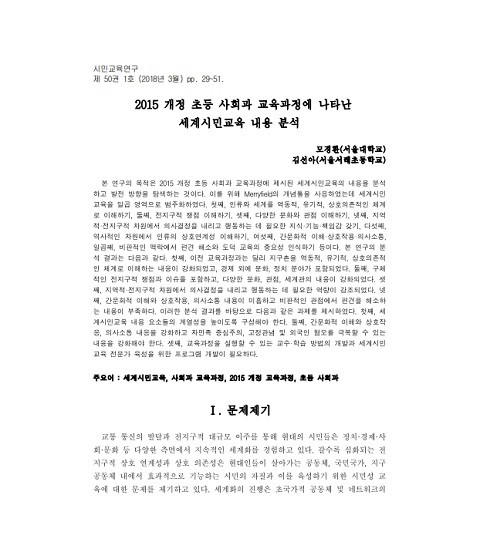 2015 개정 초등 사회과 교육과정에 나타난 세계시민교육 내용 분석 (시민교육연구; Vol. 50, No. 1) Год публикации: 2018 Автор: 모경환 | 김선아 Организация-автор: 한국사회과교육학회 본 연구의 목적은 2015 개정 초등 사회과 교육과정에 제시된 세계시민교육의 내용을 분석하고 발전 방향을 탐색하는 것이다. 이를 위해 Merryfield의 개념틀을 사용하였는데 세계시민교육을 일곱 영역으로 범주화하였다. 첫째, 인류와 세계를 역동적, 유기적, 상호의존적인 체계로 이해하기, 둘째, 전지구적 쟁점 이해하기, 셋째, 다양한 문화와 관점 이해하기, 넷째, 지역적·전지구적 차원에서 의사결정을 내리고 행동하는 데 필요한 지식·기능·책임감 갖기, 다섯째, 역사적인 차원에서 인류의 상호연계성 이해하기, 여섯째, 간문화적 이해·상호작용·의사소통, 일곱째, 비판적인 맥락에서 편견 해소와 도덕 교육의 중요성 인식하기 등이다. 본 연구의 분석 결과는 다음과 같다. 첫째, 이전 교육과정과는 달리 지구촌을 역동적, 유기적, 상호의존적인 체계로 이해하는 내용이 강화되었고, 경제 외에 문화, 정치 분야가 포함되었다. 둘째, 구체적인 전지구적 쟁점과 이슈를 포함하고, 다양한 문화, 관점, 세계관의 내용이 강화되었다. 셋째, 지역적·전지구적 차원에서 의사결정을 내리고 행동하는 데 필요한 역량이 강조되었다. 넷째, 간문화적 이해와 상호작용, 의사소통 내용이 미흡하고 비판적인 관점에서 편견을 해소하는 내용이 부족하다. 이러한 분석 결과를 바탕으로 다음과 같은 과제를 제시하였다. 첫째, 세계시민교육 내용 요소들의 계열성을 높이도록 구성해야 한다. 둘째, 간문화적 이해와 상호작용, 의사소통 내용을 강화하고 자민족 중심주의, 고정관념 및 외국인 혐오를 극복할 수 있는 내용을 강화해야 한다. 셋째, 교육과정을 실행할 수 있는 교수·학습 방법의 개발과 세계시민교육 전문가 육성을 위한 프로그램 개발이 필요하다.
 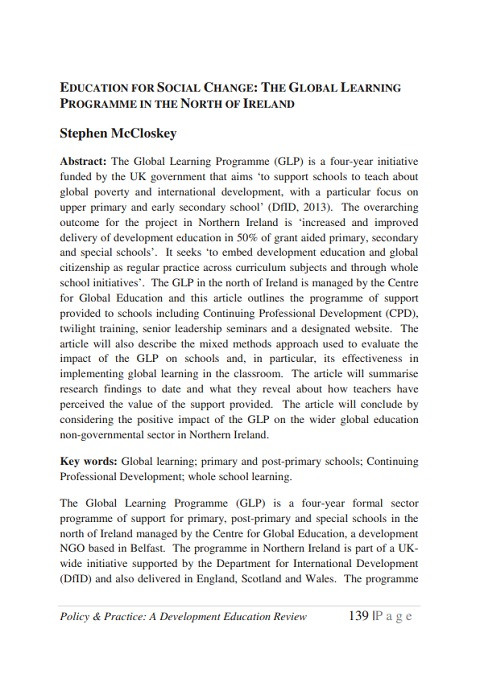 Education for Social Change: The Global Learning Programme in the North of Ireland (Policy and Practice: A Development Education Review; Vol. 23, Autumn) Год публикации: 2016 Автор: Stephen McCloskey Организация-автор: Centre for Global Education (CGE) The Global Learning Programme (GLP) is a four-year initiative funded by the UK government that aims ‘to support schools to teach about global poverty and international development, with a particular focus on upper primary and early secondary school’ (DfID, 2013). The overarching outcome for the project in Northern Ireland is ‘increased and improved delivery of development education in 50% of grant aided primary, secondary and special schools’. It seeks ‘to embed development education and global citizenship as regular practice across curriculum subjects and through whole school initiatives’. The GLP in the north of Ireland is managed by the Centre for Global Education and this article outlines the programme of support provided to schools including Continuing Professional Development (CPD), twilight training, senior leadership seminars and a designated website. The article will also describe the mixed methods approach used to evaluate the impact of the GLP on schools and, in particular, its effectiveness in implementing global learning in the classroom. The article will summarise research findings to date and what they reveal about how teachers have perceived the value of the support provided. The article will conclude by considering the positive impact of the GLP on the wider global education non-governmental sector in Northern Ireland.
  일상 사례로 비추어 본 지속가능발전을 위한 생활 속 우리의 실천: 어린이용 (지속가능발전 교육자료 2호) Год публикации: 2020 Организация-автор: 지속가능발전포털 | 대한민국 환경부 지속가능발전목표를 위해 우리가 일상 생활 속에서 쉽게 실천할 수 있는 행동에는 어떤 것들이 있는지 6가지 행동수칙으로 정리하였다.행동수칙1. 교통, 2. 에너지 절약, 3. 물 아껴쓰기, 4. 장바구니 이용하기, 5. 분리수거하기, 6. 나무 심기
 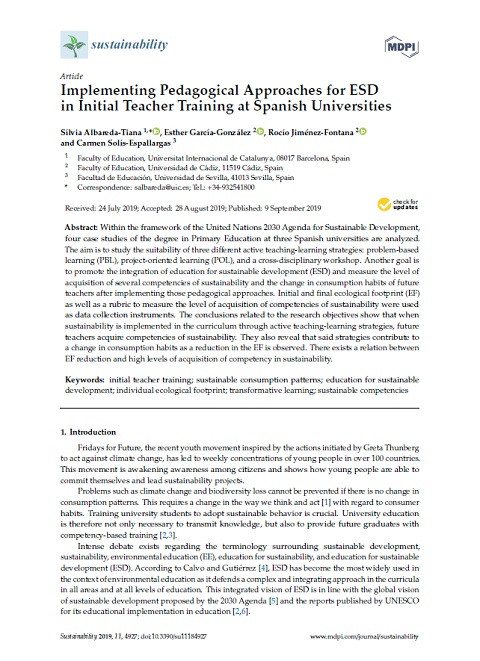 Implementing Pedagogical Approaches for ESD in Initial Teacher Training at Spanish Universities (Sustainability 2019; Vol. 11, No. 18) Год публикации: 2019 Автор: Sílvia Albareda-Tiana | Esther García-González | Rocío Jiménez-Fontana | Carmen Solís-Espallargas Организация-автор: Multidisciplinary Digital Publishing Institute (MDPI) Within the framework of the United Nations 2030 Agenda for Sustainable Development, four case studies of the degree in Primary Education at three Spanish universities are analyzed. The aim is to study the suitability of three different active teaching-learning strategies: problem-based learning (PBL), project-oriented learning (POL), and a cross-disciplinary workshop. Another goal is to promote the integration of education for sustainable development (ESD) and measure the level of acquisition of several competencies of sustainability and the change in consumption habits of future teachers after implementing those pedagogical approaches. Initial and final ecological footprint (EF) as well as a rubric to measure the level of acquisition of competencies of sustainability were used as data collection instruments. The conclusions related to the research objectives show that when sustainability is implemented in the curriculum through active teaching-learning strategies, future teachers acquire competencies of sustainability. They also reveal that said strategies contribute to a change in consumption habits as a reduction in the EF is observed. There exists a relation between EF reduction and high levels of acquisition of competency in sustainability.
 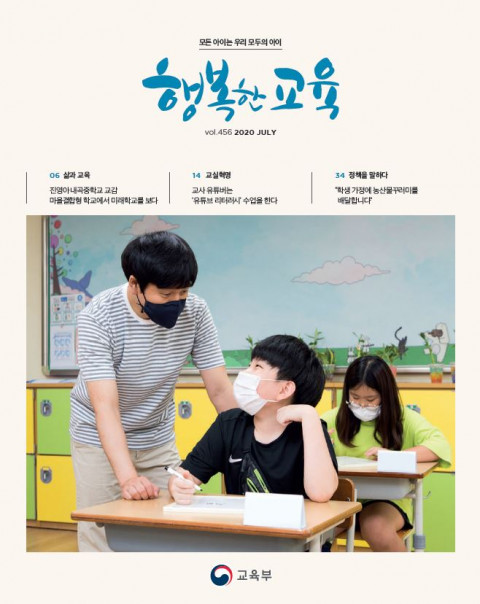 행복한 교육 2020년 7월호 (제456호) Год публикации: 2020 Организация-автор: 대한민국 교육부 특별기획 미래_지능정보사회를 이끌 인재 양성 청사진교육부는 최근 ‘과학·수학·정보·융합교육 종합계획(5개년)’을 발표하며 향후 5년간의 미래 인재 양성에 대한 청사진을 제시했다. 교과 간의 긴밀한 연결과 융합을 바탕으로 정책이 수립되어 시너지 효과가 기대된다. 이번 발표에 따르면, 인공지능(AI), 가상·증강현실(VR·AR) 등 최첨단 에듀테크 기술이 교육 현장에 적극적으로 도입되는데, 대표적으로 최첨단 기술을 적용한 지능형 과학실을 2024년까지 모든 학교에 구축하여 학생들이 첨단 과학을 직접 체험하고 학습할 수 있도록 한다는 계획이다. 교육부의 과학·수학·정보·융합교육 청사진을 살펴본다.정책을 말하다_“학생 가정에 농산물꾸러미를 배달합니다”학교급식의 중단으로 학부모와 농가, 급식업체의 부담이 증가함에 따라 교육부와 농림축산식품부는 시도교육청·지자체와 협력하여 ‘학생 가정 농산물꾸러미 지원사업’을 추진하고 있다. 꾸러미사업에 서울, 대구, 인천, 광주, 대전, 세종, 경기, 강원, 충북, 충남, 전북, 전남, 경북, 경남과 부산 기장군에서 참여하며 499만여 명의 학생 가정에 3만 7천 톤의 농산물을 공급하였다. 일부 지역(울산, 부산, 제주, 세종)에서는 학생 가정 내 경제적 부담을 줄여주고자 잔여 급식예산을 교육재난지원금 등의 형태로 지급하고 있다.
  The International Experience and Enlightenment of Global Citizenship Education In the New Century (Journal of Shanghai Education Research) Год публикации: 2019 Автор: Wuxi | Thomas Tse Организация-автор: Shanghai Educational Research Since the beginning of the new century, international or regional organizations such as UNESCO and Oxfam have been actively carrying out teaching practices related to global citizenship education, highlighting similar orientation characteristics and providing important reference value for the implementation of global citizenship education in formal education. They emphasize cognition, skill, value and action as the training direction, take diversity, criticalness and action as the core topic, learn objective from simple description to critical analysis, and take integrated systematic teaching as the main practice mode. 新世纪以来全球公民教育的国际经验与启示 (上海教育科研) Год публикации: 2019 Автор: Wuxi | Thomas Tse Организация-автор: Shanghai Educational Research 新世纪以来,联合国教科文组织、乐施会等国际或地区组织正在积极开展有关全球公民 教育的教学实践,突显出相似的取向特征,对全球公民教育在正式教育中的实施具有重要借鉴价值。它 们强调以认知、技能、价值与行动为培养方向,以多样性、批判性和行动力为核心议题,学习目标从简单 描述向批判性分析进阶,并以全校融合的系统化教学为主要实践模式。
  Study on Singapore’s Character and Citizenship Education Curriculum Reform: Discuss the Design of the Integration of Moral Education Curriculum from Primary School to University (Global Education; Vol. 48, No. 2) Год публикации: 2019 Автор: Wu Xiaowei Организация-автор: East China Normal University Strengthening the integration of moral education curriculum is an important part of the overall planning of a moral education system from primary school to university, which also is an important method to improve the effectiveness of moral education. Singapore’s curriculum reform reviving around character and citizenship education can provide reference and enlightenment for the integration of moral curriculum from primary school to university in China. Using the socialist core values to lead and plan the moral education curriculum system, we should focus on the systematic of curriculum objectives, the organic integration of curriculum structure and content, the rational use of teaching methods and strategies and evaluation models, so as to promote the coordinated connection and development of moral education courses from primary school to university. 新加坡品格与公民课程改革研究: —兼论我国的德育课程一体化建设 (全球教育展望; Vol. 48, No. 2) Год публикации: 2019 Автор: Wu Xiaowei Организация-автор: East China Normal University 加强德育课程一体化建设,是整体规划大中小幼德育体系的重要环节,也是提高德育实效性的重要举措。本文通过分析新加坡围绕品格与公民教育开展的课程改革,试图为我国德育课程一体化建设路径提供借鉴和思考。在以社会主义核心价值观引领和规划德育课程体系的过程中,应注重课程目标的一体化衔接、课程结构和内容的有机整合,教学方法策略及评价模式的合理运用,推动不同学段德育课程的体系化架构与设计。
  A Case Study on the Possible Contribution of Global Citizenship Concept to Education for Sustainable Development (Environmental Education; Vol. 31, No.1) Год публикации: 2018 Автор: Seyoung Hwang Организация-автор: Korean Society for Environmental Education The aim of this study was to explore the ways in which the recent discussion on global citizenship education could contribute to the discursive possibility of education that addresses cultural diversity and co-existence which had not been considered much in the education for sustainable development (ESD) field. For that, the study showed how the formative experience of global citizen identity as the core concept of global citizenship can be a significant learning experience for ESD. The case studies included UNESCO school activity, school club activity, international volunteering activity and local cultural exchange activity. Based on the interviews with participants, the study found out that they were in the state of accepting or orienting themselves toward global citizen identity. The study also identified the kinds of qualitative experiences affecting such identity formation as facing and reflecting on one’s own cultural bias, intercultural sympathy, participation and action beyond mere knowledge acquisition, self-directed participation and achievement, lack of reflection in the one’ own life context as a global citizen, and conflict with the values embedded in the competition-driven lifestyle. Based on the result, the potential and meanings of the ESD focused on global citizen identity were discussed.