
Ресурсы
Изучайте широкий спектр ценных ресурсов ВГГ, чтобы углубить своё понимание и повысить эффективность исследований, просветительской деятельности, преподавания и обучения.
Найдено: 3,158
 国际环境政治与全球公民教育的批判路径 (比较教育研究; No. 8) Год публикации: 2017 Автор: Zheng Fuxing Организация-автор: Beijing Normal University 自 20 世纪 90 年代以来 , 全球公民教育研究和实践蓬勃发展,然而全球公民教育 实践的效果很有限。对于全球公民教育的探讨不能回避“全球公民教育如何可能”这一前提性 问题。“全球公民”身份推衍困境、“在地实施”的“异化”后果让全球公民教育实施的可能性成 为问题。环境问题既是一个“全球共同利益”问题,也是各国政府关心的问题,为解答“全球 公民教育何以可能”提供了较好的切入点。国际环境政治解释了全球环境治理中发展中国家与 发达国家的不合作与不平等状况。以全球环境问题及其治理作为教育内容,全球公民教育具有 批判性。批判的生态教育学成为全球公民教育的重要实践形态。在既有的国家边界限制下,批 判的生态教育学通过全球与在地的混合行动,让全球公民教育获得了一种新的可能性。
  Education Disrupted Education Reimagined: Responses from Education’s Frontline During the COVID-19 Pandemic and Beyond Год публикации: 2020 Организация-автор: WISE | Salzburg Global Seminar | Diplomatic Courier The special edition E-Book you are reading about today was produced in real time, as WISE, in partnership with Salzburg Global Seminar, convened key stakeholders and education leaders from over 98 countries in a three-part series of global conferences aimed at bringing the global education community together. The result is a contemporary historical record of how schools, NGOs, governments, and international organizations responded to school closures during the crisis and how they are attempting to use this crisis as a springboard to reimagine—and even transform—education in their communities and countries.The E-Book offers an opportunity to a global audience to make sense of what happened but it also offers a breeding ground of ideas from some of the world’s top education thinkers. It is the editors’ sincere hope that through this publication we provide the education community with a reference point from the crisis from which future research, policy, and innovation can grow.
  Analysis of the Education for Democratic Citizenship Policies in Norway (Global Education; No. 5) Год публикации: 2013 Автор: Yang Tingting Организация-автор: East China Normal University There are growing concerns about Islamophobia and far-right and anti-democratic movements across Europe. Norway’s vulnerability was not perceived until the July 2011 attacks happened in Norway in which 77 people died. This paper will examine education for democratic citizenship policies in the context both of extreme right political activity happened nationally and inter- nationally, considering ways in which it supports the national identity, cultural diversity, social cohesion, seeking the value orientation, core content and weaknesses of education for democratic citizenship policies in Norway. 试析挪威的民主公民教育政策 (全球教育展望; No. 5) Год публикации: 2013 Автор: Yang Tingting Организация-автор: East China Normal University 放眼整个欧洲,近来伊斯兰教恐慌、极端右翼分子和反民主运动此起彼伏,挪威也直 到 2011 年 7 月发生 77 人死亡的恶性案件后,才察觉到本国民主的脆弱性。本文在极端右翼 活动频发的国际和国内背景下,对挪威的民主公民教育政策进行文本分析,阐述各相关政策 文件是如何对国家认同、文化多样性、社会整合加以强调的,试图探求挪威民主公民教育政策 的价值导向与核心观点,以及挪威民主公民教育可能存在的不足。
  한 세대 후 교육 2050년의 한국교육은 어떻게 변해 있을까? (Future Horizon Plus 제42권 제5호) Год публикации: 2019 Автор: 서영인 Организация-автор: 과학기술정책연구원 세대를 평균 30년으로 보면 향후 약 2050년경의 한국교육은 어떻게 변해 있을까? 변화에는 인간의 의지가 작동하는 변화와 그와 상관없이 나타나는 변화가 있을 수 있다. 전자의 경우가 대부분이지만 간혹 후자가 작동하는 경우도 있다. 자연재해나 불의의 각종 사고 등이 그것이다. 그러나 현재의 모습이 과거 인간의 생각과 상상력의 결과라는 점을 인정한다면 한 세대 후 교육 역시 현재 인간의 상상력과 의지가 작동한 결과로 볼 수 있어 전자의 경우에만 한정하여 미래 교육을 예측해보려고 한다.
  The Necessity and Path Selection for the Construction of Modern Citizen Moral Education System (Theory and Practice of Education; Vol. 37, No. 4) Год публикации: 2017 Автор: Feng Yong-gang Организация-автор: Shanxi Education Association Social modernization calls for modern citizen moral education. As the organic composition of modern education, development quality of citizen moral education directly relate and determine the country’s modernization level, have the far- reaching significance in promoting the growth and development of the civil society. The strengthen of the construction of modern citizen moral education system which can help build a healthy civil society, should base on the current social background and era demand, enhance the consciousness of citizen moral education, enrich the content of citizen moral education, optimize the process of citizen moral education, improve the network system of citizen moral education, perfect the safeguard mechanism of citizen moral education. 构建现代公民道德教育体系的必要性及路径选择 (教育理论与实践; Vol. 37, No. 4) Год публикации: 2017 Автор: Feng Yong-gang Организация-автор: Shanxi Education Association 社会的现代化呼唤现代的公民道德教育。作为现代教育的有机组成,公民道德教育的发展水准直接 关涉和决定着国家现代化的程度,在推进公民社会的成长和发展中意义深远。加强现代公民道德教育体系建设, 构建健全的公民社会,需立足于当前的社会背景和时代诉求,提升公民道德教育意识,丰富公民道德教育内容,优 化公民道德教育过程,健全公民道德教育网络体系,完善公民道德教育保障机制。
 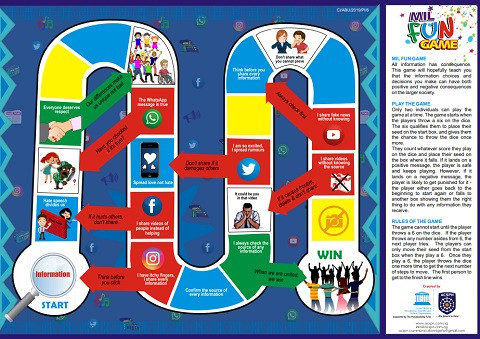 Media and Information Literacy: Fun Game Год публикации: 2019 Организация-автор: UNESCO Dakar | Association of Communication Scholars & Professionals of Nigeria (ACSPN) This game will teach you that the information choices and decisions you make can have both positive and negative consequences on the larger society.
 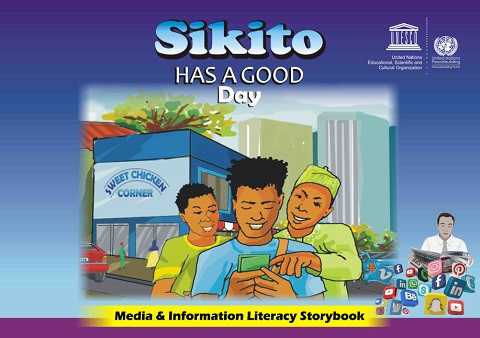 Sikito Has a Good Day: Media & Information Literacy Storybook Год публикации: 2019 Организация-автор: UNESCO Dakar | Association of Communication Scholars & Professionals of Nigeria (ACSPN) Today's world is shaped by the quality of information produced, accessed and consumed at individual and social levels. This determines the quality of our decisions and actions. Increasingly, current digital realities and their social media manifestations, have enabled more opportunities for expression. Increased access to the internet is promoting freedom, with consequences for peace and conflict. Students will learn responsible online communication and media information &l literacy from the story.
 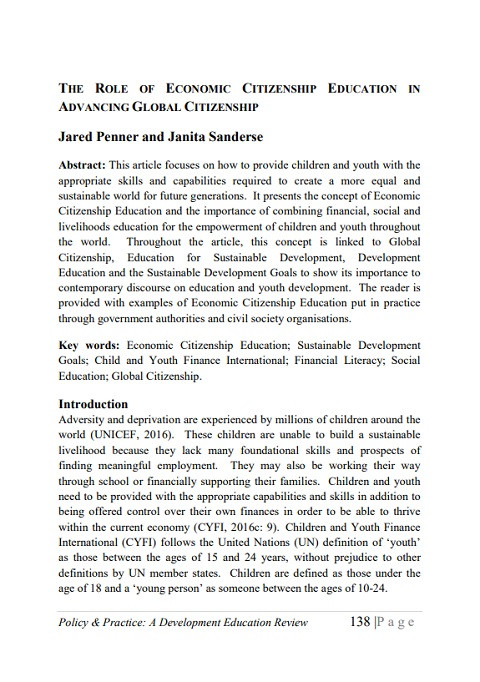 The Role of Economic Citizenship Education in Advancing Global Citizenship (Policy & Practice: A Development Education Review; Vol. 24, Spring) Год публикации: 2017 Автор: Jared Penner | Janita Sanderse Организация-автор: Centre for Global Education (CGE) This article focuses on how to provide children and youth with the appropriate skills and capabilities required to create a more equal and sustainable world for future generations. It presents the concept of Economic Citizenship Education and the importance of combining financial, social and livelihoods education for the empowerment of children and youth throughout the world. Throughout the article, this concept is linked to Global Citizenship, Education for Sustainable Development, Development Education and the Sustainable Development Goals to show its importance to contemporary discourse on education and youth development. The reader is provided with examples of Economic Citizenship Education put in practice through government authorities and civil society organisations.