
Ресурсы
Изучайте широкий спектр ценных ресурсов ВГГ, чтобы углубить своё понимание и повысить эффективность исследований, просветительской деятельности, преподавания и обучения.
Найдено: 3,158
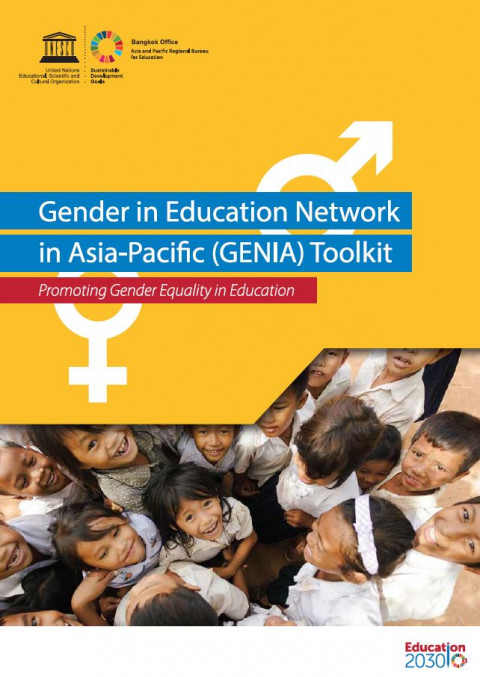 Gender in Education Network in Asia-Pacific (GENIA) Toolkit: Promoting Gender Equality in Education Год публикации: 2019 Организация-автор: UNESCO Bangkok The GENIA Toolkit was originally designed in 2003 when the Gender in Education Network in Asia Pacific was established. The fifth edition of the GENIA Toolkit (25 tools) is designed for use by gender focal points and education planners and implementers. It introduces key concepts and theoretical debates, and outlines practical approaches for mainstreaming gender equality throughout the education system, and within education policy.The toolkit is designed to be used selectively, depending on the user’s needs. It can be used as a self-study tool. Readers can select topics that they have identified as priority learning areas to help them improve their own understanding and practical capacity. The toolkit can also be used by trainers to facilitate training sessions. Trainers can choose tools from the kit that best match the needs of their trainees.
  More Than One-half of Children and Adolescents Are Not Learning Worldwide; UIS Fact Sheet No. 46 Год публикации: 2017 Организация-автор: UNESCO Institute for Statistics (UIS) This paper presents the first estimates for a key target of Sustainable Development Goal 4, which requires primary and secondary education that lead to relevant and effective learning outcomes. By developing a new methodology and database, the UIS has produced a global snapshot of the learning situation facing children and adolescents who are in school and out. The data show the critical need to improve the quality of education while expanding access to ensure that no one is left behind. The paper also discusses the importance of benchmarking and the concept of minimum proficiency levels. Más de la mitad de los niños y adolescentes en el mundo no está aprendiendo; Ficha informativa del UIS No. 46 Год публикации: 2017 Организация-автор: UNESCO Institute for Statistics (UIS) Este documento presenta las primeras estimaciones para una meta fundamental de Objetivo de Desarrollo Sostenible 4, la cual requiere una educación primaria y secundaria que lleve a resultados de aprendizaje relevantes y efectivos. A través del desarrollo de una nueva metodología y base de datos, el UIS ha producido una panorámica global de la situación de aprendizaje que enfrentan los niños y adolescentes que están dentro y fuera de escuela. Los datos muestran una necesidad crítica de mejorar la calidad de la educación, ampliando al mismo tiempo el acceso para asegurar que nadie se quede atrás. En el documento también se discute la importancia del análisis comparativo y el concepto de niveles mínimos de competencia.
 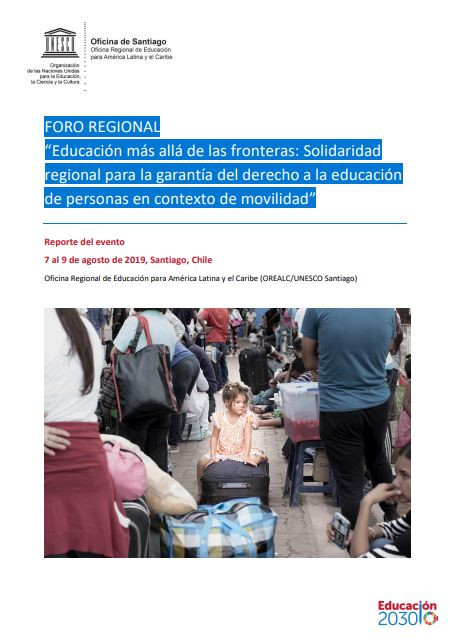 Foro regional: Educación más allá de las Fronteras: Solidaridad Regional para la Garantía del Derecho a la Educación de Personas en Contexto de Movilidad; reporte del evento Год публикации: 2019 Организация-автор: UNESCO Santiago El aumento sustantivo de la movilidad intrarregional, la progresiva transformación de la procedencia de la población en contexto de movilidad y la presencia de flujos masivos de desplazamiento en los últimos años han supuesto importantes desafíos para los Estados. Particularmente, en establecer las maneras en que las personas migrantes, refugiadas, solicitantes de asilo y retornadas puedan ejercer sus derechos fundamentales. Entre estos derechos, el derecho a la educación emerge como una herramienta para proteger la dignidad humana, especialmente considerando su capacidad de promover la garantía de otros derechos y de constituirse, por tanto, en un derecho multiplicador. Un compromiso central de la Agenda 2030 adoptada por los Estados Miembros es “no dejar a nadie atrás”, por lo que considerar las necesidades de protección de las personas en situación de movilidad resulta urgente. El logro de los Objetivos de Desarrollo Sostenible depende de nuestra respuesta a este desafío mundial y regional.
 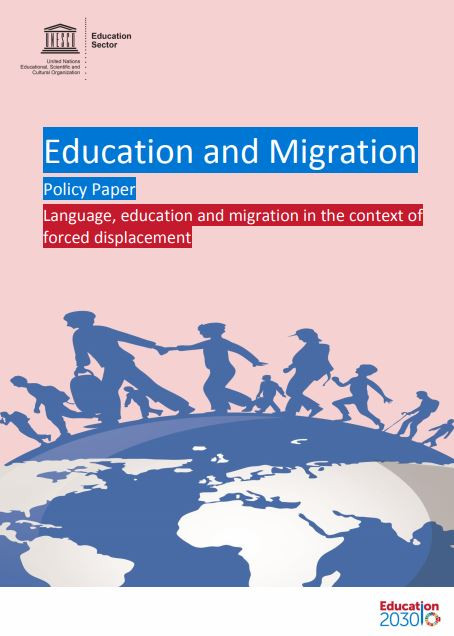 Education and Migration Policy Paper: Language, Education and Migration in the Context of Forced Displacement (Policy Brief Series, no 1) Год публикации: 2018 Автор: Francine Sara Menashy | Zeena Zhakaria A surge in global migration, spurred in part by conflict, emergency, and fragility, has elicited increased attention to the specific needs of migrant and refugee learners. The international community faces an urgent global challenge: more people are now displaced than since the end of the Second World War. Half of those displaced are under the age of 18. Further, while two-thirds of international migrants are in high-income countries, 85% of those displaced by conflict and natural disaster now live in low-income countries. Forced displacement creates particular vulnerabilities, including access to education free from discrimination. Meeting Sustainable Development Goal 4 by 2030 demands that all children, youth, and adults receive an inclusive and equitable quality education. Education is a right that plays a critical role in advancing both sustainable development and peace. Yet refugees, migrants, and asylum seekers encounter numerous barriers to an inclusive andequitable quality education in host countries worldwide.
 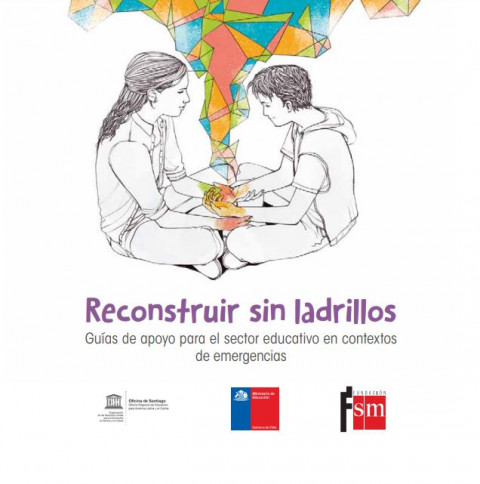 Reconstruir sin ladrillos: guías de apoyo para el sector educativo en contextos de emergencias Год публикации: 2017 Автор: Griselda Amuchástegui | María Isabel del Valle | Henry Renna Организация-автор: UNESCO Santiago La Educación es fundamental para todos los niños, niñas y jóvenes y más aún en situaciones de emergencia. Es una herramienta para el bienestar psico-social de las comunidades en la respuesta, de desarrollo de capacidades para la preparación y reducción del riesgo y de fortalecimiento local en la recuperación de los territorios. La educación es y debe ser un medio para mejorar y transformar las vidas y el hábitat del ser humano. También la Educación es un fin, en su búsqueda y construcción colectiva las personas regeneran relaciones, trazan proyectos comunes y fortalecen su auto-concepto. Ella no sólo contribuye al bienestar, la Educación es por misma un estar-bien colectivo, mejora nuestras habilidades, internaliza valores, contribuye al cambio social, a la salud y la vida sana, la cohesión local. Es un derecho y es también habilitador de otros derechos. Históricamente, ante desastres la Educación ha sido abordada a mediano y largo plazo en lugar de ser activada desde la fase de respuesta a emergencias; la ayuda humanitaria suele enfocarse en la provisión de alimentos, vivienda, agua, albergue, cuestiones imprescindibles pero que deben y pueden ser cruzadas con acciones del sector de Educación desde el primer momento. La Educación no puede esperar a tiempos más estables para su despliegue; debe ser garantizada en todo momento, en todo lugar y de todas las formas posibles como un Derecho Humano Fundamental.
  Situation Analysis of SDG 4 with a Gender Lens, Target 4.5 Год публикации: 2018 Организация-автор: UNESCO Bangkok Equity and inclusion are at the heart of the SDG 4-Education 2030 Agenda. Target 4.5 calls for monitoring equity using disaggregated parity indices for all education indicators “by income, sex, age, race, ethnicity, migratory status, disability and geographic location, or other characteristics” (UN, 2016). In East Asia and the Pacific, access to basic education has expanded in recent decades, especially for girls (UNESCO & UNICEF, 2012). Despite these gains, many girls are still denied the right to education in the sub-region, but this should not mask the fact that boys also face barriers to education. As policymakers seek to implement Target 4.5, they must address the multiple, intersecting disadvantages that all children and youth face.
 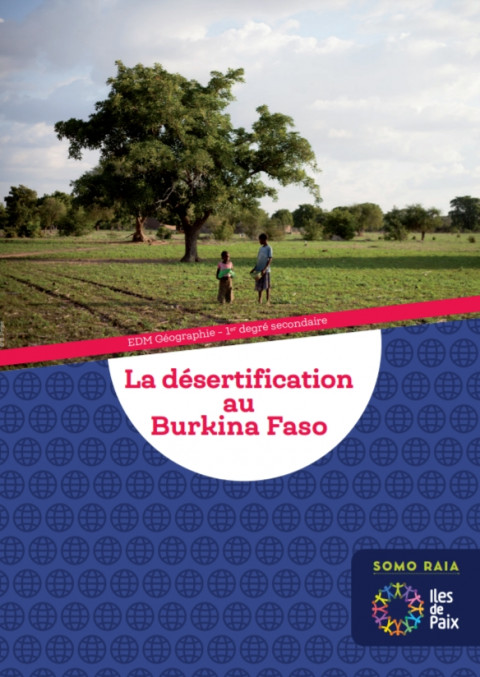 La désertification au Burkina Faso Год публикации: 2019 Организация-автор: Îles de Paix Au Burkina Faso, les changements climatiques contribuent à accentuer le phénomène de désertification et à aggraver les problèmes alimentaires. L’objectif de ce dossier est que les étudiants puissent découvrir ce pays d’Afrique ainsi que les enjeux liés à la désertification. Au travers des activités, les élèves auront la possibilité d’exercer plusieurs compétences via des documents variés : chansons, documents écrits, iconographies, cartes, schémas, etc. Une partie documentaire, destinée à l’enseignant, permet d’approfondir la thématique.
 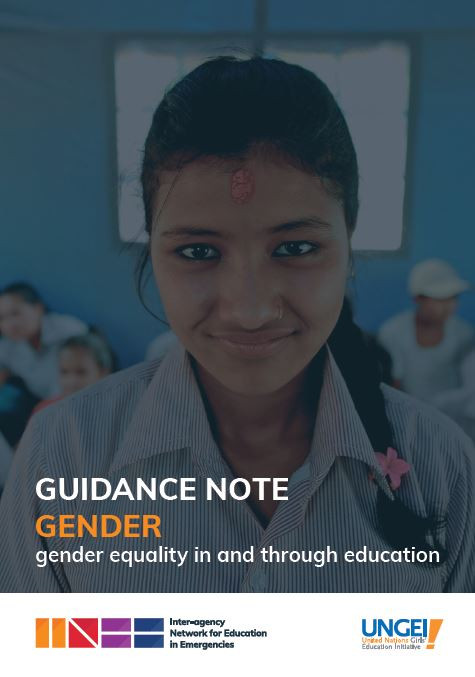 INEE Guidance Note on Gender: Equality in and Through Education Год публикации: 2019 Организация-автор: Inter-agency Network for Education in Emergencies (INEE) With the launch of the Global Goals for Sustainable Development (SDGs) in 2015, the international community committed to providing inclusive and equitable quality education for all (SDG4) as well as achieving gender equality and the empowerment of all women and girls (SDG5). The Global Goals also emphasize the need to “leave no one behind” by focusing on those furthest behind first, such as those affected by crisis. In line with this, the Education 2030 Framework for Action stresses the importance of providing education in “safe, supportive and secure learning environments free from violence” and recommends a stronger, better coordinated response to ensure the protective space of education is maintained during crises and subsequent recovery efforts.In response to these global commitments, the INEE Guidance Note on Gender provides strategies to ensure that girls, boys, women, and men in contexts of conflict and crisis equally enjoy the protection and learning outcomes that quality education can provide. It also outlines principles for gender-responsive programming, in alignment with the INEE Minimum Standards for Education in Emergencies. The Guidance Note on Gender shows how attention to gender dynamics and social constraints will result in better education for all crisis-affected populations and help build inclusive, equitable education systems for the future. This guidance note also responds to recent developments in the humanitarian context, including the historic commitment made by G7 partners to quality education for girls in crisis situations. The ensuing Charlevoix Declaration on Quality Education for Girls, Adolescent Girls, and Women in Developing Countries recognizes that quality education can contribute to peace and stability as well as positive health and life outcomes for all. It is critical that the development community now harnesses this global momentum by working together to break the particular barriers that prevent too many girls and boys in situations of crisis and conflict from accessing the education they need. It is our hope that this Guidance Note on Gender will help better equip those at the frontlines of this work to do just that.
 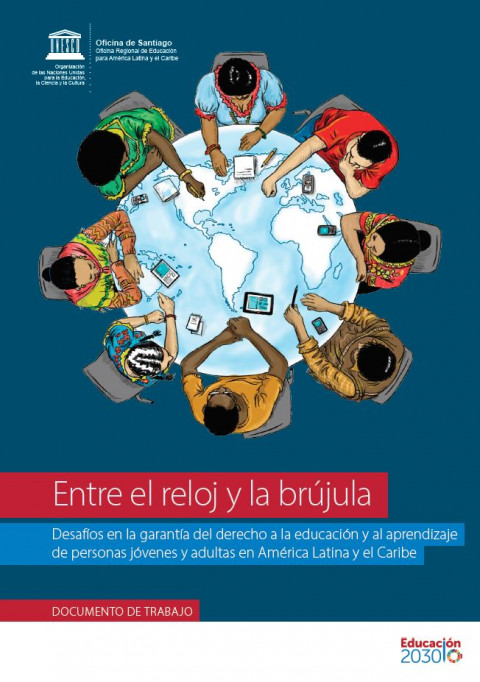 Entre el reloj y la brújula: desafíos en la garantía del derecho a la educación y al aprendizajede personas jóvenes y adultas en América Latina y el Caribe; documento de trabajo Год публикации: 2019 Автор: Henry Renna Организация-автор: UNESCO Santiago Este documento tiene por objetivo proporcionar una visión general de la educación y del aprendizaje de personas jóvenes y adultas como derecho humano y social. Los instrumentos de derecho vinculante y no vinculante que la sustentan son históricos y de larga data, como también contingentes, amplios y extensos en su alcance, con presencia regional e internacional. El documento muestra —sobre la base de los Indicadores del Objetivo de Desarrollo Sostenible 4 (ODS 4 Agenda 2030)— que los principales desafíos para los países de América Latina y el Caribe tienen relación con la lentitud de los progresos (el desafío del reloj) dejando a muchas y muchos jóvenes y adultos al margen de oportunidades educativas, de conocimientos, habilidades y aptitudes, y privados de alcanzar el bienestar integral. Este informe también sostiene —basado en los informes nacionales del Tercer Reporte Global de Educación y Aprendizaje de Adultos— que muchos desafíos están vinculados con la dirección de las políticas (el desafío de la brújula), con sentidos reduccionistas y homogeneizadores detrás de las instituciones y de la acción pública, lo que precariza y fragiliza la garantía del derecho a la educación y al aprendizaje de las personas jóvenes y adultas. Este documento es consistente con el llamado de la UNESCO a «repensar la educación» e invita a reconstruir en el siglo XXI un mundo y una educación sin muros, donde se difuminen las fronteras mentales e institucionales que reducen, dividen y aislan los sistemas educativos, con el fin de liberar su poder transformador para todos y todas.