
Ресурсы
Изучайте широкий спектр ценных ресурсов ВГГ, чтобы углубить своё понимание и повысить эффективность исследований, просветительской деятельности, преподавания и обучения.
Найдено: 948
 Features of Countering Violent Extremism and Terrorism in Kazakhstan Год публикации: 2019 Автор: Anna Gusarova Организация-автор: Central Asian Bureau for Analytical Reporting (CABAR) | Institute for War and Peace Reporting (IWPR) «In Kazakhstan there is no term as “violent extremism” in the conceptual construct, and as a result at the legislative level. Too vague definition of the terms extremism and terrorism significantly complicates the work on prevention and counteraction», – said Anna Gusarova, an expert in international security, director of the Central Asian Institute for Strategic Studies, in her article written specifically for CABAR.asia. Особенности противодействия насильственному экстремизму и терроризму в Казахстане Год публикации: 2019 Автор: Anna Gusarova Организация-автор: Central Asian Bureau for Analytical Reporting (CABAR) | Institute for War and Peace Reporting (IWPR) «В Казахстане отсутствует термин «насильственный экстремизм» в понятийном аппарате и, как следствие, на законодательном уровне. Слишком размытое определение терминов экстремизм и терроризм заметно осложняет работу по предупреждению и противодействию», – отмечает Анна Гусарова, эксперт в области международной безопасности, директор Центральноазиатского института стратегических исследований, в статье написанной специально для CABAR.asia.
  Advantages and Risks of Introducing the “Multilingual and Multicultural Education” Program in Kyrgyzstan Год публикации: 2019 Автор: Kanzada Zayirbekova Организация-автор: Central Asian Bureau for Analytical Reporting (CABAR) | Institute for War and Peace Reporting (IWPR) «Multilingual education makes it possible to simultaneously master the state and official languages, along with one of the foreign ones. It also creates social cohesion, enhances the culture of interethnic communication, and all this in total strengthens interethnic relations,» notes Kanzada Zayirbekova, a participant of the CABAR.asia School of Analytics, in her article. Преимущества и риски внедрения программы «Многоязычного и поликультурного образования» в Кыргызстане Год публикации: 2019 Автор: Kanzada Zayirbekova Организация-автор: Central Asian Bureau for Analytical Reporting (CABAR) | Institute for War and Peace Reporting (IWPR) «Многоязычное образование дает возможность одновременно овладеть государственным, официальным и одним из иностранным языком. Также создает сплоченность в обществе и повышение культуры межнационального общения и все это укрепляет межнациональные отношения», – отмечает участница Школы аналитики CABAR.asia Канзада Зайырбекова в своей статье.
 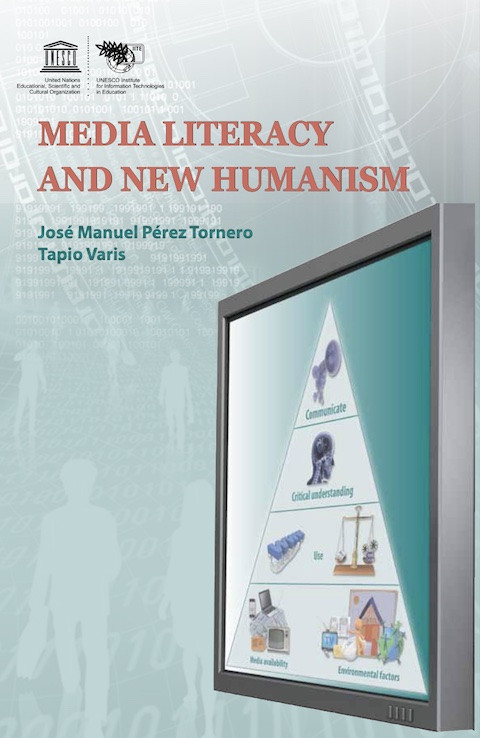 Media Literacy and New Humanism Год публикации: 2010 Автор: José Manuel Pérez Tornero | Tapio Varis Организация-автор: UNESCO Institute for Information Technologies in Education (IITE) The authors consider the opportunities that media literacy opens in the world of global education and communication in the context of new humanism.Being applied to education, the concept of new humanism, a new UNESCO credo, suggests the creation of a more inclusive society in which all humans have a chance to access knowledge and quality education and every word being heard in the universal dialogue. In the authors’ opinion, the new humanism in the global society must prioritize a new sense of respect for multiplicity and cultural diversity and must support media development with the goal of consolidating the new culture of peace.The book is aimed at educators, researchers, policy-makers, the media and civil society.
 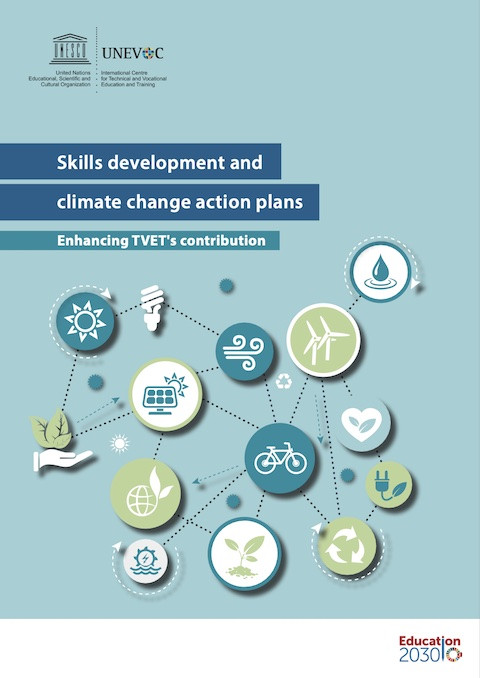 Skills Development and Climate Change Action Plans: Enhancing TVET's Contribution Год публикации: 2021 Организация-автор: UNESCO International Centre for Technical and Vocational Education and Training (UNEVOC) Climate change is an ongoing process that, at the current pace of such activities, cannot be avoided. Tools have been proposed to deal with climate change focus on adaptation and mitigation. Strengthening national and international awareness of and commitment to reducing the impact of climate change has become the only viable option to ensure the sustainability of life on Earth.The Paris Agreement entered into force in 2016 with the aim of bringing all nations together in a common goal of combating climate change and adapting to its impacts. According to the Agreement, every party should submit a climate plan laying out its adaptation and mitigation targets. Technical and vocational education and training (TVET) has the potential to play significant roles in these plans. The smooth transition to green societies and economies relies on amongst others the knowledge, skills and competencies to promote sustainable development. Effective education and training for sustainable development pivots on governance and vision, and the ability to empower people in an inclusive manner to act in favour of sustainable development. It also relies on the ability to train, upskill, reskill and empower those that can take advantage of the job growth and job creation potential in a changing economy.This discussion paper compiles and reviews relevant information regarding the country submissions (Nationally Determined Contributions and National Communications) which lay out adaptation plans and the policies created in fifty-seven selected countries. The aim is to summarize key information that can help assess the ongoing and potential contribution of TVET to the realization of these plans. The analysis made through this discussion paper has helped to generate a set of approaches for climate change adaption, through the education and training lens. These approaches can be used to advance the discussion in strengthening the technical and vocational skills development component in country climate adaptation plans.
 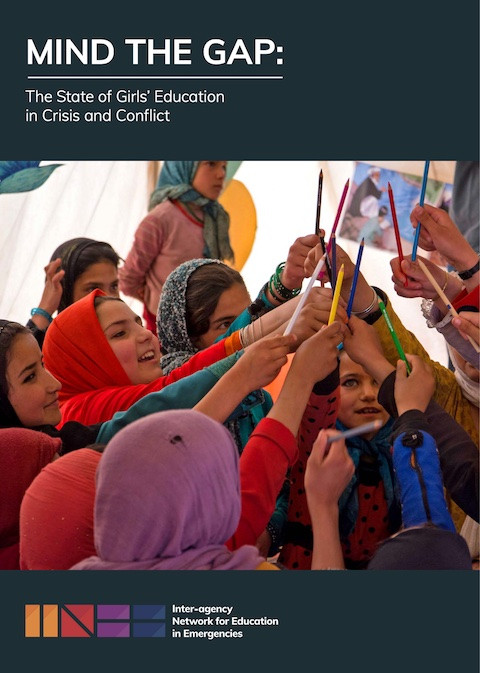 Mind the Gap: The State of Girls’ Education in Crisis and Conflict Год публикации: 2021 Организация-автор: Inter-agency Network for Education in Emergencies (INEE) This report summarizes progress, gaps, challenges and opportunities in improving education and training for girls and women affected by conflict and crisis. The report aims to support the Charlevoix Declaration on Quality Education’s commitment to enhance the evidence base and monitor progress toward gender-equitable education in crises. The report draws from data on 44 crisis-affected countries, from recent research, and from a set of case studies of interventions in a range of crisis-affected contexts.
  Understanding the Impact of Artificial Intelligence on Skills Development Год публикации: 2021 Автор: Kelly Shiohira Организация-автор: UNESCO International Centre for Technical and Vocational Education and Training (UNEVOC) The era of artificial intelligence is young in years but advanced in impact. Intermediate skill jobs as we know them are fast disappearing as their tasks are systematically automated, and individuals are increasingly likely to encounter AI technology in their everyday lives. In fact, fifty percent of organizations worldwide report using some form of AI in their operations.It is clear that AI has broad implications for the whole of humanity, and therefore on the education and training institutions that equip lifelong learners with the skills to navigate both work and society. A wide range of institutions and other stakeholders have risen to the challenge through research and innovative programmes, paving the way for a better understanding of AI’s potential – and its pitfalls.This paper synthesizes research on current trends, programmes, policies and uses of AI related to technical and vocational education and training across six continents, covering developing and developed contexts, as a resource for stakeholders invested in the future of intermediate-level workers and TVET. Lecturers, students, administrators, policymakers, programme implementers and lifelong learners are invited to examine current practices, opportunities and challenges raised by AI, and recommendations to build a future-ready education and training system.
  Secondary Education and Skills Год публикации: 2020 Организация-автор: Generation Unlimited | Global Initiative on Decent Jobs for Youth All young people need access to quality education and learning that would help them develop the skills, knowledge, attitudes and values they need to find and retain productive work, to make informed decisions, and to positively engage in their communities. However, millions of young people remain out of school or do not have access to quality learning opportunities. The COVID-19 pandemic and the resulting economic downturn have made the challenges facing young people even more pressing, as shrinking labour markets leave low-skilled young people with fewer choices, and render them more vulnerable to exploitation.There is a need for a radical re-think of what works, seeking a radical improvement in traditional curricula, the number of trained professional teachers, student–teacher ratios, and the teaching methods and strict school timetables that have become less relevant to the current needs of young people.The aim of this guide is to support the Generation Unlimited strategic priorities, and to inform policy makers and social partners, so as to guide action on investment, policy change and delivery, increasing the likelihood of successful outcomes and decent jobs for young people.
  Медийно-информационная грамотность в цифровом мире: Как научить Учителей Год публикации: 2021 Организация-автор: UNESCO Institute for Information Technologies in Education (IITE) В сборник вошли статьи, отражающие некоторые тренды развития цифровой медиасреды, подходы к формированию медийно-информационной грамотности (МИГ), описания отдельных практик, представляющих опыт реализации обучения МИГ педагогов и учащихся различных уровней и форм образования, а также рекомендации, направленные на интеграцию МИГ в педагогическое образование и повышение квалификации учителей и преподавателей.