
Ресурсы
Изучайте широкий спектр ценных ресурсов ВГГ, чтобы углубить своё понимание и повысить эффективность исследований, просветительской деятельности, преподавания и обучения.
Найдено: 2,255
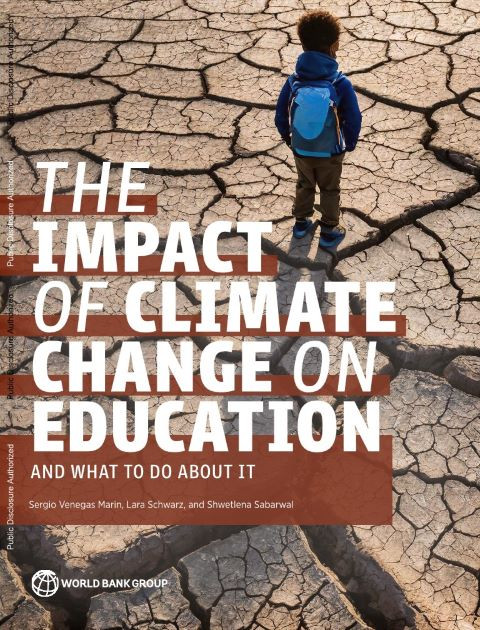 The Impact of Climate Change on Education and What to Do about It Год публикации: 2024 Автор: Sergio Venegas Marin | Lara Schwarz | Shwetlena Sabarwal Организация-автор: International Bank for Reconstruction and Development | World Bank Education can be the key to ending poverty in a livable planet, but governments must act now to protect it. Climate change is increasing the frequency and intensity of extreme weather events such as cyclones, floods, droughts, heatwaves and wildfires. These extreme weather events are in turn disrupting schooling; precipitating learning losses, dropouts, and long-term impacts. Even if the most drastic climate mitigation strategies were implemented, extreme weather events will continue to have detrimental impacts on education outcomes.
  Greening Education Partnership: Getting Every Learner Climate-Ready Год публикации: 2024 Организация-автор: UNESCO Bangkok The UN Secretary-General calls the climate crisis ‘a battle for our lives’, as we still struggle to transform our societies to reach the 1.5°C-degree path recommended by the Paris Agreement. Rapid and radical transformation at all levels and in many aspects of our life is required, with education as a central and powerful means to support the adaptation and strengthening of the resilience of learners and societies. It is also important to ensure that education systems become more resilient to climate change to create safe and climate-proof schools. Building off of the knowledge and practice accumulated in Education for Sustainable Development (ESD), a new Greening Education Partnership aims to deliver strong, coordinated and comprehensive action which will prepare every learner to acquire the knowledge, skills, values, and attitudes to tackle climate change and to promote sustainable development.
  الإرشادات التوجيهية لتخضير مناهج التعليم والتعلّم من أجل العمل المناخيّ Год публикации: 2024 Организация-автор: UNESCO This Guidance responds to the calls from young people for a holistic approach to climate change and sustainability in the curriculum. It outlines a common language on how quality climate change and sustainability can be reflected in the curriculum by setting expected learning outcomes per age group (from 5-year olds and up to 18+ age group, including a lifelong learning approach).This is crucial for accelerating country-level action and ensuring joint monitoring of progress. The objective is to have 90 per cent of all countries include climate change in their curricula by 2030, as established by the Greening Education Partnership.This Guidance aims to support countries, schools or individual practitioners in reassessing their ongoing practices to adopt a more action-oriented, holistic, scientifically accurate, justice-driven and lifelong learning approach to climate change.
  Diagnosing and Enhancing Environmental Literacy of Citizens to Raise Green Awareness Год публикации: 2021 Автор: Jeongyoon Yeom | Namsoo Kim | Haengwoon Jeong | Woohyeon Jeong Организация-автор: Korea Environment Institute (KEI) 1. Research purposeA nationwide consensus on the understanding on and necessity of the environmental policy is needed in order to successfully achieve the policy objectives.The necessity of environmental education is being highlighted but in reality, there is a lack of objectives and specific indicators to verify its effect.The goal of environmental education should be the expansion of environmental literacy and indicators to measure this should be developed. 2. Research scopeSummarize the concept of environmental literacy and develop the scales for adultsMeasure the level of environmental literacy of citizensConfirm the predictors and consequences of environmental literacyUnderstand citizen types via cluster analysis 시민 인식의 녹색 전환을 위한 환경 리터러시 진단 및 강화 방안 Год публикации: 2021 Автор: 염정윤 | 김남수 | 정행운 | 정우현 Организация-автор: 한국환경연구원 1. 연구의 필요성 및 목적 환경 정책이 성공적으로 정책 목표를 달성하기 위해서는 정책 이해와 필요성에 대한 범국민적 공감대가 필수 환경교육의 중요성을 강조하고 있지만 실질적으로 교육의 효과를 확인할 수 있는 객관적이고 구체적인 지표가 부재함 환경교육의 목표를 환경 리터러시의 증대로 설정하고 이를 측정할 지표 개발이 필요2. 연구의 범위 환경 리터러시 개념 정리 및 성인 대상의 측정 도구 개발 일반 시민의 환경 리터러시 수준 측정 환경 리터러시의 예측 요인과 결과 요인 확인 군집 분석을 통한 시민 유형 파악* 본 저작물은 한국환경연구원에서 '2021'년에 작성하여 공공누리 제'4'유형으로 개방한 ‘시민 인식의 녹색 전환을 위한 환경 리터러시 진단 및 강화 방안(작성자: 염정윤)’을 이용하였으며 해당 저작물은 한국환경연구원 홈페이지(http://www.kei.re.kr)’에서 무료로 다운받으실 수 있습니다.
 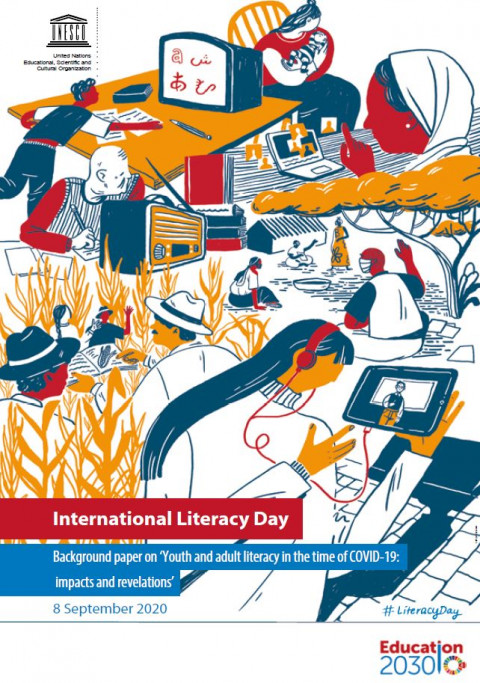 International Literacy Day: Background Paper on 'Youth and Adult Literacy in the Time of COVID-19; Impacts and Revelations' Год публикации: 2020 Организация-автор: UNESCO Specially prepared on the occasion of International Literacy Day 2020, this background paper illustrates the impact of the COVID-19 crisis on youth and adult literacy, based on the limited information that is currently available. It provides five regional snapshots and identifies preliminary lessons learned thus far, while aiming to inspire continued reflection and subsequent action. It also makes the case for the ongoing importance of advancing youth and adult literacy, a priority that was already neglected even before the pandemic but which deserves all our attention. ILD 2020 thus seeks to trigger reimaginations of literacy teaching and learning in the COVID-19 crisis and beyond, with a particular focus on the role of educators.
  Envision 4.7: Bridge 47 Global Event; Helsinki, Finland 5–7 November 2019: Report Год публикации: 2019 Организация-автор: Bridge 47 | Frinland. Ministry of Education and Culture | Finland. Ministry for Foreign Affairs Global event Envision 4.7 was held in Helsinki in November 2019. The event brought around 200 people together to discuss ways to take the SDG Target 4.7 forward. In this report you can find summaries of all the speeches, panel discussions, workshops and working groups that were held at the event, together with a summary of discussions around all the different topics. You can also find pictures and drawings from the event at the report.
  User Empowerment through Media and Information Literacy Responses to the Evolution of Generative Artificial Intelligence (GAI) Год публикации: 2024 Автор: Divina Frau-Meigs Организация-автор: UNESCO Key messages Artificial Intelligence and Generative AI are having a significant impact on people’s engagement with information, digital technology, and media. This raises concerns about control human agency and autonomy over information, decision making, gender equality, and freedoms in general. User empowerment through Media and Information Literacy (MIL) as a response to GAI, which is still in its infancy, needs to be fully deployed and public policy makers should be concerned in developing it well from the outset. MIL is necessary to build people’s ethical use of synthetic media, i.e. video, text, image or voice content fully or partially generated by AI-systems. The societal opportunities being deepened by GAI include: access to information, participation, employability, creativity, lifelong learning and creative industries. The societal potential risks being deepened by GAI include: disinformation, loss of data privacy, threats to integrity of elections, surveillance, lack of source reliability, discrimination, including gender-based and racial stereotypes, and copyrights violations. Building on familiarity in the face of urgency, AI literacy can be embedded in MIL to teach and train all sorts of communities (educators, librarians, youth workers, women networks, etc.). Ensuring explainable AI is key to both the design of MIL curricula and to the design of policy and governance around GAI. To build trust in information and education, source reliability needs to be revised to encompass the different types of “evidence” provided by GAI. MIL can train informed people from outside the technology industry to participate in the design, implementation and regulation of AI, in a manner that remains human-centered, gender-responsive and mindful of the public interest. Training for MIL is within the remit of governments and institutions of higher education, which have a duty to ensure MIL policy actions are sustained and strengthened over time, to be future-proof, in the face of an ever-evolving AI/GAI. L’autonomisation des utilisateurs grâce aux réponses apportées par l’éducation aux médias et à l’information à l’évolution de l’intelligence artificielle générative (IAG) Год публикации: 2024 Автор: Divina Frau-Meigs Организация-автор: UNESCO Messages clés L’intelligence artificielle et l’IA générative influent grandement sur les rapports des indivi- dus à l’information, aux technologies numériques et aux médias. Mais cela ne va pas sans inquiétudes quant à leur contrôle, au pouvoir d’action et à l’autonomie dont disposent les utilisateurs vis-à-vis de l’information, à la prise de décisions, à l’égalité des genres et aux libertés en général. . Pour constituer une réponse à l’IAG, technologie qui en est à ses balbutiements, l’autonomisation des utilisateurs grâce à l’éducation aux médias et à l’information (EMI) doit être pleinement déployée, et les autorités publiques doivent s’efforcer de la promouvoir dès le début. L’EMI est indispensable pour garantir une utilisation éthique des médias synthétiques, c’est-à-dire des vidéos, textes, images et sons totalement ou partiellement créés à l’aide de systèmes d’IA. L’IAG offre de nombreuses opportunités sociales dans différents domaines, dont l’accès à l’information, la participation, l’employabilité, la créativité, l’apprentissage tout au long de la vie et les industries créatives, entre autres. Il existe cependant des risques sociaux potentiels aggravés par l’IA générative, dont : la désinformation, la perte de contrôle sur la confidentialité des données, les menaces pour l’intégrité des élections, la surveillance, le manque de fiabilité des sources, la discrimination notamment fondée sur le genre et les stéréotypes raciaux et les violations des droits d’auteur. Pour mettre à profit la familiarité face à l’urgence, la maîtrise de l’IA pourrait être intégrée dans les programmes d’EMI afin d’éduquer et de former des communautés très diverses (éducateurs, bibliothécaires, animateurs pour la jeunesse, réseaux de femmes, etc.). Pour bien concevoir non seulement les programmes d’EMI mais aussi la gouvernance de l’IAG et les politiques connexes, l’IA explicable joue un rôle essentiel. Pour renforcer la confiance dans l’information et l’éducation, la fiabilité des sources doit être réexaminée pour englober tous les différents types de « preuves » fournies par l’IAG. L’EMI peut former des acteurs éclairés n’appartenant pas au secteur de la technologie afin qu’ils contribuent à la conception, à la mise en œuvre et à la réglementation de l’IA d’une manière qui reste centrée sur l’humain, sensible au genre et soucieuse de l’intérêt public. La formation dans le cadre de l’EMI relève des gouvernements et des établissements d’enseignement supérieur, qui doivent veiller à ce que les actions politiques en la matière soient soutenues et renforcées dans la durée, pour s’adapter aux évolutions constantes de l’IA/IAG.
  International Day of Education 2025: Artificial Intelligence and Education: Preserving Human Agency in a World of Automation Год публикации: 2025 Организация-автор: UNESCO International Day for Education 2025 aims to: Examine new possibilities offered by AI, especially for teaching, learning, assessment and educational administration. Promote the development of critical AI literacies by equipping educators and learners with the competencies needed to understand, use and influence AI technologies, in line with the UNESCO AI competency frameworks for teachers and students. Ensure that AI complements, rather than replaces, the essential human elements of learning, including the cultivation of in-person relationships and emotional intelligence.