
Ресурсы
Изучайте широкий спектр ценных ресурсов ВГГ, чтобы углубить своё понимание и повысить эффективность исследований, просветительской деятельности, преподавания и обучения.
Найдено: 1,727
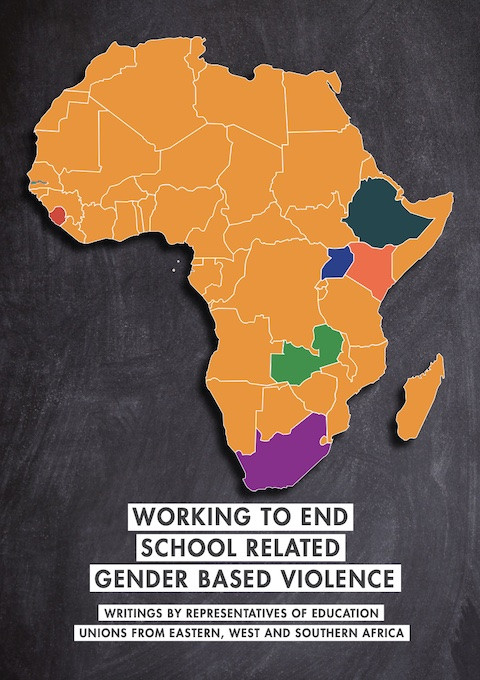 Working to End School Related Gender Based Violence: Writings by Representatives of Education Unions From Eastern, West and Southern Africa Год публикации: 2019 Автор: Shamim Meer Организация-автор: Gender at Work | Labour Research Service (LRS) | Global Affairs Canada (GAC) | United Nations Girls' Education Initiative (UNGEI) | Education International (EI) School Related Gender Based Violence (SRGBV) is violence that undermines the bodily integrity, human rights, and gender equality of all those involved in the school but primarily that of the school child.In 2016, 7 teacher unions i.e. SADTU and NAPTOSA from South Africa, BETUZ and ZNUT from Zambia, UNATU from Uganda, ETA from Ethiopia and KNUT from Kenya and in 2018, SLTU from Sierra Leone, GTU from the Gambia and the staff from the Ghana-based Education International Regional Africa Office - actively engaged in a Gender at Work - Gender Action Learning Process (GAL).The main aim of this specific GAL process was to create a participatory EI pilot program in Southern, East and West Africa focusing on individual teachers’ and teacher unions’ capacity to address SRGBV. With the support of Gender at Work facilitators, participants strengthened their understanding of gender inequality and gender based violence in the context of the school. Throughout the GAL Process participants spoke from their hearts, sharing inspirational stories of change.
  Strengthening the Quality of Early Childhood Education and Care Through Inclusion Год публикации: 2020 Автор: Susie Lee | Barbara Janta Организация-автор: European Union (EU) The quality in Early Childhood Education and Care (ECEC) has risen up the policy agenda globally, leading to a general consensus that quality ECEC can lead to positive and equitable outcomes for all children. Given these contexts, the European Commission considers inclusion as an integral part of quality ECEC. However, ensuring effective access to quality ECEC for all children remains a challenge, especially for those from disadvantaged backgrounds. This is in part because both inclusion and quality ECEC are multi-faceted concepts. This present policy memo helps policymakers better understand this challenge and suggests some possible solutions. To do so, this memo introduces what inclusion means in education generally and in ECEC particularly, and then discusses how inclusion in ECEC is understood in the current EU policy context. Lastly, the memo summarises findings from recent EU-level projects on how inclusion is integrated into different aspects of quality in ECEC.
  Digital Education Action Plan 2021-2027: Resetting Education and Training for the Digital Age Год публикации: 2020 Организация-автор: European Union (EU) The Digital Education Action Plan (2021-2027) outlines the European Commission’s vision for high quality, inclusive and accessible digital education in Europe.It is a call to action for stronger cooperation at European level to learn from the COVID-19 crisis during which technology is being used at a scale never seen before in education and training make education and training systems fit for the digital age
  Global Citizenship: Whitepaper About an Emerging Concept Год публикации: 2021 Организация-автор: Melton Foundation The Melton Foundation is an active part of a larger community aiming to develop and promote the understanding of global citizenship as an overarching framework for thought and action. In this context, the Melton Foundation has developed this Whitepaper. This material aims to: Familiarize communities with the concept of Global Citizenship and provide an honest, clear picture of it. Analyze the current state of Global Citizenship, evaluate issues preventing its widespread adoption and put forward suggestive remedies.
  Online Media Literacy Strategy Год публикации: 2021 Организация-автор: Government of the United Kingdom The Online Harms White Paper set out a commitment to develop an Online Media Literacy Strategy ahead of the implementation of the online harms regulator. The aim of the strategy is to educate and empower internet users across the UK to manage their online safety. Over 170 organisations are currently involved in delivering media literacy education in the UK. The Media Literacy Strategy sets out the government’s multi-year plan to bring coordination to the media literacy landscape and outlines a Media Literacy Framework of best practice principles to inform the content and delivery of media literacy education.
  Cross-Sectoral Cooperation for Sustainable Futures Год публикации: 2021 Автор: Jana Arbeiter | Maja Bučar Организация-автор: Bridge 47 Cross-sectoral cooperation is important to strengthen the coherence and collaboration, as well as mobilization of resources needed for addressing systemic challenges, implementing the Sustainable Development Goals (SDGs), and enabling transformative change. Building or strengthening cross-sectoral multi-stakeholder groups or coalitions within SDG Target 4.7, can support equipping everyone with the knowledge, skills and competencies needed to contribute to a more sustainable and just future.Multi-stakeholder groups or coalitions in support of SDG Target 4.7 on a local, regional and global level are essential mechanisms for promoting and implementing sustainable development. They can enable coherence and collaboration, as well as pooling of expertise and resources needed for co-creation of the relevant policy proposals linked to the implementation of SDG Target 4.7. Building and strengthening multi-stakeholder groups or coalitions require a clear basis for establishing well-defined relationships within the multi-stakeholder groups or coalitions, well-designed structures and operating procedures and strong coordination. But most importantly, they have the potential to combine key stakeholders from relevant sectors of society, which can advocate for the implementation of SDG Target 4.7 and the (co)-creation of appropriate policies that address global justice, sustainability, and key global challenges. This publication identifies the following recommendations for establishing multi-stakeholder groups or coalitions in support of SDG Target 4.7: Multi-stakeholder groups or coalitions in support of SDG Target 4.7 on a local, regional and global level should be established, and resources should be made available for this. Stakeholders wishing to establish multi-stakeholder groups in the context of SDG Target 4.7 should clearly define their main goals and objectives. Stakeholders involved in multi-stakeholder groups in the context of SDG Target 4.7 need to be strategically identified and cover all major societal sectors, including different components of SDG Target 4.7. Coalitions in support of SDG Target 4.7 should place focus on facilitation, active listening, and peer learning opportunities. Inclusive and flexible coordination and leadership should be applied, stressing transparency, accountability and joint commitment to the cause.
  Transformative Education: Bridging Education for Change Год публикации: 2021 Автор: Jana Arbeiter | Maja Bučar Организация-автор: Bridge 47 This publication suggests that improvements in the areas of coordination, cooperation, awareness raising and capability development are needed, as outlined in the recommendations below. Policies and strategies at national, regional and global level should adopt overarching visions for transformative education in the form of overarching strategies for SDG Target 4.7. Mechanisms for coordination and collaboration between the different components of SDG Target 4.7 should be established at national, regional and global levels. Awareness of the role of transformative education and SDG Target 4.7 in contributing to more just and sustainable futures should be raised jointly between the different components of SDG Target 4.7. Opportunities for capacity building and upskilling of practitioners and learners linked to transformative education should be enabled and created at national, regional and global levels.
  Unlocking the Transformative Potential of Education: The Alliance Between Lifelong Learning and SDG Target 4.7 Год публикации: 2021 Автор: Chris Millora Организация-автор: Bridge 47 This paper has found that Lifelong learning as a spectrum of formal, informal and non-formal learning, offers a framework to embrace different forms of learning people gain in various spaces across their lifespan. While several lifelong learning policies emphasise economic benefits, evidence shows that lifelong learning also facilitates active citizenship, tolerance to diversity, empathy, learning to live together, leadership, intergenerational learning, and awareness of social injustices. This paper demonstrated the impact of ALE provisions that bring to centre stage the needs of adults – particularly women – in resource-poor contexts. These programmes recognise the ‘funds of knowledge’ and ‘banks of skills’ already existing in these communities – challenging the deficit discourse that is dominant particularly in development circles even today.Based on these findings, this paper puts forward seven interrelated policy recommendations: (1) acknowledgement, within SDG 4.7 policies, that learning occurs in all life stages, forms and spaces; (2) prioritisation of lifelong learning and transformative approaches to education into local, national, regional and global level policies, including provisions of funding; (3) a focus on the transformative competencies and outcomes of lifelong learning; (4) positioning lifelong learning as a cross- cutting (rather than separate) approach to achieving the SDGs; (5) increased attention to recognising, validating and accrediting (RVA) non-formal and informal learning; (6) involving marginalised groups as stakeholders that can shape policy and not only recipients; (7) increased government support and financing to adult educators and literacy facilitators.
  Transformative Competencies: How to Define and Implement Competencies for SDG Target 4.7 Год публикации: 2021 Автор: Johanna Helin Организация-автор: Bridge 47 This paper was commissioned to support advocacy for SDG Target 4.7 in European and global policies by exploring the concept of ‘Competencies for SDG Target 4.7’. This advocacy paper draws from a desk review of existing global and regional competency frameworks at national, regional and global levels. The aim is to get a clearer understanding of these transformative competencies and how they help the implementation and assessment of Target 4.7.This paper is divided in three sections. The first section provides background to the different world views that frame the discussion on competencies, before turning to presenting some of the competency frameworks for Target 4.7. The second section gives some examples of how these competencies are being introduced into national education policies, professional skills training and lifelong learning. The paper finishes with conclusions and policy recommendations.
  Indicators: The Need and Challenges of Tracking Implementation of Target 4.7 Год публикации: 2021 Автор: Johanna Helin Организация-автор: Bridge 47 This paper investigates the existing and proposed indicators and monitoring frame- works for 4.7. Examining efforts at national, regional, and global levels will identify the main challenges in measurement initiatives. The paper will start by looking at the context of SDGs and the special character of Target 4.7. Thereafter, it will discuss the process and limitations of defining the indicators at the global level. It will also review regional developments, tools, and ideas for national and local level assessment frameworks in Asia-Pacific and Europe. The paper ends with conclusions and policy recommendations.