
Ресурсы
Изучайте широкий спектр ценных ресурсов ВГГ, чтобы углубить своё понимание и повысить эффективность исследований, просветительской деятельности, преподавания и обучения.
Найдено: 3,385
 North/South Relationships in the International Trade Union Movement: The Weight of History and the Rigidity of Structures (Quebec Journal of International Law; Special Issue, Nov.) Год публикации: 2012 Автор: Sid Ahmed Soussi Организация-автор: Société québécoise de droit international (SQDI) The following article submits a critical analysis regarding the evolution of North-South relations within the International Trade Union Movement, specifically concerning the creation of the International Trade Union Confederation (ITUC) in 2006. Currently faced with a growing transnational outsourcing phenomenon, affecting collective conflict and labor regulation in Africa as well as South and Central America, the ITUC draws attention to new issues. In terms of collective action, numerous South and Central American unions favor local alliances that extend to non-unionized actors. They criticize the ITUC’s ignorance of local resistance as well as its preference for global action that is carried out through continental and institutional strategies. Divergences among members of the International Trade Union Movement are not only the result of internal power struggles that surfaced within the organization in 2006, during the Vienna exchanges. These differences owe their existence to history, notably to rapports of domination that the postcolonial period renewed and brought forward in other forms. In addition to history, declining notions of collective action resulting from differential policies also contribute to divergences. These policies are similar to the relationship between society and the State that Northern and Southern organizations base on separate premises. Here, the analysis is depicted by Quebec’s central labor organizations’ and the international methods of cooperation they employ. Several studies underline the emergence of new forms of representation and collective action lead by a number of South and Central American labor organizations. Even though, in some cases, these new types of representation take on traditional forms of unionism such as marked political involvement and organizational instability, they surface within atypical strategies. These unusual approaches include the coexistence of socially-generated unionism and community unionism, as well as the mobilization of local resistance movements through coalitions that extend to other community actors with prioritized issues (oversized informal economies and a compressed public sector). The analysis explores the underlying dynamic that, based on recurring local experiences, produces consequences on a global scale. Les rapports nord/sud dans le mouvement syndical international: Le poids de l’histoire et la rigidité des structures (Revue québécoise de droit international; Special Issue, Nov.) Год публикации: 2012 Автор: Sid Ahmed Soussi Организация-автор: Société québécoise de droit international (SQDI) Cet article propose une analyse critique de l’évolution des rapports Nord-Sud dans le mouvement syndical international (MSI) dans le contexte de la restructuration amorcée avec la fondation, en 2006, de la Confédération Syndicale Internationale (CSI). Elle explicite les nouveaux enjeux de ces rapports, face au phénomène croissant de l’externalisation transnationale du travail qui affecte la conflictualité collective et la régulation du travail en Afrique et en Amérique latine. Nombre de syndicats du Sud, privilégiant, en termes d’action collective, des alliances locales élargies à des acteurs non syndicaux, reprochent à la CSI d’ignorer les résistances locales et de leur préférer une action globale portée par des stratégies continentales et institutionnelles. Ces divergences ne résultent pas seulement des rapports de force internes au MSI depuis les assises de Vienne en 2006. Elles doivent leur persistance, d’abord au poids de l’Histoire, lestée notamment par des rapports de domination que la période postcoloniale a continué de reconduire sous d’autres formes. Il y a ensuite ces conceptions de l’action collective qui se déclinent à travers des rapports au politique différenciés notamment par des rapports à la société civile et à l’État que les organisations syndicales du Nord et leurs alter ego du Sud fondent sur des prémisses distinctes. Cette analyse est illustrée ici par le cas des modes de coopération internationale des centrales syndicales du Québec. Plusieurs recherches soulignent l’émergence de nouvelles formes de représentation et d’action collectives menées par nombre d’organisations syndicales du Sud. Même si elles reprennent parfois les figures traditionnelles du syndicalisme dans ces régions – engagement politique marqué, instabilité des structures – ces formes apparaissent comme des stratégies atypiques : cohabitation entre syndicalisme de transformation sociale et community unionism, mobilisation de résistances locales par des coalitions élargies à d’autres acteurs de la société civile autour d’enjeux prioritaires (économies informelles surdimensionnées et secteurs publics compressés). Cette analyse fait le point sur cette dynamique à l’oeuvre qui, à partir de la récurrence de ces expériences locales, produit des conséquences à l’échelle globale.
  유네스코학교 길라잡이: 밑동부터 차근차근 (개정판) Год публикации: 2022 Автор: 김다영 | 박현주 | 유성상 | 이신애 | 이하은 | 임재민 | 정다정 Организация-автор: 유네스코한국위원회 본 자료는 2020년 출간된 유네스코학교 길라잡이 밑동부터 차근차근의 2022년 개정판이다. 개정판에서는 유네스코학교 활동을 위한 최신 자료 및 한일교사대화 공동수업과 평화프로젝트 등 여러 활동의 결과를 추가 수록하였다.
 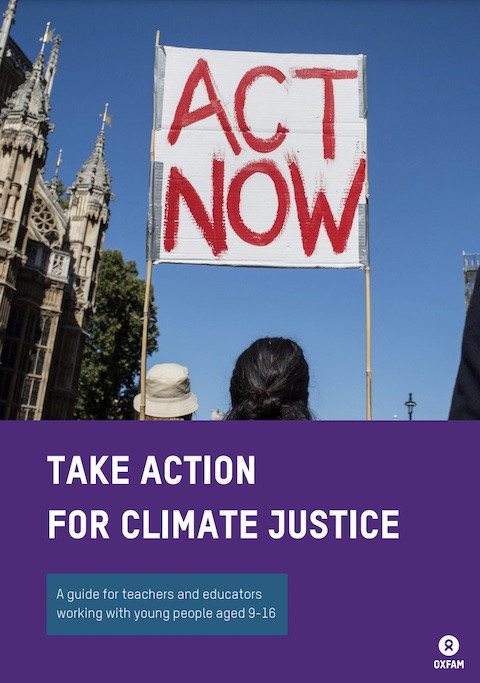 Take Action for Climate Justice: A Guide for Teachers and Educators Working With Young People Aged 9-16 Год публикации: 2022 Организация-автор: Oxfam GB Aimed at teachers and educators, this short guide contains practical advice, classroom activities and helpful planning tools to inspire and motivate young people aged 9-16 to take action for our planet and its people.There are many ways in which we can all take climate action, from making individual lifestyle changes to participating in collective community responses that target the systemic causes of the climate emergency, and all are important. Taking action can develop young people’s sense of agency, build skills such as leadership and decision-making, and help them to build empathy and manage eco-anxiety. This guide supports young people to take action by sharing the message about climate justice, raising awareness and influencing others to help make change happen.A recent survey by Inter Climate Network found that more than 80 per cent of young people aged 11–18 were concerned about climate change, with half of them already choosing to take climate action. Almost all of those taking action are doing so at home, with only a third acting on climate change in school. Another key finding was that many young people do not feel they have the power to effect change, citing barriers such as a lack of knowledge about what they can do, insufficient time provided in school for positive climate action, and a sense that individual actions have little impact without wider structural change.
 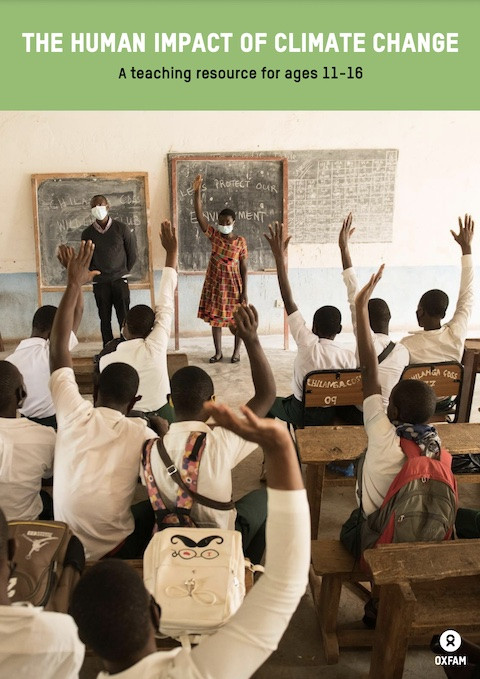 The Human Impact of Climate Change: A Teaching Resource for Ages 11-16 Год публикации: 2021 Организация-автор: Oxfam GB These activities for ages 11-16 explore the human impact of the climate emergency and provide new spaces, approaches and opportunities for climate education and social action. This is in response to the call to action by Teach the Future (2020) who presented research on the current state and future of climate education in the UK. Their report discovered an overwhelming demand for climate education in schools alongside low levels of teacher knowledge about how to effectively deliver climate education and a narrow range of curriculum areas where it is taught. This resource frames the climate emergency as a human rights and people-centred issue and supports teachers to promote a sense of agency and empowerment within young people. This in turn is recognised as one strategy to help young people manage eco-anxiety, as well as disillusionment and disengagement with climate issues. This resource is suitable as both a curriculum resource and to inform social action by young people (for example, in GCSE Citizenship Studies)
  톡(Talk)쏘는 다문화와 세계시민교육(세계시민교육은 무엇인가) Год публикации: 2022 Организация-автор: 중앙선거관리위원회 톡(Talk)쏘는 다문화와 세계시민교육한국선거방송과 함께 알아보는 선거이야기'세계시민교육은 무엇인가?'
 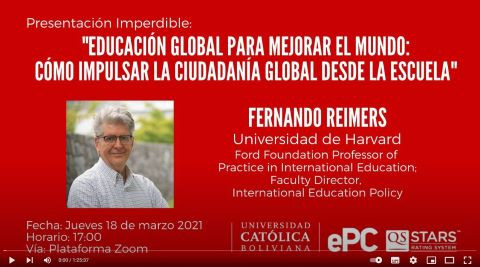 Global Education to Improve the World: How to Promote Citizenship from School Год публикации: 2021 Автор: Fernando Reimers Giving priority to global education would help make what is learned in school relevant, more current and attractive for both male and female students and their educators. This video offers an overview of this topic and the multidimensional theoretical model of global education that places teachers, administrators and other members of the educational community at the center of the definition of what the education of global citizens should be and how should develop. Its objective is to provide guidance on how to educate students with a global mindset so that they are competent and responsible when acting in the face of the global challenges of their time. Educación global para mejorar el mundo: Como impulsar la ciudadania desde la escuela Год публикации: 2021 Автор: Fernando Reimers Dar prioridad a la educación global ayudaría a hacer relevante lo que se aprende en la escuela, más actual y atractivo tanto para las alumnas y los alumnos como para sus educadores. Este video ofrece una visión sobre este tema y el modelo teórico multidimensional de la educación global que sitúa a docentes, directivos y otros integrantes de la comunidad educativa en el centro de la definición de lo que debería ser la educación de ciudadanas y ciudadanos globales y cómo debería desarrollarse. Su objetivo es dar orientaciones acerca de cómo educar al alumnado con una mentalidad global para que sea competente y responsable a la hora de actuar ante los desafíos mundiales de su tiempo.
 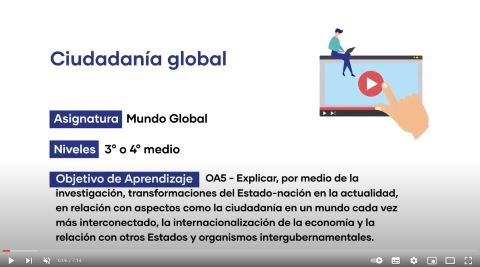 Global Citizenship Год публикации: 2020 Организация-автор: Educar Chile | Chile Foundation This video seeks to explain how nation-states have been transformed today, in relation to aspects such as citizenship in an increasingly interconnected world, the internationalization of the economy, and the relationship with other states and intergovernmental organizations. Ciudadanía global Год публикации: 2020 Организация-автор: Educar Chile | Chile Foundation En este video se busca explicar cómo se han transformado los estados-nación en la actualidad, en relación con aspectos como la ciudadanía en un mundo cada vez más interconectado, la internacionalización de la economia y la relación con otros estados y organismos intergubernamentales.