
Ресурсы
Изучайте широкий спектр ценных ресурсов ВГГ, чтобы углубить своё понимание и повысить эффективность исследований, просветительской деятельности, преподавания и обучения.
Найдено: 1,727
 Les ODD comme nouvelle citoyenneté mondiale Год публикации: 2018 Организация-автор: UVED Cynthia Fleury, professeur au Conservatoire National des Arts et Métiers, titulaire de la Chaire « Humanités et Santé », et également professeur associée à PSL / Mines ParisTech, présente dans cette vidéo (10'27) les trois questions qui lui paraissent fondamentales pour la réalisation des Objectifs de Développement Durable : celle de l'état de droit, celle de la santé humaine entendue dans son sens le plus large et celle de la transition numérique, indissociable de la transition écologique.
 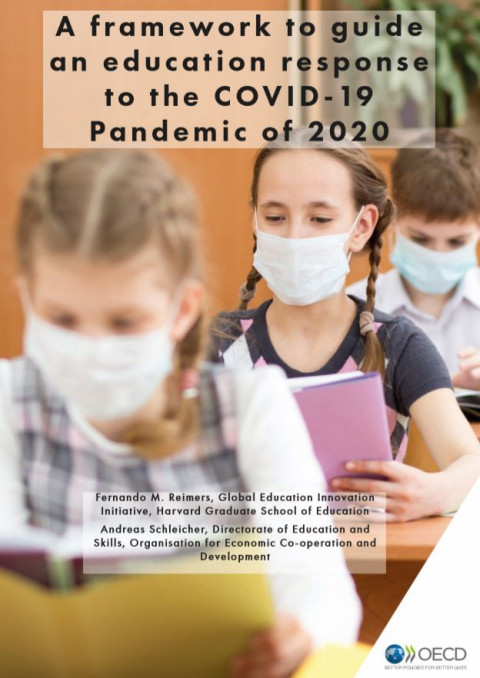 A Framework to Guide an Education Response to the COVID-19 Pandemic of 2020 Год публикации: 2020 Автор: Fernando Reimers | Andreas Schleicher Организация-автор: Organisation for Economic Co-operation and Development (OECD) This report aims at supporting education decision making to develop and implement effective education responses to the COVID-19 Pandemic. The report explains why the necessary social isolation measures will disrupt school-based education for several months in most countries around the world. Absent an intentional and effective strategy to protect opportunity to learn during this period, this disruption will cause severe learning losses for students.The report proposes that leaders of education systems and organizations develop plans for the continuation of education through alternate modalities, during the period of necessary social isolation. It offers a framework of areas to be covered by such plans. Un cadre pour guider une réponse éducative à la Covid-19 en cas de pandémie de 2020 Год публикации: 2020 Автор: Fernando Reimers | Andreas Schleicher Организация-автор: Organisation for Economic Co-operation and Development (OECD) Ce rapport vise à appuyer la décision de l'éducation faisant de développer et mettre en œuvre des réponses éducatives efficaces au Covid-19 en cas de pandémie. Le rapport explique pourquoi les mesures d'isolement social nécessaires perturberont l'éducation en milieu scolaire pendant plusieurs mois dans la plupart des pays à travers le monde. En l'absence d'une stratégie délibérée et efficace pour protéger l'occasion d'apprendre au cours de cette période, cette perturbation entraîne des pertes sévères d'apprentissage pour les étudiants.Le rapport propose que les dirigeants des systèmes d'éducation et les organisations à élaborer des plans pour la poursuite de l'éducation des modalités alternatives, au cours de la période d'isolement social nécessaire. Il offre un cadre de zones à couvrir par ces plans.
  Educación a la ciudadanía mundial: Marco de referencia de la AQOCI Год публикации: 2019 Организация-автор: Affaires mondiales Canada | Quebec Association of International Cooperation Organizations (AQOCI) La educación es parte integrante de la misión de las organizaciones de solidaridad y cooperación internacionales (OCI). En continuidad con su misión de educación y de compromiso con el público, la AQOCI adopta de ahora en adelante un enfoque de Educación para la ciudadanía mundial (ECM). Ésta se encuentra en la razón misma de ser de la asociación y de sus integrantes, ya que la solidaridad internacional supone que todas las poblaciones estén conscientes de las desigualdades y que se movilicen para la construcción de un mundo más justo e igualitario. Durante el 1er Encuentro, las OCI destacaron la importancia de ampliar el impacto de su acción en ECM y de hacer valer y reconocer sus competencias en ese ámbito ante los diversos colaboradores así como la población en general. En ese sentido, este nuevo marco de referencia es una primera herramienta para las OCI miembros de la AQOCI. En éste se propone orientación, conceptos y un repertorio conciso de nuestras prácticas comunes con el objetivo de describir, orientar y reconocer nuestra acción colectiva en ECM. Este marco expresa la visión actual de la AQOCI y valora la acción diversificada del conjunto de sus integrantes. Éducation à la citoyenneté mondiale: Cadre de référence de l’AQOCI Год публикации: 2019 Организация-автор: Affaires mondiales Canada | Association québécoise des organismes de coopération internationale (AQOCI) L’éducation fait partie intégrante de la mission des organismes de solidarité et de coopération internationales (OCI). En continuité avec l’éducation et l’engagement du public, l’AQOCI adopte désormais l’approche de l’Éducation à la citoyenneté mondiale (ECM). Celle-ci est au cœur de la raison d’être de l’association et de ses membres puisque la solidarité internationale suppose que toutes les populations soient conscientes des inégalités et qu’elles se mobilisent dans la construction d’un monde plus juste et égalitaire. Lors du 1er Rendez-vous, les OCI ont souligné l’importance d’accroître l’impact de leur action en ECM et de mieux faire valoir et reconnaître leur expertise dans ce domaine auprès de divers partenaires, particulièrement des milieux de l’enseignement, ainsi qu’auprès de la population en général. Dans ce sens, ce nouveau cadre de référence est un premier outil pour les OCI membres de l’AQOCI. Il propose une orientation, une terminologie et un recensement succinct de nos pratiques communes afin de décrire, orienter et reconnaître leur action collective en ECM. Ce cadre de référence exprime la vision actuelle de l’AQOCI et valorise l’action diversifiée de l’ensemble de ses membres.
  Global education in Lithuania: challenges and opportunities Год публикации: 2014 Автор: Indrė Augutienė | Zina Baltrėnienė Организация-автор: Lithuanian Development Education and Cooperation Network of Non-governmental Institutions (Association LITDEA) | Lithuanian National Non-Governmental Development Cooperation Organisations‘ Platform (NGDO Platform) The publication has been produced implementing the project ‘‘Quality Partnership for Development-EU Presidency project for the Lithuanian EU Presidency, 2013“ (no. DCINSA ED/2013/319-124). Today we live in a constantly changing world which is bound by the spirit of relations between people, countries and cultures and which presents various challenges and opportunities. Every day we have to solve numerous economic, social and environmental issues connecting us with other countries, their cultures and citizens and providing an opportunity for all of us to become part of a global society.In order to accept the opportunities provided by the globalisation processes and cope with the emerging challenges it is necessary to create the conditions for people to acquire the knowledge on global realities, emerging global development problems and to relate them with their own life. It is also important to provide the opportunities for people to acquire the skills and enhance own values facilitating active global citizenship and responsibility. Global problems increasingly impact on the lives of everybody throughout the world, therefore we must realise that we are part of the world with the still prevailing poverty, social inequality, climate change and global warming problems. In the current society it is especially important to ensure that different forms of education enhance people‘s understanding about the above challenges and their impact on personal, communal, national and global development.Global Education is directed toward formation and development of people‘s skills, knowledge and values facilitating understanding and response to the challenges of the 21st century. So far the concept of Global Education was not validated in any national documents. Today non-governmental organisations are actively discussing this issue with the academic society and with the Ministries of Foreign Affairs/and Education and Science representing the state in the above area. Besides, Lithuania has not developed a uniform Global Education strategy yet, but the dimension of Global Education is included in several specific national policy documents. In view of this, this article reviews the prerequisites for integration of global education set forth in the main legal acts defining Lithuania‘s sustainable development, development cooperation and education. This document provides a review of the Global Education concept, prerequisites for its implementation and description of the current situation in Lithuania. It also includes the proposals for a successful development of Global Education activities in our country. Éducation globalein Lithuania: challenges and opportunities Год публикации: 2014 Автор: Indrė Augutienė | Zina Baltrėnienė Организация-автор: Lithuanian Development Education and Cooperation Network of Non-governmental Institutions (Association LITDEA) | Lithuanian National Non-Governmental Development Cooperation Organisations‘ Platform (NGDO Platform) La publication a été réalisée la mise en œuvre du projet « Partenariat Qualité pour le projet de développement de l'UE Présidence de la présidence lituanienne de l'UE, 2013 »(no. DCINSA ED / 2013 / 319-124). Aujourd'hui, nous vivons dans un monde en constante évolution qui est lié par l'esprit des relations entre les peuples, les pays et les cultures, et qui présente divers défis et opportunités. Chaque jour, nous devons résoudre de nombreux problèmes économiques, sociaux et environnementaux qui nous relie avec d'autres pays, leurs cultures et leurs citoyens et de fournir une occasion pour nous tous de faire partie d'une société mondiale. Pour acept les possibilités offertes par les processus de mondialisation et faire face aux nouveaux défis, il est nécessaire de créer les conditions pour les gens à acquérir les connaissances sur les réalités mondiales, les problèmes de développement mondiaux émergents et à les relier à leur propre vie. Il est également important de fournir les possibilités pour les personnes à acquérir les compétences et de renforcer les valeurs propres à faciliter la citoyenneté mondiale active et la responsabilité. Les problèmes mondiaux de plus en plus d'impact sur la vie de tout le monde à travers le monde, nous devons donc réaliser que nous faisons partie du monde avec la pauvreté qui prévaut encore, les inégalités sociales, le changement climatique et les problèmes de réchauffement planétaire. Dans la société actuelle, il est particulièrement important de veiller à ce que les différentes formes d'éducation d'améliorer la compréhension des gens sur les défis ci-dessus et de leur impact sur le développement personnel, communautaire, national et mondial. Éducation globaleis dirigée vers la formation et le développement des compétences, les connaissances des personnes et des valeurs qui facilitent la compréhension et la réponse aux défis du 21e siècle. Jusqu'à présent, le concept de l'éducation globalewas pas validée dans les documents nationaux. Aujourd'hui, les organisations non-gouvernementales discutent activement de cette question avec la société académique et avec les Ministères des Affaires Étrangères / et de l'éducation et de la science représentant l'état dans la zone ci-dessus. Par ailleurs, la Lituanie n'a pas encore mis au point une formation globalestrategy uniforme, mais la dimension de l'éducation globaleis inclus dans plusieurs documents spécifiques de la politique nationale. Compte tenu de cela, cet article examine les conditions préalables à l'intégration de l'éducation globaleset énoncées dans les principaux actes juridiques définissant le développement durable, la coopération au développement et de l'éducation de la Lituanie. Ce document fournit un examen de la globaleconcept Éducation, conditions préalables à sa mise en œuvre et la description de la situation actuelle en Lituanie. Il comprend également les propositions pour un développement réussi d’activités mondiales de l'éducation dans notre pays.
  Отчет об общественном мониторинге законодательства и правоприменительной практики местной полицейской службы в сфере предупреждения и профилактики бытового насилия в РК Год публикации: 2017 Автор: S.V. Korneytchuk | N.S. Gladyr Организация-автор: OSCE. Programme Office in Astana Основной целью настоящего мониторинга является деятельность по оценке и прогнозированию законодательства путем выявления противоречий в законодательстве, устаревших, коррупциогенных и неэффективно реализуемых норм права, а также выработка предложений по совершенствованию законодательства и механизмов его реализации подразделениями местной полицейской службы. Это издание опубликовано при финансовой поддержке Офиса программ ОБСЕ в Астане в рамках проекта «Общественный мониторинг законодательства и правоприменительной практики местной полицейской службы в сфере предупреждения и профилактики бытового насилия в РК».
 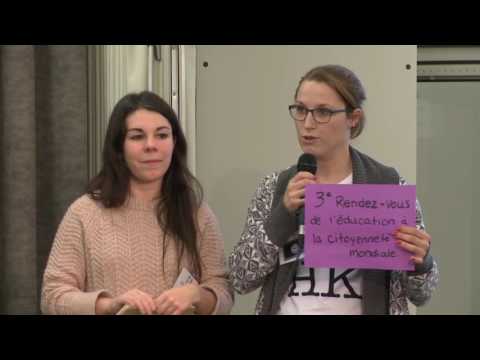 1er rendez-vous de l'éducation à la citoyenneté mondiale: Se donner une vision d'avenir en ÉCM Год публикации: 2017 Организация-автор: Association québécoise des organismes de coopération internationale (AQOCI) Travail en sous-groupes: « Se donner une vision d'avenir en ÉCM »
 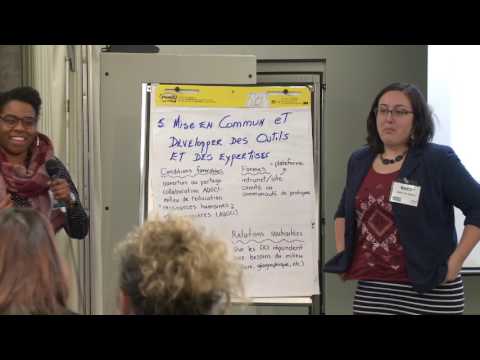 1er rendez-vous de l'éducation à la citoyenneté mondiale: Conditions favorables au changement Год публикации: 2017 Организация-автор: Association québécoise des organismes de coopération internationale (AQOCI) Travail en sous-groupes: «Conditions favorables au changement: de la situation actuelle à la situation souhaitée»