
Latin America and the Caribbean Move Toward Education for Peace: Santo Domingo Sets the Stage for a Regional Roadmap
© UNESCO
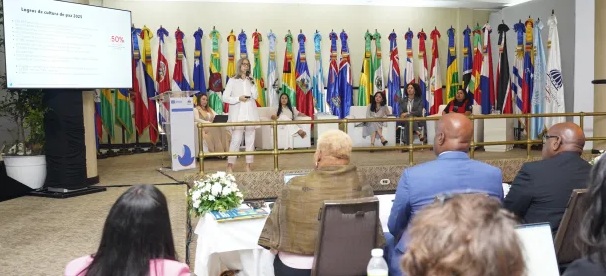
Delegates from 20 countries shared experiences in transformative education and discussed priority actions within the scope of UNESCO’s Recommendation, laying the foundation for future debates and planning measures at the national level.
25 November 2025 - Last update:26 November 2025
How can education become a driving force for more just and peaceful societies? This question guided the Regional Meeting on the Recommendation on Education for Peace, Human Rights and Sustainable Development, organized by UNESCO’s Regional Office in Havana and the Ministry of Education of the Dominican Republic, held in Santo Domingo from November 12 to 14.
Over three days, representatives from ministries of education, teachers, researchers, and civil society organizations debated proposals and actions that will serve as a starting point for a roadmap aimed at strengthening educational policies and practices in Latin America and the Caribbean, in line with the Recommendation adopted in 2023 by UNESCO’s 193 Member States.
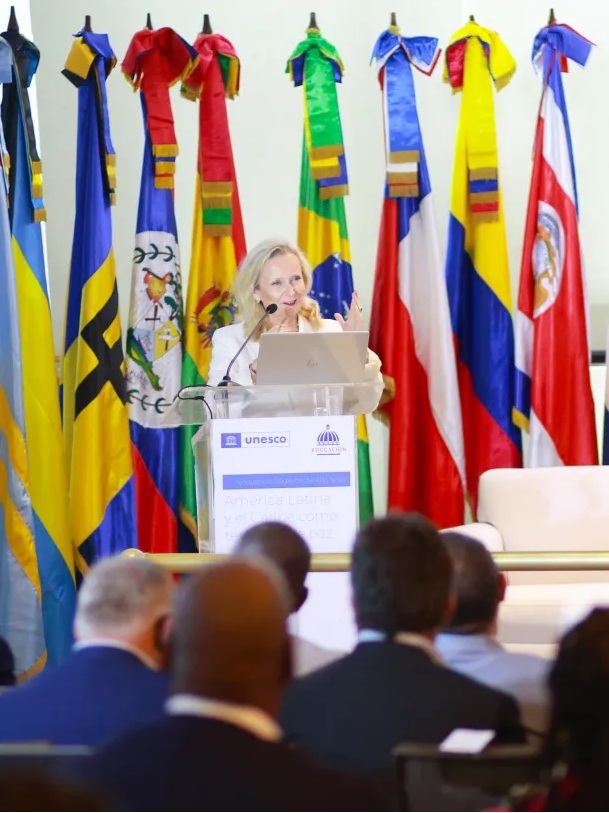
"The regional meeting was a polyphony of ideas, exchanges of experiences, and innovative initiatives for transformative education. Beyond a starting point for a roadmap, what we are creating is a community of practice where UNESCO Member States can support each other in an ongoing conversation"
Anne Lemaistre
Director of UNESCO’s Regional Office in Havana
The vision behind this normative instrument is clear: peace is not limited to the absence of violence but is conceived as an active, multidimensional process that transforms social, political, and economic structures to prevent violence at its roots and create conditions for political, climate, and cultural justice.
"The Recommendation is a lens through which we view our policies. Once we commit to peace, inclusion, and attention to diversity, we can no longer see the world in any other way"
Vannina Trentin
Deputy Coordinator for Training at UNESCO’s International Institute for Educational Planning (IIEP) for Latin America and the Caribbean
Among the topics discussed was the need for transformative education: curricula integrating environmental education, civic ethics, and the arts; continuous teacher training; safe learning environments; and policies that incorporate human rights and sustainability perspectives at all educational levels.
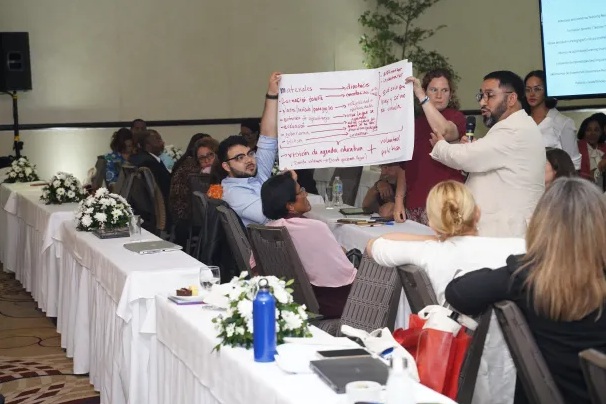
"Education cannot remain neutral in the face of today’s challenges; it must be a conscious act of building citizenship and peace"
Ancell Scheker
Vice Minister of Education of the Dominican Republic
Regional experiences and consensus
Twenty-one Member States shared initiatives showing how education can become a driver of peace: programs against racism and hate speech, school coexistence plans based on a culture of peace, curricula integrating global citizenship and sustainable development, and strategies for the ethical use of technology and artificial intelligence. Innovative proposals such as educational games for teachers and students were also presented.
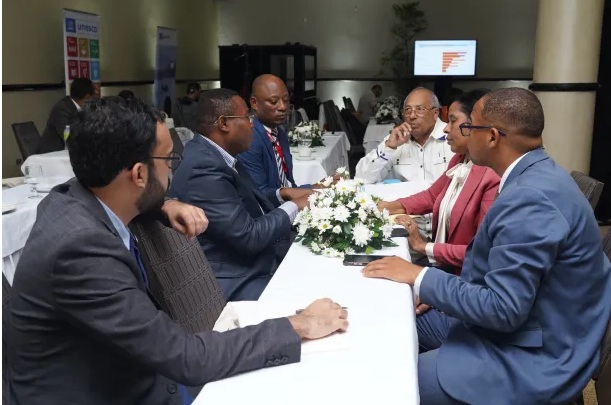
Organizations like the Latin American Campaign for the Right to Education (CLADE) and Education International (EI) reaffirmed education as a human right and a public good. From academia, experiences included Brazil’s Paulo Freire Institute, emphasizing South-South dialogue between Latin America and Africa and the fight against racial discrimination; Chile’s Universidad Católica Silva Henríquez, with studies on youth life projects; and Uruguay’s UNESCO Chair on Social Transformations and Human Condition, working with communities through a culture of peace.
Ministries also showcased concrete progress. “We have incorporated programs that strengthen knowledge and promote harmony among students, the community, and nature, aiming for every student to become a social agent and promoter of peace,” said Alexander Colón from the Dominican Republic’s Ministry of Education. From Panama, Jaime Castillo highlighted: “We are transforming the curriculum to integrate peace, sustainable development, and human rights, placing students and families at the center of the education system.”
The importance of a territorial approach to building peace from communities was also emphasized, involving local actors and knowledge. Representatives from Learning Cities and Biosphere Reserves agreed these spaces are essential for linking education, culture, and sustainability. The UNESCO Associated Schools Network also demonstrated its potential as a living laboratory of ideas and transformative practices.
An indicative roadmap and tools for action
The meeting concluded with the presentation of the Santo Domingo Roadmap, conceived as a starting point to deepen debate and plan measures at the national level. Indicative actions include creating a community of practice among focal points, horizontal cooperation among Member States, and awareness campaigns on the Recommendation. Strategic lines were also defined in policies and laws, curricula, teacher training, and educational materials.
"In a world where we face so many challenges every day, it is essential for Member States to work together to implement the 2023 Recommendation. When we act collectively, we achieve more"
Sithree van Heydoorn
Minister of Education, Science, Culture and Sports of Curaçao
To support implementation, UNESCO presented a Resource Kit with guides and methodologies adapted to different educational levels, including the Implementation Guide for the Recommendation, the Handbook for Preventing Hate Speech, the “Education in Colors” methodology, and innovative materials such as the board game African Diaspora, along with resources on socio-emotional learning and integrating the General History of Africa into education systems.

With this indicative roadmap and shared resources, the region now has a foundation to advance toward education systems that integrate peace, human rights, and sustainability. The meeting made clear that this process requires cooperation among Member States, educational communities, and partners—and that the conversation initiated in Santo Domingo will be key to guiding future policies and practices.