
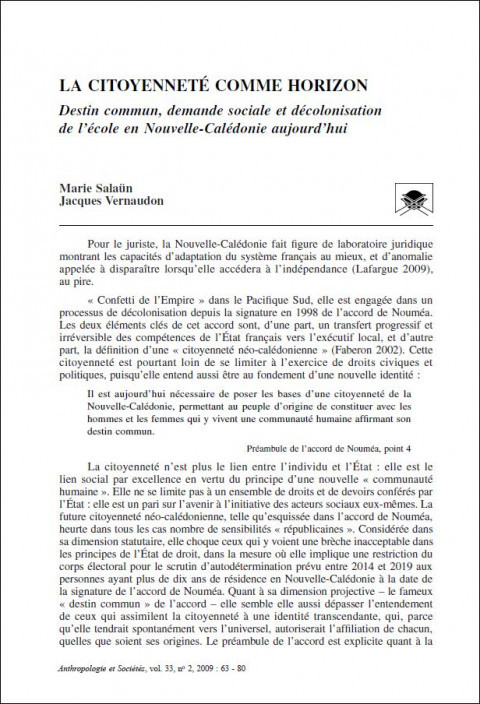
Working Towards Citizenship: Shared Destiny, Social Demand and Decolonisation of the Educational System in Contemporary New Caledonia
The situation in contemporary New Caledonia could be described as almost experimental. The territory is engaged in an innovative process of decolonisation and, within the next ten years or so, should witness the emergence of a New Caledonian citizenship, transcending the ethnic divisions engendered by colonisation through the elaboration of a « common destiny ». As a breeding ground for the inequalities which the current re-balancing process is attempting to alleviate, the educational system has been a key focus for Kanak independence movement demands over the last thirty years. This article presents some data from the first inquiries with parents whose children are involved in Kanak languages and culture classes, which have been included in the new curriculum, no longer national but local, since 2005. This recent inclusion seems to have encountered some forms of support which override community boundaries, since speaking a vernacular language is seen as a way of asserting one’s membership in a truly « local » community. What can we learn from developments in the social demand regarding a new multilingual educational system of interethnic coexistence that New Caledonians are committed to define?
相关资源
-
 IIEP-UNESCO 12th Medium-Term Strategy: 2026–2029
 -
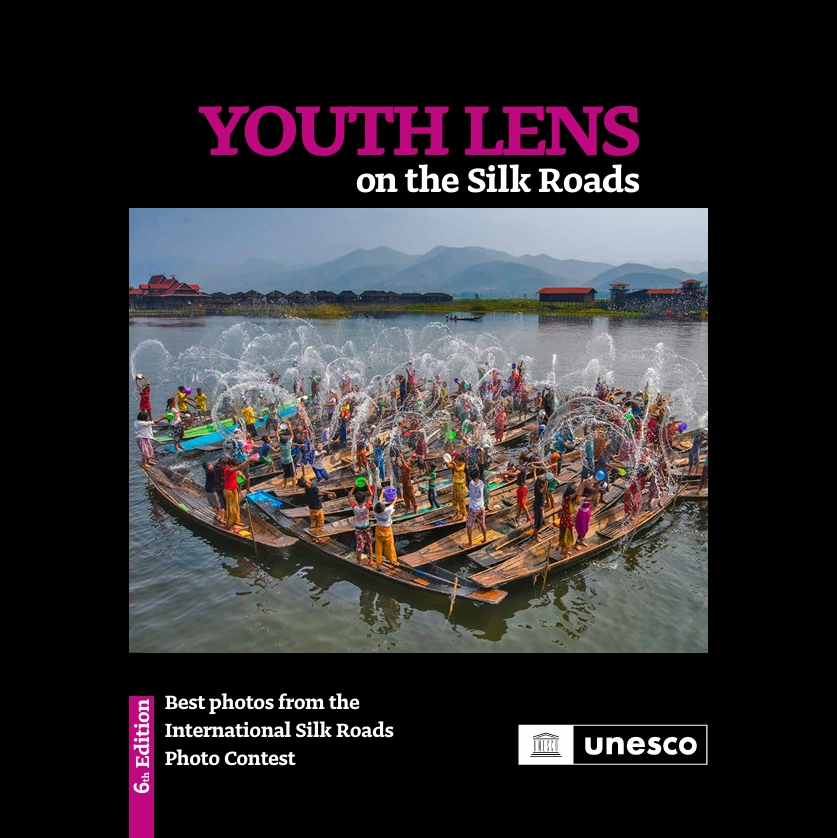 Youth Lens on the Silk Roads: Best Photos from the International Silk Roads Photo Contest; 6th Edition
 -
 Advancing Intergenerational Learning: Identifying Challenges and Opportunities for Older Adults; Integrated Case Study Report
 -
 Digital Empowerment for Lifelong Learning and Transformative Andragogy (DELTA) for Adult Educators: Introduction to the DELTA Framework and Resources