
相关资源
探索丰富的全球公民教育资源,深化理解,促进研究、倡导、教学与学习。
共找到3,559条结果
 Multicultural education: Israeli and German adolescents' knowledge and views regarding the Holocaust This study probes a unique case of multicultural education of Israeli and German students regarding the Holocaust. Their knowledge level of German history leading to the rise of Hitler and the Nazi party to power, knowledge about the Holocaust, the relation between their knowledge of attitudes toward the "other" (German/Israeli) group, and their reaction to a racist-dictatorial regime are explored. The findings were that German adolescents’ (high school students’) knowledge regarding the events leading to the rise of the Nazi party was greater than that of the Israeli adolescents. However, the knowledge of Israelis was greater regarding the Holocaust. A positive correlation was found between the knowledge levels and their attitudes toward the other groups (German/Israeli) and toward resistance to the possible rise of a dictatorial regime. The findings point to the fact that multicultural education, which combines attitudinal, cognitive and instrumental goals, can succeed in promoting non-racist views. (By the author)
 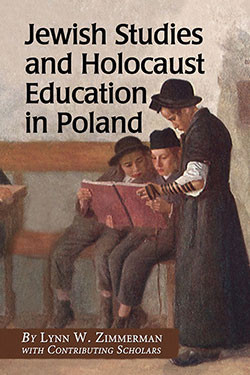 Jewish Studies and Holocaust Education in Poland This volume examines how people in Poland learn about Jewish life, culture and history, including the Holocaust. The main text provides background on concepts such as culture, identity and stereotypes, as well as on specific topics such as Holocaust education and curriculum, various educational institutions, and the connection of arts and cultural festivals to identity and culture. It also gives a brief overview of Polish history and Jewish history in Poland, as well as providing insight into how the Holocaust and Jewish life and culture are viewed and taught in present-day Poland. This background material is supported by essays by Poles who have been active in the changes that have taken place in Poland since 1989. A young Jewish-Polish man gives insight into what it is like to grow up in contemporary Poland, and a Jewish-Polish woman who was musical director and conductor of the Jewish choir Tslil gives her view of learning through the arts. Essays by Polish scholars active in Holocaust education and curriculum design give past, present and future perspectives of learning about Jewish history and culture. (By the publisher)
  Auschwitz in museums - Representing and teaching the Holocaust in the twenty-first century 出版年份: 2007 作者: S.Lassig | K.H.Pohl 'Auschwitz' in Museums: Representing and Teaching the Holocaust in the Twenty-first is a select extract from the book "How the Holocaust Looks Now International Perspectives". The book offers a series of essays that explore the historical culture the holocaust has engendered in Europe, Israel and the USA, the politics of its reception and representation, the motivations for and effectiveness of commemorating it, and the creative and didactic practices it has generated in contemporary literature, art, and thought.
  Powerful and Authentic Digital Media and Strategies for Teaching about Genocide and the Holocaust The continued prominence of genocide and Holocaust education, along with the movement toward the affective in social studies curricula, the advent of the Internet, and continued scholarship in the field, has led to the availability of a staggering array of digital resources for teachers (D. S. Symer 2001). These resources have the potential to enhance genocide and Holocaust education by providing robust content resources and interactive opportunities for students to develop new skills and understanding. In this article, the authors identify new digital media resources and strategies that engage students in authentic learning experiences about genocide and the Holocaust. They use F. W. Newmann and G. G. Wehlage's (1993) framework for "authentic instruction." Using this framework, the authors identify digital media that engage students in moral and ethical valuing, emphasize historical inquiry, and are relevant to the world outside of school. (By the author)
  Informative Kit on Global Citizenship Education (GCE) for Policy Makers: Boosting Global Citizenship Education Using Digital Storytelling 出版年份: 2017 机构作者: European Union (EU) | European Commission This informative kit aims to equip policy makers with all the necessary knowledge about the role that Global Citizenship Education (GCE) can play in contemporary society. This document will summarize GCE, its principles, capabilities and advantages and will provide best cases regarding its application. The goal is to convince policy makers into adopting GCE in the training and education curricula. Furthermore, it presents the Digital Storytelling (DS) method and its benefits as a tool to teach GCE more effectively.
 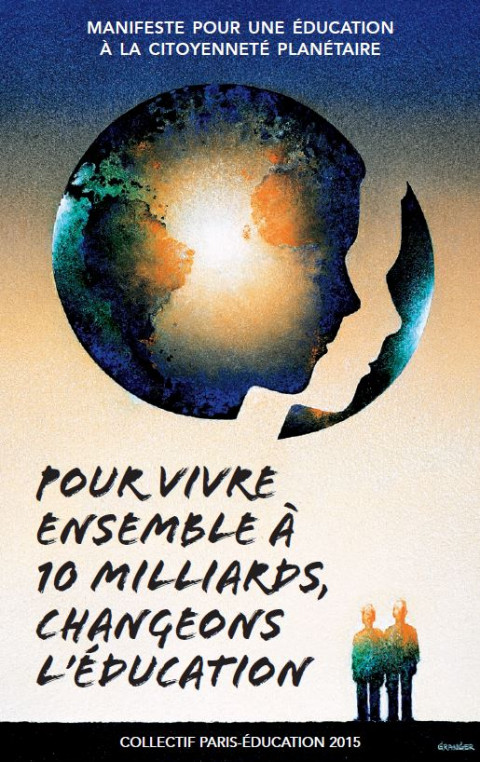 Manifeste pour une éducation à la citoyenneté planétaire: Pour vivre ensemble à 10 milliards, changeons l'éducation 出版年份: 2015 机构作者: Collectif Paris-Education 2015 Face à l’ampleur, l’urgence, la diversité et la complexité des problématiques engendrées par le modèle de développement de nos sociétés contemporaines, nous sommes donc obligés, dans l’urgence, de nous pencher sur les questions d’éducation et de formation des générations futures qui devront affronter des réalités biophysiques, économiques et politiques inédites, dont nous commençons à peine à entrevoir l’ampleur. Ce qui est dès lors en jeu, avec l’avenir de l’homme et de la Terre, c’est l’humain, ce qu’il deviendra, ce qu’il sera capable de porter comme projet pour l’humanité.Quelles qualités d’humains devons-nous faire advenir pour que ces réalités inédites puissent être rencontrées demain, sans que l’humanité bascule dans la violence et le dépeçage égoïste de la planète? Quels enfants voulons-nous laisser à notre Terre?Cette urgence impose un changement d’échelle dans la transformation des systèmes éducatifs, des contenus et des méthodes d’enseignement. Malgré la volonté et la compétence de nombreux acteurs de l’école, force est de constater que les actions menées pour une éducation plus en cohérence avec les enjeux climatiques et, plus largement, sociétaux restent à la marge. Elles sont réalisées par des individus clairvoyants. Il est temps d’enclencher la vitesse supérieure.
  [Video] GLOBAL CITIZENSHIP EDUCATIONAL PROGRAM 出版年份: 2018 机构作者: EducacionBA To build a fairer, more equitable and sustainable future, the "Global Citizenship" educational program is created to promote the Sustainable Development Goals through quality education enhanced by digital technologies and by fostering 21st century skills. Through a digital platform, school contents and monitoring, evaluation and planning tools, children learn by playing, carrying out missions, creating strategies and being protagonists of their learning.It has an extensive potential to reach an ambitious scope of 2.000 teachers and 50.000 students. During 2018 a pilot test was carried out with 6 precursory schools. In the platform, teachers are provided with tools to develop and undertake meaningful and innovative educational projects with their students. Students are offered school contents that challenge and empower them as key players. They are encouraged to learn through play, to carry out missions, to devise strategies, and to lead projects which reinforce learning processes and encourage their creativity and commitment. PRESENTACIÓN DE CIUDADANÍA GLOBAL 出版年份: 2018 机构作者: EducacionBA Para construir un futuro más justo, equitativo y sustentable se crea el programa "Ciudadanía Global", cuyo objetivo es promover los Objetivos de Desarrollo Sostenible a través de una educación de calidad potenciada por las tecnologías digitales y fomentando las habilidades del siglo XXI. A través de una plataforma digital, contenidos de calidad y herramientas de planificación seguimiento y evaluación, niñas y niños aprenden jugando, emprendiendo misiones, creando estrategias y siendo protagonistas de sus aprendizajes.
  Que valent les apprentissages en histoire, géographie et éducation à la citoyenneté ? : Colloque international des didactiques de l'histoire, de la géographie et de l'éducation à la citoyenneté 出版年份: 2014 作者: Caroline Leininger | Angelina Ogier | Sylvain Genevois 机构作者: Institut national de recherche pédagogique L’histoire et la géographie scolaires, de même que l’éducation à la citoyenneté, sont des domaines sensibles, liés au politique et au contexte social et sociétal dans lequel ils s’inscrivent. Si les recherches en didactique ont constaté dans les années 1990 une grande stabilité de l’histoire et la géographie scolaires, elles interrogent aujourd’hui plus spécifiquement les changements curriculaires et les recompositions qu’ils entraînent (thèmes des deux dernières éditions du colloque (Nantes, 2008, Lausanne 2009). Ces changements découlent de choix politiques et de savoirs universitaires, et redéfinissent le projet de ces disciplines et ses finalités. L'élève devient ainsi à l'issue de sa scolarité : un acteur de la société, un citoyen, un acteur économique, membre de communautés culturelles et politiques, un individu épanoui etc.Ce choix de finalités est aussi un choix de valeurs, explicites ou non dans les prescriptions, assumées ou non par les enseignants, par les élèves, les parents. Ce constat amène à questionner les articulations entre les apprentissages disciplinaires d’une part, et les apprentissages sociaux et politiques d’autre part. Les définitions de ces apprentissages, leur légitimité et leurs évaluations posent également question. Enseignants, décideurs, formateurs, didacticiens peuvent ainsi se demander ce que valent les apprentissages en histoire, en géographie et en éducation à la citoyenneté, tant du point de vue de leur reconnaissance disciplinaire et sociale que du point de vue des valeurs qui leur sont associées. Cet ouvrage cherche à questionner les articulations entre les apprentissages disciplinaires et les apprentissages sociaux et politiques.
 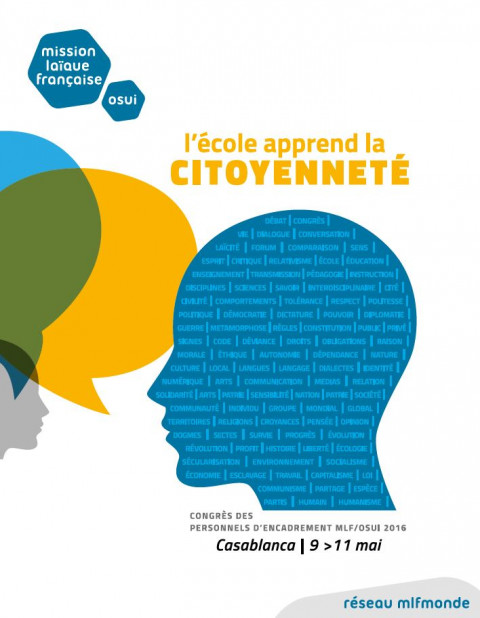 L’école apprend la citoyenneté (Congrès des personnels d’encadrement MLF/OSUI 2016) 出版年份: 2017 机构作者: Mission laïque française Le groupe scolaire Louis-Massignon à Bouskoura (Casablanca, Maroc) a accueilli du 9 au 11 mai 2016 près de 300 acteurs de l’enseignement français, représentants des établissements du réseau mlfmonde, du réseau de l’AFLEC, des académiespartenaires (Dijon, Paris, Poitiers et Reims), des représentants du MAEDI, du MENESR, de la DNE, de la DGESCO et de l’AEFE, des grands établissements de l’Éducation nationale (CNED, Canopé, ESENESR, CIEP), des représentants de l’organisation du baccalauréat international, de l’Unesco et de la société civile.Les mesures qui entrent en vigueur sur l’éducation à la citoyenneté concernent les «valeurs de la République».Parce que l’enseignement moral et civique est conçu et établi pour et dans un contexte strictement national, se pose dès lors la question d’une adaptation à l’usage de l’enseignement français à l’étranger qui ne soit pas en contradiction avec l’intention et l’esprit de cette partie du programme.