
相关资源
探索丰富的全球公民教育资源,深化理解,促进研究、倡导、教学与学习。
共找到3,559条结果
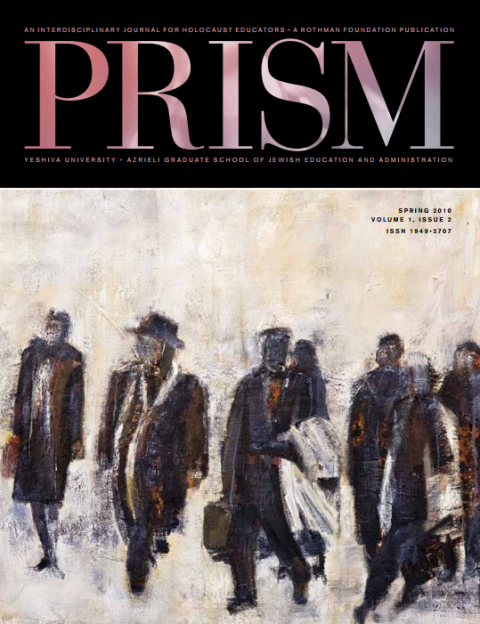 The layering of knowledge, memory, and understanding. Using Berlin’s ‘Places of Remembrance’ memorial to teach about the Holocaust Carson Phillips offers detailed and specific suggestions for teaching about the Berlin memorial described in Pnina Rosenberg’s essay (pp. 90–96), along with extended learning opportunities that feature contemporary encounters with, and the meaning of, that and two additional exhibits. “This educational unit,” he writes, “is designed to develop the critical thinking skills of students, to elucidate the complexities of the Holocaust, and to examine the range of human responses to it.” An invaluable aid for educators is the appendix with the text of decrees originally imposed between 1933 and 1945. (By the publisher)
  Mémorial de la Shoah - Musée, Centre de documentation juive contemporaine The Shoah Memorial provides access to various resources on the Holocaust, mostly in French.
  2018 High-level Political Forum: Contribution from the SDG-Education 2030 Steering Committee 出版年份: 2018 机构作者: SDG-Education 2030 Steering Committee ECOSOC invited intergovernmental bodies, including the SDG-Education 2030 Steering Committee, to contribute to the 2018 High-level Political Forum. This contribution is based on the HLPF mandated structure for all submissions, and suggested focus areas from the perspective of SDG4 based on discussions held during the last SDG-Education 2030 Steering Committee meeting (Paris, 28 February – 2 March 2018).
  Developing reflective citizens: The role of Holocaust education In what way can we best conceptualize the relationship of Holocaust education to the broader goal of developing reflective citizens? Keeping in mind the diversity of our audience while simultaneously recognizing the traditions of social studies education in the United States, the author argues that Holocaust education should be integrated within the rationale of educating young people to reflect upon issues that have direct relationships to (1) the development of values and (2) the fostering of behaviours emphasizing social responsibility. In short, Holocaust education ‒ meaning the design of curricula, creation of pedagogical strategies and evaluation of student performance ‒ can be a critical component in developing a citizenry who are capable of addressing global problems such as human rights violations and genocide by employing a reflective understanding of history and its relationships to present and future policies and practices, irrespective of national boundaries (By the author) Les élèves face à la Shoah : lieux, histoire, voyage Teaching the Holocaust is not easy. All teachers know it. In order to develop new forms of teaching, some have found a solution: leave the classroom and go with their students to visit places of memory. This approach, at a time when travel in general is developing, is increasingly popular. Its success has helped fuel a debate: what is the impact on students participating in these visits? What does the teacher need to do to prepare and to conduct such a trip to a memorial site? This books addresses the subject from the French perspective, and also from the English, Belgian, Spanish, Italian, Swiss, and Israeli point of view. Auschwitz is the main focus, but other places are also examined. (By the publisher - Translation)
  Contemporary Debates in Holocaust Education Holocaust education is a controversial and rapidly evolving field. This book, which critically analyses the very latest research, discusses a number of the most important debates which are emerging within it. Adopting a truly global perspective, Contemporary Debates in Holocaust Education explores both teachers' and students' levels of Holocaust knowledge as well as their attitudes and approaches towards the subject. Moreover, it employs a forward-looking perspective by thinking about how the subject will be taught when there are no survivors remaining and what challenges and opportunities digital technology, social media and online learning offer the modern teacher of the Holocaust. This book seeks to shift the parameters of existing debates and offer an insightful commentary on the nature, scope and direction of Holocaust education, which will be of great use to academics, teachers and policy-makers alike. (By the publisher) Mémoires à venir - Une enquête sur la mémoire du XXe siècle auprès de 31 172 jeunes de 16 a 29 ans, en 24 langues, dans 31 pays The Foundation for Political Innovation(Fondapol) and the Foundation for the Memory of the Shoah have carried out an international survey of the younger generations that reveals the memories and perceptions of youth regarding the major events of the twentieth and twenty-first centuries. The participants were 31,172 young people aged 16 to 29, surveyed in 24 different languages in 31 countries : Australia , Austria, Belgium , Canada, China , Croatia, Denmark , Estonia , USA , Finland, France , Greece, Hungary , India, Israel, Italy, Japan , Latvia, Lithuania , Netherlands , Poland, Czech Republic, Romania, United Kingdom , Russia, Serbia , Switzerland, Turkey and Ukraine. (By the publisher - Translation)
 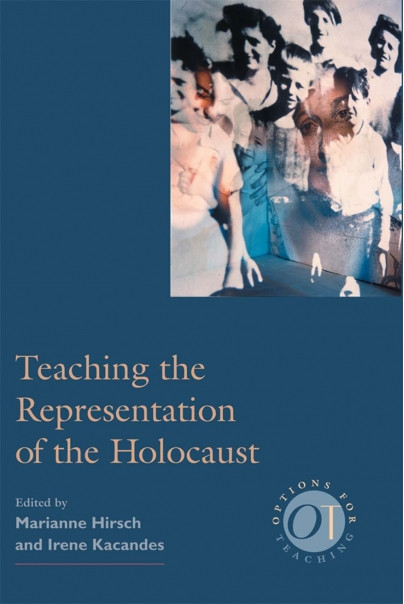 Teaching the representation of the Holocaust “Can the story be told?” Jorge Semprun asked after his liberation from Buchenwald. The question is addressed from many angles in this volume of essays on teaching about the Holocaust. In their introduction, Marianne Hirsch and Irene Kacandes argue that Semprun’s question is as vital now, and as difficult and complex, as it was for the survivors in 1945. The thirty-eight contributors to Teaching the Representation of the Holocaust come from various disciplines (history, literary criticism, psychology, film studies) and address a wide range of issues pertinent to the teaching of a subject that many teachers and students feel is an essential part of a liberal arts education. This volume offers approaches to such works as Jurek Becker’s Jacob the Liar, Roberto Benigni’s Life Is Beautiful, Anne Frank’s diary, Daniel Jonah Goldhagen’s Hitler’s Willing Executioners, Claude Lanzmann’s Shoah, Primo Levi’s Survival in Auschwitz, Cynthia Ozick’s The Shawl, Dan Pagis’s “Written in Pencil in the Sealed Railway Car,” Art Spiegelman’s Maus, Steven Spielberg’s Schindler’s List, Elie Wiesel’s Night, and Abraham Yehoshua’s Mr. Mani. To the challenge “How do we transmit so hurtful an image of our own species without killing hope and breeding indifference?” posed by Geoffrey Hartman in this volume, the editors respond, “Only in the very human context of classroom interaction can we hope to avoid either false redemption or unending despair.” (By the publisher)
  Address by Irina Bokova, Director-General of UNESCO, on the occasion of the Ethics in Action event, Casina Pio IV in the Vatican Gardens; Vatican, 16 October 2017 出版年份: 2017 机构作者: UNESCO. Director-General, 2009-2017 (Bokova, I.G.) This address was delivered by Irina Bokova, Director-General of UNESCO, on the occasion of the Ethics in Action event, Casina Pio IV in the Vatican Gardens; Vatican, on 16 October 2017.
 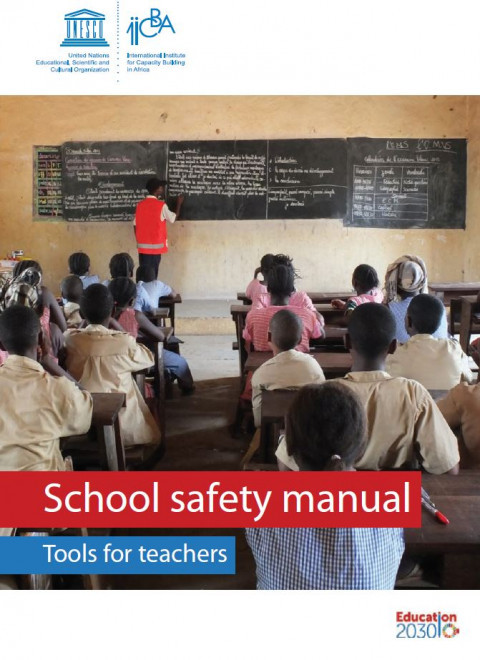 School Safety Manual: Tools for Teachers 出版年份: 2017 机构作者: UNESCO International Institute for Capacity-Building in Africa (IICBA) This manual was produced as part of the Teacher Training and Development for Peace-building in the Horn of Africa and Surrounding Countries project and aims to introduce teachers to the knowledge and skills needed for the establishment, maintenance and sustainment of basic school safety. As more children are enrolling in school in Africa, creating a safe and peaceful environment must be a top priority of teachers and educational institutions.The responsibility of schools to provide a safe environment for their students has been affirmed in the United Nations (UN) Sustainable Development Goal (SDG) four on Education.