
相关资源
探索丰富的全球公民教育资源,深化理解,促进研究、倡导、教学与学习。
共找到1,726条结果
 UNESCO Guidance for the World Heritage ‘No-Go’ Commitment: Global Standards for Corporate Sustainability 出版年份: 2022 机构作者: UNESCO UNESCO World Heritage properties are cultural, natural and mixed sites of outstanding universal value (OUV) that exemplify some of humanity’s most exceptional heritage and treasures on our planet. They cover over a thousand properties in all regions of the world and it is the duty of the international community as a whole to cooperate on their protection. UNESCO World Heritage sites provide major benefits to our society and help safeguard ecosystem services and cultural resources vital for human well-being. Yet the threats to UNESCO World Heritage sites have been rising steadily for decades, including those arising from harmful industrial and infrastructure projects, extractive activities such as mining, oil and gas and large hydropower projects, among others. In view of these significant threats, several leading companies and financial institutions have committed to protect World Heritage by respecting them as ‘no-go’ areas. UNESCO World Heritage sites are protected under international law as humanity’s legacy to future generations and, as such, merit particular attention in corporate policies and business conduct. However, there is wide variation in the nature and strength of sustainability policies and due diligence processes. This guidance was developed to assist companies to develop comprehensive strategies for World Heritage as part of their efforts to measure and manage environmental, social and governance risks. Orientations de l’UNESCO relatives à l’engagement de respecter les sites du patrimoine mondial en tant que zones d’exclusion : recommandations mondiales pour le développement durable des entreprises 出版年份: 2022 机构作者: Organisation des Nations Unies pour l'éducation, la science et la culture (UNESCO) Les biens du patrimoine mondial de l’UNESCO sont des sites culturels, naturels et mixtes d’une valeur universelle exceptionnelle (VUE) qui sont représentatifs du patrimoine et des trésors les plus exceptionnels de l’humanité sur notre planète. Ils recouvrent plus d’un millier de biens dans toutes les régions du monde et il incombe à la communauté internationale toute entière de coopérer pour en assurer la protection. Les sites du patrimoine mondial de l’UNESCO apportent de nombreux bénéfices à notre société et aident à préserver les services écosystémiques et les ressources culturelles indispensables au bien-être humain. Pourtant, les menaces qui pèsent sur les sites du patrimoine mondial de l’UNESCO n’ont cessé d’augmenter depuis des décennies, notamment celles qui découlent de projets industriels et d’infrastructures néfastes, d’activités extractives telles que l’exploitation minière, pétrolière et gazière, et de grands projets hydroélectriques, entre autres. Au vu de ces menaces importantes, plusieurs grandes entreprises et institutions financières se sont engagées à protéger le patrimoine mondial en respectant le principe de zones d’exclusion (« no-go areas »). Les sites du patrimoine mondial de l’UNESCO sont protégés par le droit international en tant que legs de l’humanité aux générations futures et, à ce titre, ils méritent qu’une attention particulière leur soit octroyée par les entreprises dans leurs politiques et leur conduite. Cependant, la nature et le poids des politiques de durabilité et des procédures de diligence raisonnable varient considérablement. Les présentes orientations ont été conçues pour aider les entreprises à élaborer des stratégies globales relatives au patrimoine mondial dans le cadre de leurs efforts pour mesurer et gérer les risques environnementaux, sociaux et de gouvernance. 教科文组织 世界遗产 “禁入”承诺指南: 企业可持续性全球标准 出版年份: 2022 机构作者: UNESCO 教科文组织世界遗产地是具有突出普遍价值的文化、自然和混合遗产地,体现出人类在地球上最杰出的一些遗产和珍宝。它们涵盖世界各个地区的一千多处遗产,整个国际社会都有责任合作保护这些遗产。世界遗产地给我们的社会带来了巨大惠益,有助于保护对人类福祉至关重要的生态系统服务和文化资源。 然而,几十年来,世界遗产面临的威胁逐渐增加,包括有害的工业和基础设施项目、采矿和油气开采等采掘活动以及大型水电项目等造成的威胁。鉴于这些重大威胁,一些龙头企业和金融机构已承诺保护世界遗产,将其作为“禁入”区域加以尊重。 世界遗产地作为人类留给后代的遗产,受到国际法律保护,因此在企业政策和商业行为中值得特别关注。然而,在可持续性政策和尽职调查程序的性质和力度方面存在着很大差异。制定本指南,旨在协助企业制定全面的世界遗产战略,作为衡量和管理环境、社会和治理风险工作的一部分。
  دليل معلمي الصحافة: تقرير حول الذكاء الاصطناعي 出版年份: 2023 作者: Maarit Jaakkola 机构作者: UNESCO يؤثر تطور الذكاء االصطناعي والتحكم فيه على المجتمع بأثره، وبالتالي البد أن تتولى التغطية اإلعالمية القائمة على الذكاء االصطناعي توعية الجمهور بشأن اآلثار المترتبة على التكنولوجيا نفسها، بغض النظر عن الجانب الصحفي. فعلى سبيل المثال، إعداد تقارير بخصوص القوى الديناميكية في العالقة المتغيرة ما بين الشركات والسلطات والمواطنين والرقائق الحاسوبية، وبين البيانات والخوارزميات. على الرغم من أن العديد من تطبيقات الذكاء االصطناعي تخدم مصلحة الجمهور، إال أن الصحفيين بحاجة إلى بصيرة وخبرة بشأن جوانب مثل اإلقصاء، وعدم المساواة في المزايا والمنافع، وانتهاك حقوق اإلنسان . كجزء من سلسلة التعليم الصحفي، عمل برنامج اليونسكو الدولي لتنمية االتصاالت على دعم مجلس التعليم العالمي للصحافة في التكليف بإعداد هذا الدليل، وذلك بهدف تحفيز معلمو الصحافة وتمكينهم حتى تسنى يتسنى لهم مساعدة طلبة الصحافة والصحفيين العاملين على الوصول إلى العدالة في واحدة من أهم قضايا عصرنا. مشتمالت الدليل يغطي هذا الكتيب الجوانب التالية : • فهم آلية الذكاء االصطناعي والتعرف على أنواع الذكاء االصطناعي المختلفة• استكشاف إمكانيات الذكاء االصطناعي، باإلضافة إلى نقاط قوته وضعفه .• تخيل مستقبل يتسم بالتنوع باستخدام الذكاء االصطناعي من خالل التعرف على الخطابات الشائعة التي تشكل وعي الجمهور . • فهم دور الصحافة في توسيط وتشكيل الحوار حول الذكاء االصطناعي• لبحث عن وسائل لتقديم إلعداد تقارير حول الذكاء االصطناعي بطريقة متنوعة وواقعية ومسؤولة.• إقامة صالت عالقات مع أساليب أنواع الصحافة الموجودة بالفعل، من تقارير األخبار العامة إلى صحافة البيانات . يمثل تعزيز التعليم الصحفي أحد النتائج الرئيسية التي يسعى إليها البرنامج الدولي لتنمية االتصاالت، وهو برنامج حكومي دولي فريد ضمن نظام األمم المتحدة متخصص في تنمية وسائل اإلعالم . Reporting on Artificial Intelligence: A Handbook for Journalism Educators 出版年份: 2023 作者: Maarit Jaakkola 机构作者: UNESCO The rise and control of artificial intelligence (AI) is impacting society as a whole. It follows that AI coverage must inform audiences about the implication of the technology itself, beyond journalism. For instance, reporting on the power dynamics in the changing relationship between companies, authorities, citizens and computer chips, and between data and algorithms. While many AI deployments serve public interest, journalists also need insight and expertise to alert about aspects like exclusions, unequal benefits, and violations of human rights. As part of its journalism education series, UNESCO’s International Programme for the Development of Communication (IPDC) has supported the World Journalism Education Council in commissioning this handbook. The aim is to inspire and empower so that journalism educators can help both journalism students and working journalists do justice to one of the major issues of our times. The handbook covers:• Understanding machine intelligence and identifying different types of AI• Exploring AI’s potential, as well as its strengths and weaknesses• Imagining diverse futures with AI by recognising pervasive popular narratives that inform public consciousness• Understanding journalism’s role in mediating and shaping AI discourse• Finding ways of reporting about AI in a nuanced, realistic and accountable manner• Making connections to existing genres of journalism, ranging from general news reporting to data journalism. Strengthening journalism education is one of the key results sought by IPDC, a unique intergovernmental programme within the UN system that specializes in media development. Освещение тематики искусственного интеллекта: пособие для преподавателей журналистики 出版年份: 2023 作者: Maarit Jaakkola 机构作者: UNESCO Развитие искусственного интеллекта (ИИ) и задача осуществления кон троля над ним оказывают влияние на общество в целом. Это означает, что освещение темы ИИ должно информировать аудиторию о послед ствиях применения самой технологии, выходя за рамки журналистики. Например, освещение динамики сил в условиях меняющихся отноше ний между компаниями, властями, гражданами и компьютерными чипами, а также между данными и алгоритмами. Хотя многие разработки в области ИИ служат общественным интересам, журналистам также необходимы знания и компетентность, чтобы предупреждать общественность о таких аспектах, как риски социальной эксклюзии, неравное распределение благ и нарушения прав человека. Данная публикация является частью серии публика ций по журналистскому образованию, и подготовле на совместно Международной программой развития коммуникации ЮНЕСКО (МПРК) и Всемирным советом по образованию в области журналистики. Целью данного пособия является вдохновение и расширение возможностей преподавателей журналистики, чтобы они могли помочь начинающим и работающим журнали стам разобраться в одной из важнейших проблем современ ности. В пособии рассматриваются следующие темы:• выработка общего представления о машинном интеллекте и опре деление различных типов ИИ;• рассмотрение потенциала ИИ, а также его сильных и слабых сторон;• формулирование сценариев будущего в реалиях ИИ путём выявления распространённых популярных установок, формирующих общественное сознание;• понимание роли журналистики в опосредовании и формировании дискурса об ИИ;• поиск способов взвешенного, реалистичного и ответственного освещения проблематики ИИ;• увязка с существующими жанрами журналистики — от новостного репортажа до журналистики данных. Повышение уровня журналистского образования — один из ключевых результатов, к которым стремится МПРК, уникальная межправительственная программа в системе ООН, специализирующаяся на развитии СМИ
 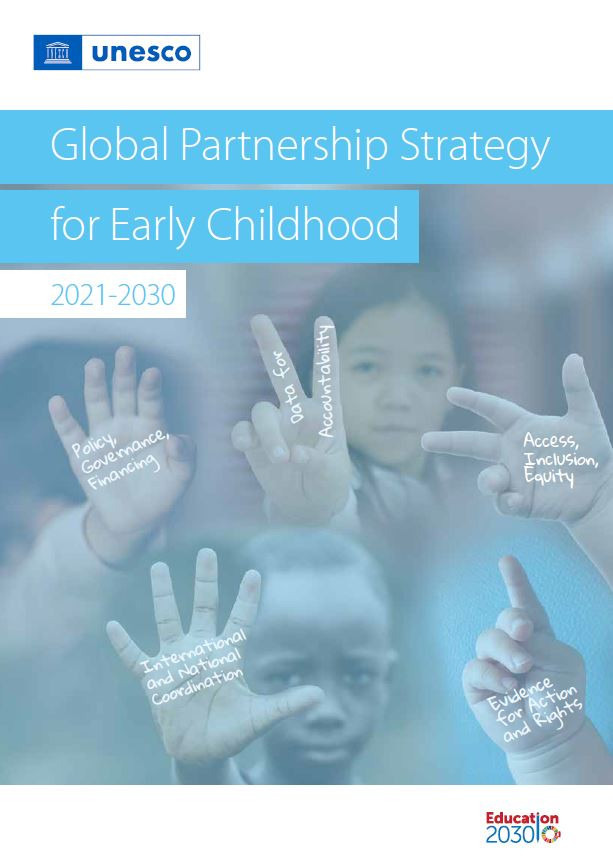 Global Partnership Strategy for Early Childhood, 2021-2030 出版年份: 2022 机构作者: UNESCO The Global Partnership Strategy for early childhood is the result of inter-agency efforts to counter the negative trend in education and to overcome the reduction and closure of services for health, nutrition, sanitation, and child protection in all regions of the world during the COVID-19 pandemic. Well-designed and implemented policies and services for early childhood care, education and development enable all countries to protect and guarantee child rights, achieve high rates of return on their investments in child and family development and widen avenues for transforming societies and lives. Stratégie de partenariat mondial pour la petite enfance, 2021-2030 出版年份: 2022 机构作者: Organisation des Nations Unies pour l'éducation, la science et la culture (UNESCO) La Stratégie de Partenariat mondial pour la petite enfance est le résultat des efforts interagences pour contrer la tendance négative dans l’éducation et pour surmonter la réduction et la fermeture des services de santé, de nutrition, d’assainissement et de protection de l’enfance dans toutes les régions du monde pendant la pandémie de COVID-19. Des politiques et des services bien conçus et mis en oeuvre pour la protection, l’éducation et le développement de la petite enfance permettent à tous les pays de protéger et de garantir les droits de l’enfant, d’obtenir des taux de rendement élevés sur leurs investissements dans le développement de l’enfant et de la famille et d’élargir les possibilités de transformation des sociétés et des vies.
  اﻟﺘﺼﺪي ﻟﺨﻄﺎب اﻟﻜﺮاﻫﻴﺔ: ﻫﻞ اﻟﺘﻌﻠﻴﻢ ﻫﻮ اﻟﺤﻞ؟ 出版年份: 2022 作者: Nicole Fournier-Sylvester 机构作者: UNESCO | UN. Office on Genocide Prevention and the Responsibility to Protect هذه الورقة جزء من مجموعة أوراق المناقشة ، التي تمّ إعدادها بتكليف من اليونسكو ومكتب الأمم المتحدة للمستشار الخاص وتعتبر الأوراق مساهمة ، )OSAPG( المعني بمنع الإبادة الجماعية مباشرة في استراتيجية وخطة عمل الأمم المتحدة. في سياق منتدى أصحاب المصلحة المتعددين والمؤتمر الوزاري المعني بمعالجة خطابالكراهية من خلال التعليم في سبتمبر وأكتوبر 2021.وقد سلط تفشي جائحة كوفيد- 19 الضوء على أهمية استراتيجية وخطة عمل الأمم المتحدة ، مما أدى إلى ظهور موجة من خطاب الكراهية في جميع أنحاء العالم - مما يؤدي إلى تفاقم التعصب والتمييز تجاه مجموعات معينة وزعزعة استقرار المجتمعات والأنظمة السياسية. تسعى أوراق المناقشة إلى تفريغ القضايا الرئيسية المتعلقةبهذا التحدي العالمي واقتراح الاستجابات والتوصيات الممكنة. Addressing Hate Speech: Educational Responses 出版年份: 2022 作者: Nicole Fournier-Sylvester 机构作者: UNESCO | UN. Office on Genocide Prevention and the Responsibility to Protect This paper is part of a collection of discussion papers, commissioned and produced by UNESCO and the United Nations Office of the Special Adviser on the Prevention of Genocide (OSAPG).The papers are a direct contribution to the United Nations Strategy and Plan of Action and are published in the context of the Multistakeholder Forum and Ministerial Conference on Addressing Hate Speech through Education in September and October 2021.The outbreak of the COVID-19 pandemic has highlighted the pertinence of the United Nations Strategy and Plan of Action, generating a wave of hate speech across the world –further exacerbating intolerance and discrimination towards particular groups and destabilizing societies and political systems. The discussion papers seek to unpack key issues related to this global challenge and propose possible responses and recommendations.