
相关资源
探索丰富的全球公民教育资源,深化理解,促进研究、倡导、教学与学习。
共找到2,199条结果
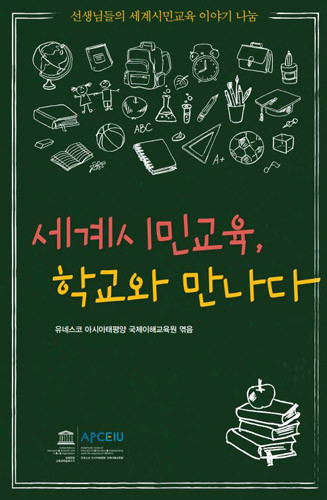 세계시민교육, 학교와 만나다: 선생님들의 세계시민교육 이야기 나눔 出版年份: 2016 机构作者: 유네스코 아시아태평양 국제이해교육원 유네스코 아시아태평양 국제이해교육원은 “세계시민교육, 학교와 만나다”를 출간하였다. 이 책은 세계시민교육을 실천하고 있는 학교 선생님들의 현장 이야기를 담은 책으로, 세계시민교육 선도교사로 활동하고 있는 11명의 선생님들의 세계시민교육에 관한 진솔한 이야기를 만날 수 있다. 여는글수평적 관계 맺음으로 시작하는 세계시민교육 - 김동혁 (광주 문정여고)작은 학교에서 세계시민교육 실천하기 - 곽병남 (충북 영동초등학교)배움으로 행동하기, 행동으로 배우기 - 임영아 (울산 강남고등학교)아이들의 시선에서 사회적 문제 바라보기 - 이흥순 (인천 청일초등학교)지구인과 소통하며 살아가기 - 박범철 (서울 경문고등학교)제주에서 세계시민을 만나다 - 한상희 (제주 서귀중앙여자중학교)아이들과 함께, 선생님들과 함께 열어가는 세계시민교육 - 김민경 (인천 청량초등학교)스스로, 천천히, 하나의 변화로 시작하기: ‘촛불하나’ 이야기 - 최재화 (경기 신천고등학교)세계시민교육, 아이들과 눈맞춰 함께 가기 - 김양모 (안동 동부초등학교)미래로 가는 길, 선생님과 함께 걷는 세계시민교육 - 정애경 (서울 국제고등학교) 세계시민교육이란 일상에서 가치 찾기 - 조성준 (대전 복수고등학교)
  Final Report: 2016 UNESCO/KOICA Joint Fellowship Programme 出版年份: 2016 机构作者: APCEIU This report provides an overview of the activities carried out during the 2016 UNESCO/KOICA Joint Fellowship Programme held in Republic of Korea from 1 September - 31 October, 2016.In its 10th year of implementation, UNESCO/KOICA Joint Fellowship Programme 2016 invited 25 educators from 17 countries in Africa and the Asia-Pacific region for two months; from September 1st to October 31st. The overarching goal of the Programme was to enhance the capacities of participating educators under the themes of “Teacher Training for Basic Education,” “Use of ICT for Education (or e-Learning),” “Leadership in Global Education” and “Girls’ Education.” Composed of various segments such as lectures, workshops, hands-on activities, and seminars, which were closely interlinked with each module, the modules were designed to enable the participants to reorient their perspectives on educational development, to gain essential knowledge and skills, and furthermore to produce meaningful and relevant outputs that could be widely applied in their local contexts.For more information, please contact APCEIU's Office of Education and Training at ent@unescoapceiu.org.
 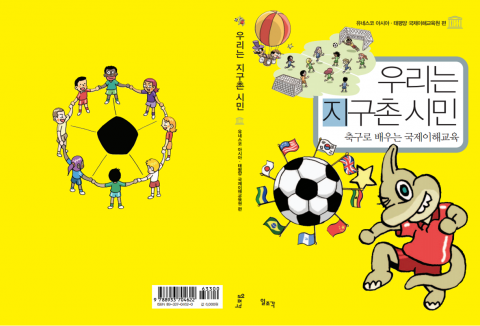 우리는 지구촌 시민: 축구로 배우는 국제이해교육 出版年份: 2004 机构作者: 유네스코 아시아태평양 국제이해교육원 『우리는 지구촌 시민—축구로 배우는 국제이해교육』은 세계화 시대에 우리 학생들이 세계 이웃의 다른 모습을 이해하고, 함께 살아가는 가치관을 깨우칠 수 있도록 도움을 주기 위하여 만들어진 교재입니다.세계적인 석학들과 교육 전문가들로 구성된 유네스코 21세기 세계교육위원회는 「들로르 보고서」에서 ‘함께 살기 위한 교육’을 21세기 교육의 핵심 과제로 제시하였습니다. 점차 증가하고 있는 여러가지 갈등 문제를 교육을 통하여 해결해 나가기 위한 시도인 것입니다. 이러한 세계적인 흐름 속에서 우리나라도 이에 발맞추어 제 7차 교육과정에서 '국제이해교육'을 창의적 재량학습 과목의 하나로 채택하였습니다. 이제는 국제이해교육의 하나의 독립된 학습 과목으로 자리잡을 수 있게 되었고, 이에 걸맞은 전문 교재와 교육 자료들이 필요하게 되었습니다. 하지만 안타깝게도 이러한 시대적인 요구를 만족시켜 줄만한 교재나 교육 자료는 그다지 많지 않습니다. 또한 '국제이해교육'이라는 제목을 통해서도 알 수 있듯이, 그 범위가 아주 넓어 어디서부터 어떻게 시작해야 할 지 막막한 기분이 드는 것도 사실입니다.유네스코 아시아태평양 국제이해교육원은 이러한 교육 현장의 요구에 부응하기 위해 『우리는 지구촌 시민—축구로 배우는 국제이해교육』을 발간하게 되었습니다. 유네스코 아시아태평양 국제이해교육원은 아시아·태평양 지역의 45개 나라들과 함께 '국제이해교육'을 강화하고 발전시킬 책임을 완수하기 위해 학교와 시민사회에서 다양한 활동을 이어오고 있습니다. 이러한 활동의 일환으로 우리 교육원은 다양한 분야의 전문가들과 함께 국제이해교육의 교육과정을 연구하는 동시에, 교원들에 대한 연수와 교육자료 개발에 온 힘을 쏟고 있습니다. 이번에 발간된 『우리는 지구촌 시민—축구로 배우는 국제이해교육』은 일곱 개의 장으로 구성되어 있으며, 각 장은 학생들이 세계 여러 나라의 저마다 다른 문화에 대한 이해를 통해서 문화간 이해, 인권, 평화, 세계화, 지속가능한 발전 등의 범세계적인 가치관을 배울 수 있도록 짜여졌습니다. 학생들이 일상 생활에서 쉽게 접할 수 있는 '축구'라는 작고 친근한 소재를 통해 '나와 다른 모습에 대한 이해'와 '함께 만들어가는 세상'을 체험하고 배울 수 있도록 꾸몄으며, 각 단원마다 다양한 <함께해보기>를 수록하여 학생들이 직접 참여함으로써 자신들이 가지고 있던 편견과 선입견을 발견하고 스스로 깨우쳐 나갈 수 있도록 구성하였습니다. 이 교재를 통하여 학생들이 편견에서 벗어나 세계의 친구들과 함께 살아갈 수 있는 올바른 가치관과 태도를 배울 수 있게 되기를 바랍니다.
 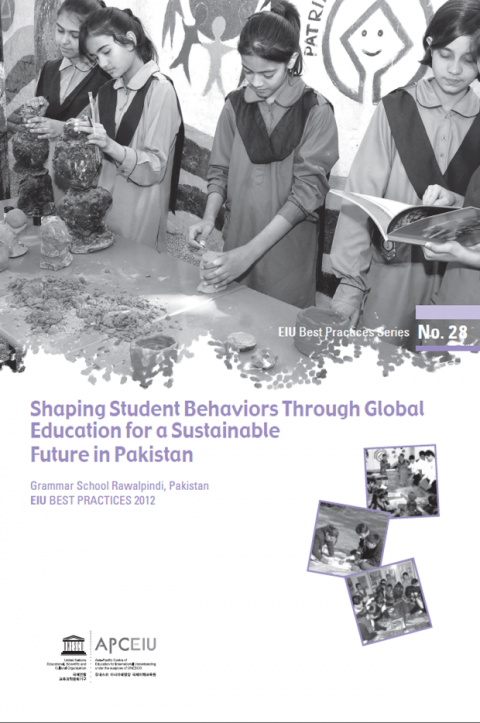 EIU Best Practice Series No. 28: Shaping student behaviors through global education for a sustainable future in Pakistan 出版年份: 2012 作者: Nasreen Iqbal 机构作者: APCEIU Issue No. 28 introduces a Global Education programme with its various activities from Grammar School Rawalpindi in Pakistan. It aims to enable and empower young people to become responsible and humane citizens to achieve a peaceful and sustainable future. It is targeted at all levels of students, including preschool level, to increase their awareness of social and civic values. The programme mainly focuses on EIU while equipping learners with conflict resolution skills, cultural and national identities and global citizenship. Also, it incorporates issues such as universal values, human rights, health, sustainable development, gender, multiculturalism, respect for minority groups, identity and self-worth, tolerance, etc. into the school ethos and curriculum so that the students will be able to perform positive changes on national as well as on international level. Façonner le comportement des élèves par le biais de l'éducation mondiale pour un avenir durable au Pakistan (ECI Série des Meilleures Pratiques no.28) 出版年份: 2012 作者: Nasreen Iqbal 机构作者: Centre Asie-Pacifique d'éducation pour la compréhension internationale (APCEIU) Question n ° 28 introduit un programme d’Éducation Mondiale avec ses diverses activités de Grammar School Rawalpindi au Pakistan. Il vise à permettre et permettre aux jeunes de devenir des citoyens responsables et humains pour parvenir à un avenir pacifique et durable. Il est destiné à tous les niveaux des élèves, y compris le niveau préscolaire, afin d'accroître leur prise de conscience des valeurs sociales et civiques. Le programme se concentre principalement sur ECI tout aux apprenants des compétences de résolution des conflits, des identités culturelles et nationales et la citoyenneté mondiale. En outre, il intègre des questions telles que les valeurs universelles, les droits de l'homme, la santé, le développement durable, l'égalité, le multiculturalisme, le respect pour les groupes minoritaires, l'identité et l'estime de soi, la tolérance, etc. dans l'ethos et le curriculum de sorte que les étudiants seront en mesure école pour effectuer des changements positifs sur le national et au niveau international.
 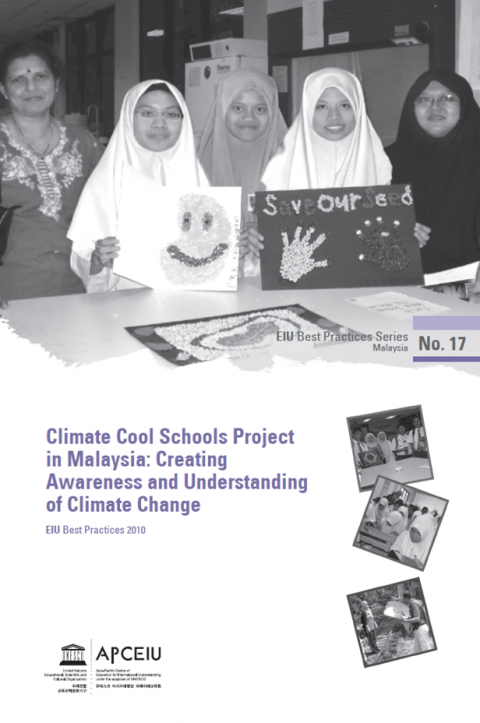 EIU Best Practice Series No. 17: Climate cool schools project in Malaysia: creating awareness and understanding of climate change 出版年份: 2010 作者: Maria Salih 机构作者: APCEIU The Climate Cool Schools (CCS)-Global Platform project is a multilateral learning portal for students in Malaysia, the UK, and Hong Kong to work together to explore local and global climate change issues. The learning portal enables these students to learn from each other about what actions are possible, and to find a voice to advocate wider actions at the local and global levels. The project was initiated in late 2007 and in early 2008 embarked on a two year trial basis with the British Council (BC), Sultan Idris Education University (SIEU), and the Perak State Education Department (JPN, Perak) as the partners. This project is a follow-up from the ZeroCarbonCity project launched in 2005 by the British Council. Projet d’Écoles Fraîches Climatique en Malaisie: la sensibilisation et la compréhension des changements climatiques (ECI Série des Meilleures Pratiques n ° 17 ) 出版年份: 2010 作者: Maria Salih 机构作者: Centre Asie-Pacifique d'éducation pour la compréhension internationale (APCEIU) Le Projet d'Écoles Fraîches Climatique (EFC)) - Plate-Forme Mondiale est un portail d'apprentissage multilatéral pour les étudiants en Malaisie, au Royaume-Uni, et à Hong Kong à travailler ensemble pour explorer les enjeux locaux et mondiaux du changement climatique. Le portail d'apprentissage permet à ces étudiants d'apprendre les uns des autres sur les actions sont possibles, et de trouver une voix pour préconiser des actions plus larges aux niveaux local et mondial. Le projet a été lancé à la fin de 2007 et au début de 2008 a lancé à titre d'essai de deux ans avec le British Council (BC), Sultan Idris Université Education (SIEU), et l'État de Perak Département de l'éducation (JPN, Perak) que les partenaires. Ce projet est un suivi du projet ZeroCarbonCity lancé en 2005 par le British Council.
 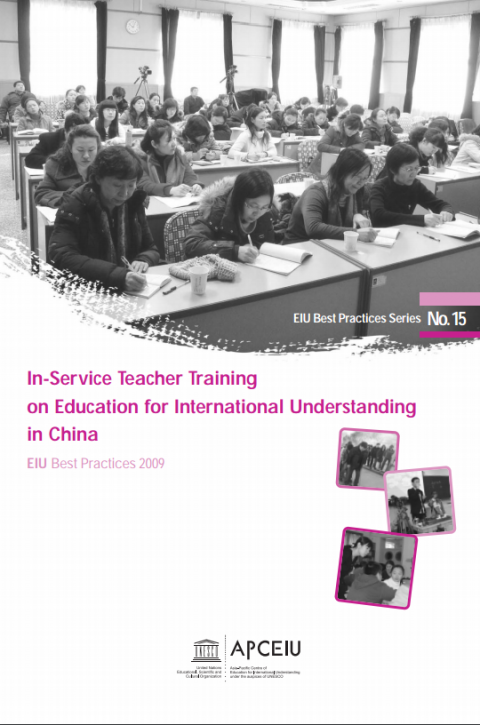 EIU Best Practices Series No.15: In-service teacher training on education for international understanding in China 出版年份: 2009 作者: Yu Xin 机构作者: APCEIU This document introduces an effective and systematic in-service teacher training programme on Education for International Understanding (EIU) in Beijing, China. In order for this training to take place, the Beijing Institute of Education (BIE) has been working to develop a school-based curriculum on EIU to be implemented in local schools. Through this effort, the in-service teacher training programme on EIU motivated and strengthened the capacity of teachers to incorporate EIU curriculum into various subjects they teach in schools. As a result of this practice, schools in which EIU have been implemented, raised the level of global awareness among their teachers and students. This effort to promote EIU in Beijing is an excellent model for policy makers, curriculum developers and educators to learn the effective strategies to promote EIU in schools. La formation continue des enseignants sur l'éducation pour la compréhension internationale en Chine (ECI Série des Meilleures Pratiques no.15) 出版年份: 2009 作者: Yu Xin 机构作者: Centre Asie-Pacifique d'éducation pour la compréhension internationale (APCEIU) Ce document présente un programme de formation des enseignants efficace et systématique en service sur l'éducation pour la compréhension internationale (ECI) à Beijing, en Chine. Pour que cette formation ait lieu, le Beijing Institute of Education (BIE) a travaillé pour élaborer un programme scolaire sur ECI à mettre en œuvre dans les écoles locales. Grâce à cet effort, le programme de formation des enseignants en service sur ECI motivé et renforcé la capacité des enseignants à intégrer curriculum ECI dans diverses matières qu'ils enseignent dans les écoles. En raison de cette pratique, les écoles dans lesquelles ECI ont été mises en œuvre, a soulevé le niveau de sensibilisation mondiale parmi leurs enseignants et les étudiants. Cet effort de promouvoir ECI à Beijing est un excellent modèle pour les décideurs, les concepteurs de programmes et les éducateurs à apprendre les stratégies efficaces pour promouvoir ECI dans les écoles.
 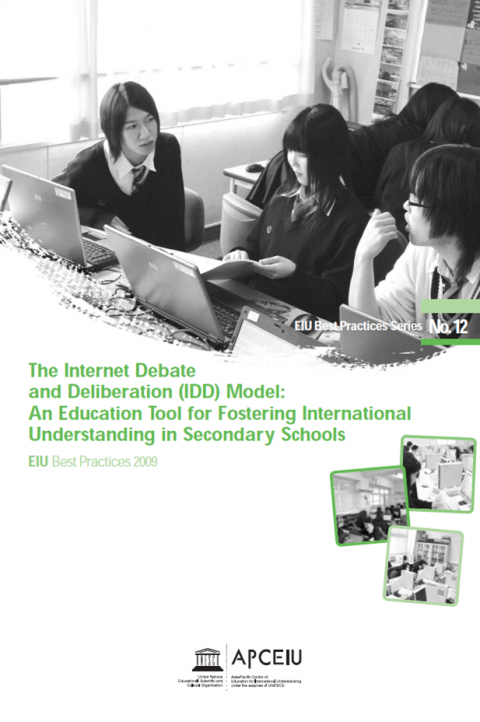 EIU Best Practice Series No. 12: The Internet Debate and Deliberation (IDD) Model: An Education Tool for Fostering International Understanding in Secondary Schools 出版年份: 2009 作者: Rose Sabanal 机构作者: APCEIU This document introduces a case of the internet-based debate and deliberation with an aim to strengthen critical and integrated thinking among high school students from various countries. The case demonstrates that the school in case has been making a devoted effort to develop effective methods of communication among young people with different cultural backgrounds and perspectives, eventually leading to the development of educational content that will enable young learners to critically reflect on highly contending issues of EIU.