
相关资源
探索丰富的全球公民教育资源,深化理解,促进研究、倡导、教学与学习。
共找到1,443条结果
 기후위기·환경재난시대 지속가능한 미래를 위한 포럼: 자료집 出版年份: 2020 机构作者: 전국시도교육감협의회 | 경상남도교육청 2020년 9월 3일 전국시도교육감협의회와 경상남도교육청이 공동 주최한 「기후위기·환경재난시대 지속가능한 미래를 위한 포럼」의 자료집으로 기후변화에 따른 기후위기와 환경재난시대에 지속가능한 학교환경교육 활성화 기반 마련을 위해 학교교육의 대전환과 미래교육으로서의 환경교육 등에 대해 논의하였다. [출처: 전국시도교육감협의회 홈페이지 > 정보마당 > 정책자료실]
  A New Era of Social Justice: International Labour Conference, 100th Session, 2011 出版年份: 2011 机构作者: International Labour Organization (ILO) This report specifically presents to the conference what the Director believes are the fundamental problems the ILO faces as it oversees a century of its inception in 2019. These problems are the remnants of an ineffective growth pattern that has increased inequality around the world over the past 30 years. The mission of the organization is to continue to work together to develop effective responses to these challenges - within the ILO itself, with national bodies such as governments, employers and workers, and through ILO cooperation with others. حقبـة جديـدة من العدالـة الاجتماعيـة: مؤتمر العمل الدولي، الدورة المائة ٢٠١١ 出版年份: 2011 机构作者: International Labour Organization (ILO) يعرض هذا التقرير بالتحديد على المؤتمر ما يعتقد المدير أنها مشاكل جوهرية تواجهها منظمة العمل الدولية وهي تشرف على بلوغ قرن من إنشائها في عام ٢٠١٩. وتتجسد هذه المشاكل في مخلفات نمط نمو غير مجد أدى إلى زيادة انعدام المساواة في جميع أنحاء العالم خلال السنوات الثلاثين الماضية. وتتمثل مهمة المنظمة في مواصلة العمل معاً لبلورة استجابات فعالة حيال هذه التحديات - داخل منظمة العمل الدولية نفسها، ومع الهيئات الوطنية من حكومات وأصحاب عمل وعمال، ومن خلال تعاون منظمة العمل الدولية مع جهات أخرى.
  Concept note for the 2020 Global education monitoring report on inclusion 出版年份: 2018 In line with its mandate, the 2020 GEM Report will assess progress towards Sustainable Development Goal 4 (SDG 4) on education and its ten targets, as well as other related education targets in the SDG agenda.Echoing the overall orientation in the SDGs to “leave no one behind”, this year's Report will also take an in-depth look at inclusion and education. Inclusion is central in the formulation of SDG 4 but is also taken up in other targets in the goal, notably targets 4.5 on gender equality and 4.a on learning environments. Responding to this emphasis, the 2020 GEM Report will analyse policies the world over and present evidence on the different elements of education systems that can support inclusion, such as laws and policies, governance and finance, curricular and learning materials, teachers, school infrastructure, school selection and parental and community views.The Report will focus on the barriers faced by all learners, especially those with overlapping characteristics that make them particularly vulnerable to exclusion. It will also take an in-depth look at people with disabilities, a group whose particular challenges gave rise to the inclusion debate. The Report will look at a range of indicators measuring inclusion in education using both quantitative and qualitative data. The analysis will be based on geographically balanced evidence, and will pay special attention to contexts where disadvantaged children might be particularly at risk of exclusion from education, such as in situations of conflict.
  Artificial intelligence in education: challenges and opportunities for sustainable development 出版年份: 2019 作者: Pedró, Francesc | Subosa, Miguel | Rivas, Axel | Valverde, Paula Artificial Intelligence is a booming technological domain capable of altering every aspect of our social interactions. Ineducation, AI has begun producing new teaching and learning solutions that are now undergoing testing in differentcontexts. This working paper, written for education policymakers, anticipates the extent to which AI affects the education sector to allow for informed and appropriate policy responses. This paper gathers examples of the introduction of AI in education worldwide, particularly in developing countries, discussions in the context of the 2019 Mobile Learning Week and beyond, as part of the multiple ways to accomplish Sustainable Development Goal 4, which strives for equitable, quality education for all. First, this paper analyses how AI can be used to improve learning outcomes, presenting examples of how AI technology can help education systems use data to improve educational equity and quality in the developing world. Next, thepaper explores the different means by which governments and educational institutions are rethinking and reworking educational programmes to prepare learners for the increasing presence of AI in all aspects of human activity. Thepaper then addresses the challenges and policy implications that should be part of the global and local conversations regarding the possibilities and risks of introducing AI in education and preparing students for an AI-powered context. Finally, this paper reflects on future directions for AI in education, ending with an open invitation to create new discussions around the uses, possibilities and risks of AI in education for sustainable development.
  Bridge Zambia Project Report 出版年份: 2019 机构作者: Korean National Commission for UNESCO | Zambia National Commission for UNESCO The Bridge Zambia Project (the Project) has been implemented jointly between the Korean National Commission for UNESCO (KNCU) and its partners in Zambia since October 2010. In March 2019, KNCU’s involvement in the Project will come to an end and Zambia will take over full responsibility for the Project as it goes forward. The Project has supported grassroots activities through the establishment of a Community Learning Centre (CLC), which acts as a hub of community-led development activities in non-formal education. The Project has mobilized and empowered communities and local leadership to take charge of non-formal education programmes with the aim of assisting Zambia to attain UNESCO’s Education for All goals and UN Sustainable Development Goal 4 (SDG 4), concerning education quality.
 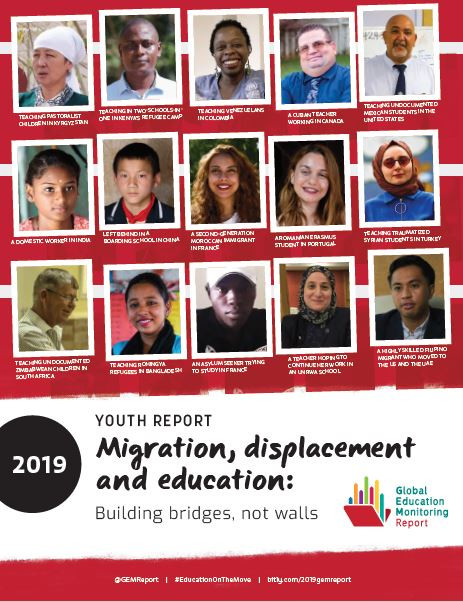 Migration, displacement and education: building bridges, not walls; Global education monitoring report, youth report, 2019 出版年份: 2018 机构作者: Global Education Monitoring Report Team The Education 2030 Incheon Declaration and Framework for Action specifies that the mandate of the Global Education Monitoring Report is to be ‘the mechanism for monitoring and reporting on SDG 4 and on education in the other SDGs’ with the responsibility to ‘report on the implementation of national and international strategies to help hold all relevant partners to account for their commitments as part of the overall SDG follow-up and review’. It is prepared by an independent team hosted by UNESCO. This is among the most aspirational global commitments of the United Nations 2030 Agenda for Sustainable Development. Migration and displacement are two global challenges the agenda needs to address in achieving the 17 Sustainable Development Goals (SDGs), including SDG4: ‘Ensure inclusive and equitable quality education and promote lifelong learning opportunities for all’.
 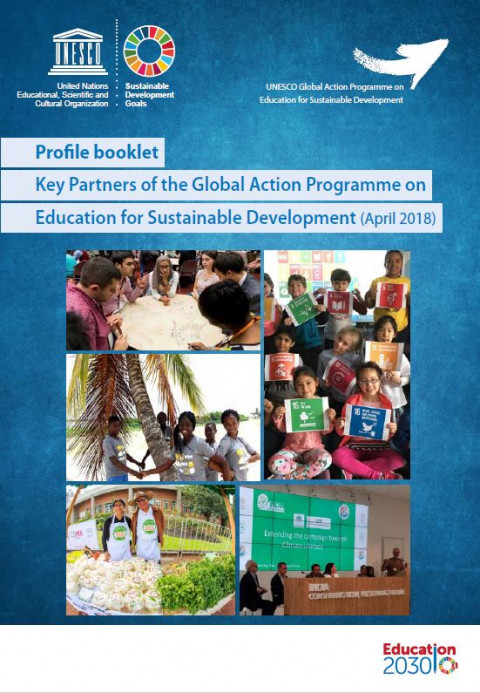 Profile booklet: key partners of the Global Action Programme on Education for Sustainable Development (April 2018) 出版年份: 2018 UNESCO’s Global Action Programme (GAP) was launched at the World Conference on Education for Sustainable Development (ESD) in November 2014 in Aichi-Nagoya, Japan as a follow-up programme to the Decade of ESD (2005-2014). This booklet contains profiles of the current 96 members (also called Key Partners) of the GAP Partner Networks. Each Key Partner is listed in alphabetical order within one of the five Partner Networks. Each profile presents the main objective of their work, their GAP launch commitment and specific activities that contribute to the GAP, as well as related website links and contact information for the organization’s focal point.
  Integrating education for sustainable development (ESD) in teacher education in South-East Asia: a guide for teacher educators 出版年份: 2018 机构作者: UNESCO Bangkok This publication is a cumulative output of the project Sustainability Begins with Teachers in South-East Asia, implemented by UNESCO Bangkok, in cooperation with SEAMEO from 2017 to 2018, with the generous support of the Government of Japan. The initial content was developed together with the representatives of the universities and teacher education institutions who participated in the South-East Asia Sub-Regional Workshop on Education for Sustainable Development for Teacher Education Institutions, held from 5 to 9 June 2017 in Chiang Rai, Thailand. Content has since been enhanced through the sharing of knowledge and experiences gathered from a series of in-country workshops held in Cebu, Philippines; Luang Prabang, Lao PDR; Kampot, Cambodia; Bangkok, Thailand; and Yogyakarta, Indonesia. This culminated in a project review workshop in Bangkok from 24 to 26 April 2018 in which different in-country experiences were shared and comments on the guidebook collected. Twenty-six universities and teacher education institutions have taken part in the project process in total. This guidebook is a result of this collaborative journey.
  تقرير أهداف التنمية المستدامة 2017 出版年份: 2017 机构作者: United Nations (UN) يستعرض تقرير أهداف التنمية املستدامة لعام 2017 التقدم المحرز نحو تحقيق الأهداف السبعة عشر في السنة الثانية من تنفيذ خطة التنمية المستدامة لعام 2030 .ويستند التقرير إلى أحدث البيانات المتاحة. وهو يسلط الضوء على المكاسب والتحديات في الوقت الذي يتحرك فيه المجتمع الدولي صوب تحقيق الطموحات والمباديء التي تبناها في خطة عام 2030.