
相关资源
探索丰富的全球公民教育资源,深化理解,促进研究、倡导、教学与学习。
共找到3,438条结果
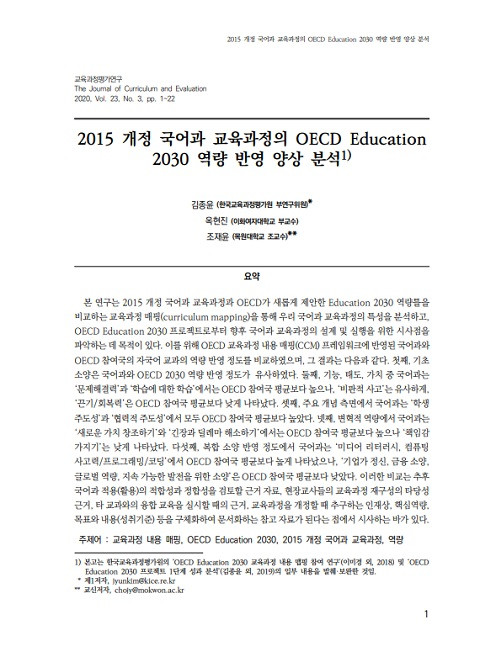 Analysis of the 2015 Revised Korean Languages Curriculum in Terms of the OECD Education 2030 Competencies (Journal of Curriculum and Evaluation; Vol. 23. No. 3) 出版年份: 2020 作者: Jongyun Kim | Hyounjin Ok | Jaeyoon Cho 机构作者: Korea Institute for Curriculum and Evaluation (KICE) The purpose of this study is to analyze the characteristics of the Korean language curriculum through curriculum content mapping (CCM) in the OECD Education 2030 project, which is later compared with the international curricular of the national languages. The CCM framework consists of a “competency code” that presents OECD competencies and a “content code” that contains the content of the curriculum. In this study, the degree of the competencies in the Korean language curriculum is analyzed and compared with the international curricular in terms of the OECD perspective. The result is analyzed as follows. First, foundational literacies of Korean were similar to the international national language curricular. Second, in the competencies of skills, attitudes and values, “problem-solving” and “learning about learning” were higher in the Korean language curriculum than the OECD average, “critic thinking” was similar to, and “persistence” was lower than the OECD average. Third, in terms of key concepts, both “student agency” and “co-agency” were higher in the Korean language curriculum. Fourth, “creating values” and “solving dilemmas” in terms of the degree of reflection of CCM framework competency related to transformational competencies, the Korean Language was higher than the average of OECD member countries in terms of “creating new values” and “resolving tensions and dilemmas” were higher but “taking responsibilities” were lower than the OECD countries. Fifth, the competencies in the compound literacies were also compared. These comparison results provide as reference materials that describes the suitability of the Korean language curriculum and contributes to future revisions of the Korean language curriculum for the students in 2030s. 2015 개정 국어과 교육과정의 OECD Education 2030 역량 반영 양상 분석 (교육과정평가연구; Vol. 23, No. 3) 出版年份: 2020 作者: 김종윤 | 옥현진 | 조재윤 机构作者: 한국교육과정평가원 본 연구는 2015 개정 국어과 교육과정과 OECD가 새롭게 제안한 Education 2030 역량틀을 비교하는 교육과정 매핑(curriculum mapping)을 통해 우리 국어과 교육과정의 특성을 분석하고, OECD Education 2030 프로젝트로부터 향후 국어과 교육과정의 설계 및 실행을 위한 시사점을 파악하는 데 목적이 있다. 이를 위해 OECD 교육과정 내용 매핑(CCM) 프레임워크에 반영된 국어과와 OECD 참여국의 자국어 교과의 역량 반영 정도를 비교하였으며, 그 결과는 다음과 같다. 첫째, 기초 소양은 국어과와 OECD 2030 역량 반영 정도가 유사하였다. 둘째, 기능, 태도, 가치 중 국어과는 ‘문제해결력’과 ‘학습에 대한 학습’에서는 OECD 참여국 평균보다 높으나, ‘비판적 사고’는 유사하게, ‘끈기/회복력’은 OECD 참여국 평균보다 낮게 나타났다. 셋째, 주요 개념 측면에서 국어과는 ‘학생 주도성’과 ‘협력적 주도성’에서 모두 OECD 참여국 평균보다 높았다. 넷째, 변혁적 역량에서 국어과는 ‘새로운 가치 창조하기’와 ‘긴장과 딜레마 해소하기’에서는 OECD 참여국 평균보다 높으나 ‘책임감 가지기’는 낮게 나타났다. 다섯째, 복합 소양 반영 정도에서 국어과는 ‘미디어 리터러시, 컴퓨팅 사고력/프로그래밍/코딩’에서 OECD 참여국 평균보다 높게 나타났으나, ‘기업가 정신, 금융 소양, 글로벌 역량, 지속 가능한 발전을 위한 소양’은 OECD 참여국 평균보다 낮았다. 이러한 비교는 추후 국어과 적용(활용)의 적합성과 정합성을 검토할 근거 자료, 현장교사들의 교육과정 재구성의 타당성 근거, 타 교과와의 융합 교육을 실시할 때의 근거, 교육과정을 개정할 때 추구하는 인재상, 핵심역량, 목표와 내용(성취기준) 등을 구체화하여 문서화하는 참고 자료가 된다는 점에서 시사하는 바가 있다.
  학교 미디어교육을 위한 교과 교육과정 개선 방안 연구 出版年份: 2021 作者: 장의선 机构作者: 한국교육과정평가원 | 대한민국 교육부 본 연구의 목적은 디지털 환경으로 변화하는 미디어 리터러시 개념을 탐색하고 국내외 동향 및 선행연구를 분석하여 각 교과에서 담당할 수 있는 미디어 교육에서의 역할을 모색함으로써 향후 학교급별・교과별 체계적인 미디어 리터러시 교육을 위한 실제적 개선 방안 마련에 있다. 본 연구에서는 먼저 미디어 리터러시와 관련하여 국내외 연구 동향 및 선행연구를 분석하고 교과별 반영 실태를 조사하였다. 다음으로 선행연구에 터해 도출된 디지털 미디어 리터러시 역량에 대한 타당화를 수행하였으며, 이러한 결과를 바탕으로 디지털 미디어 리터러시의 구성 역량을 교과 교육과정에 반영할 수 있는 방안을 제시하였다. 본 저작물은 교육부에서 2021년 작성하여 공공누리 제 4유형으로 개방한 ‘학교 미디어교육을 위한 교과 교육과정 개선 방안 연구 (장의선)’을 이용하였으며 해당 저작물은 온나라 정책연구(www.prism.go.kr)에서 무료로 다운받으실 수 있습니다.
  학교 수준 민주시민교육을 위한 교육과정 개선 방안 出版年份: 2020 作者: 장의선 | 김기철 | 박진용 | 박태준 | 이인태 | 강대현 | 정윤미 机构作者: 한국교육과정평가원 본 연구의 목적은 먼저 세계화가 이미 일상화 된 21세기의 학생들에게 요구되는 민주시민성을 폭넓게 성찰하고, 이를 측정할 수 있는 민주시민성 지표를 구안한 후, 구안한 지표를 준거로 민주시민성 인식 및 교육과정 현황 등 민주시민교육 관련 주요 실태와 요구를 분석하여, 민주시민교육 강화를 위한 교육과정 개선안을 도출하는 데 있다.
  지속가능발전교육을 위한 국가·사회적 요구 조사 出版年份: 2021 作者: 권영락 | 이미숙 | 김혜숙 | 유은정 | 김찬국 机构作者: 한국교육과정평가원 본 연구의 목적은 생태 위기 및 환경 문제에 대응하고 지속가능발전을 이루기 위해 학교교육의 방향에 대한 국가·사회적 인식 및 요구를 파악하는 것이다. 본 연구는 ‘지속가능발전교육을 위한 국가·사회적 요구 조사’라는 취지에 맞게 학생, 교사, 학부모, 교육전문가 등 교육 관계자들을 대상으로 한 인식 및 실태 조사에 중점을 두고 있다. 이에 주요 연구 내용은 지속가능발전교육에 관한 교육 관계자들의 인식과 실태를 조사하고, 이를 토대로 지속가능발전교육의 개선 방향을 위한 정책 제언을 탐색하는 것이다.본 저작물은 한국교육과정평가원에서 2021년 작성하여 공공누리 제 1유형으로 개방한 ‘지속가능발전교육을 위한 국가·사회적 요구 조사 (권영락; 이미숙; 김혜숙; 유은정; 김찬국)’ 를 이용하였으며 해당 저작물은 한국교육과정평가원(https://www.kice.re.kr/)에서 무료로 다운받으실 수 있습니다.
 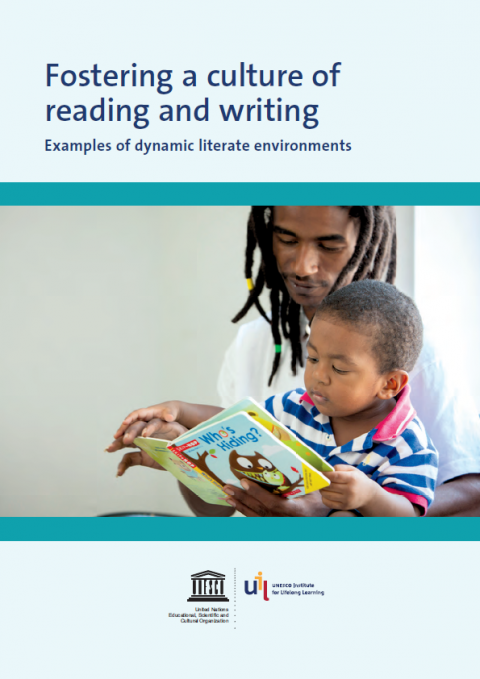 Fostering a culture of reading and writing: examples of dynamic literate environments 出版年份: 2017 作者: Hanemann, Ulrike | Krolak, Lisa 机构作者: UNESCO Institute for Lifelong Learning (UIL) The examples of literacy programmes showcased and analysed in this publication confirm the critical role of literate environments. They have been selected from UNESCO’s Effective Literacy and Numeracy Practises Database (LitBase), which UIL develops on a continuous basis. They demonstrate first and foremost how the development of literate environments can positively influence people’s motivation to (re-)engage in literacy and learning and how they can practise their newly acquired skills in their daily activities to reach sustainable skills levels. In addition, they reveal successful strategies towards a culture of reading, writing and learning in the family, community or wider society. The examples reflect different contexts, such as families, libraries and prisons, to illustrate the potential of ICTs, intergenerational approaches, and community, mobile and prison libraries to engage young people and adults in literacy and learning. Créer des cultures de la lecture, de l'écriture et de l'apprentissage 出版年份: 2017 作者: Hanemann, Ulrike | Krolak, Lisa 机构作者: UNESCO Institute for Lifelong Learning (UIL) Les exemples de programmes d'alphabétisation présen-tés et analysés dans cette publication confirment le rôle déterminant des environnements alphabétisés. Ils sont tirés de la base de données Pratiques efficaces d'alpha-bétisation (LitBase) de l'UNESCO, que UIL développe en permanence. Ils démontrent, d'abord et avant tout, com-ment la mise en place d'environnements alphabétisés peut influencer positivement une personne et la pousser à se (re)mettre à l'alphabétisation et à l'apprentissage, mais aussi comment l'apprenant peut pérenniser ses acquis en les appliquant à ses activités quotidiennes. En outre, ils révèlent des stratégies efficaces pour créer une culture de la lecture, de la lecture et de l'apprentissage au sein de la famille, de la communauté ou de la société. Les exemples incluent divers contextes – familles, biblio-thèques et prisons – pour illustrer la capacité des TIC, des approches intergénérationnelles et des bibliothèques communautaires, mobiles et carcérales à encourager jeunes et adultes à s'alphabétiser et à apprendre.
  A study of the middle school social studies and moral education curriculum to foster global citizenship 出版年份: 2009 作者: Geunho Lee | Deokgeun Kim | Byungsu Min | Hyunjeong Oh | Hyojeong Kim | Junsik Park | Jeongmin Eom 机构作者: Korea Institute for Curriculum and Evaluation (KICE) This study was conducted to analyze the determinants (i.e. multicultural acceptability, national identity, and moral values) influencing global citizenship in order to examine the construct of global citizenship as well as to find the moral education about global citizenship for teacher education. Hierarchical regression was used to analyze the survey of 116 college students in university of education. The results are following. Firstly, The hierarchical regression analysis of ModelⅢ with influencing three factors to global citizenship explained 25% of the variance in student’s global citizenship, and it was found common good among moral values and experience of living a life in the foreign countries as important factors in the model. Second, They regressed into the variance of moral values even though a few ones of multi-cultural acceptability and national identity were influential factors before modelⅢ. Contrary to theoretical expectations, they are turned into be a half of influential factors to global citizenship. Based on the results, we suggested that to solve the global problems need to be strengthen in the developing the education curriculum for global citizenship. Furthermore, future research with stratified sampling will be conducting to generalize the result of this study. L’Étude sur l'Éducation à la Citoyenneté Mondiale dans l'enseignement de premier cycle 出版年份: 2009 作者: Geunho Lee | Deokgeun Kim | Byungsu Min | Hyunjeong Oh | Hyojeong Kim | Junsik Park | Jeongmin Eom 机构作者: Korea Institute for Curriculum and Evaluation (KICE) Cette étude a été menée pour analyser les déterminants (à savoir d'aceptabilité multiculturelle, identité nationale, et les valeurs morales) qui influent sur la citoyenneté mondiale en vue d'examiner la construction de la citoyenneté mondiale, ainsi que de trouver l'éducation morale de la citoyenneté mondiale pour la formation des enseignants. Régression hiérarchique a été utilisé pour analyser le sondage auprès des 116 étudiants de niveau collégial à l'université de l'éducation. Les résultats suivent. Tout d'abord, l'analyse de régression hiérarchique des ModelⅢ d'influencer trois facteurs à la citoyenneté mondiale explique 25% de la variance de la citoyenneté mondiale de l'étudiant, et il a été trouvé bien commun entre les valeurs morales et de l'expérience d'une vie dans les pays étrangers comme des facteurs importants dans la modèle. Deuxièmement, ils ont régressé dans la variance des valeurs morales, même si quelques uns d'aCECptabilité multi-culturelle et l'identité nationale sont des facteurs influents avant modelⅢ. Contrairement aux attentes théoriques, ils sont transformés en une moitié de facteurs influents à la citoyenneté mondiale. D'après les résultats, nous avons proposé que pour résoudre les problèmes mondiaux doivent être renforcer dans le développement du programme d'éducation à la citoyenneté mondiale. En outre, les recherches futures avec échantillonnage stratifié sera conduit à généraliser le résultat de cette étude. 세계시민의식 고취를 위한 중학교 사회과ㆍ도덕과 교육과정 선진화 연구 出版年份: 2009 作者: 이근호 | 김덕근 | 민병수 | 오현정 | 엄정민 | 김효정 | 박준식 | 김종람 机构作者: 한국교육과정평가원 This study was conducted to analyze the determinants (i.e. multicultural acceptability, national identity, and moral values) influencing global citizenship in order to examine the construct of global citizenship as well as to find the moral education about global citizenship for teacher education. Hierarchical regression was used to analyze the survey of 116 college students in university of education. The results are following. Firstly, The hierarchical regression analysis of ModelⅢ with influencing three factors to global citizenship explained 25% of the variance in student’s global citizenship, and it was found common good among moral values and experience of living a life in the foreign countries as important factors in the model. Second, They regressed into the variance of moral values even though a few ones of multi-cultural acceptability and national identity were influential factors before modelⅢ. Contrary to theoretical expectations, they are turned into be a half of influential factors to global citizenship. Based on the results, we suggested that to solve the global problems need to be strengthen in the developing the education curriculum for global citizenship. Furthermore, future research with stratified sampling will be conducting to generalize the result of this study.