
相关资源
探索丰富的全球公民教育资源,深化理解,促进研究、倡导、教学与学习。
共找到2,161条结果
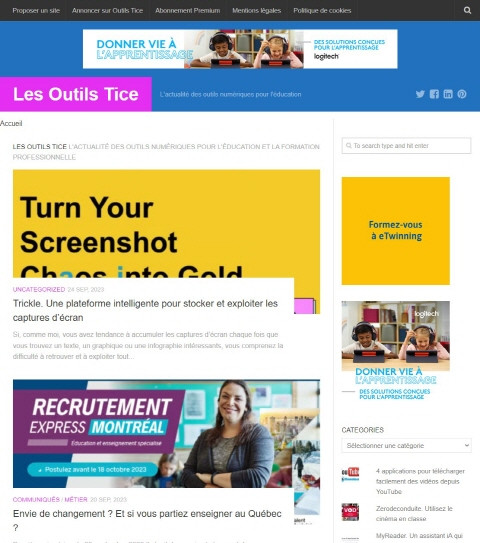 Les Outils TICE - L'actualité des outils numériques pour l'éducation 作者: Fidel Navamuel Les outils Tice est un site de références dans son domaine.Créé par un journaliste, il recense, chaque semaine l’actualité des sites et des outils utilisant les Technologies de l’Information et de la Communication dans l’Education (TICE). Chaque ressource est présentée et analysée. Les ressources sont classées par catégorie et une newsletter permet de recevoir chaque semaine les dernières nouveautés. Les outils Tice is a reference site in its field.Created by a journalist, it provides weekly news on sites and tools using Information and Communication Technologies in Education.(ICTE). Each resource is presented and analyzed. Resources are classified by category, and a weekly newsletter keeps you up to date with the latest news.
 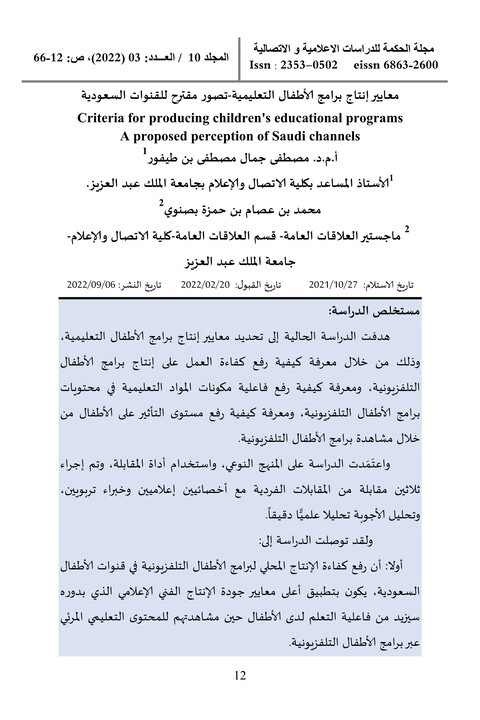 معايير إنتاج برامج الأطفال التعليمية: تصور مقترح للقنوات السعودية (مجلة الحكمة للدراسات الإعلامية والاتصالية؛ Vol.10, No.3) 出版年份: 2022 作者: Basnawi Muhammad مستخلص الدراسة هدفت الدراسة الحالية إلى تحديد معايير إنتاج برامج الأطفال التعليمية، وذلك من خلال معرفة كيفية رفع كفاءة العمل على إنتاج برامج الأطفال التلفزيونية، ومعرفة كيفية رفع فاعلية مكونات المواد التعليمية في محتويات برامج الأطفال التلفزيونية، ومعرفة كيفية رفع مستوى التأثير على الأطفال من خلال مشاهدة برامج الأطفال التلفزيونية. واعتَمَدت الدراسة على المنهج النوعي، واستخدام أداة المقابلة، وتم إجراء ثلاثين مقابلة من المقابلات الفردية مع أخصائيين إعلاميين وخبراء تربويين، وتحليل الأجوبة تحليلا علميًّا دقيقاً. ولقد توصلت الدراسة إلى: أولا: أن رفع كفاءة الإنتاج المحلي لبرامج الأطفال التلفزيونية في قنوات الأطفال السعودية، يكون بتطبيق أعلى معايير جودة الإنتاج الفني الإعلامي الذي بدوره سيزيد من فاعلية التعلم لدى الأطفال حين مشاهدتهم للمحتوى التعليمي المرئي عبر برامج الأطفال التلفزيونية. ثانياً: أنَّ الموضوعات ذات الأولوية الواجب توفرها في محتوى برامج الأطفال التعليمية هي: (التربية العقلية، التربية الأخلاقية، التنشئة الاجتماعية). ثالثاً: أنَّ استخدام الوسائل التربوية الحديثة في صناعة محتوى برامج الأطفال التعليمية وهي: (النمذجة، والقصة الدرامية، والمسابقات، والتكرار) ستزيد من فاعلية تأثيرها على محتويات برامج الأطفال في القنوات السعودية. وبناء على ما توصلت إليه الدراسة من نتائج فقد أوصى الباحث بتطبيق نموذج معايير إنتاج برامج الأطفال التعليمية المقترح عند صناعة برامج الأطفال التلفزيونية في القنوات السعودية. Criteria for Producing Children's Educational Programs A Proposed Perception of Saudi Channels (Al-Hikma Journal for Media and Communication Studies; Vol.10, No.3) 出版年份: 2022 作者: Basnawi Muhammad This study aimed to define the production criteria of children's educational programs, by knowing how to raise the work efficiency for the production of children's television programs, knowing how to raise the effectiveness of the components of educational materials in the contents of children's television programs, and knowing how to raise the influential levels on children by watching children's programs television. This study relied on the qualitative approach. By using the interview tool, thirty sessions of individual interviews were conducted with media specialists and educational experts; then the transcripts were scientifically analyzed. This study relied on the qualitative approach. By using the interview tool, thirty sessions of individual interviews were conducted with media specialists and educational experts; then the transcripts were scientifically analyzed. This study found: First: To increase the efficiency of local production of children’s television programs in Saudi children’s channels is by applying the highest quality standards of media artistic production, which, in turn, will increase the learning effectiveness of children when they watch visual educational content through children’s television programs. Secondly: The priority topics, which should be provided in the content of children’s educational programs, is: (Mental education, moral education,socialization). Third: The use of modern educational means in the content industry for children’s educational programs, which comprises (modeling, dramatic story, competitions, repetition) will increase the effectiveness of their impact on the contents of children's programs in Saudi channels. Based on the findings of this study, the researcher proposed an application model of the production criteria for children's educational programs when producing children's television programs on Saudi channels.
  다문화 이주여성 미디어교육 프로그램 개발 연구 出版年份: 2022 作者: 김지혜 | 박소영 | 최인숙 机构作者: 시청자미디어재단 이 연구의 목적은 다문화 이주여성 대상 미디어 교육 프로그램을 개발하는 것이다. 이민과 이주의 시대, 대한민국의 문화적 다양성은 더욱 커지고 있다. 사회 구성원의 문화적 기반이 다채로워진 지금의 시대에 무엇보다도 강조되어야 할 것은 상호 이해와 존중을 기반으로 사회 통합을 추진하고 전체 구성원의 상생과 공존을 가능하게 하는 ‘지속 가능한 발전 전략’을 모색하는 것이다.
 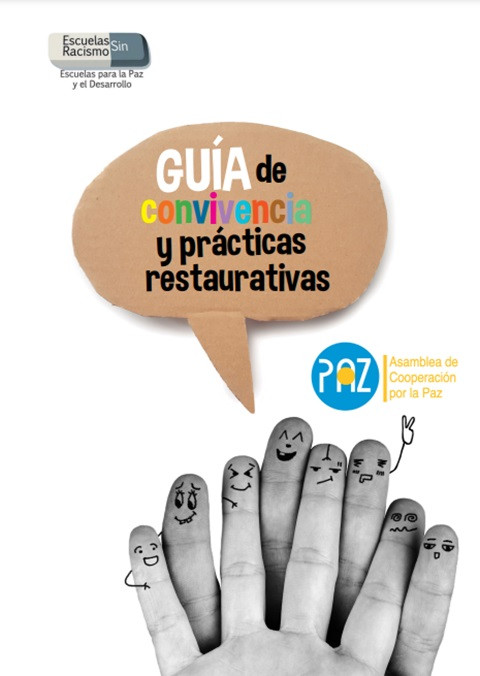 Guide to Coexistence and Restorative Practices 出版年份: 2020 作者: Juan de Vicente Abad 机构作者: Assembly of Cooperation for Peace This guide to coexistence and restorative practices aims to join this collective movement that places coexistence as the central axis of teaching practice. Its objective is to provide teachers with very practical and useful strategies to effectively manage coexistence in the classroom. It is a proposal to address coexistence from a preventive, participatory and people-centered dimension, which conceives coexistence not only as an objective but as an object of intentional learning, which perceives conflict as an opportunity and with an inclusive and restorative perspective, betting on a restorative approach. In the guide you can find practical activities, the purpose of which is to guide educational centers to know and implement the restorative model, through a series of resources that range from the analysis of coexistence to restorative conversations to resolve daily conflicts. Guía de convivencia y prácticas restaurativas 出版年份: 2020 作者: Juan de Vicente Abad 机构作者: Assembly of Cooperation for Peace Esta guía de convivencia y prácticas restaurativas quiere sumarse a este movimiento colectivo que sitúa la convivencia como eje central de la práctica docente. Cuyo objetivo es dotar al profesorado de estrategias muy prácticas y útiles para gestionar de forma eficaz la convivencia en las aulas. Es una propuesta para abordar la convivencia desde una dimensión preventiva, participativa y centrada en las personas, que concibe la convivencia no solo como un objetivo sino como un objeto de aprendizaje intencional, que percibe el conflicto como oportunidad y con una perspectiva inclusiva y reparadora, apostando por un enfoque restaurativo. En la guía se pueden encontrar actividades prácticas, cuya finalidad es orientar a los centros educativos a conocer e implementar el modelo restaurativo, a través de una serie de recursos que van desde el análisis de la convivencia hasta las conversaciones restaurativas para resolver conflictos cotidianos.
 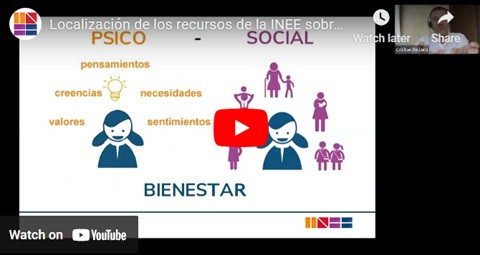 Location of INEE Resources on PSS-SEL 出版年份: 2024 机构作者: Harvard Graduate School of Education (HGSE) | Inter-agency Network for Education in Emergencies (INEE) In these workshops, participants learned how to locate INEE PSS-SEL resources, including the INEE Background Document on Psychosocial Support and Psychoeducation for Children and Youth in Emergencies, the INEE Guidance Note on PSS, the PSS-SEL Toolkit, and the Guidance Note on Teacher Well-Being in Emergencies, and how to effectively adapt them to different contexts.
 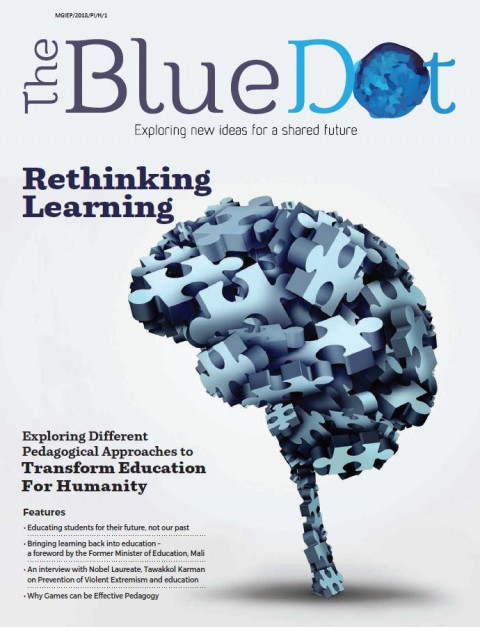 Rethinking Learning: Exploring Different Pedagogical Approaches to Transform Education for Humanity (The Blue Dot Issue 7, 2018) 出版年份: 2018 机构作者: Mahatma Gandhi Institute of Education for Peace and Sustainable Development (MGIEP) In the seventh issue of the Blue Dot, we focus on Rethinking Learning. The Issue includes a foreword by the Former Minister of Education of Mali, H.E. Adama Samassékou on how education systems need to be re-looked at to incorporate personalised learning and technology as an enabler and our Cover Story, which focuses on the importance of socio-emotional learning.Additionally, we feature opinions by specialists from academia, research, policymaking and the industry on the need to relook at education systems for the future. Amongst various experts, we hear from Andreas Schleicher, Director of Education and Skills and Special Advisor on Education Policy to the Secretary-General at the Organisation for Economic Co-operation and Development (OECD); Anneli Rautiainen from the Finnish National Agency for Education as well as Pratik Mehta, Head of Education & Skills, Microsoft India.Further, we present short blogs from the youth about what future education systems mean to them and we hear from Nobel Laureate, Ms Tawakkol Karman on the importance of education for peace.
  التعليم المسؤول للتاريخ كوسيلة للمصالحة التاريخية؟ : تجربة الرابطة الأوروبية لمعلمي التاريخ: هل تصلح كدراسة حالة؟ 出版年份: 2012 作者: فان دير لييو-رورد، يوكي 机构作者: Lebanese Association for Educational Studies (LAES) يكتب العديد من الباحثين الجامعيين المختصين بنظرية التاريخ وتعليم التاريخ عن المصالحة من خلال تعلّم التاريخ وتعليمه. ولكن تكاد لا توجد معلومات أمبيريقية عن تطبيقات عملية لمقاربات من هذا النوع ولا عن مسار وضعها قيد التنفيذ. أود في هذه المساهمة ان القي نظرة عن قرب على أساليب عمل يوروكليو EUROCLIO (الرابطة الأوروبية لمعلمي التاريخ) في البلدان التي توجد داخلها توترات سياسية وعرقية ودينية مثل بلغاريا واستونيا ولاتفيا ومولدوفا ورومانيا وروسيا وأوكرانيا وتركيا وفي البلدان والمناطق التي تعرضت حديثا لصراعات عنيفة مثل البوسنة وكرواتيا وقبرص وجورجيا وجمهورية مقدونيا وصربيا. ومن ثم أود أن أطرح السؤال حول عمل يوروكليو EUROCLIO وأستطلع ما يصح ان يكون مثلا عن المصالحة من خلال تعليم التاريخ وما اذا مقاربتها تنشئ تعليما وتعلما للتاريخ يكون داعما لكيانات سياسية مستدامة. Responsible History as a Tool for Historical Reconciliation? EUROCLIO, the European Association of History Educators as a Case Study? 出版年份: 2012 作者: فان دير لييو-رورد، يوكي 机构作者: Lebanese Association for Educational Studies (LAES) Many university researchers specialized in the theory of history and in teaching history write about reconciliation using history learning and teaching. However, there are almost no empirical data on practical applications of such approaches nor on the process of implementation. In this contribution. I’d like to have a close look at the working methods of the European Association of History Educators EUROCLIO, in countries with internal political, racial and religious tensions, such as Bulgaria, Estonia, Latvia, Moldovia, Romania, Russia, Ukraine, Turkey and in the countries and regions that were recently exposed to severe conflicts such as Bosnia, Croatia, Cyprus, Georgia, Republic of Macedonia and Serbia. Then I’d want to ask the question about how EUROCLIO functions and explore what applies to be an example of reconciliation through teaching history, and whether the reconciliation approach creates a history teaching and learning that would be supportive of sustainable political entities.