
相关资源
探索丰富的全球公民教育资源,深化理解,促进研究、倡导、教学与学习。
共找到882条结果
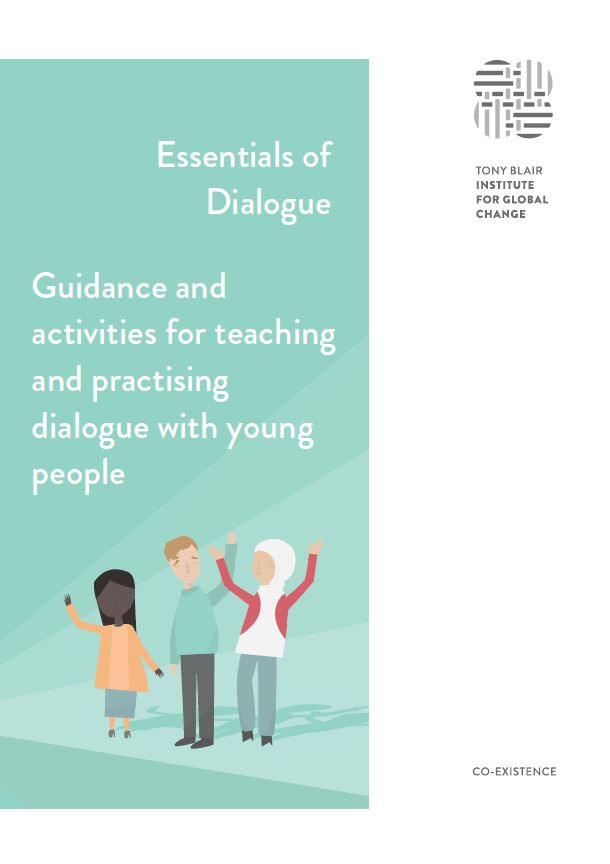 Essentials of Dialogue: Guidance and Activities for Teaching and Practising Dialogue with Young People 出版年份: 2016 机构作者: Tony Blair Institute for Global Change The Essentials of Dialogue, gives educators an introduction to dialogue-based learning and provides important foundational skill building activities to build the skills of dialogue, whether it be in-person or remote.This guidebook provides adaptable lessons that focus on the five core skills of dialogue, briefing notes, and steps to prepare young people for engaging in intercultural dialogue online to support global citizenship development.
  Strengthening Democracy Is the Key to Preventing Far-Right Extremism 出版年份: 2021 作者: Cynthia Miller-Idriss This article emphasizes that Disinformation, misinformation and propaganda undermine democratic practices in ways that should be fought not only by trying to shrink or contain the extremist fringe, but also by strengthening democratic values and practices within the mainstream.And also highlights that It is critical to engage proactively and consistently in order to prevent further escalations in far-right extremism and interrupt violent radicalisation at early stages.
  School Online Safety - Self review tool 出版年份: 2016 机构作者: South West Grid for Learning Trust (SWGfL) The Self Review Tool is intended to help schools to review their current online safety policy and practice. It provides management information and stimulus that can influence the production or review of online safety policies and develop good practice and process for identifying strengths and weaknesses. It also focuses on opportunities for commitment and involvement from the whole school as well as a continuum for schools to discuss how they might move from a basic level provision for online safety to practice that is aspirational and innovative. School Online Safety - Self review tool 出版年份: 2016 机构作者: South West Grid for Learning Trust (SWGfL) Le Self Review Tool a pour objectif d'aider les écoles à réviser leurs politiques de sécurité en ligne et leurs pratiques actuelles. Cet outil contient des informations et des conseils de gestion qui peuvent influer sur la production ou la révision des politiques de sécurité en ligne et sur le développement de bonnes pratiques et processus permettant d’identifier les points forts et les faiblesses de ces systèmes. Il étudie également les possibilités d’engagement et d’implication pour l’ensemble de l’école, et la mise en place d’un espace de discussion en vue de passer d’une politique basique à des pratiques ambitieuses et innovantes.
 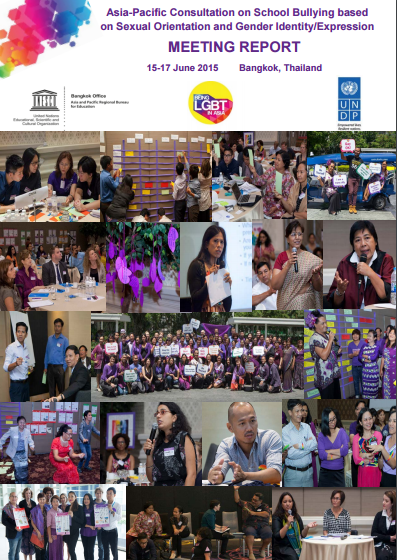 Asia-Pacific Consultation on School Bullying Based on Sexual Orientation and Gender Identity/Expression 出版年份: 2015 机构作者: UNESCO Bangkok This report documents the presentations and discussions made during the Asia-Pacific Consultation on School Bullying based on Sexual Orientation and Gender Identity/Expression held from 15-17 June 2015 at the Pullman King Power Hotel in Bangkok, Thailand.
 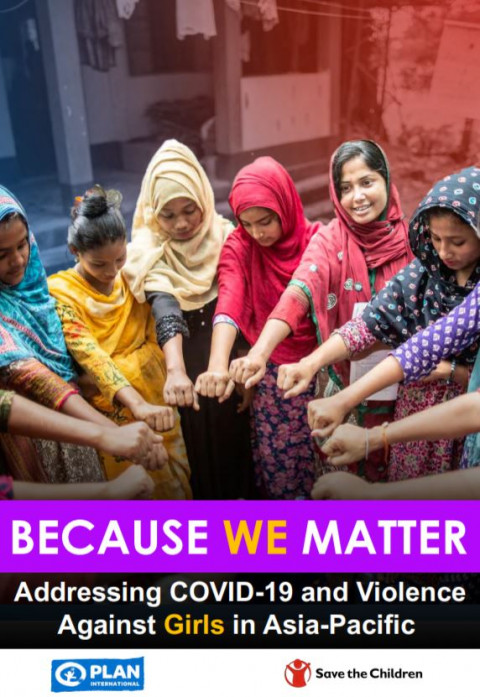 Because We Matter: Addressing COVID-19 and Violence Against Girls in Asia-Pacific 出版年份: 2020 机构作者: Save the Children | Plan International This thematic policy brief aims to seek and secure commitment from regional and national leaders to urgently prioritize and invest consistently in the protection of girls, who are disproportionately exposed to multitude forms of violence and their devastating consequences. It provides evidence and raises concerns of girls’ vulnerability to combined and complex risks that are further intensified by the COVID-19 pandemic.This brief is primarily intended for regional policy-makers and duty-bearers responsible for regulating, planning and resourcing protection of There is no definition of what it means to be a girl. It offers a set of recommendations to guide policy and investments across the Asia Pacific region to ensure gender-responsive, effective and well-resourced measures to protect all children, and particularly girls.
 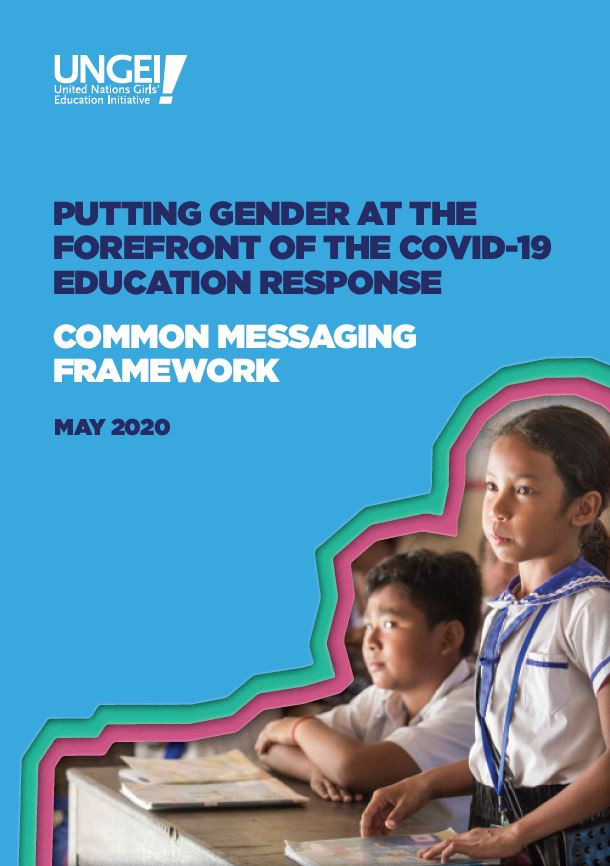 Putting Gender at the Forefront of the COVID-19 Education Response: Common Messaging Framework 出版年份: 2020 机构作者: United Nations Girls' Education Initiative (UNGEI) Nationwide school closures as part of measures to prevent the spread of COVID-19 have disrupted the education of an entire generation of children and youth. Previous health emergencies demonstrate that girls are disproportionately affected, with the effects of gender inequality and unequal power structures exacerbated in times of crisis. This Common Messaging Framework, developed with UNGEI partner and ally organisations, can be used as an advocacy tool to leverage the power of collective action to position gender at the forefront of the COVID-19 response and enhance coherence in advocacy and communications efforts. Mettre le genre au premier plan de la réponse éducative au COVID-19: Cadre de messagerie commun 出版年份: 2020 机构作者: United Nations Girls' Education Initiative (UNGEI) Les fermetures d’écoles à l’échelle nationale dans le cadre des mesures visant à prévenir la propagation du COVID-19 ont perturbé l’éducation de toute une génération d’enfants et de jeunes. Les urgences sanitaires antérieures démontrent que les filles sont touchées de manière disproportionnée, les effets de l’inégalité entre les sexes et des structures de pouvoir inégales étant exacerbés en temps de crise.En tant que partenariat mondial dédié à la promotion de l’égalité des sexes dans et à travers l’éducation, nous devons tirer parti de la puissance de l’action collective pour placer le genre au premier plan de la réponse COVID-19 et renforcer la cohérence dans le plaidoyer et la communication entre les organisations partenaires et alliées.Cette initiative de messagerie commune représente une opportunité stratégique pour favoriser le dialogue et attirer l’attention sur les impacts sexospécifiques de COVID-19, plaider en faveur de stratégies pour répondre aux dimensions sexospécifiques de cette crise et envisager la réouverture en toute sécurité des écoles à travers une perspective sexospécifique. Poniendo el género en primer plano de la respuesta educativa ante el COVID-19: Marco común de la mensajería 出版年份: 2020 机构作者: United Nations Girls' Education Initiative (UNGEI) El cierre de las escuelas a nivel nacional como parte de las medidas para prevenir el contagio del COVID-19 ha interrumpido la educación de toda una generación de niños, niñas y jóvenes. Las emergencias de salud anteriores han demostrado que las niñas se ven afectadas de manera desproporcionada con los efectos de la desigualdad de género y estructuras de poder desiguales exacerbadas en tiempos de crisis.Como asociación mundial dedicada a avanzar la igualdad de género en y a través de la educación, debemos ejercer el poder de la acción colectiva para posicionar al género en primer plano en la respuesta ante el COVID-19 y aumentar la coherencia en la defensa, promoción y comunicación entre las organizaciones socias y aliadas.Esta iniciativa común de mensajería representa una oportunidad estratégica para promover el diálogo y llamar la atención sobre los impactos de género del COVID-19, abogar por estrategias que respondan a las dimensiones de género de esta crisis y ver hacia una futura reapertura de las escuelas a través de una lente de género.
 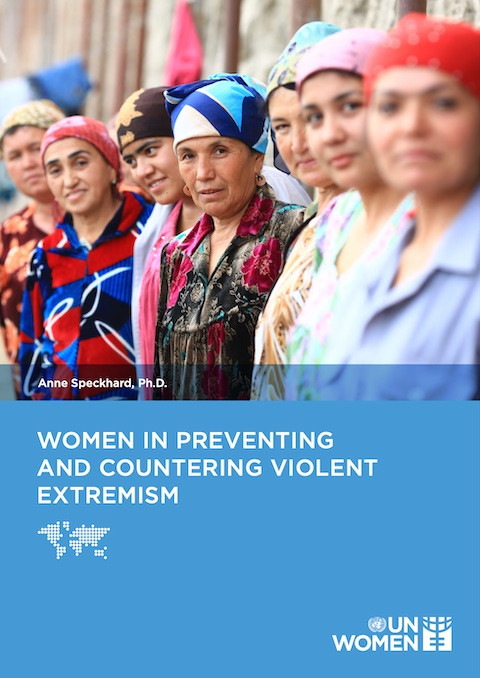 A Training Manual: Women in Preventing and Countering Violent Extremism 出版年份: 2021 作者: Anne Speckhard 机构作者: United Nations Entity for Gender Equality and the Empowerment of Women (UN Women) This publication serves as guidance for actors involved in the prevention and countering of violent extremism (P/CVE) in Europe and Central Asia including state officials, members of non-governmental organizations, community activists, staff of UN agencies, international and regional organizations to help them understand violent extremism’s gender dimensions. It is designed as a training guide, for staff and trainers who are working with different counterparts engaged in P/CVE, and want to help create more effective and gender-sensitive responses. Participants may for example include civil society activists, women leaders, teachers, journalists, lawyers, social workers, religious authorities, youth, police, local and national governmental officials. The five modules in this guide include learning objectives, explanatory text, warm-up activities, practical exercises, references for further reading and empirical experiences from the region of Europe and Central Asia. Modules may be used all together or one-by-one. The ideal timeframe for delivering the training using all the modules is at least two and a half days (half day per unit). The training is suitable for groups of five to twenty-five people. When organizing the workshop consider gender, age and diversity factors to have the richest learning experience possible. Participants should feel that they are in a safe space where they can openly share their ideas and experiences. Needed materials are indicated for the different exercises. As the guide is aimed at increasing the awareness of persons with different levels of sensitivity and knowledge on violent extremism and gender equality, across Europe and Central Asia, it is an introduction which readers should complement with other resources for deeper and more technical insights. The training should also be tailored to the participants’ interests and needs and to the local context.